
The Comeback Trail: Teague-Neeld and Sinclair Headline Crucial Injury Returns Across Global Netball
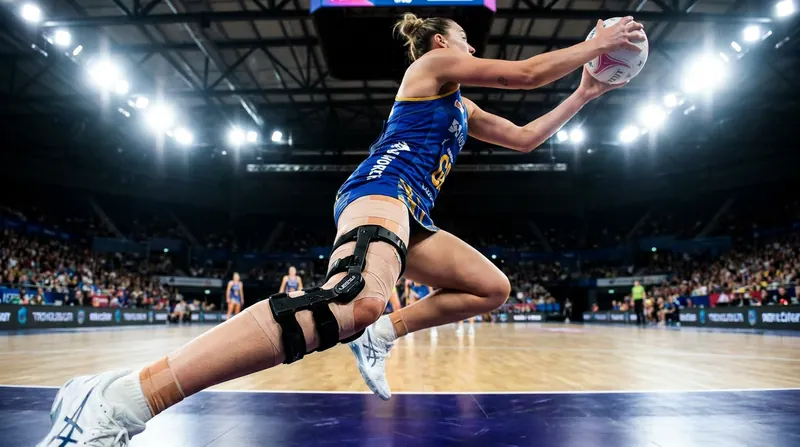
After a grueling start to the 2026 season, top netball leagues worldwide are seeing a wave of uplifting injury returns. Stars like Alice Teague-Neeld and Greer Sinclair are stepping back onto the court, providing massive boosts to their teams' playoff ambitions.
By Xia Wu

Share this story
The medical ward is finally clearing out. After a grueling opening half of the 2026 season that saw rosters decimated across the globe, netball's top domestic leagues are witnessing a wave of crucial, season-defining injury returns.
From the Suncorp Super Netball (SSN) in Australia to New Zealand's ANZ Premiership and England's Netball Super League (NSL), the narrative is rapidly shifting from who is missing to who is back in action. For teams harboring serious championship aspirations, the timing of these medical clearances could not be better, injecting fresh legs and veteran leadership into squads just as the playoff races reach a fever pitch.[1]
In Western Australia, the West Coast Fever are breathing a collective sigh of relief. Vice-captain Alice Teague-Neeld has successfully navigated her way back to the court after a debilitating back injury sidelined her from rounds six through eight.
The setback was the first major injury of the 30-year-old's otherwise resilient career, forcing her to watch from the sidelines as the Fever dropped three of four matches during a mid-season slump. Her absence exposed a glaring hole in the team's attacking connection, proving just how vital her court vision and steadying presence are to the Fever's offensive structures.
Teague-Neeld's return has been nothing short of transformative for the Perth-based franchise. In her first major test back in the starting seven, she orchestrated a commanding 18-goal demolition of the Queensland Firebirds, instantly restoring the Fever's trademark offensive fluidity.
The victory sent a resounding message to the rest of the SSN: a healthy West Coast squad remains a terrifying prospect. With the Fever now locked in a fierce battle with the Melbourne Mavericks for third place and the right to host the minor semi-final at RAC Arena, Teague-Neeld's return to peak physical condition is their most valuable asset.[1]
The psychological toll of an extended absence is often as challenging as the physical rehabilitation itself. Teague-Neeld candidly admitted that the injury weighed heavily on her mind, particularly with Australian Diamonds selection for the upcoming Commonwealth Games looming in the background. However, the highly structured nature of modern netball rehabilitation allowed her to compartmentalize the mounting external pressure, focusing entirely on getting her back right and controlling the controllables within the Fever's high-performance environment.
Athletes in her position must battle the isolation of rehab while watching their teammates compete, a dynamic that tests mental fortitude. By leaning on the club's medical staff and trusting the phased return-to-play protocols, Teague-Neeld was safely able to accelerate her recovery without risking a secondary setback.
That sentiment of patience and resilience is echoed across the Tasman Sea, where the Go Media Stars of the ANZ Premiership are finally reaping the rewards of a cautious medical approach. The Auckland-based franchise endured a cursed 2025 campaign, heavily disrupted by severe, season-ending injuries that derailed their title hopes.
Now, under the guidance of head coach Temepara Bailey, the Stars are welcoming back dynamic midcourter Greer Sinclair, who ruptured her anterior cruciate ligament (ACL) in May of last year and faced a grueling twelve-month recovery. Sinclair's absence left a significant void in the Stars' transitional play, making her successful reintegration a top priority for the franchise's 2026 ambitions.
Sinclair's return to play has been meticulously managed by the Stars' medical team. Coach Bailey has made long-term player health her absolute priority for the 2026 season, implementing strict, milestone-based return-to-play protocols to ensure that Sinclair—alongside returning defender Kate Burley, who suffered a severe foot injury—is not rushed back prematurely.
This cautious, evidence-based approach is paying immense dividends, providing the Stars with a massive injection of midcourt stability and defensive grit as they look to challenge the heavily favored GoSweetSpot Mystics and VIP Frames and Trusses Tactix at the top of the ANZ Premiership ladder.
The reality of ACL rehabilitation in professional netball is a grueling, isolated grind that tests an athlete's absolute limits. Maddi Ridley, vice-captain of the Queensland Firebirds Futures, recently made her own emotional return from a second career ACL tear, shedding light on the arduous journey.
Ridley noted that while the modern rehab process is highly structured and well-researched, no two injuries are the same, even within the same body. The mental fortitude required to endure months of repetitive, painful exercises, often separated from the main playing group, makes the eventual return to the court a profound triumph for both the athlete and the dedicated medical staff who guide them.
In England's Netball Super League, the comeback stories are proving equally compelling and landscape-altering. The Saracens Mavericks have welcomed back international shooter George Inger—formerly known prior to her marriage as George Fisher—after a devastating two-year stint on the sidelines.
Inger, who previously starred in the ANZ Premiership for the Southern Steel before her knee injury, brings 22 caps for the Vitality Roses and a proven track record of 415 international goals back to the English domestic competition. Her return completely alters the Mavericks' attacking dynamic under new head coach Tamsin Greenway, providing a world-class focal point in the shooting circle.
Meanwhile, the LexisNexis Dragons are celebrating the highly anticipated return of Welsh Feather Leah Middleton. The standout defender missed the entirety of the 2025 season due to a severe injury, a massive blow following a 2024 campaign where she was so dominant she was named the franchise's Player of the Season.
Middleton's reintroduction to the defensive circle provides the Dragons with the elite ball-winning capability and aerial presence they sorely lacked last year, offering genuine hope for a sustained climb up the highly competitive NSL ladder. Her ability to read the play and disrupt opposition feeds makes her one of the most impactful returning players in the Northern Hemisphere.
These uplifting returns stand in stark contrast to the ongoing injury crises that continue to plague other title contenders, highlighting just how fortunate healthy teams are. The NSW Swifts, for example, have seen their 2026 SSN campaign effectively derailed by a mounting casualty list.
With international superstar Helen Housby ruled out indefinitely with a back injury, and Diamonds defender Sarah Klau battling lingering leg issues, the Swifts' depth has been tested beyond its absolute limits. It serves as a stark, unforgiving reminder of the fragile nature of championship windows in professional netball, where a single awkward landing can alter a franchise's destiny.[2]
For head coaches and high-performance managers, the integration of a returning star requires a delicate, data-driven balancing act. While the immediate temptation is to thrust a marquee player back into heavy, unrestricted minutes to secure crucial wins, medical staff dictate a phased approach to prevent soft-tissue compensations and secondary injuries.
For head coaches and high-performance managers, the integration of a returning star requires a delicate, data-driven balancing act.
The West Coast Fever, Go Media Stars, and Saracens Mavericks have all demonstrated a commendable willingness to sacrifice short-term gains for long-term athlete health, a modern coaching philosophy that is now bearing fruit as their respective leagues approach the high-stakes business end of the season.
Ultimately, the successful return of players like Teague-Neeld, Sinclair, and Inger elevates the overall standard of the global game. It ensures that the upcoming domestic playoff fixtures and international tournaments will be contested by the sport's premier, fully fit talents, rather than being decided by a battle of attrition. As the 2026 netball season hurtles toward its dramatic conclusion, the clearing out of the medical ward is the fans' ultimate gain, setting the stage for a spectacular and fiercely competitive finals series across the world.[1]
Key points
- Alice Teague-Neeld has returned from a back injury to revitalize the West Coast Fever's offense.
- Greer Sinclair is back on court for the Go Media Stars following a twelve-month ACL rehabilitation.
- George Inger has returned to the Saracens Mavericks after spending two years on the sidelines.
- Coaches across global leagues are prioritizing strict return-to-play protocols over rushing athletes back.
- These key returns are shifting the balance of power as domestic leagues approach their playoffs.
How we got here
May 2025
Greer Sinclair ruptures her ACL during the ANZ Premiership season, beginning a year-long rehab.
Early 2026
George Inger returns to the Saracens Mavericks after a devastating two-year knee injury absence.
April 2026
Alice Teague-Neeld is sidelined with a back injury, missing rounds 6 through 8 of the SSN.
May 2026
Teague-Neeld returns to the court, leading the West Coast Fever to an 18-goal victory over the Firebirds.
June 2026
Teams across the SSN, ANZ Premiership, and NSL solidify their playoff pushes, bolstered by returning stars.
- Rehabilitating Athletes
- Focuses on the mental toll and isolation of long-term rehab, emphasizing the profound personal triumph of returning to the court.
- Coaching and Medical Staff
- Prioritizes long-term player health and strict return-to-play protocols over rushing stars back for short-term gains.
- League Analysts
- Evaluates how these crucial injury returns shift the balance of power and alter playoff trajectories across the global leagues.
Perspectives this story doesn't cover
- Fans of teams still suffering from injury crises
- Reserve players losing court time due to returning starters
Sources
Source coverage
2 outlets
3 viewpoints surfaced


- [1]Netball AustraliaLeague Analysts
SSN Ins & Outs 2026
Read on Netball Australia → - [2]Fox Sports AustraliaLeague Analysts
Swifts' season over as injury crisis deepens; Mavericks stamp authority
Read on Fox Sports Australia →
More in Sports
See all →Injury
Global Netball Injury Report: How Replacement Players Are Seizing Their Moments on the World Stage
7 sources
Injury
Global Netball Injury Report: Glasgow's Triumphant Fever Homecoming and Housby's Commonwealth Games Heartbreak
2 sources
Injury
Global Netball Injury Report: Veve's Commonwealth Games Honour and Ridley's Resilience Highlight Latest Returns
2 sources
Injury
Global Netball Injury Report: Babia's Groundbreaking ACL Return and Durant's Farewell Headline Latest Updates
2 sources
Comments
Every angle. Every day.
Get Sports stories with full source coverage and perspective breakdowns, free every day.