
Pentagon Restores Mandatory Flu Shots for Recruits Following Deadly Base Outbreak
The Defense Department has reinstated mandatory influenza vaccinations for all incoming military recruits, reversing a 2025 policy implemented by Defense Secretary Pete Hegseth. The abrupt reversal follows a severe flu outbreak at a Georgia training base that left two recruits dead and dozens hospitalized.

The Department of Defense has abruptly reinstated its mandatory influenza vaccination requirement for all incoming military recruits, reversing a controversial 14-month-old policy implemented by Defense Secretary Pete Hegseth. The immediate return to compulsory flu shots marks a significant departure from the administration’s broader push to eliminate medical mandates within the armed forces. The directive, issued late Thursday, requires all accessions at basic training facilities to receive the vaccine within 48 hours of arrival unless they possess a documented, pre-existing medical exemption.[1][4]
The policy reversal follows a severe and rapidly spreading influenza outbreak at Fort Moore, Georgia, which left two Army recruits dead and hospitalized 84 others with acute respiratory distress. The outbreak, which began in early June, quickly overwhelmed the base's medical infrastructure as the virus swept through high-density barracks. Military officials confirmed that the deceased recruits, both under the age of 20, had not received a flu vaccine prior to arriving at the installation and developed severe secondary bacterial pneumonia.[3]
Secretary Hegseth originally suspended the flu vaccine mandate in April 2025, framing the decision as a necessary step to protect the bodily autonomy of service members and boost sagging recruitment numbers. That move built upon the earlier repeal of the military's COVID-19 vaccine mandate, extending the philosophy of "medical freedom" to standard seasonal immunizations that had been required for decades. At the time, Hegseth argued that young, healthy recruits were at minimal risk from seasonal respiratory viruses and that compulsory injections were deterring potential enlistees.[2][3]
However, military public health experts have long warned that basic training environments are uniquely susceptible to explosive viral outbreaks. Recruits are subjected to extreme physical and psychological stress, sleep deprivation, and close-quarters living, all of which severely compromise their immune systems. This phenomenon, colloquially known among service members as the "recruit crud," creates an ideal incubator for respiratory pathogens to mutate and spread rapidly among populations that would otherwise be considered low-risk.[5]
In its official statement announcing the reinstatement, the Department of Defense avoided direct references to the political debate surrounding medical mandates, focusing instead on operational necessity. The Pentagon cited "evolving medical intelligence" and the paramount importance of "force readiness" as the primary drivers behind the decision. "The Department's highest priority remains the health, safety, and deployability of our fighting force," the statement read, noting that preventable illnesses degrade training schedules and compromise unit cohesion.[2][4]
The tragic outcome at Fort Moore has ignited fierce backlash from military families and veterans' advocacy groups, many of whom are expressing both relief at the policy change and deep anger over what they view as preventable deaths. Several organizations representing military families have publicly questioned why standard public health protocols were discarded for political signaling. The families of the hospitalized recruits have demanded a full independent investigation into the base's medical response and the initial decision to halt the mandate.[3]
The reversal has also triggered immediate political fallout on Capitol Hill. Democratic lawmakers on the Armed Services Committee are calling for emergency hearings, arguing that the Defense Secretary compromised national security and troop welfare to appease anti-vaccine political factions. Conversely, some conservative commentators and medical freedom advocates have criticized the Pentagon's retreat, arguing that the outbreak at Fort Moore is an isolated tragedy being weaponized to permanently reinstate heavy-handed medical mandates across the military.[2][3]
Epidemiologists tracking the Fort Moore outbreak noted that the specific strain of influenza involved was particularly virulent, but heavily matched to the current season's vaccine formulation. Public health officials emphasized that while the flu vaccine does not prevent all infections, it dramatically reduces the incidence of severe complications, hospitalization, and death. In a closed-door briefing with lawmakers, military surgeons general reportedly presented data showing a 400% increase in lost training days due to respiratory illness since the mandate was lifted.[1][5]
Implementation of the restored mandate begins immediately across all service branches, including the Army, Navy, Air Force, and Marine Corps training depots. Recruits currently in the middle of their basic training cycles will be offered the vaccine on a mandatory basis over the coming week, with specialized medical teams deployed to major installations to expedite the rollout. The Pentagon has clarified that religious and medical exemptions will still be processed, but the baseline expectation is universal compliance for new accessions.[1][4]
Looking ahead, the crisis has prompted a broader internal review of all medical readiness protocols suspended over the past year. While Defense officials have explicitly stated there are no plans to reinstate the COVID-19 vaccine mandate, other routine immunizations that were quietly made optional in 2025 are now under intense scrutiny. The Fort Moore tragedy serves as a stark reminder of the fragile balance between political directives and the unforgiving biological realities of maintaining a standing military force.[5]
Open questions
- Whether the families of the deceased recruits will pursue legal action against the Department of Defense.
- If the Pentagon will move to reinstate other routine immunizations that were made optional in 2025.
- How the policy reversal will impact military recruitment numbers in the upcoming quarter.
- Military Medical Consensus
- Argues that high-density barracks are unique environments where infectious diseases pose a severe threat to operational readiness, necessitating mandatory immunizations.
- Defense Leadership
- Focuses strictly on force deployability and training schedules, framing the policy reversal as a pragmatic operational necessity rather than a political concession.
- Medical Freedom Advocates
- Maintains that service members should retain bodily autonomy regarding medical decisions and views the mandate's return as an overreach.
Sources
Source coverage
5 outlets
3 viewpoints surfaced





- [1]ReutersDefense Leadership
Pentagon reinstates mandatory flu vaccines for recruits after fatal outbreak
Read on Reuters → - [2]Fox NewsMedical Freedom Advocates
Rob Reiner's final role draws fierce criticism 6 months after legendary director's tragic death
Read on Fox News → - [3]The Washington PostMilitary Medical Consensus
Deadly outbreak forces Pentagon to scrap Hegseth's controversial ban on flu shots
Read on The Washington Post → - [4]Department of DefenseDefense Leadership
DOD Updates Immunization Requirements for Accessions
Read on Department of Defense → - [5]STAT NewsMilitary Medical Consensus
RFK Jr. presents $700 million in mental health funding, but experts say grants aren’t new
Read on STAT News →

More in News & Politics
See all →Pacific Defense
US Marines Deploy Iron Dome-Based Missile Defense System to Japan Amid Taiwan Tensions
3 sources
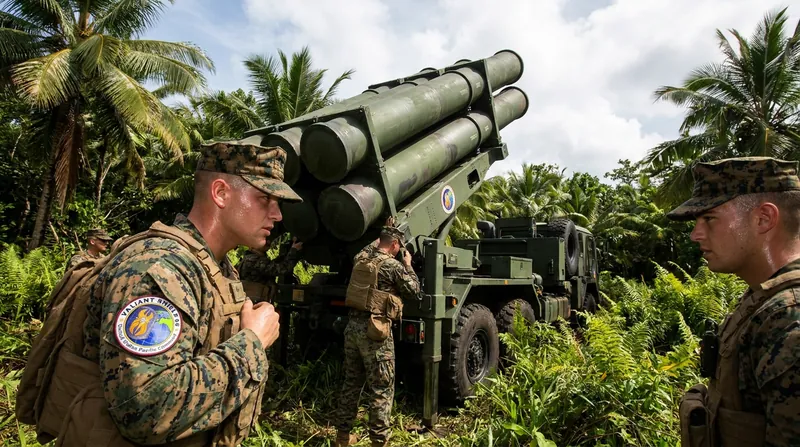
Pacific Defense
Japanese Torpedo Sinks US Navy Vessel in Friendly Fire Incident During Valiant Shield Exercise
3 sources

Military Space
US Army Establishes Dedicated Space Operations Branch in Major Strategic Shift
4 sources
Ukraine Air War
Ukraine Signs $2.5 Billion Contract With Sweden for Gripen E Fighters, Securing Major Air Force Upgrade
5 sources

Comments
Every angle. Every day.
Get News & Politics stories with full source coverage and perspective breakdowns, free every day.