
1.8-Million-Year-Old Burned Bones Push Back Hominin Fire Use by Hundreds of Thousands of Years
A new forensic analysis of fossilized bones from South Africa's Wonderwerk Cave reveals that early human ancestors were tending fires 1.8 million years ago. The discovery pushes the timeline of controlled fire use back by nearly 800,000 years, reshaping our understanding of hominin cognitive development.
By Factlen Editorial Team
- Paleoanthropologists
- Argue that the ability to transport and maintain fire was a monumental cognitive leap that fundamentally altered human evolution and paved the way for brain expansion.
- Archaeological Methodologists
- Emphasize the importance of the new non-destructive luminescence techniques, arguing that many more ancient sites may hold hidden evidence of early fire use.
- Evolutionary Skeptics
- Point out that while the evidence for tending fire is strong, the leap to widespread cooking at 1.8 million years ago still lacks direct dietary proof at this specific site.
What's not represented
- · Indigenous heritage advocates regarding the excavation of ancestral sites
- · Climate scientists modeling Early Pleistocene wildfire frequency
Why this matters
Fire is the foundational technology that allowed humans to cook food, expand our brains, and dominate the globe. Pushing its mastery back to 1.8 million years ago suggests that our ancestors were actively engineering their environments far earlier than previously believed, fundamentally altering the timeline of human cognitive evolution.
Key points
- Burned bones found in South Africa's Wonderwerk Cave push the timeline of hominin fire use back to 1.8 million years ago.
- The discovery suggests early humans were actively capturing and tending natural fires, rather than just observing them.
- Researchers used a non-destructive blue-light luminescence test to prove the microscopic bones had been thermally altered.
- The bones were found 30 meters deep inside the cave, ruling out natural wildfires as the cause of the burning.
- The timeline aligns with the 'Cooking Hypothesis,' which links the mastery of fire to rapid hominin brain expansion.
- The new forensic techniques could help uncover hidden evidence of early fire use at other archaeological sites worldwide.
The mastery of fire is arguably the single most transformative technological leap in human history, fundamentally altering hominin diets, social structures, and brain development. For decades, the archaeological consensus held that the earliest definitive evidence of controlled fire use dated to roughly one million years ago. Now, an international team of researchers has shattered that timeline, presenting compelling evidence that early human ancestors were actively tending fires nearly 1.8 million years ago. The discovery, centered on microscopic burned bones found deep within a South African cave, pushes the dawn of hominin pyrotechnology back by hundreds of thousands of years.[1][2]
The core claim of the new research is that hominins—most likely Homo erectus—were not merely passive observers of natural wildfires, but active managers who transported embers into sheltered spaces to maintain them. This distinction is crucial in paleoanthropology. While the ability to reliably ignite a fire from scratch did not evolve until roughly 400,000 years ago, the cognitive leap required to recognize the utility of a natural fire, safely capture it, and feed it with fuel represents a massive milestone in behavioral sophistication.[3][4]
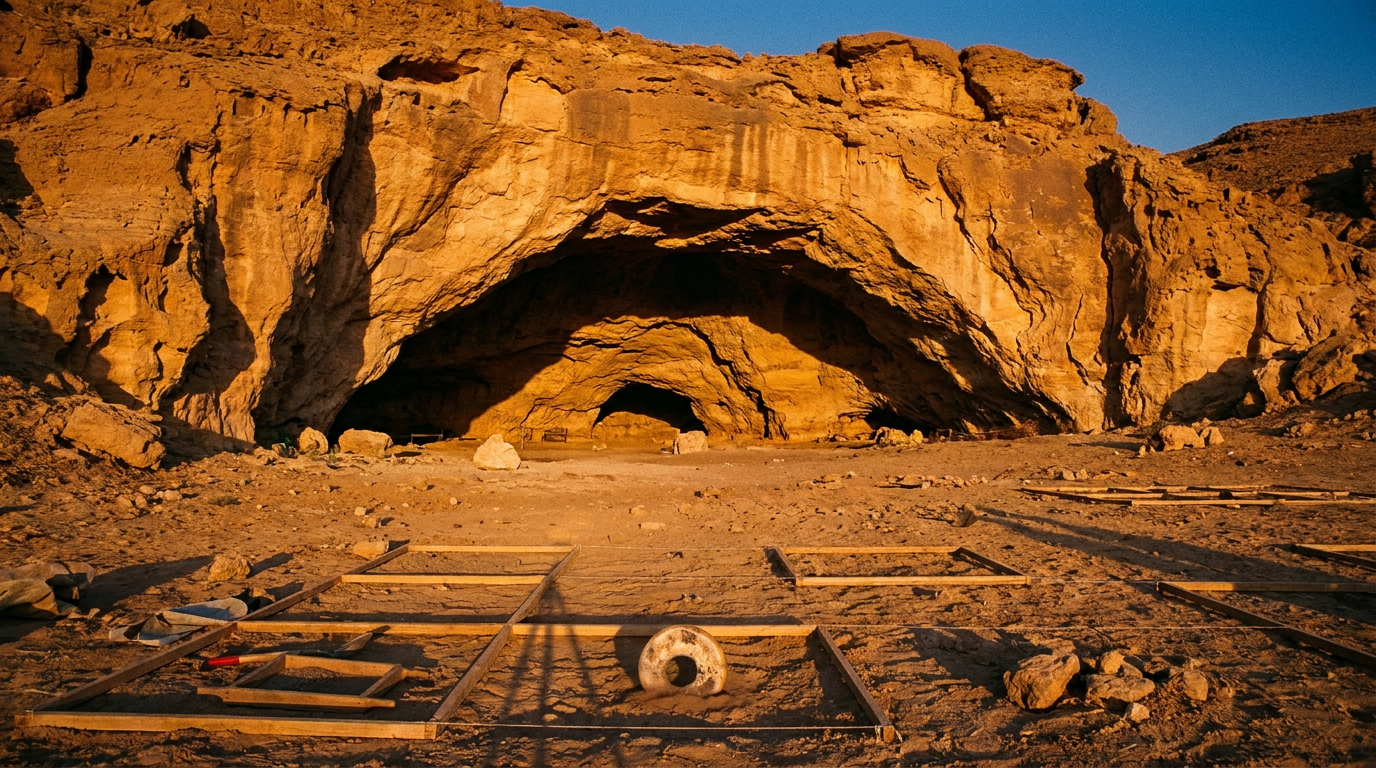
The evidence for this paradigm-shifting claim originates from Wonderwerk Cave, a massive cavern located in South Africa's Kalahari Desert. Wonderwerk is an invaluable geological time capsule, boasting a continuous record of human occupation spanning nearly two million years. Previous excavations at the site had already established it as the home of the oldest known indoor living spaces, but the deeper, older stratigraphic layers had long guarded their secrets due to the fragile nature of the fossils embedded within them.[1][5]
Researchers focused their attention on Strata 10 and 11, deep sedimentary layers associated with early Acheulean stone tools. These distinctively shaped hand axes are the hallmark of Homo erectus, a hominin species known for its modern-like body proportions and unprecedented geographic dispersal. Within these ancient layers, the team discovered hundreds of tiny, calcified animal bones. The prevailing hypothesis is that these bones were originally deposited by barn owls, which nested in the cave and regurgitated indigestible rodent remains in the form of pellets onto the cave floor.[2][6]

The primary methodological challenge was proving that these microscopic bones had been burned by fire, rather than simply stained by minerals over millions of years. Traditional chemical testing often requires destroying the rare fossils, a non-starter for such ancient and precious artifacts. To solve this, the research team adapted a non-destructive luminescence technique originally developed for modern forensic science. This method relies on the principle that bone undergoes permanent structural changes when exposed to intense heat, altering how it interacts with specific wavelengths of light.[4][7]
By exposing the fossilized owl pellets to a high-intensity blue light, the researchers were able to observe a distinct reddish glow emitted only by the bones that had been thermally altered. To ensure the accuracy of this novel approach, the team cross-validated their findings using Fourier Transform Infrared Spectroscopy (FTIR), a technique that measures the absorption of infrared light to identify chemical bonds. The results from both methods aligned perfectly, providing robust, peer-reviewed confirmation that the bones had indeed been subjected to the intense heat of a fire.[1][3]
Establishing the presence of fire is only half the battle; the more difficult task is proving that the fire was intentional rather than natural. The evidence against a natural wildfire relies heavily on the spatial distribution of the artifacts. The burned bones were discovered in sediment located more than 30 meters—nearly 100 feet—inside the cave entrance. Natural grass fires and brush fires on the African savanna simply do not possess the fuel continuity or oxygen dynamics required to penetrate that deeply into a subterranean cavern.[6][7]
Establishing the presence of fire is only half the battle; the more difficult task is proving that the fire was intentional rather than natural.
Furthermore, the researchers had to rule out spontaneous combustion, a phenomenon that can occur in caves with massive accumulations of bat guano. Geological analysis of Strata 10 and 11 confirmed a complete absence of guano deposits or the specific mineral markers associated with its decomposition. With natural wildfires and spontaneous combustion scientifically eliminated as viable explanations, the only remaining vector for the fire was intentional transport by the hominins who inhabited the cave.[3][6]
The intentionality of the fire use is further supported by the physical arrangement of the burned remains. The scorched bones were not scattered randomly across the cave floor, as one might expect from a chaotic natural event. Instead, they were found in distinct, localized clusters. This pattern strongly suggests repeated, deliberate burning events occurring in specific hearth-like areas over long stretches of time, indicating that maintaining a fire was a routine part of daily life for these early humans.[7]

The implications of this discovery ripple outward into evolutionary biology, particularly regarding the "Cooking Hypothesis" championed by researchers like Richard Wrangham. This theory posits that the advent of cooking was the primary catalyst for the rapid brain expansion seen in Homo erectus. Raw meat and tough tubers require massive amounts of energy to chew and digest. Cooking pre-digests these foods, unlocking a surplus of calories that the body can redirect toward fueling a larger, more metabolically demanding brain.[2][4]
If hominins were reliably tending fires 1.8 million years ago, the timeline aligns perfectly with the fossil record showing a sudden increase in hominin cranial capacity and a reduction in jaw and tooth size during the same era. While the Wonderwerk Cave discoveries provide the environmental context for this evolutionary leap, researchers are careful to maintain transparent uncertainty regarding direct dietary evidence. The burned owl pellets prove that fires were burning, but they do not definitively prove that Homo erectus was using those specific fires to cook meat or tubers at this exact site.[3][5]
Another area of scientific uncertainty surrounds the exact mechanics of how these early humans transported the fire. Because they lacked the technology to strike sparks or create friction fires, they must have relied on opportunistic harvesting. Experts theorize that Homo erectus may have gathered smoldering branches from lightning strikes or natural brush fires, carefully carrying the embers back to the cave and feeding them with dry grasses, animal dung, or even the owl pellets themselves to keep the flames alive through the night.[4][7]
The ability to maintain a fire would have offered immediate, life-saving advantages beyond just nutrition. In the harsh environment of the Early Pleistocene, a fire deep inside a cave provided critical warmth during cold desert nights. It also served as a powerful deterrent against apex predators like saber-toothed cats and giant hyenas, allowing hominins to sleep safely on the ground rather than in trees. Furthermore, the light from the flames would have extended the waking hours, fostering social bonding and the development of more complex communication.[6][7]
The success of the blue-light luminescence technique at Wonderwerk Cave is being hailed as a major methodological breakthrough that could rewrite the history of other ancient sites. Because early fire evidence is often subtle—consisting of microscopic ash or slightly altered minerals rather than obvious charcoal pits—many archaeological digs may have unknowingly overlooked it. By applying this non-destructive test to existing museum collections and ongoing excavations, researchers hope to uncover a hidden global network of early hominin fire use.[2][5]

Ultimately, the Wonderwerk Cave findings force a reevaluation of how we view our earliest ancestors. Homo erectus can no longer be seen merely as a creature reacting to its environment, but rather as an active engineer capable of harnessing one of nature's most dangerous forces. By capturing fire and bringing it into the dark, these early humans took a foundational step toward mastering the planet, setting in motion a technological and cognitive trajectory that would eventually lead to modern humanity.[5]
As excavations continue in the Kalahari, the research team is already preparing to test even older strata within the cave system. While 1.8 million years now stands as the benchmark for controlled fire use, the continuous refinement of forensic archaeology suggests that the true dawn of hominin pyrotechnology may lie even deeper in the past, waiting to be illuminated by the glow of a blue light.[1][7]

How we got here
~2.0 Million Years Ago
Homo erectus emerges in Africa, bringing new Acheulean stone tool technologies and modern body proportions.
1.79 - 1.07 Million Years Ago
Hominins at Wonderwerk Cave repeatedly bring natural fire deep inside the cavern, leaving behind burned owl pellets.
~1.0 Million Years Ago
The previous oldest confirmed evidence of fire use is deposited, also found in the higher strata of Wonderwerk Cave.
~400,000 Years Ago
Hominins develop the cognitive and technological ability to reliably ignite and create fire from scratch.
June 2026
Researchers publish new luminescence data, officially pushing the timeline of controlled fire use back to 1.8 million years.
Viewpoints in depth
Paleoanthropologists
Focus on the cognitive leap required to transport and maintain fire, viewing it as a turning point in human evolution.
For paleoanthropologists, the Wonderwerk Cave discovery is less about the physical fire and more about the mind of the hominin that carried it. Recognizing that a dangerous natural wildfire could be captured, tamed, and utilized requires a level of abstract thinking and forward planning previously unconfirmed in early Homo erectus. This camp argues that the ability to maintain a hearth fundamentally restructured hominin society, extending waking hours, fostering complex social bonds, and providing the necessary caloric surplus—via cooking—to fuel unprecedented brain expansion.
Archaeological Methodologists
Emphasize the technological breakthrough of non-destructive testing, which opens new doors for reevaluating ancient sites.
Methodologists view this study as a triumph of forensic application in archaeology. Because early fire use rarely leaves behind obvious charcoal pits, relying instead on microscopic thermal alterations, traditional destructive testing has severely limited the scope of investigation. By successfully adapting blue-light luminescence and FTIR spectroscopy to fossilized bone, this camp argues that researchers now have the tools to re-examine decades-old museum collections. They predict that Wonderwerk Cave is not an anomaly, and that this new technique will soon uncover a widespread global network of early Pleistocene fire use.
Evolutionary Skeptics
Maintain cautious optimism, noting that while the presence of fire is proven, direct evidence of cooking at this specific date remains elusive.
While agreeing that the evidence for hominin-tended fire at 1.8 million years ago is robust, cautious interpreters warn against immediately assuming these fires were used for cooking. This camp points out that the burned bones belonged to rodents regurgitated by owls, not necessarily animals hunted and cooked by Homo erectus. They argue that the primary use of these early fires may have been for warmth and predator defense, and that the scientific community must wait for direct dietary evidence—such as cut-marked, burned megafauna bones or dental calculus analysis—before fully validating the Cooking Hypothesis at this specific stratigraphic layer.
What we don't know
- Exactly how Homo erectus transported the embers from natural wildfires into the cave without extinguishing them.
- Whether these specific fires were used primarily for warmth and light, or if they were actively used to cook meat and tubers.
- If Wonderwerk Cave was an isolated instance of early pyrotechnology, or part of a widespread behavioral shift across the African continent.
Key terms
- Acheulean
- An early stone tool industry characterized by distinctive oval and pear-shaped hand axes, typically associated with Homo erectus.
- Homo erectus
- An extinct species of archaic human that lived throughout most of the Pleistocene, known for being the first hominin to exhibit modern-like body proportions and migrate widely out of Africa.
- Luminescence Testing
- A non-destructive analytical method used to determine if a material has been exposed to intense heat by measuring the specific wavelengths of light it emits when stimulated.
- Stratigraphy
- The branch of geology concerned with the order and relative position of sedimentary layers (strata), used to determine the chronological timeline of an archaeological site.
- Cooking Hypothesis
- The evolutionary theory that the advent of cooking pre-digested food, unlocking a surplus of calories that fueled the rapid expansion of the hominin brain.
Frequently asked
Did these early humans know how to start a fire?
No. The evidence suggests that Homo erectus gathered embers from natural sources, like lightning strikes or wildfires, and carried them into the cave to maintain them. The ability to reliably ignite a fire from scratch did not evolve until roughly 400,000 years ago.
How did scientists test the bones without destroying them?
Researchers adapted a forensic blue-light luminescence test and Fourier Transform Infrared Spectroscopy (FTIR). These techniques detect structural changes in the bone caused by intense heat without requiring the fossils to be crushed or chemically dissolved.
Why are owl pellets important to this discovery?
Barn owls nested in the cave and regurgitated indigestible rodent bones onto the floor. Because these tiny bones were found burned in localized clusters, they serve as a perfect proxy to prove that hominins were building fires directly on top of the pellet-strewn cave floor.
How do we know it wasn't just a natural wildfire?
The burned bones were found 30 meters (nearly 100 feet) deep inside the cave. Natural grass fires on the savanna do not have the fuel or oxygen dynamics to burn that deeply underground, proving the fire had to be intentionally transported.
Sources
Source coverage
7 outlets
3 viewpoints surfaced







[1]Science NewsPaleoanthropologists
Archaeologists have discovered traces of fires built up to 1.8 million years ago in a cave in southern Africa
Read on Science News →[2]ScienceAlertEvolutionary Skeptics
Human Ancestors May Have Been Using Fire Much Earlier Than We Thought
Read on ScienceAlert →[3]ScienceDailyArchaeological Methodologists
Burned Bones Rewrite the History of Fire
Read on ScienceDaily →[4]HeritageDailyPaleoanthropologists
Archaeologists working at South Africa's famous Wonderwerk Cave have uncovered the strongest evidence yet
Read on HeritageDaily →[5]Sci.NewsPaleoanthropologists
Evidence of Fire Use by Early Humans May Date Back Nearly 1.8 Million Years
Read on Sci.News →[6]The Cool DownArchaeological Methodologists
Scientists find scorched bones deep inside South African cave, suggesting early humans tended fire nearly 1.8 million years ago
Read on The Cool Down →[7]PLOS OneArchaeological Methodologists
Evidence for early fire use at Wonderwerk Cave, South Africa
Read on PLOS One →

More in science
See all 7 stories →Genetic Engineering
First Base-Editing of Human Embryos Achieves Precise DNA Changes Without Chromosomal Damage
8 sources

Cosmic Dawn
Webb Telescope Finds 50-Million-Solar-Mass Black Hole That Predates Its Host Galaxy
8 sources

Quantum Gravity
Ambitious 'Table-Top' Experiment Aims to Deliver First Direct Evidence of Quantum Gravity
7 sources

Cell Therapy
CAR-T Cell Therapy Achieves 'Durable Remission' in Lupus and Sclerosis, Signaling Paradigm Shift for Autoimmune Disease
6 sources

Every angle. Every day.
Get science stories with full source coverage and perspective breakdowns delivered to your inbox.