
Streaming's 'Great Rebundling' Accelerates as Platforms Consolidate Apps and Roll Out AI Discovery
Major streaming platforms are aggressively consolidating their services and deploying AI-driven interfaces to combat subscriber fatigue, signaling an end to the era of endless app-switching.
By Factlen Editorial Team
- Consumer Advocates
- Celebrate the return of bundled pricing and unified interfaces that save viewers time and money.
- Industry Analysts
- View consolidation as a necessary survival tactic to reduce subscriber churn and achieve profitability.
- Platform Developers
- Focus on using AI and unified home screens to solve content discovery and keep users within their ecosystems.
What's not represented
- · Independent Filmmakers
- · Niche Streaming Services
Why this matters
After years of paying for fragmented, expensive streaming services, consumers are finally seeing price relief and improved convenience. The shift toward discounted mega-bundles and unified apps means viewers will spend less money and less time searching for what to watch.
Key points
- Major streaming platforms are aggressively bundling their services to combat subscriber fatigue and high churn rates.
- The Disney+, Hulu, and Max mega-bundle offers subscribers roughly 42% in savings compared to standalone plans.
- Hardware providers like Roku are rolling out AI-driven home screens to unify content discovery across multiple apps.
- Disney is reportedly preparing to sunset the standalone Hulu app, migrating its content entirely into Disney+.
- Analysts view the consolidation as a necessary step for streaming companies to achieve long-term profitability.
For years, the streaming revolution promised liberation from the expensive, bloated cable bundle. Instead, it delivered a fractured landscape that forced viewers to juggle half a dozen expensive apps, manage multiple passwords, and spend more time searching for shows than actually watching them. But in June 2026, the industry is officially reversing course. The 'Great Rebundling' has arrived in full force, bringing massive app consolidations, deeply discounted cross-studio mega-bundles, and AI-driven universal search interfaces designed specifically to cure consumer fatigue.[1][4]
The shift marks a major victory for viewers who have grown exhausted by the sheer friction of modern television. Rather than asking consumers to chase content across a fragmented ecosystem of walled gardens, streaming giants are finally teaming up to put everything in one place. This newfound cooperation acknowledges a hard truth that executives previously ignored: the era of the standalone, niche streaming service is rapidly ending, replaced by a drive toward seamless aggregation that prioritizes the user's time, convenience, and wallet.[4]
The most immediate financial relief for households is coming from unprecedented cross-studio mega-bundles. The highly anticipated partnership between Disney+, Hulu, and Max is now offering users access to three massive, premium content libraries for a single discounted monthly price. At $19.99 per month for the ad-supported tier, or $32.99 for the premium ad-free version, the partnership offers roughly 42% in savings compared to purchasing the subscriptions individually. For families trying to balance prestige HBO dramas with Disney's family catalog, the math is finally working in their favor.[2][3]

'If you bundle it, you're often getting quite a good deal overall,' notes recent industry coverage, highlighting that these combined offerings are becoming the most cost-effective way to access prestige television, live sports, and family entertainment without breaking the bank. Beyond just Disney and Warner Bros. Discovery, platforms like Amazon Prime Video and Apple TV are aggressively expanding their add-on channels. This allows users to subscribe to secondary services like Starz or Paramount+ directly within a single, unified billing ecosystem, eliminating the headache of managing a dozen separate credit card charges.[1][2]
But the rebundling isn't just about pricing and billing; it is fundamentally changing the software experience on the screen. The standalone niche app is rapidly becoming a relic of the past as companies look to pool their resources. Disney, for example, is reportedly preparing to fully sunset the standalone Hulu app by the end of the year. Instead of maintaining two separate technical infrastructures, the company is migrating Hulu's entire adult-oriented library directly into the Disney+ interface, creating a single, comprehensive destination for its subscribers.[6]
But the rebundling isn't just about pricing and billing; it is fundamentally changing the software experience on the screen.
Similarly, following Paramount's recent acquisition turbulence and broader market shifts, industry reports indicate that the company is preparing to merge the Paramount+ and Max streaming services into a single unified platform. For everyday viewers, this consolidation means fewer individual apps to download, fewer clunky interfaces to learn, and a massive reduction in the friction required to switch from a blockbuster theatrical movie to a live sporting event or a breaking news broadcast. The goal is to recreate the effortless channel-surfing experience of traditional television.[6]
Beyond corporate mergers between rival studios, the hardware platforms that power our living rooms are stepping in to solve the 'what to watch' problem at the operating system level. Roku is currently rolling out its biggest home screen update in more than a decade, fundamentally redesigning how users interact with their televisions. Rather than forcing users to remember which specific app holds which exclusive show, the hardware itself is becoming the ultimate aggregator, bridging the gap between competing streaming services.[5][6]

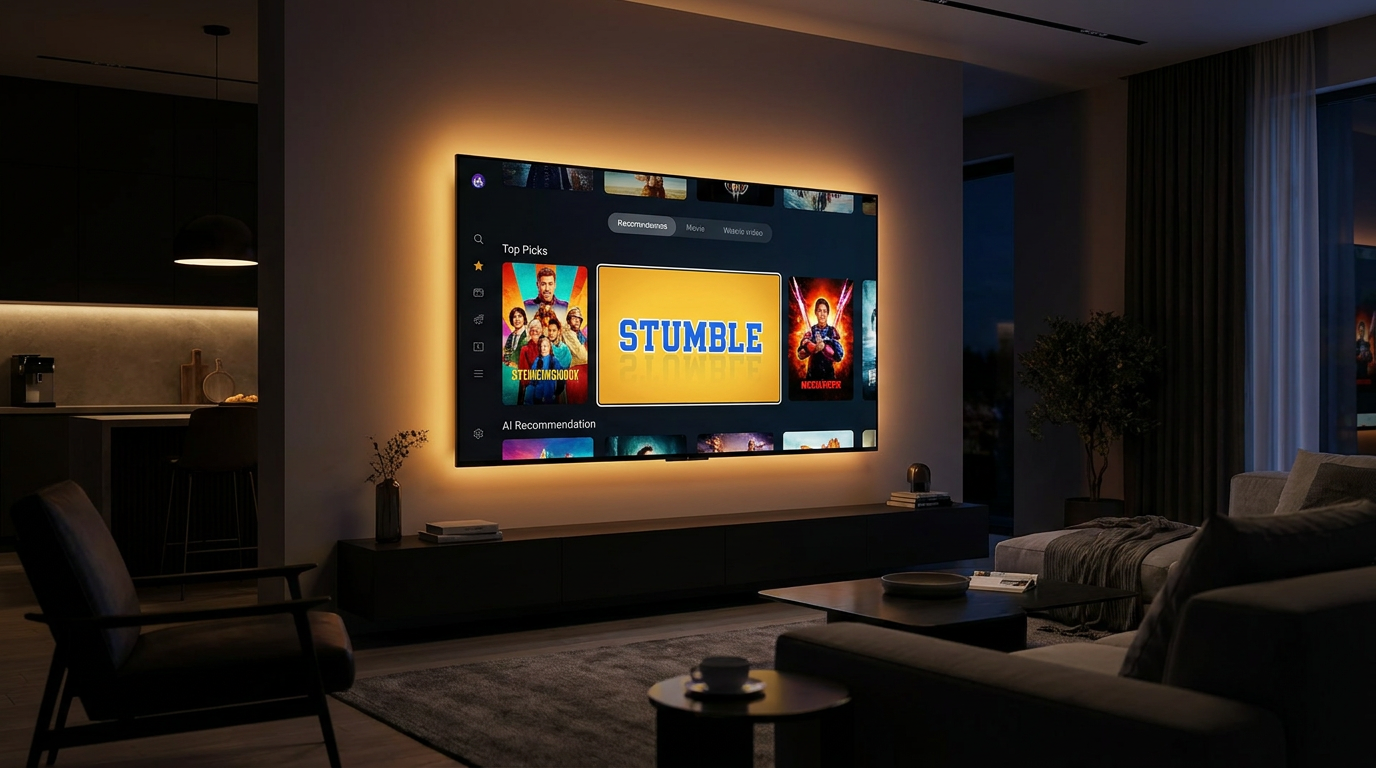
The new Roku interface abandons the traditional, static grid of isolated apps in favor of an AI-driven universal home screen. The system automatically curates and arranges content across all of a user's active subscriptions, pulling personalized recommendations into a single 'Top Picks' feed. By utilizing artificial intelligence to understand individual viewing habits, the platform dynamically updates the home screen to surface relevant movies, live sports, and creator content without ever requiring the user to open a single individual streaming app.[5][6]
This technological intervention is desperately needed in today's saturated entertainment market. According to industry data, the average streaming viewer spent up to 20 minutes just trying to find something to watch in 2025—a massive and frustrating increase from the 7.5 minutes spent searching in 2019. Platform developers are betting heavily that AI-driven personalization will finally reverse this trend, shrinking discovery time and getting viewers into their shows faster, effectively eliminating the dreaded endless scroll that has come to define modern television.[5]
For the streaming companies themselves, this era of unprecedented cooperation is driven by pure financial necessity rather than mere goodwill. 'Scale matters,' financial analysts point out, noting that consumers are increasingly happy to cancel niche services immediately after finishing a specific hit show. By building massive, unified bundles, platforms offer a library so wide and diverse that viewers have fewer reasons to ever hit the cancel button, stabilizing monthly subscription revenue in an otherwise highly volatile entertainment industry.[4]

Ultimately, the streaming industry has realized that everyday convenience is just as important as exclusive blockbuster content. By tearing down the digital walled gardens, slashing combined subscription prices, and using artificial intelligence to surface the best shows regardless of which studio produced them, the Great Rebundling is finally delivering the seamless, consumer-friendly television experience that the streaming era promised all along. The future of television is no longer about having the most apps on your screen; it is about having the smartest, most unified bundle.[3][4][5]
How we got here
Late 2019
The 'Streaming Wars' escalate as major studios launch their own standalone apps, fragmenting the market.
2024
Disney and Warner Bros. Discovery announce a landmark partnership to bundle Disney+, Hulu, and Max.
2025
Viewer fatigue peaks, with the average user spending 20 minutes per session just searching for content.
June 2026
Roku launches an AI-driven universal home screen, while Paramount and Disney accelerate app consolidations.
Viewpoints in depth
Consumer Advocates
Celebrate the return of bundled pricing and unified interfaces that save viewers time and money.
Consumer advocacy groups and tech reviewers are largely praising the shift toward consolidation. For years, they have warned that the fragmentation of the streaming market was creating an unsustainable financial burden on households, effectively recreating the high costs of traditional cable but with worse user interfaces. By offering massive discounts on mega-bundles and integrating libraries into single apps, advocates argue that the industry is finally putting the viewer's experience first. They highlight that unified billing and universal search are the exact features consumers have been demanding since the streaming wars began.
Industry Analysts
View consolidation as a necessary survival tactic to reduce subscriber churn and achieve profitability.
Financial analysts and media executives view the 'Great Rebundling' not as a charitable consumer initiative, but as a mandatory survival mechanism. The standalone streaming model proved incredibly expensive to maintain, with platforms spending billions on original content only to see users cancel their subscriptions the moment a hit show ended. Analysts argue that scale is the only path to profitability. By locking users into discounted, multi-service bundles, platforms drastically reduce their churn rates. The strategy guarantees a steady, predictable stream of monthly revenue, which is essential to offset the massive costs of modern television production.
What we don't know
- Whether the discounted bundle prices will eventually creep back up to match traditional cable costs.
- How smaller, independent streaming platforms will survive in a market dominated by three or four mega-bundles.
Key terms
- The Great Rebundling
- The industry trend of competing streaming services partnering to offer combined subscriptions at a discount, mimicking traditional cable packages.
- Churn Rate
- The percentage of subscribers who cancel their streaming service during a given period, often after finishing a specific show.
- Universal Search
- A feature that allows users to search for a movie or show once and see results across all their installed streaming apps simultaneously.
Frequently asked
Will I lose my standalone Hulu app?
Industry reports indicate Disney plans to sunset the standalone Hulu app by the end of 2026, migrating all of its content directly into the Disney+ platform.
How much does the new mega-bundle save?
The combined Disney+, Hulu, and Max bundle saves subscribers roughly 42% compared to paying for all three services individually.
What is Roku changing on its home screen?
Roku is introducing an AI-driven interface that curates content from all your subscribed apps into a single, unified discovery feed, reducing the need to open individual apps.
Sources
Source coverage
6 outlets
3 viewpoints surfaced





[1]CNETIndustry Analysts
Best Streaming Services of 2026: Netflix, Disney Plus, Max and More
Read on CNET →[2]Business InsiderConsumer Advocates
Best streaming deals and bundles (2026)
Read on Business Insider →[3]IGNConsumer Advocates
These Streaming Bundles Are Worth the Monthly Cost
Read on IGN →[4]Hargreaves LansdownIndustry Analysts
Streaming wars: why scale is back at the centre of the story
Read on Hargreaves Lansdown →[5]RokuPlatform Developers
Streaming Predictions 2026: TV gets way more personalized
Read on Roku →[6]Michael SavesConsumer Advocates
June 2026 Streaming News: Roku Update, Hulu App, Paramount Merger
Read on Michael Saves →

Every angle. Every day.
Get entertainment stories with full source coverage and perspective breakdowns delivered to your inbox.