
Stem Cell Transplant Banishes Severe Autoimmune Disease for 15 Years in Landmark Study
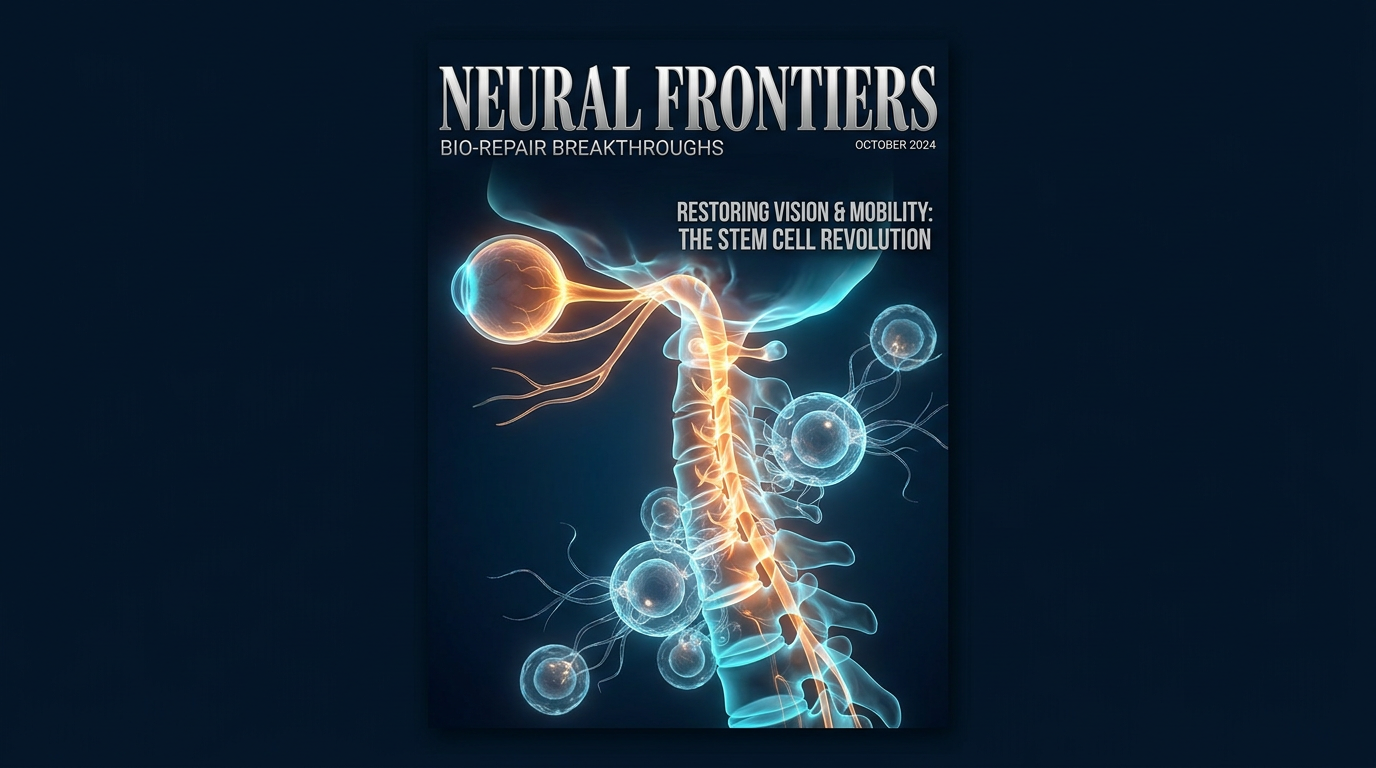
Two patients with a devastating neurological autoimmune disorder have remained completely symptom-free for over 15 years after receiving a donor stem-cell transplant that entirely replaced their immune systems.
By Factlen Editorial Team
- Clinical Researchers
- Focus on the biological mechanism, the eradication of AQP4 antibodies, and the proof-of-concept for allogeneic transplants.
- Patient Advocates
- Focus on the human impact, escaping the financial and physical burden of lifelong immunosuppressants, and regaining mobility.
- Medical Safety Monitors
- Emphasize the severe risks of the conditioning regimen and graft-versus-host disease, urging caution before widespread adoption.
What's not represented
- · Health Insurance Providers
- · Patients with mild NMOSD
Why this matters
Autoimmune diseases are traditionally viewed as lifelong, incurable conditions managed only through expensive and taxing immunosuppressants. This 15-year milestone provides concrete proof-of-concept that replacing a defective immune system with a healthy donor's cells can offer a permanent, medication-free cure for even the most severe neurological attacks.
Key points
- Two patients with severe NMOSD have been in remission for over 15 years following an allogeneic stem-cell transplant.
- The procedure entirely replaced their defective immune systems with healthy donor cells.
- Neither patient has required immunosuppressive medication since recovering from the transplant.
- The treatment successfully eradicated the AQP4 autoantibodies responsible for the disease.
- Due to severe risks like graft-versus-host disease, the procedure is currently reserved for highly refractory cases.
- The success provides a proof-of-concept for treating other severe autoimmune diseases like multiple sclerosis.
For millions of people living with severe autoimmune disorders, the medical consensus has long offered a grim reality: these conditions can be managed, but never truly cured. The immune system, once it learns to attack the body's own tissues, rarely forgets. But a landmark long-term study published this week in the journal Med and highlighted by Nature has shattered that assumption. Two patients suffering from a devastating neurological condition have now remained entirely symptom-free for more than 15 years after undergoing a radical procedure to entirely replace their immune systems.[1][5]
The patients were suffering from neuromyelitis optica spectrum disorder (NMOSD), a rare and aggressive disease that relentlessly targets the central nervous system. By utilizing an allogeneic hematopoietic stem-cell transplant—a procedure that wipes out the patient's defective immune system and rebuilds it using stem cells from a healthy donor—researchers achieved what amounts to a functional cure. More than a decade and a half later, neither patient shows any trace of the disease-causing antibodies that once threatened to paralyze them.[1][3]
To understand the magnitude of this 15-year milestone, one must understand the sheer brutality of NMOSD. Often misdiagnosed in its early stages as multiple sclerosis, NMOSD is characterized by severe, recurrent inflammatory attacks. The immune system mistakenly identifies the body's own neural infrastructure as a foreign invader, launching coordinated assaults primarily against the optic nerves and the spinal cord. These attacks manifest as sudden episodes of profound vision loss, excruciating eye pain, intractable vomiting, and progressive muscle weakness that can rapidly escalate to full paralysis.[2][6]
At the biological level, the disease is driven by a highly specific malfunction. In the vast majority of NMOSD patients, the immune system produces an autoantibody known as AQP4-IgG. This rogue antibody specifically targets aquaporin-4, a crucial water channel protein located on the surface of star-shaped brain cells called astrocytes. When the antibodies bind to these channels, they trigger a massive inflammatory cascade that strips away the protective myelin sheath surrounding nerves, leaving irreversible neurological scarring in its wake.[4][6]

The prognosis for NMOSD, particularly before the advent of modern targeted therapies, has historically been devastating. Because the disease follows a relapsing course in more than 90 percent of patients, the cumulative damage from each attack builds rapidly. According to data from the National Institutes of Health, without effective intervention, approximately 50 percent of patients with NMOSD are confined to a wheelchair within five years of their initial onset, and many face permanent blindness.[6]
The standard of care for preventing these catastrophic relapses relies heavily on broad-spectrum immunosuppressants and, more recently, targeted monoclonal antibodies. While these drugs can significantly reduce the frequency of attacks, they come with a heavy burden. Patients are tethered to lifelong, highly expensive medication regimens—sometimes costing hundreds of thousands of dollars annually—that leave them perpetually vulnerable to opportunistic infections. Furthermore, for a subset of patients with highly refractory disease, these drugs simply fail to halt the progression.[4][7]
It was this failure of standard therapies that led doctors to attempt a drastic intervention for a man with severe NMOSD in 2009, and a woman with a similarly aggressive case in 2010. The medical team opted for an allogeneic hematopoietic stem-cell transplant. Unlike autologous transplants, where a patient's own stem cells are harvested, cleaned, and returned, an allogeneic transplant relies on blood-forming stem cells taken from a completely different, healthy donor. The goal was not merely to suppress the immune system, but to evict it entirely and move a new one in.[1][5]
The procedure is grueling and carries immense physiological risks. Before the donor cells could be introduced, the patients had to undergo an intense "conditioning" regimen. Doctors administered a punishing combination of chemotherapy drugs, specifically fludarabine and treosulfan, alongside B-cell depleting antibody therapies. This chemical bombardment was designed to systematically hunt down and eliminate the patients' malfunctioning immune cells, effectively erasing the biological memory that was driving the autoimmune attacks.[8]
The procedure is grueling and carries immense physiological risks.
This conditioning phase brings the patient to the brink of total vulnerability. For a period of several weeks, the patients possessed virtually no immune defense, requiring strict isolation in specialized hospital wards to protect them from everyday pathogens that would normally be harmless but could now prove fatal. It is a high-stakes medical tightrope walk, balancing the need to completely eradicate the disease-causing cells against the immediate threat of lethal infection.[1][4]

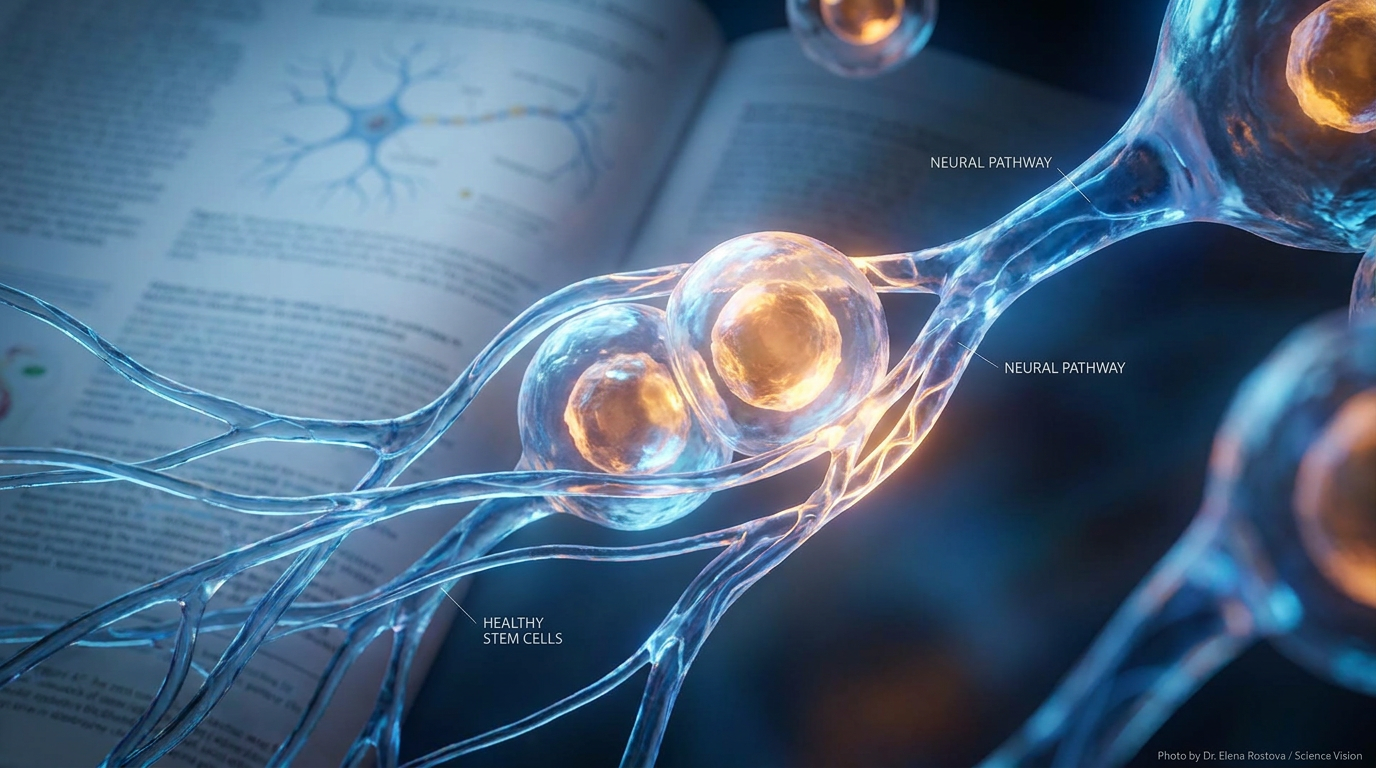
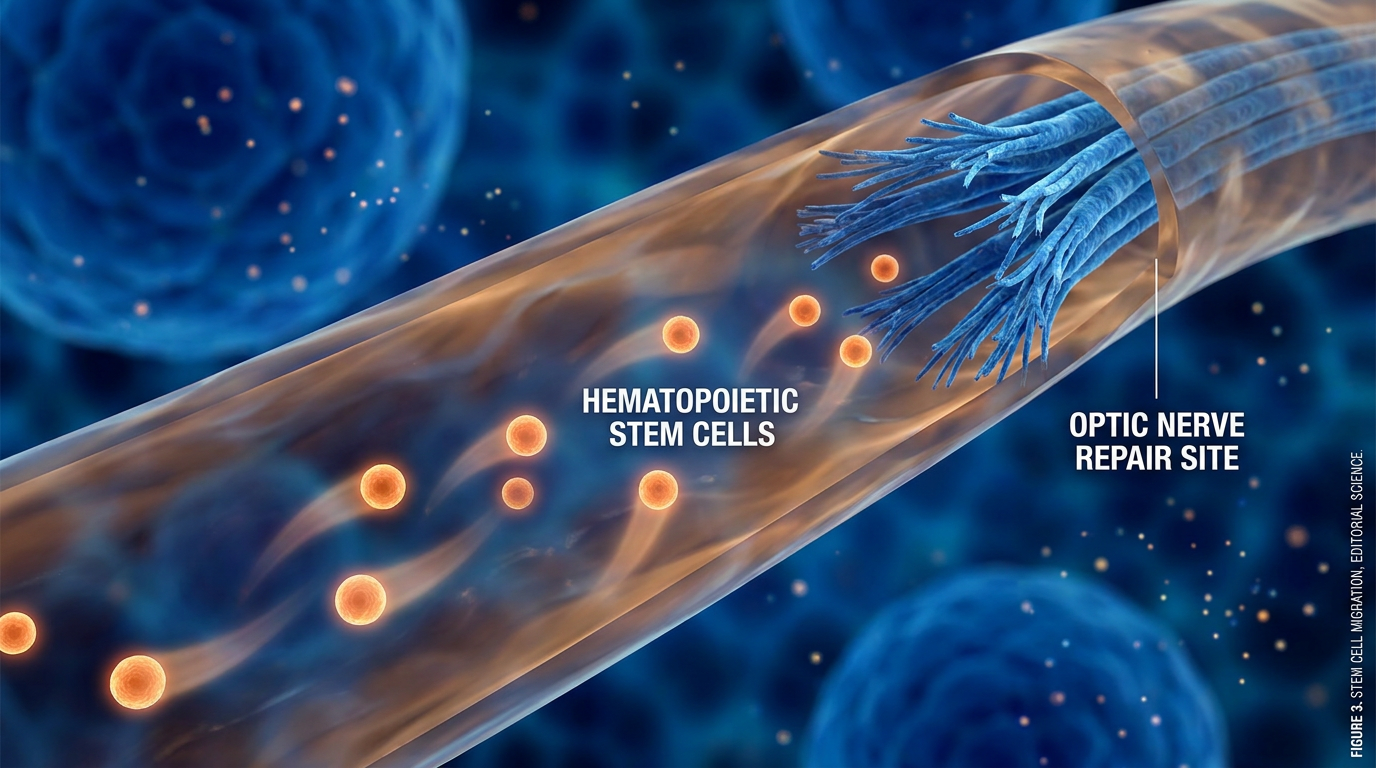
Once the defective immune system was cleared, the rebuilding phase began. The male patient received a single infusion of stem cells donated by his healthy sister, while the female patient received cells from a matched, unrelated donor. These microscopic progenitor cells migrated to the empty spaces within the patients' bone marrow and began the slow, miraculous work of generating an entirely new repertoire of white blood cells, T-cells, and B-cells—a fresh immune system that had never learned to attack aquaporin-4.[3][5]
The clinical outcomes over the subsequent 15 years have exceeded the most optimistic expectations of the research team. Following their recovery from the transplant procedure, both patients entered a deep and sustained remission. Regular blood tests over the past decade and a half have confirmed a stunning biological reality: the AQP4 autoantibodies that once ravaged their nervous systems have completely vanished and never returned. The source of the autoimmune attack was not just suppressed; it was eradicated.[1][4]
The human impact of this biological reset has been profound. The male patient, whose neurological condition was rapidly deteriorating prior to the 2009 transplant, saw his disability stabilize and improve enough to resume a completely normal life, eventually starting a family. The female patient regained significant motor function in her arms. Crucially, neither patient has required a single dose of immunosuppressive medication to manage their NMOSD since recovering from the transplant.[2][3]
This long-term success highlights a critical distinction in the field of cellular therapy. Previous clinical trials have explored autologous (self-donated) stem cell transplants for NMOSD and multiple sclerosis, often achieving several years of remission. However, because autologous transplants return the patient's own genetic material, the underlying predisposition to the autoimmune disease remains, and relapses frequently occur after five to ten years. The allogeneic approach, by introducing donor genetics, appears to offer a permanent fix.[5][7]
Despite these unprecedented results, researchers are urging caution, emphasizing that this is not an immediate silver bullet for all autoimmune patients. The transparent uncertainty lies in the severe risks inherent to allogeneic transplants. The most prominent danger is graft-versus-host disease (GVHD), a potentially fatal complication where the newly minted donor immune system recognizes the patient's own organs and tissues as foreign and launches a systemic attack against them.[1][2]

To mitigate this risk, both patients in the study required additional prophylactic medications during the engraftment phase to ensure the new immune cells learned to tolerate their new host. While both navigated this dangerous window successfully, the mortality rate associated with allogeneic transplants—stemming from either severe infection during the conditioning phase or subsequent GVHD—remains high enough that the procedure is currently reserved only for the most severe, treatment-resistant cases.[1][8]
The publication of these 15-year results in Med is expected to catalyze a new wave of larger, multi-center clinical trials. Medical safety monitors and regulatory bodies will require data from dozens, if not hundreds, of patients to fully quantify the risk-to-reward ratio. Researchers need to determine exactly which patient profiles are robust enough to survive the conditioning regimen and desperate enough to warrant the risks of graft-versus-host disease.[1][6]
Beyond NMOSD, this proof-of-concept sends a powerful ripple through the broader field of immunology. If a donor stem cell transplant can permanently cure a severe, antibody-driven disease of the central nervous system, it opens theoretical doors for treating highly refractory cases of other devastating autoimmune conditions, such as severe systemic sclerosis, advanced lupus, and aggressive forms of multiple sclerosis that fail to respond to standard biologic therapies.[4][7]
For now, the medical community is celebrating a rare and definitive victory. In a field defined by managing chronic decline, the ability to offer two patients 15 years of healthy, medication-free life represents a monumental paradigm shift. It proves that the immune system's most destructive errors are not always permanent sentences, and that with enough scientific audacity, the body can be taught to heal itself by starting entirely anew.[1][3]
How we got here
2009
The first patient, a man with rapidly deteriorating NMOSD, receives an allogeneic stem cell transplant from his sister.
2010
A second patient, a woman with severe disease, undergoes the same procedure using cells from an unrelated donor.
2019
Early data from autologous (self-donated) stem cell trials shows promise for NMOSD, but relapses remain a long-term issue.
June 2026
Researchers publish 15-year follow-up data in the journal Med, confirming both allogeneic transplant patients remain completely symptom-free.
Viewpoints in depth
Clinical Researchers
A paradigm shift in autoimmune treatment.
For immunologists and neurologists, the 15-year data represents a holy grail: the complete and durable eradication of a disease-causing autoantibody. Researchers emphasize that the success of the allogeneic (donor) approach, as opposed to autologous (self) transplants, suggests that replacing the genetic architecture of the immune system is necessary to permanently cure certain refractory autoimmune conditions. They view this not just as a win for NMOSD, but as a foundational blueprint for tackling other severe immune disorders.
Patient Advocates
Freedom from lifelong medical burdens.
Advocacy groups for rare neurological diseases highlight the profound quality-of-life improvements demonstrated by these two patients. Beyond halting the physical paralysis and blindness caused by NMOSD, the transplant liberated the patients from the crushing financial and psychological weight of lifelong immunosuppressive therapies. Advocates argue that while the upfront risks are high, the prospect of a true, medication-free cure is a beacon of hope for patients who are currently failing standard treatments.
Medical Safety Monitors
High risks require strict patient selection.
Bioethicists and clinical safety monitors urge immense caution, pointing out that allogeneic stem cell transplants remain one of the most dangerous procedures in modern medicine. The dual threats of lethal infections during the chemotherapy conditioning phase and the long-term risk of graft-versus-host disease (GVHD) mean this procedure carries a significant mortality rate. They argue that until the conditioning regimens become safer, this functional cure must be strictly reserved for patients who have exhausted all other pharmacological options and face imminent, severe disability.
What we don't know
- Whether the conditioning regimen can be made safe enough to offer this treatment to patients with moderate autoimmune disease.
- Exactly how many other autoimmune conditions (like lupus or MS) will respond as definitively to allogeneic transplants.
- The long-term success rate when the procedure is scaled up to hundreds of patients in multi-center trials.
Key terms
- Neuromyelitis Optica Spectrum Disorder (NMOSD)
- A rare, severe autoimmune disease where the immune system mistakenly attacks the optic nerves and spinal cord, leading to vision loss and paralysis.
- Allogeneic stem-cell transplant
- A medical procedure that replaces a person's faulty immune system with healthy blood-forming stem cells taken from a different donor.
- Autologous stem-cell transplant
- A procedure that uses a patient's own harvested stem cells to rebuild their immune system, which carries a higher risk of autoimmune relapse.
- Graft-versus-host disease (GVHD)
- A potentially severe complication of donor transplants where the newly transplanted immune cells recognize the patient's body as foreign and attack it.
- Aquaporin-4 (AQP4)
- A water channel protein in the central nervous system that is mistakenly targeted and destroyed by rogue antibodies in most NMOSD patients.
Frequently asked
Is this treatment a permanent cure for NMOSD?
While doctors hesitate to use the word 'cure' definitively, the two patients in this study have remained completely symptom-free and off all NMOSD medications for over 15 years, representing a functional cure.
Why isn't this available to all autoimmune patients?
The procedure requires wiping out the patient's existing immune system with intense chemotherapy, which carries a high risk of fatal infections and graft-versus-host disease. It is currently too dangerous for patients whose disease can be managed with standard drugs.
What is the difference between this and previous stem cell trials?
Previous trials mostly used 'autologous' transplants, meaning the patients received their own cleaned stem cells. This new study used 'allogeneic' transplants (donor cells), which appears to permanently remove the genetic defect causing the disease.
Will this work for Multiple Sclerosis (MS)?
Researchers believe the underlying principle—replacing a defective immune system with a healthy donor system—could theoretically work for severe, treatment-resistant cases of MS and other autoimmune diseases, though clinical trials are needed to confirm safety and efficacy.
Sources
Source coverage
8 outlets
3 viewpoints surfaced





[1]NatureClinical Researchers
Stem cells banish severe autoimmune disease for 15 years
Read on Nature →[2]QazinformPatient Advocates
Rare autoimmune disease halted for 15 years after stem-cell transplant
Read on Qazinform →[3]Positron TodayPatient Advocates
Stem cells banish severe autoimmune disease for 15 years
Read on Positron Today →[4]Pharmacy TimesMedical Safety Monitors
Stem cell transplant reverses disabling MS-like disease
Read on Pharmacy Times →[5]MedClinical Researchers
Allogeneic hematopoietic stem-cell transplantation for NMOSD: A 15-year follow-up
Read on Med →[6]National Institutes of HealthMedical Safety Monitors
Neuromyelitis Optica Spectrum Disorder: Pathogenesis and Treatment
Read on National Institutes of Health →[7]Pain News NetworkPatient Advocates
Stem Cell Transplant Reverses Rare Autoimmune Disease
Read on Pain News Network →[8]Masters of LongevityMedical Safety Monitors
Stem cells banish severe autoimmune disease for 15 years
Read on Masters of Longevity →

More in science
See all 6 stories →Neuroprosthetics
Brain-Computer Interfaces Cross the Threshold to Independent, Wireless Home Use
8 sources

Stem Cell Therapy
How a Stem Cell Transplant Banished a Severe Autoimmune Disease for 15 Years
7 sources
Stem Cell Therapy
Donor Stem Cells Halt Severe Autoimmune Disease for 15 Years in Landmark Study
7 sources
Cellular Therapy
Donor Stem Cells Banish Severe Autoimmune Disease for 15 Years in Landmark Study
5 sources
Every angle. Every day.
Get science stories with full source coverage and perspective breakdowns delivered to your inbox.