
Stellantis to Build Chinese EVs in Europe to Offset Tariffs and Underused Factory Capacity
By assembling Leapmotor and Dongfeng vehicles in its Spanish and French factories, Stellantis is legally bypassing the EU's steep import tariffs on Chinese electric vehicles. The strategy aims to utilize idle capacity while introducing aggressively priced EVs to the European market.
By Tao Yang

Share this story
The European Union spent 2024 building a massive tariff wall designed to keep heavily subsidized Chinese electric vehicles from flooding the continent. Now, the world's fourth-largest automaker is opening the gates from the inside. Stellantis—the parent company of legacy European brands including Peugeot, Fiat, and Opel—is actively retooling its European factories to assemble Chinese-designed EVs. The move effectively bypasses the very trade barriers that European regulators erected to protect the domestic auto industry, marking a radical shift in how Western automakers are responding to the influx of cheap Chinese technology.[1]
The strategy centers on Leapmotor, a fast-growing Chinese EV startup. In late 2023, Stellantis acquired a 20 percent stake in the company for €1.5 billion. Crucially, the deal established Leapmotor International, a joint venture in which Stellantis holds a 51 percent controlling stake and exclusive rights to build, export, and sell Leapmotor vehicles outside of China. By assembling these cars at its own underutilized European plants, Stellantis transforms them from "Chinese imports" into "European-made" vehicles, legally dodging EU import tariffs that can reach up to 45.3 percent.[2]
The commercial reality of this loophole hit the European market this spring. In April 2026, Leapmotor opened European orders for the B05, a fully electric compact hatchback. Priced at just €26,900, the B05 significantly undercuts European-built rivals, coming in thousands of euros cheaper than the Volkswagen ID.3 and the Renault Mégane E-Tech. The vehicle is currently being assembled at Stellantis's Figueruelas plant in Zaragoza, Spain, allowing it to land at a price point that pure Chinese imports like BYD and MG struggle to match under the new tariff regime.
The Zaragoza operation represents just the first phase of a broader manufacturing pivot. Production of the Leapmotor B10 SUV is slated to begin at the Spanish facility in August 2026, with an initial annual volume of 40,000 units. By 2027, the plant is expected to produce four distinct Leapmotor models. To support this localized assembly, European supply chains are already adapting; a new joint venture, Lieder Automotive, will begin manufacturing chassis components for the B10 in the Basque region this July, feeding directly into the Stellantis assembly line.
The blueprint is also expanding beyond the Leapmotor partnership. In May 2026, Stellantis announced a separate joint venture with state-owned Chinese automaker Dongfeng. This agreement will see Dongfeng's premium Voyah-branded electric vehicles assembled at a Stellantis plant in Rennes, France. Much like the Spanish operation, the French assembly line allows Dongfeng to sidestep import duties while giving Stellantis a much-needed production boost for an underused factory that currently only manufactures the Citroën C5 Aircross.
To understand the financial incentive behind these moves, one must look at the sheer height of the EU's tariff wall. Implemented in October 2024, the European Commission's countervailing duties were intended to level the playing field against Chinese state subsidies.
On top of a standard 10 percent import duty, Chinese-made EVs face additional levies: 17 percent for BYD, 18.8 percent for Geely, and up to 35.3 percent for automakers like SAIC. But the rules stipulate that vehicles assembled within the EU are exempt, creating a massive margin advantage for localized production.[2]
Stellantis CEO Carlos Tavares has been highly vocal about his opposition to the EU's protectionist approach, arguing that tariffs only breed complacency. He has repeatedly stated that European automakers must "fight to stay competitive" rather than hiding behind regulatory walls. By importing Chinese cell-to-chassis battery technology and component cost structures, Stellantis is forcing its own European brands to compete with Chinese pricing on their home turf, adhering to Tavares's philosophy that survival requires matching the efficiency of the disruptors.[1]
Industry analysts have dubbed the Stellantis maneuver a "Trojan Horse" strategy. Rather than defending against the Chinese EV influx, the automaker is using it as an offensive pricing weapon against its traditional rivals. The Leapmotor vehicles are distributed through Stellantis's existing network of over 800 European dealerships. This means that Volkswagen, Renault, and BMW are no longer just fighting Chinese imports; they are fighting Stellantis distributing Chinese-engineered products at Chinese price points through established European supply chains.
However, the strategy carries significant internal risks for Stellantis. The Leapmotor B05 is priced roughly €13,000 lower than Stellantis's own Peugeot E-308 in certain markets. While the joint venture captures market share from external rivals, it threatens to severely cannibalize sales from Stellantis's legacy European brands. The company's executive team is effectively betting that capturing the budget-conscious EV buyer with a Leapmotor is better than losing that customer entirely to a BYD Dolphin or an MG4.
Despite the EU's tariff wall, Chinese brands captured roughly 9 percent of the European electric vehicle market in 2025, driven by competitive pricing and advanced software configurations. With Stellantis now actively facilitating local production, that footprint is expected to accelerate rapidly. The move also places immense pressure on other European automakers to find their own cost-saving partnerships, fundamentally rewriting how vehicles are engineered, sourced, and priced on the continent.
The long-term viability of this strategy now rests in the hands of European regulators. The European Commission is reportedly drafting new legislation aimed at tightening localization rules, potentially requiring EVs to source at least 70 percent of their components from within the EU to qualify for tariff exemptions. Until those rules materialize and close the assembly loophole, Stellantis's hybrid approach stands as the most aggressive—and controversial—adaptation to the new era of global automotive trade.[2]
Key points
- Stellantis is using its European factories to assemble Chinese-designed EVs from Leapmotor and Dongfeng.
- Local assembly allows the vehicles to bypass EU import tariffs that can reach up to 45.3 percent.
- The Leapmotor B05 hatchback is launching at €26,900, significantly undercutting European-built rivals.
- Production of the Leapmotor B10 SUV will begin in Zaragoza, Spain, in August 2026.
Unanswered questions
- Whether the European Commission will introduce stricter local-content rules that close the assembly loophole.
- How severely the budget-priced Leapmotor models will cannibalize sales from Stellantis's own legacy brands like Peugeot and Fiat.
- If other major European automakers will follow suit and form similar localized assembly joint ventures with Chinese rivals.
How we got here
Oct 2023
Stellantis acquires a 20% stake in Chinese EV startup Leapmotor for €1.5 billion.
Oct 2024
The European Union implements countervailing duties on Chinese EVs, pushing total tariffs as high as 45.3%.
Apr 2026
Leapmotor opens European orders for the B05 hatchback, priced aggressively at €26,900.
May 2026
Stellantis announces a separate joint venture to build Dongfeng's Voyah EVs in France.
Aug 2026
Scheduled start of production for the Leapmotor B10 SUV at Stellantis's Zaragoza plant in Spain.
- Stellantis Strategy
- Argues that protectionism breeds complacency and that partnering with Chinese automakers is the only way to offer affordable EVs while utilizing idle European factories.
- European Regulators
- Maintain that tariffs are necessary to counter unfair state subsidies in China and protect domestic manufacturing jobs from being undercut.
- Chinese Automakers
- View European joint ventures as the most viable path to bypass trade barriers and secure a permanent, localized foothold in Western markets.
Perspectives this story doesn't cover
- European Auto Workers Unions
- Competing European Automakers (VW, Renault)
Sources
Source coverage
2 outlets
3 viewpoints surfaced


- [1]The GuardianStellantis Strategy
EV prices in UK and EU not likely to dive due to Chinese rivalry, says Xpeng boss
Read on The Guardian → - [2]INGEuropean Regulators
Web of EU-tariffs add up to 45% to import prices
Read on ING →
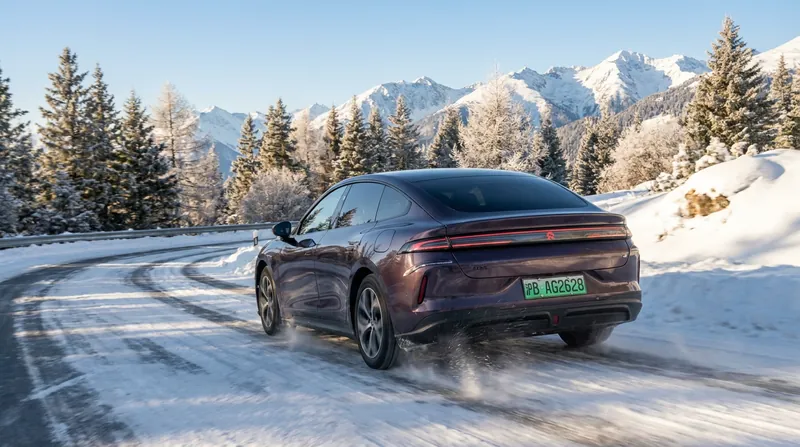
More in Automotive & Transportation
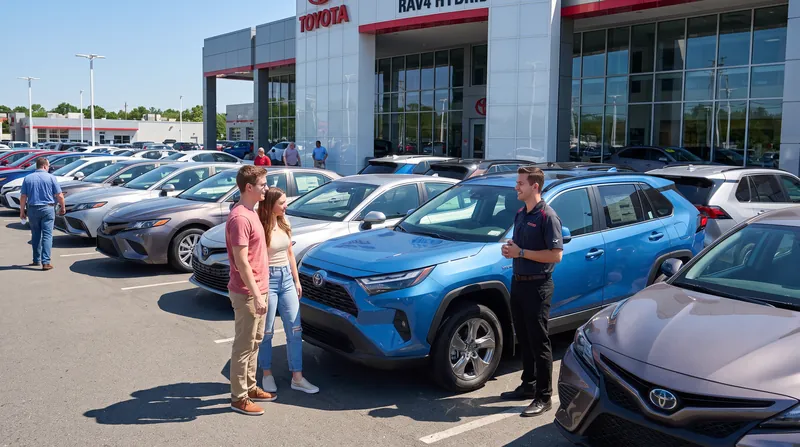
See all →Hybrid Adoption
Toyota's Electrified Vehicles Surpass 50% of Quarterly Global Production Volume
5 sources
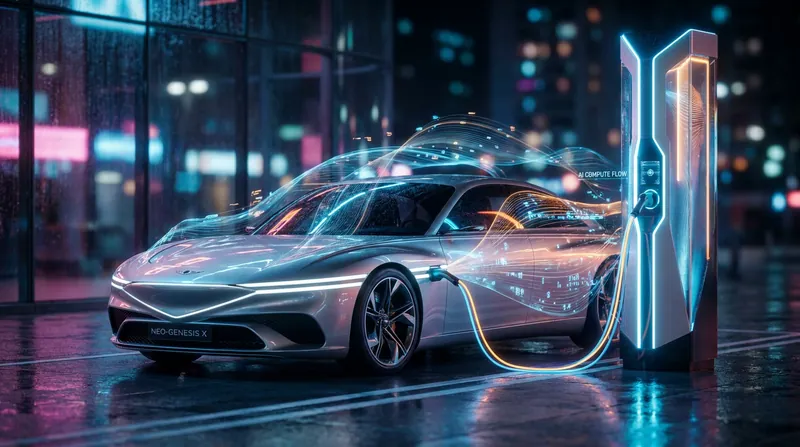
AI Infrastructure
CATL Chairman Proposes Repurposing 40 Million EVs as Distributed AI Compute Infrastructure
2 sources
EV Mandate
EU Council Proposes Rollback of 2035 EV Mandate, Allowing 10% Emissions Offset
6 sources
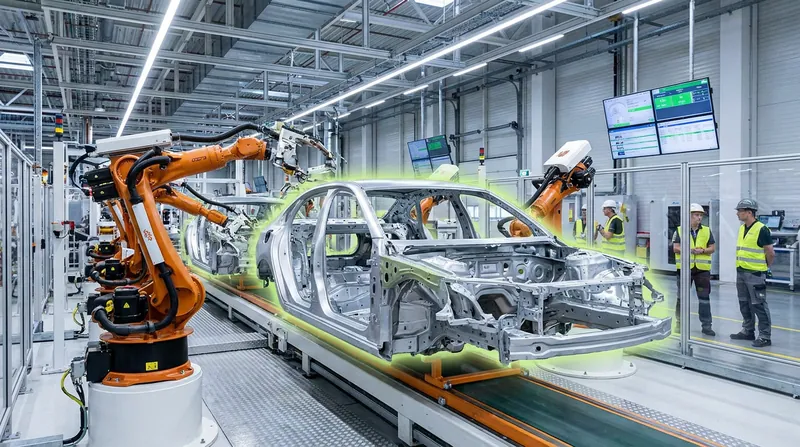
Battery Chemistry
CATL Begins Mass Production of Sodium-Ion EV Batteries, Targeting Cost and Extreme Cold Performance
2 sources
Comments
Every angle. Every day.
Get Automotive & Transportation stories with full source coverage and perspective breakdowns, free every day.