
Stablecoins Surpass $315 Billion Market Cap as Global Adoption Transforms Cross-Border Payments
Fueled by regulatory clarity from the U.S. GENIUS Act, stablecoin transaction volumes hit a record $28 trillion in early 2026, driven by corporate treasuries and emerging markets.
By Factlen Editorial Team
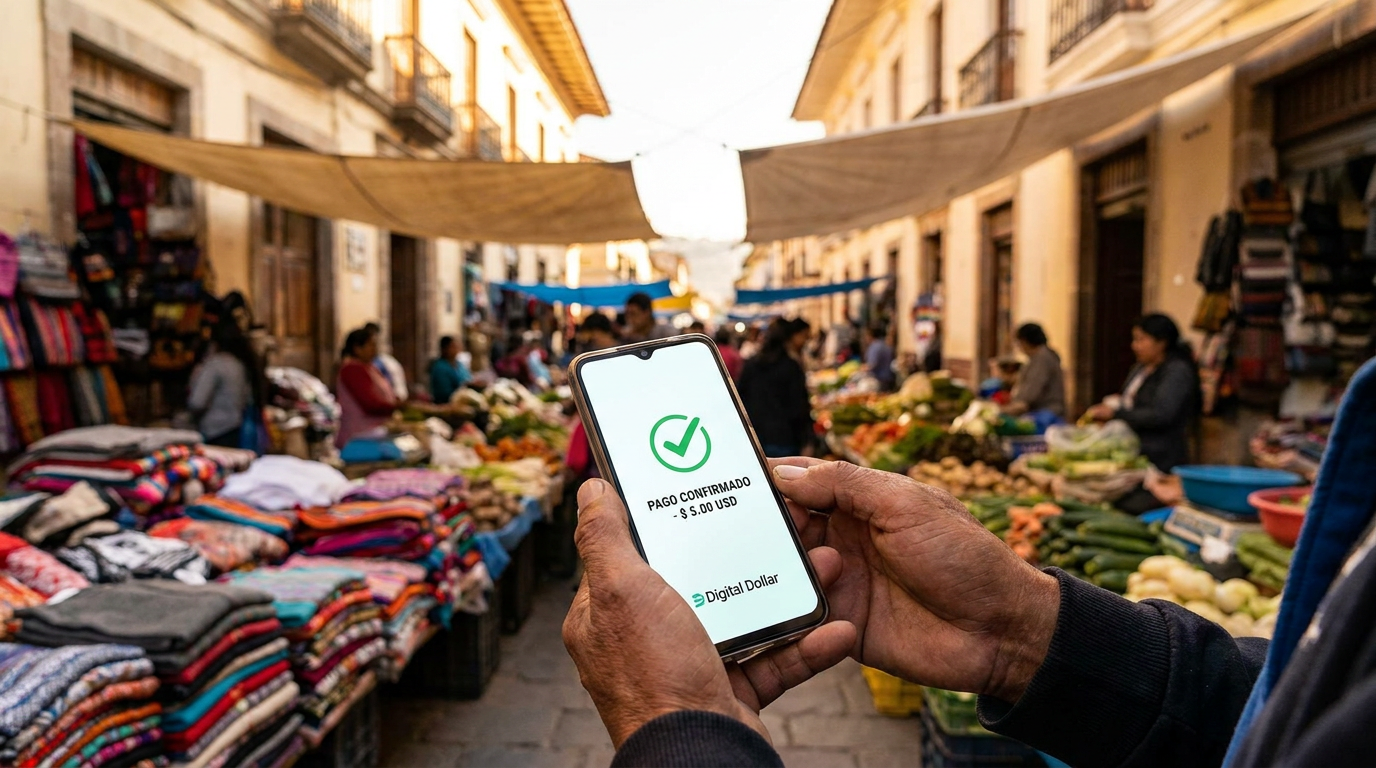
- Emerging Market Users
- Rely on stablecoins as a vital tool to access U.S. dollars, bypass high remittance fees, and hedge against local inflation.
- Corporate Treasurers
- Value stablecoins for their ability to drastically reduce the cost and settlement time of cross-border B2B payments.
- Global Regulators
- Focus on ensuring that stablecoin reserves are fully backed and do not introduce systemic risks to traditional financial markets.
What's not represented
- · Traditional Correspondent Banks
- · Retail Consumers in Developed Nations
Why this matters
The maturation of stablecoins means cross-border payments, supplier settlements, and remittances are becoming nearly instantaneous and virtually free. For businesses and families in emerging markets, this bypasses the high fees and multi-day delays of the traditional correspondent banking system.
Key points
- Stablecoins surpassed a $315 billion global market capitalization in mid-June 2026.
- Transaction volumes hit a record $28 trillion in the first quarter of the year.
- The U.S. GENIUS Act of 2025 provided the regulatory clarity needed for corporate treasuries to adopt the technology.
- Latin America leads global adoption, with 71% of crypto users relying on stablecoins for cross-border needs.
Stablecoins have officially crossed the $315 billion market capitalization threshold in mid-June 2026, marking a monumental shift in how global value is transferred. Once viewed primarily as a niche tool for cryptocurrency traders to park their assets between speculative bets, dollar-pegged digital currencies have matured into a foundational pillar of global finance. This milestone underscores a broader transition within the digital asset space: the move from volatile speculation to boring, highly efficient utility.[1][5]
The sheer scale of this utility is reflected in the network's throughput. In the first quarter of 2026 alone, stablecoin transaction volumes reached a staggering $28 trillion. To put that figure into perspective, it rivals the settlement volumes of major traditional payment networks like Visa and Mastercard. Companies across the globe are actively integrating these assets to handle creator payouts, supplier settlements, and seamless cross-border transfers, fundamentally bypassing the friction of the legacy correspondent banking system.[1][6][8]
Industry analysts point to a specific legislative catalyst for this explosive growth: the U.S. GENIUS Act of July 2025. Prior to the act, corporate treasurers were hesitant to hold significant capital on-chain due to the lingering trauma of unbacked algorithmic stablecoin collapses in previous years. The GENIUS Act mandated that all dollar-pegged digital assets operating within its purview be fully backed by U.S. dollars or short-term Treasuries, subject to strict auditing standards.[1][6]

By removing the existential dread of insolvency, the legislation provided the regulatory clarity that institutional players required. Consequently, 83% of surveyed organizations now report strong trust in stablecoin infrastructure, citing significant cost savings that directly boost their operational efficiency and profitability. Corporate treasuries are no longer just experimenting with blockchain technology; they are relying on it for daily liquidity management.[1][8]
While Wall Street focuses on the institutional plumbing, the most profound human impact is occurring in emerging markets. Latin America has emerged as the undisputed leader in global stablecoin adoption. According to recent data, 71% of cryptocurrency users in the region now rely on stablecoins for essential cross-border needs, including remittances and shielding their savings from local currency devaluation.[1][7]
While Wall Street focuses on the institutional plumbing, the most profound human impact is occurring in emerging markets.
For a family in Argentina or a freelance worker in Brazil, the ability to receive and hold digital dollars on a smartphone is not a speculative investment—it is an economic necessity. The technology allows them to bypass exorbitant remittance fees and the multi-day settlement delays that have historically penalized the unbanked and underbanked populations of the Global South.[7]

A similar dynamic is playing out across the Middle East and North Africa. Challenging economic circumstances and localized inflation have driven substantial adoption of crypto as a safe haven. Türkiye, serving as a critical bridge between Europe and Asia, now records nearly $200 billion in annual on-chain transactions. For these users, stablecoins provide a vital lifeline to the stability of the U.S. dollar without requiring access to a foreign bank account.[3]
The Organization for Economic Co-operation and Development recently highlighted this geographic divergence in adoption. While stablecoins represent only about 10% of the overall $2.6 to $3 trillion crypto market capitalization, they are the undisputed engine of global liquidity. The OECD notes that these assets are increasingly used to facilitate vital currency exchange and cross-border flows, especially in jurisdictions burdened by tight capital controls.[2]
However, this growing interconnectedness between crypto-assets and traditional financial markets is not without its challenges. Regulators continue to monitor the space for risks related to consumer protection, illicit financing, and cyber-threats. The sheer volume of U.S. Treasuries now held by stablecoin issuers also means that these digital asset companies are becoming significant players in the traditional sovereign debt markets, creating new macroeconomic linkages.[2][5][6]
As the $315 billion milestone settles into the rearview mirror, the narrative surrounding digital assets has fundamentally changed. The boring crypto revolution is exactly what the industry needed to achieve true mainstream financial integration. By successfully tokenizing the world's reserve currency and moving it at the speed of the internet, stablecoins have quietly built the upgraded financial rails that the global economy has been waiting for.[1][4]

How we got here
2022-2023
Algorithmic stablecoin collapses erode institutional trust in digital fiat alternatives.
July 2025
The U.S. passes the GENIUS Act, mandating strict 1-to-1 dollar or Treasury backing for stablecoins.
Q1 2026
Stablecoin transaction volumes surge to a record $28 trillion as corporate treasuries integrate the technology.
June 2026
The total global market capitalization of stablecoins surpasses the $315 billion milestone.
Viewpoints in depth
Corporate Treasurers
Focuses on the efficiency, cost reduction, and regulatory safety of digital dollars.
For multinational corporations, stablecoins are no longer an experimental technology but a necessary upgrade to financial plumbing. They argue that the $28 trillion in quarterly volume proves that blockchain-based settlements are faster, cheaper, and more transparent than the legacy correspondent banking system. The passage of the GENIUS Act provided the exact regulatory guardrails they needed to confidently hold and transfer billions of dollars on-chain without fear of algorithmic insolvency.
Emerging Market Users
Views stablecoins as an essential lifeline for remittances and inflation protection.
In regions like Latin America and MENA, the narrative is entirely divorced from Wall Street's efficiency gains. For these users, stablecoins represent an economic necessity. They argue that digital dollars provide a vital shield against local currency devaluation and offer a way to receive cross-border payments or remittances without losing high percentages to intermediary bank fees. For the unbanked, a smartphone wallet holding stablecoins is effectively a high-yield U.S. dollar savings account.
Global Regulators
Emphasizes the need for systemic safeguards as digital assets integrate with traditional finance.
While acknowledging the utility of stablecoins, international bodies like the OECD remain focused on systemic risk. They point out that as stablecoin issuers buy up massive quantities of U.S. Treasuries to back their tokens, they create new, untested linkages between crypto markets and sovereign debt. Regulators argue that continuous oversight, strict auditing, and robust cybersecurity mandates are essential to ensure that a localized digital exploit doesn't trigger a broader macroeconomic liquidity crisis.
What we don't know
- How traditional correspondent banks will adjust their fee structures and business models as corporate clients increasingly bypass them for on-chain settlements.
- Whether the European Union and Asian regulatory bodies will harmonize their stablecoin frameworks with the U.S. GENIUS Act to create a truly seamless global standard.
Key terms
- Stablecoin
- A digital currency pegged to a stable asset, like the U.S. dollar, designed to minimize price volatility.
- Market Capitalization
- The total value of all coins or tokens currently in circulation for a specific cryptocurrency.
- Correspondent Banking
- The traditional, often slow and expensive system where banks provide services to each other across international borders to move money.
- On-chain
- Transactions that occur and are permanently recorded directly on a public blockchain network.
- Remittance
- Money sent by a person working abroad back to their family or home country.
Frequently asked
What is a stablecoin?
A stablecoin is a type of cryptocurrency designed to maintain a fixed value, typically pegged 1-to-1 with a fiat currency like the U.S. dollar, by holding equivalent reserves in traditional banks.
What was the GENIUS Act?
The U.S. GENIUS Act, passed in July 2025, is legislation that requires all dollar-pegged stablecoins to be fully backed by actual U.S. dollars or short-term Treasury bills, ensuring they cannot collapse like past algorithmic tokens.
Why are stablecoins so popular in Latin America?
Many users in Latin America face high local inflation and expensive remittance fees. Stablecoins allow them to easily hold digital U.S. dollars and receive money from abroad almost instantly with minimal transaction costs.
How much money is moving through stablecoins?
In the first quarter of 2026 alone, stablecoin transaction volumes reached $28 trillion, rivaling the volume handled by traditional global payment networks.
Sources
Source coverage
8 outlets
3 viewpoints surfaced








[1]GlobalCrypto.tvEmerging Market Users
$315 Billion Stablecoins Milestone: How the GENIUS Act Transforms Payments and Adoption
Read on GlobalCrypto.tv →[2]OECDGlobal Regulators
Crypto-asset markets have grown rapidly in the past decade, with stablecoins playing an increasingly important role
Read on OECD →[3]CointelegraphEmerging Market Users
Istanbul Blockchain Week returns in June 2026 amid surging crypto adoption in Türkiye
Read on Cointelegraph →[4]ForbesCorporate Treasurers
10 Best Cryptocurrencies To Invest In: Institutional Adoption Grows
Read on Forbes →[5]ReutersGlobal Regulators
Stablecoin market cap surpasses $315 billion as global adoption accelerates
Read on Reuters →[6]BloombergCorporate Treasurers
GENIUS Act Fuels Stablecoin Boom; Q1 Volumes Hit $28 Trillion
Read on Bloomberg →[7]Financial TimesEmerging Market Users
Latin America leads the world in stablecoin reliance for cross-border payments
Read on Financial Times →[8]Wall Street JournalCorporate Treasurers
Corporate Treasuries Turn to Stablecoins for Supplier Payments
Read on Wall Street Journal →

Every angle. Every day.
Get finance stories with full source coverage and perspective breakdowns delivered to your inbox.