
South Korea Mandates Three-Stage Transition to Tokenized Securities by 2027
Financial regulators in Seoul have unveiled a phased mandate to migrate stocks, bonds, and funds onto blockchain networks by February 2027. The framework establishes a legal definition for security token offerings and tasks the Korea Exchange with piloting the infrastructure.

Share this story
Traditional brokerages argue that migrating a $1.8 trillion equity market onto distributed ledgers introduces untested settlement risks and fragmented liquidity, while blockchain advocates counter that the current T+2 settlement system is an archaic bottleneck costing investors billions in trapped capital. The Financial Services Commission (FSC) of South Korea stepped directly into that divide on Friday, announcing a binding 3-stage roadmap to tokenize domestic securities by February 2027.[1][5]
The mandate requires the phased transition of stocks, bonds, and mutual funds into Security Token Offerings (STOs). Stage one, beginning immediately, tasks the Korea Exchange (KRX) with operating a pilot sandbox for tokenized investment contracts. Stage two, slated for late 2026, will establish an over-the-counter market specifically for these digital assets. The final stage activates in February 2027, when the revised Electronic Securities Act takes effect, fully integrating STOs into the mainstream financial grid.[2][3][4]
"This is not a sandbox experiment; it is a structural replacement of how ownership is recorded and transferred," said FSC Chairman Kim Joo-hyun in the official release. "By institutionalizing security tokens, we are providing a legal foundation that protects investors while allowing fractional ownership of previously illiquid assets."[5]
The timeline puts South Korea ahead of peer nations in overhauling its financial plumbing. While jurisdictions like Switzerland and Singapore have permitted STOs in controlled environments, Seoul's mandate applies to the broader market infrastructure. The KRX pilot will initially focus on non-traditional assets—such as real estate and intellectual property rights—before expanding to conventional equities, aiming to capture a domestic alternative investment market estimated at $35 billion.[4]
Under the new framework, issuers will not need to rely on traditional securities firms to digitize their assets. The FSC is introducing a new license for "issuer account management institutions," allowing qualified companies to directly issue and register tokens on a distributed ledger. This ledger will be legally recognized as 100% equivalent to the centralized databases currently maintained by the Korea Securities Depository (KSD), eliminating layers of intermediary fees.[1][3][5]
For incumbent financial institutions, the shift requires massive capital expenditure. "We are looking at a 24-month sprint to rebuild trading desks and custody solutions from the ground up," noted a research brief from KB Securities circulated following the announcement. "The regulatory clarity is welcome, but the operational timeline is exceptionally aggressive for a market processing over 15 million daily transactions."[2]
The move also represents a sharp pivot for a government that has historically maintained a strict firewall between traditional finance and digital assets. Following the 2022 collapse of the Terra-Luna ecosystem—which wiped out an estimated $40 billion and heavily impacted retail investors in Seoul—regulators had largely restricted crypto activities. The new STO guidelines explicitly separate security tokens from utility tokens like Bitcoin, placing the former strictly under the purview of the Capital Markets Act.[1]
The immediate test for the FSC's roadmap will be the KRX pilot program launching this quarter. If the exchange can demonstrate that distributed ledgers can process high-frequency trading volumes without settlement failures, the 2027 deadline will hold. If latency or security issues emerge during the sandbox phase, the timeline for full equity tokenization will face intense pressure from the brokerages tasked with implementing it.[4][5]
Perspectives explored
The Regulatory View
State authorities see tokenization as a necessary modernization of financial plumbing.
For the Financial Services Commission, the transition to distributed ledgers is fundamentally about efficiency and legal clarity. By replacing the T+2 settlement cycle with near-instantaneous blockchain verification, regulators believe they can eliminate billions in trapped capital and intermediary fees. The framework is deliberately designed to bring shadow assets—like fractional real estate and intellectual property—into the daylight of the Capital Markets Act, ensuring investor protection while fostering a new digital economy.
The Brokerage View
Incumbent institutions warn of severe operational risks in meeting the 2027 deadline.
Traditional securities firms face a daunting capital expenditure cycle to comply with the new mandate. Rebuilding trading desks, custody solutions, and compliance algorithms to interface with distributed ledgers within 24 months is viewed as exceptionally aggressive. Brokerages argue that while the theoretical benefits of tokenization are clear, migrating a $1.8 trillion equity market introduces unprecedented risks regarding network latency, fragmented liquidity pools, and the potential for systemic settlement failures during high-volatility trading events.
The Blockchain Industry View
Digital asset advocates view the mandate as the ultimate validation of distributed ledger technology.
For blockchain developers and crypto-native firms, South Korea's roadmap represents the crossing of the Rubicon. The explicit legal recognition of distributed ledgers as equivalent to the centralized databases of the Korea Securities Depository proves that the technology can scale to meet institutional demands. Proponents argue that allowing issuers to bypass traditional brokerages via the new account management license will democratize capital formation and force legacy financial institutions to innovate or face disintermediation.
Key points
- South Korea's Financial Services Commission announced a three-stage plan to tokenize domestic securities by February 2027.
- The Korea Exchange will immediately launch a pilot sandbox for tokenized investment contracts.
- A new regulatory license will allow qualified companies to issue tokens directly on distributed ledgers without traditional brokerages.
- The framework legally equates distributed ledgers with the centralized databases maintained by the Korea Securities Depository.
Timeline
2022
The collapse of the Terra-Luna ecosystem prompts South Korean regulators to strictly separate utility crypto from traditional finance.
September 2026
The Financial Services Commission announces the three-stage roadmap for security token offerings.
Late 2026
Scheduled launch of an over-the-counter market specifically designed for digital securities.
February 2027
The revised Electronic Securities Act is slated to take effect, fully integrating tokenized assets into the market.
- Financial Regulators
- State authorities focused on modernizing market infrastructure, reducing settlement times, and providing legal clarity for fractional ownership.
- Blockchain Advocates
- Digital asset proponents who view the mandate as a massive validation of distributed ledger technology's ability to replace archaic T+2 settlement systems.
- Traditional Brokerages
- Incumbent financial institutions concerned about the aggressive 24-month timeline and the capital expenditure required to overhaul existing settlement infrastructure.
Perspectives this story doesn't cover
- Retail Investors
- International Clearing Houses
Sources
Source coverage
5 outlets
3 viewpoints surfaced




- [1]CointelegraphBlockchain Advocates
South Korean regulators introduce tokenized securities roadmap
Read on Cointelegraph → - [2]BigGo FinanceTraditional Brokerages
South Korea to Allow Stock Tokenization from February 2027, Phased Expansion to Bonds and Funds
Read on BigGo Finance → - [3]CoinGapeBlockchain Advocates
South Korea to Tokenize Stocks, Bonds and Funds in 3 Stages as STO Law Hits in Feb 2027
Read on CoinGape → - [4]Binance NewsFinancial Regulators
South Korea Plans Stock Tokenization Pilot Centered on KRX
Read on Binance News → - [5]Financial Services CommissionFinancial Regulators
FSC Announces Roadmap for the Issuance and Circulation of Security Tokens
Read on Financial Services Commission →

More in Finance
See all →Institutional Crypto
US Spot Bitcoin ETFs Record $2.39 Billion Weekly Inflow, Flipping 2026 Flow Positive
6 sources

Tokenized Assets
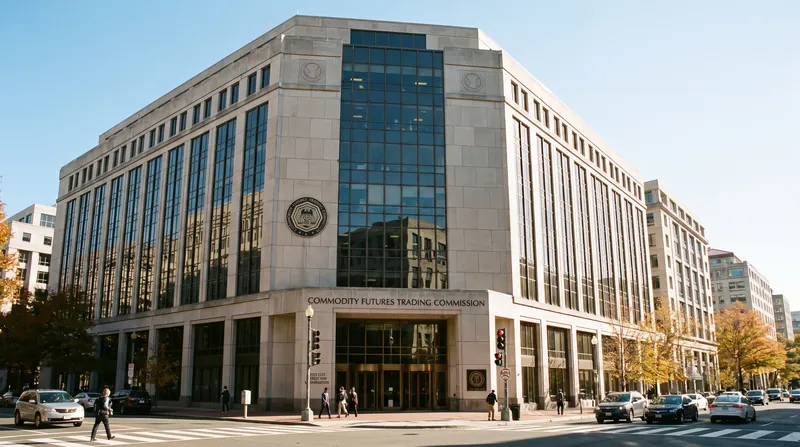
CFTC Updates Guidance to Allow Tokenized Customer Funds and Blockchain Recordkeeping for Derivatives Firms
5 sources
Cross-Chain Bridges
Kelp DAO Sues LayerZero and CEO Over $292 Million rsETH Bridge Exploit
4 sources
Tokenized Equities
Aave V4 Launches Equities Hub to Accept Tokenized Stocks as Loan Collateral
6 sources

Comments
Every angle. Every day.
Get Finance stories with full source coverage and perspective breakdowns, free every day.