
Solid-State Batteries Move From Lab to Assembly Line, Promising 600-Mile Ranges and 10-Minute Charges
After decades of research, next-generation solid-state batteries are entering pilot production in 2026, promising to eliminate range anxiety and fire risks for electric vehicles. Major automakers and battery startups are racing to scale the technology, which replaces flammable liquid electrolytes with solid materials.
By Factlen Editorial Team
- Battery Innovators
- Startups and researchers focused on the massive performance gains, arguing that the chemistry is solved and scaling is now purely an engineering challenge.
- Legacy Automakers
- Established car companies taking a phased approach, viewing solid-state as a premium differentiator for the late 2020s while relying on lithium-ion for volume.
- Manufacturing Skeptics
- Industry analysts highlighting the immense difficulty of scaling solid-to-solid contact manufacturing, warning that high costs could delay mass adoption.
- Chinese Battery Giants
- Dominant global suppliers investing heavily to ensure they control the supply chain for the next generation of battery technology.
What's not represented
- · Raw Material Miners
- · Independent Repair Shops
Why this matters
Solid-state batteries could remove the final hurdles to mass EV adoption by making cars lighter, safer, and capable of recharging as quickly as pumping gas, fundamentally reshaping the global automotive and energy landscape.
Key points
- Solid-state batteries replace flammable liquid electrolytes with stable solid materials.
- The technology promises to double energy density, enabling ranges over 600 miles.
- Major developers like QuantumScape and Toyota are launching pilot production lines in 2026.
- Early commercial models are expected to debut in premium luxury vehicles around 2027 or 2028.
The electric vehicle industry has long chased the "holy grail" of energy storage: the solid-state battery. For years, the technology has been confined to laboratory benches, academic papers, and small-scale prototypes. But in 2026, that chase is finally crossing a critical threshold, with major automakers and battery startups bringing pilot manufacturing lines online to prepare for commercial deployment.[4][7]
To understand why this shift is so monumental, it helps to look at how current batteries work. Traditional lithium-ion batteries rely on a liquid electrolyte—a chemical soup that shuttles lithium ions back and forth between the cathode and the anode during charging and discharging.[7]
While effective, that liquid electrolyte comes with inherent compromises. It is highly flammable, meaning that if a battery cell is punctured in a crash or overheats due to a short circuit, it can trigger a dangerous chain reaction known as thermal runaway.[7]
Solid-state batteries replace this volatile liquid with a stable, solid material—typically a ceramic, polymer, or sulfide glass. This fundamental architectural change eliminates the flammable components, making the battery inherently safe against fires and explosions, even under extreme stress or physical damage.[2][7]

Beyond safety, the solid electrolyte unlocks a massive leap in energy density. Because the solid barrier physically prevents the formation of "dendrites"—microscopic metallic spikes that can grow and short-circuit liquid batteries—engineers can safely use pure lithium-metal anodes instead of the heavier, bulkier graphite used today.[5][6]
The result is a battery that can store significantly more energy in the same physical footprint. Current top-tier lithium-ion cells max out around 250 to 300 watt-hours per kilogram (Wh/kg). Solid-state developers are targeting 400 to 500 Wh/kg, effectively doubling the energy capacity without adding weight.[2][7]
For the average driver, this translates to transformative real-world performance. Automakers are projecting that solid-state vehicles will routinely exceed 600 miles of range on a single charge. In recent testing, a modified Mercedes-Benz EQS equipped with solid-state cells from US-based Factorial Energy successfully drove over 745 miles.[1]
For the average driver, this translates to transformative real-world performance.
Charging times are also expected to plummet. Because solid electrolytes can tolerate higher temperatures and currents without degrading, these batteries can absorb power at astonishing rates. Several companies are targeting a 10% to 80% recharge in just 10 to 15 minutes—bringing the EV charging experience remarkably close to the time it takes to fill a gas tank.[2][4]

The race to commercialize this technology has accelerated dramatically in 2026. QuantumScape, a prominent solid-state developer backed by Volkswagen, recently launched its "Eagle Line" for low-volume manufacturing in California. The company just announced a major joint research agreement with Honda to co-develop the technology for both cars and motorcycles.[1][5]
Honda, which had already been testing QuantumScape's cells, noted that the technology demonstrated compelling and unique advantages during rigorous benchmarking. The Japanese automaker plans to integrate solid-state batteries into its EVs by the latter half of the decade, aiming for packs that are 60% smaller and 45% lighter than current models.[1][6]
Toyota, which holds over 1,000 patents in solid-state technology, is also moving aggressively. The company recently received approval from the Japanese government to begin manufacturing next-generation cells in 2026. Toyota aims to launch its first solid-state EVs in the 2027 to 2028 timeframe, likely debuting the technology in premium Lexus models.[4]
Meanwhile, Chinese battery giants are pushing their own aggressive timelines. BYD, the world's largest EV manufacturer, has stated that solid-state technology has entered a critical breakthrough stage. The company is targeting small-batch production of sulfide-based solid-state batteries by 2027.[3]

Despite the immense promise and billions of dollars in investment, significant hurdles remain before solid-state batteries reach the mass market. The primary bottleneck is no longer the chemistry, but the manufacturing process itself.[3]
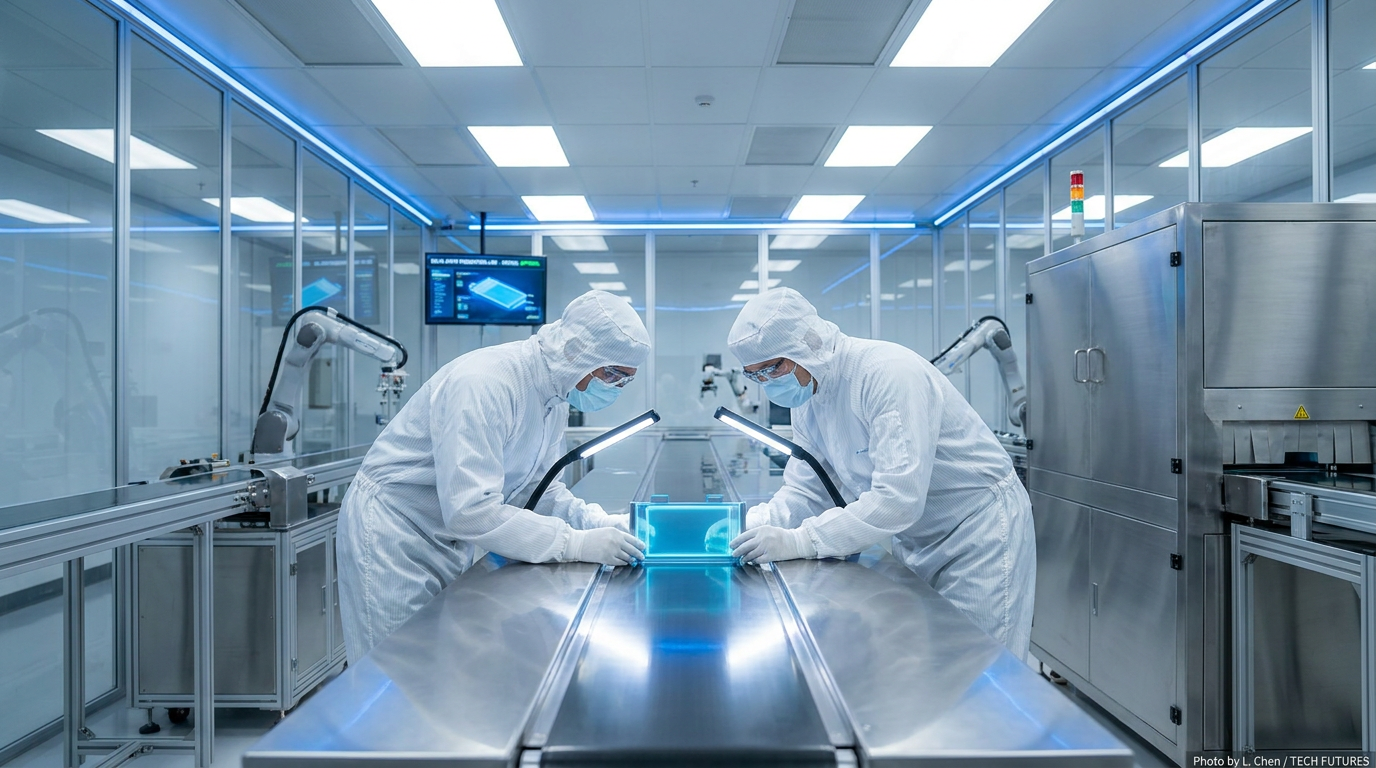
Building a solid-state cell requires pristine clean-room environments and entirely new assembly techniques. The layers of the battery must maintain perfect, microscopic solid-to-solid contact to function properly. Achieving this at a gigawatt-hour scale, with high yield rates and low defect margins, is an engineering challenge that has bankrupted previous startups.[3][7]
Cost is another major factor. Because the manufacturing processes are new and lack economies of scale, early solid-state batteries will be significantly more expensive than mature lithium-ion cells. Industry analysts expect them to debut exclusively in high-end luxury vehicles, sports cars, and commercial applications like aviation and robotics.[4][6]

It will likely take until the early 2030s for production volumes to scale enough to bring solid-state technology down to affordable, mass-market commuter cars. Until then, automakers will continue to rely on and improve traditional lithium-ion and cheaper lithium-iron-phosphate (LFP) batteries for their entry-level models.[3][4]
Nevertheless, the sheer volume of capital, engineering talent, and government support now flowing into solid-state commercialization suggests the transition is inevitable. As pilot lines spin up throughout 2026, the foundation for the next generation of electric mobility is literally solidifying.[1][7]
How we got here
2010s
Early laboratory research proves the viability of solid electrolytes but struggles with cycle life and low temperatures.
2020
Toyota demonstrates an early solid-state prototype vehicle, but acknowledges manufacturing challenges.
2024
Startups like Factorial and QuantumScape deliver advanced A-sample cells to automotive partners for rigorous testing.
2026
Major players launch pilot production lines, transitioning the technology from the lab to low-volume manufacturing.
2027-2028
Automakers target the launch of the first commercial passenger vehicles equipped with solid-state batteries.
Viewpoints in depth
Battery Innovators
Startups and researchers focused on the massive performance gains of solid-state technology.
Companies like QuantumScape and Factorial Energy argue that the fundamental chemistry of solid-state batteries has been solved. They point to rigorous third-party testing that validates their claims of 700-plus mile ranges and 10-minute charging times. For these innovators, the remaining hurdles are purely engineering challenges related to scaling up manufacturing, which they believe can be overcome with sufficient capital and partnerships with legacy automakers.
Legacy Automakers
Established car companies taking a cautious, phased approach to the technology.
Automakers like Toyota and Honda view solid-state batteries as a critical future technology, but they are managing expectations regarding timelines. They plan to introduce the batteries first in premium, low-volume vehicles where buyers can absorb the high initial costs. Simultaneously, they continue to invest heavily in improving traditional lithium-ion and cheaper lithium-iron-phosphate (LFP) batteries, which they expect will power the vast majority of mass-market EVs well into the 2030s.
Manufacturing Skeptics
Industry analysts highlighting the immense difficulty of scaling solid-to-solid contact manufacturing.
Skeptics within the battery industry warn that moving from a successful A-sample cell to gigawatt-hour mass production is notoriously difficult. They note that solid-state manufacturing requires entirely new equipment, pristine clean-rooms, and the ability to maintain perfect microscopic contact between solid layers under high pressure. These analysts caution that low yield rates and high defect margins could keep solid-state batteries prohibitively expensive for much longer than startups are currently projecting.
Chinese Battery Giants
Dominant global suppliers investing heavily to ensure they control the supply chain for the next generation of battery technology.
Companies like BYD and CATL already dominate the global supply of traditional EV batteries and are determined not to lose their edge in the solid-state era. They are aggressively funding multiple technical pathways simultaneously—including sulfide, polymer, and oxide-based solid electrolytes. Their strategy relies on leveraging their massive existing manufacturing scale to drive down costs faster than Western startups, aiming to control the global solid-state market just as they do the current lithium-ion market.
What we don't know
- Exactly how much a solid-state battery pack will cost when it first hits the commercial market.
- Whether the manufacturing yield rates can be improved quickly enough to make the batteries profitable for mass-market cars.
- How the solid electrolytes will hold up over a decade of real-world driving and extreme weather conditions.
Key terms
- Solid-State Battery
- A battery that uses a solid material, rather than a liquid, to conduct ions between its electrodes.
- Electrolyte
- The medium inside a battery that allows electrical charge (ions) to flow between the cathode and anode.
- Energy Density
- The amount of energy a battery can store relative to its weight, typically measured in watt-hours per kilogram (Wh/kg).
- Dendrites
- Microscopic, needle-like metallic structures that can grow inside liquid batteries, potentially causing short circuits and fires.
- Thermal Runaway
- A dangerous chain reaction inside a battery where overheating causes further heating, often resulting in an uncontrollable fire.
Frequently asked
Will solid-state batteries make EVs cheaper?
Eventually, yes, but not immediately. Early solid-state batteries will be expensive due to new manufacturing processes, but as production scales in the 2030s, their higher efficiency and use of cheaper materials could lower overall vehicle costs.
Are solid-state batteries truly fireproof?
They are vastly safer than current batteries. Because they lack a flammable liquid electrolyte, they are highly resistant to thermal runaway, even if punctured or exposed to extreme heat.
Can I put a solid-state battery in my current EV?
No. Solid-state batteries require entirely different thermal management and power delivery systems, meaning they must be integrated into vehicles designed specifically for them.
Sources
Source coverage
7 outlets
4 viewpoints surfaced







[1]ElectrekBattery Innovators
Honda, QuantumScape enter solid-state battery tie-up
Read on Electrek →[2]ForbesBattery Innovators
'Production-Ready' Solid-State Battery Promises 5-Minute EV Charging
Read on Forbes →[3]CarNewsChinaChinese Battery Giants
BYD chief scientist: solid-state battery at 'critical breakthrough stage' while commercialisation constrained
Read on CarNewsChina →[4]Green Car ReportsLegacy Automakers
Toyota EV plans: Tenfold boost by 2026, solid-state batteries
Read on Green Car Reports →[5]ElectriveLegacy Automakers
QuantumScape has entered a research cooperation with Japanese automaker Honda
Read on Electrive →[6]EV Infrastructure NewsBattery Innovators
QuantumScape announces joint research agreement with Honda
Read on EV Infrastructure News →[7]GridserveManufacturing Skeptics
Why solid-state battery technology matters
Read on Gridserve →
Every angle. Every day.
Get transportation stories with full source coverage and perspective breakdowns delivered to your inbox.