
Smart Ring vs. Smartwatch: Which Wearable Fits Your Lifestyle in 2026?
While smartwatches remain the ultimate fitness and productivity tools, smart rings are rapidly gaining ground as the superior choice for sleep tracking and passive health monitoring.
By Factlen Editorial Team
- Sleep & Recovery Seekers
- Value overnight comfort, long-term health trends, and frictionless biometric tracking.
- Fitness Enthusiasts
- Prioritize real-time data, GPS accuracy, and actionable workout metrics during exercise.
- Ecosystem Loyalists
- Choose devices based on seamless integration with their existing smartphones and apps.
What's not represented
- · Budget-conscious consumers who rely on sub-$100 fitness bands.
- · Medical professionals evaluating the clinical accuracy of consumer wearables.
Why this matters
Choosing the right wearable dictates whether you actually use it to improve your health. Picking a device that aligns with your daily habits ensures you get actionable data on your sleep, recovery, and fitness without wasting hundreds of dollars on tech that sits in a drawer.
Key points
- Smart rings excel at passive health tracking, offering superior comfort and accuracy for overnight sleep monitoring.
- Smartwatches dominate active fitness tracking with real-time displays, built-in GPS, and advanced workout metrics.
- Battery life heavily favors rings, which last up to a week compared to the daily charging required by most watches.
- Ecosystem lock-in remains a factor, with Apple Watches requiring iPhones and Galaxy Rings favoring Android devices.
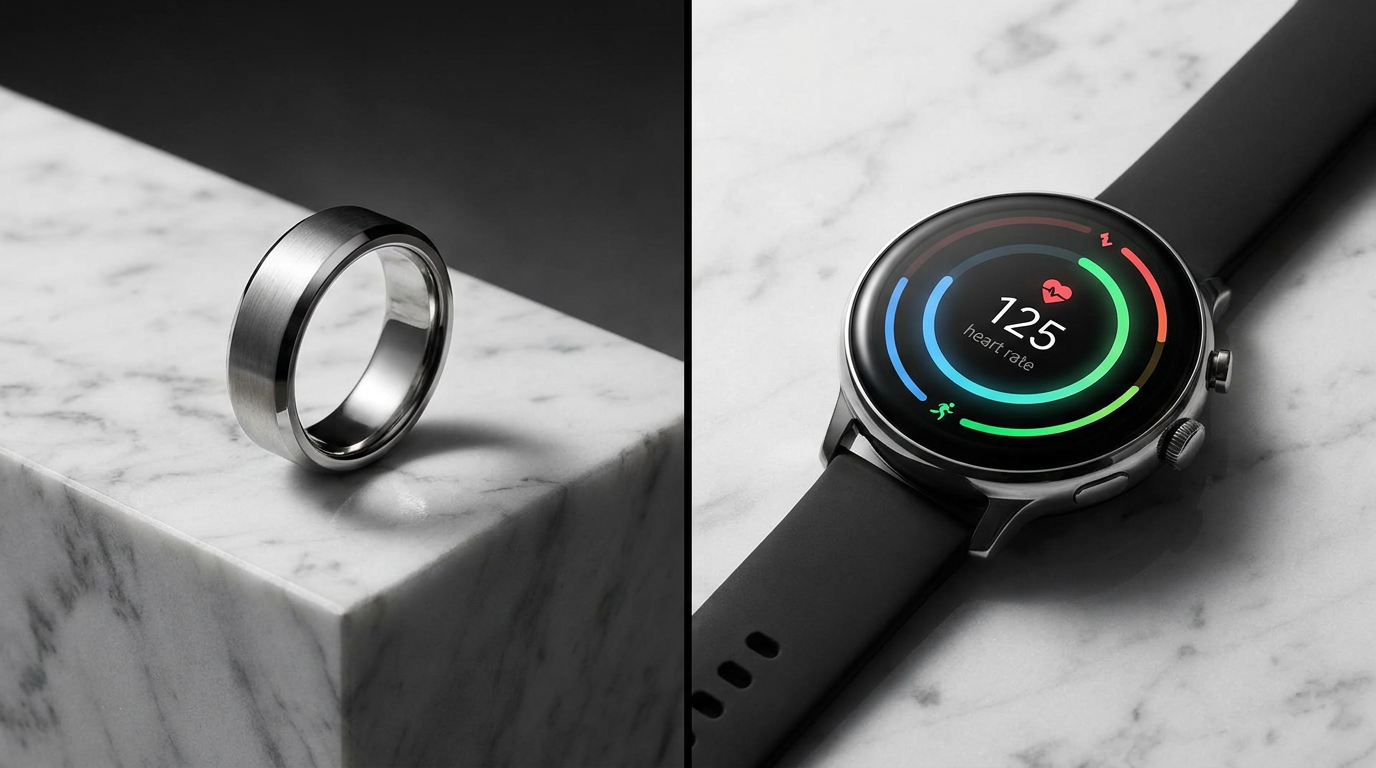
The wearable technology landscape in 2026 has fractured into two distinct philosophies: the interactive smartwatch and the ambient smart ring. With the release of devices like the Oura Ring 4, the Samsung Galaxy Ring, and the Apple Watch Series 11, consumers are no longer just choosing a brand—they are choosing how they want to interact with their health data. This comparison breaks down the side-by-side trade-offs between the two form factors.[1][2]
The fundamental divide comes down to active versus passive monitoring. Smartwatches are interactive dashboards that command attention, offering real-time feedback, notifications, and on-demand apps. Smart rings, conversely, are designed to disappear, quietly collecting biometric data in the background without adding another screen to your daily digital diet.[2][5]
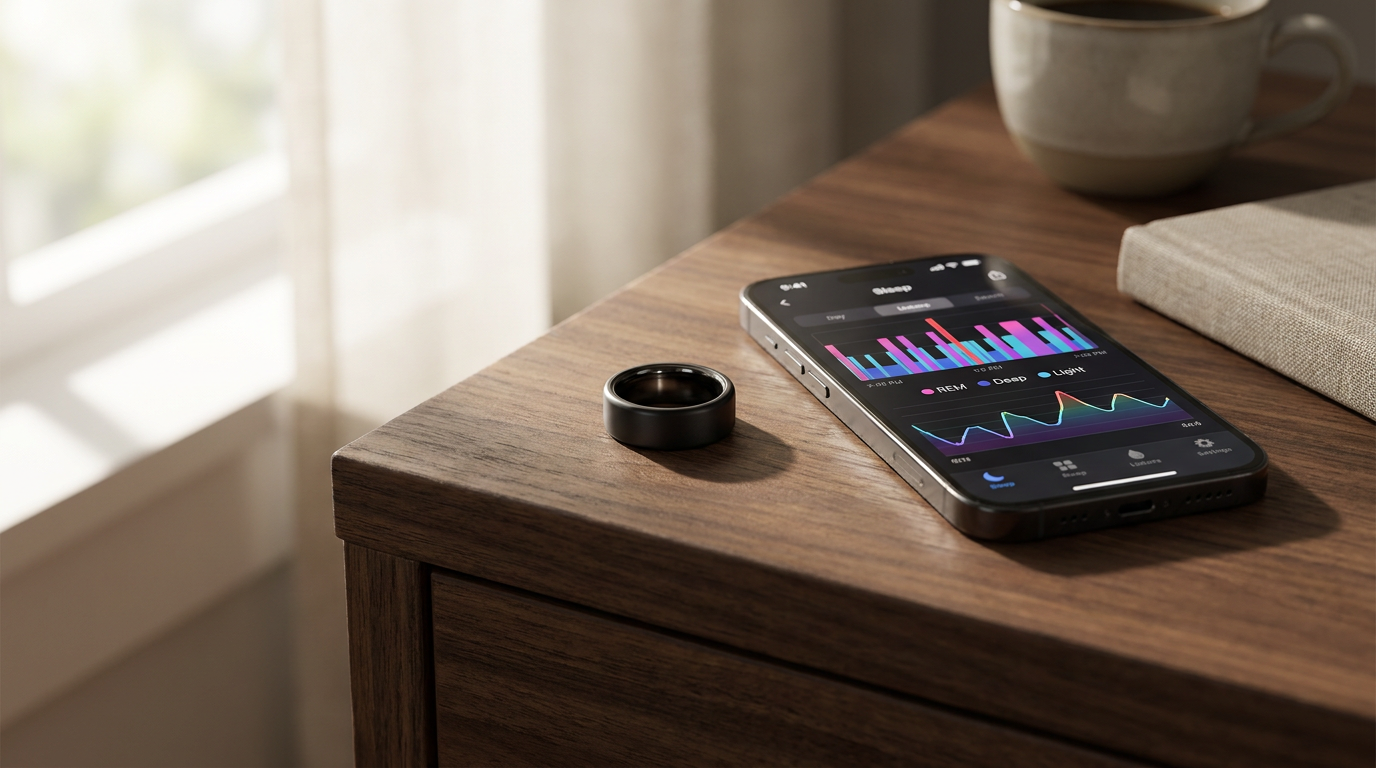
When evaluating sleep and recovery tracking, the smart ring is the definitive winner. The case for rings centers on comfort and sensor placement; the finger provides a highly accurate read of blood flow and skin temperature. Evidence from recent sleep tests shows that rings consistently outperform watches in tracking sleep stages and heart rate variability (HRV) because they fit snugly and do not shift during the night. The case against rings in this category is minor, primarily lacking the haptic alarms found on wrist wearables.[6][7]

The case against smartwatches for sleep tracking is primarily physical. Wearing a bulky metal and glass device to bed can be uncomfortable, and the screen can inadvertently illuminate, disrupting circadian rhythms. While the Apple Watch Series 11 and Samsung Galaxy Watch offer robust sleep data, users frequently cite the need to charge them daily as a significant barrier to consistent overnight tracking.[6][8]
When it comes to active fitness tracking, the smartwatch reclaims the crown. The case for watches is built on real-time utility: built-in GPS for runners, live heart-rate zones on a bright display, and the ability to leave your phone at home. Evidence from fitness testers in 2026 confirms that watches respond instantly to heart rate spikes during high-intensity interval training, whereas rings can lag by several minutes and fail to provide mid-workout pacing.[3][4]
When it comes to active fitness tracking, the smartwatch reclaims the crown.
The case against smart rings in the gym is both functional and physical. Rings lack a screen to display rep counts or timers, and they are highly dependent on a nearby smartphone to log GPS routes. Furthermore, wearing a titanium ring while lifting heavy weights or gripping a barbell is uncomfortable and risks scratching both the ring's sensors and the gym equipment.[4][8]

Battery life and maintenance represent another massive divergence in the trade-off analysis. Smart rings boast a significant advantage, with devices lasting between six and eight days on a single 80-minute charge. In contrast, the Apple Watch Series 11 requires daily charging, typically maxing out at 18 to 30 hours of battery life, forcing users to find a dedicated window every day to power up.[2][7]
The financial and ecosystem trade-offs are equally important to quantify. Smartwatches generally cost between $250 and $400 upfront, with no ongoing fees. Smart rings sit in a similar $300 to $400 price bracket, but models like the Oura Ring require a $5.99 monthly subscription to unlock comprehensive data. The Samsung Galaxy Ring avoids subscriptions but locks users into the Android ecosystem, just as the Apple Watch strictly requires an iPhone.[1][2][8]

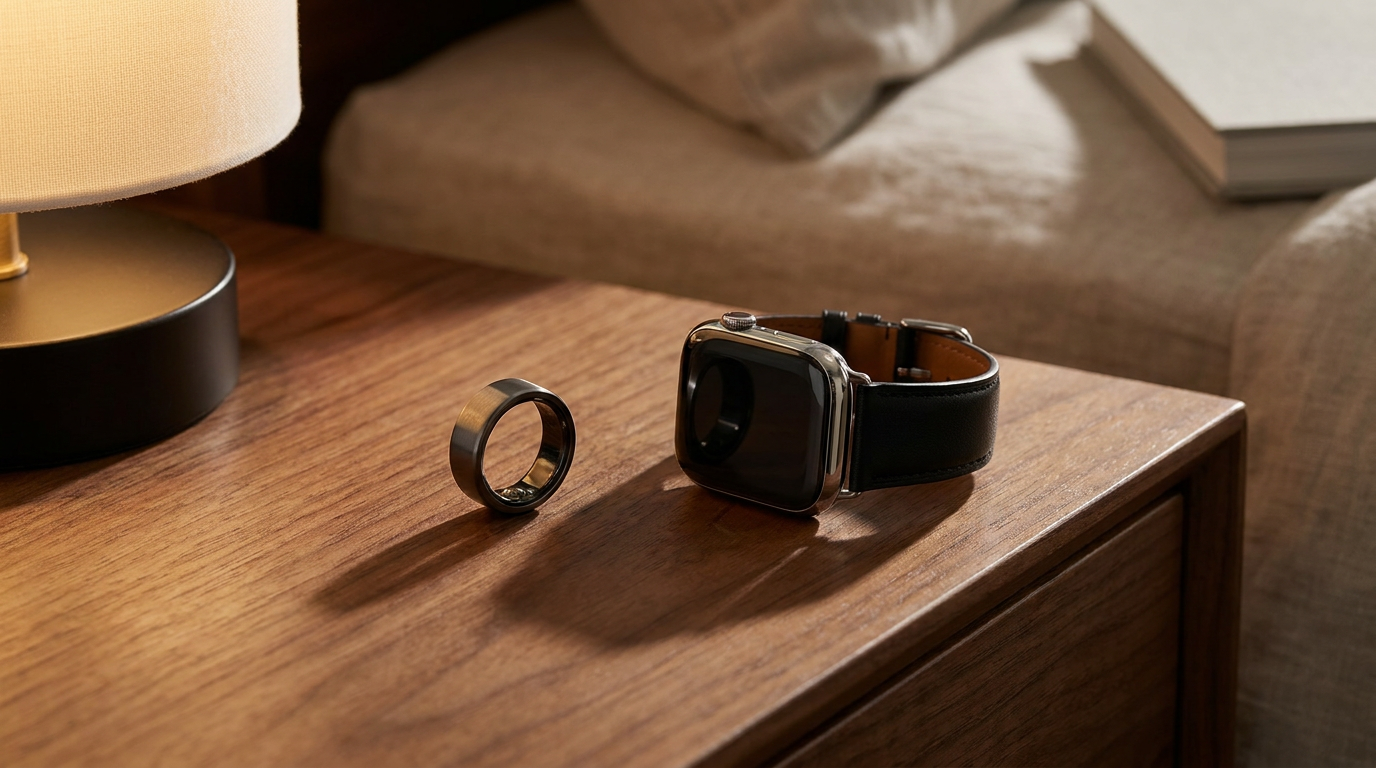
Interestingly, a growing segment of health enthusiasts in 2026 is adopting a hybrid approach. They wear a smartwatch during the day for notifications, contactless payments, and workout tracking, then switch to a smart ring at night for frictionless sleep and recovery monitoring. The two devices can share data through central hubs like Apple Health, creating a seamless 24/7 biometric picture.[7]
Ultimately, the smartwatch fits well when you are an active athlete who needs real-time pacing, a professional who wants to triage notifications without looking at a phone, or someone who values advanced medical sensors like an ECG. It does not fit well if you suffer from screen fatigue, find wristwear uncomfortable while typing, or refuse to charge another device every single day.[3][5]
Conversely, the smart ring fits well when your primary goals are improving sleep quality, tracking menstrual cycles via overnight temperature, and monitoring baseline recovery without the distraction of a display. It does not fit well if you want to track complex gym workouts, need built-in GPS for marathon training, or prefer to leave your smartphone behind during a run.[2][6]
How we got here
2015
The Apple Watch launches, popularizing the modern smartwatch and wrist-based health tracking.
2018
Oura releases its second-generation ring, proving that finger-based wearables can accurately track sleep and recovery.
2024
Samsung enters the smart ring market with the Galaxy Ring, bringing mainstream tech competition to the space.
2026
The Oura Ring 4 and Apple Watch Series 11 launch, highlighting the distinct divide between active and passive health tracking.
Viewpoints in depth
Fitness Enthusiasts
Athletes who prioritize real-time data and actionable workout metrics.
For runners, cyclists, and gym-goers, the smartwatch is an indispensable tool. This camp values the ability to glance at a screen mid-workout to check pacing, heart rate zones, and interval timers. They argue that a fitness tracker is only useful if it can actively guide a workout, making the screenless smart ring a non-starter for serious athletic training.
Sleep & Recovery Seekers
Users focused on overnight comfort and long-term health trends.
This perspective views health tracking as a 24/7 endeavor that shouldn't interfere with daily life. They champion the smart ring for its 'set it and forget it' nature, noting that wearing a bulky watch to bed is uncomfortable and counterproductive to good sleep hygiene. For this group, the highly accurate overnight temperature and HRV readings from a finger sensor far outweigh the need for a digital display.
Tech Minimalists
Consumers looking to reduce screen time while maintaining health insights.
Tech minimalists argue that smartwatches contribute to digital fatigue by moving smartphone notifications to the wrist. They prefer smart rings because they decouple health data from the constant ping of emails and text messages. This camp values the ring as a piece of jewelry that quietly monitors well-being without demanding constant attention or daily charging.
What we don't know
- Whether future smart rings will be able to incorporate haptic feedback or micro-displays without sacrificing their multi-day battery life.
- How upcoming non-subscription ring models will impact the market dominance of subscription-based leaders like Oura.
Key terms
- Heart Rate Variability (HRV)
- The variation in time between each heartbeat, used as a key indicator of physical recovery and stress levels.
- SpO2
- An estimate of the amount of oxygen in your blood, often measured overnight to detect breathing disturbances.
- Passive Tracking
- Health monitoring that occurs automatically in the background without requiring the user to interact with a screen or start a workout.
Frequently asked
Can I wear a smart ring while lifting weights?
It is generally not recommended, as gripping heavy metal bars can scratch the ring's exterior or cause discomfort against your finger.
Do I need a subscription for a smart ring?
It depends on the brand. The Oura Ring requires a monthly fee for full data access, while the Samsung Galaxy Ring does not.
Which device is better for tracking sleep?
Smart rings are widely considered better for sleep tracking due to their lightweight comfort and highly accurate finger sensors.
Can I use an Apple Watch with an Android phone?
No, the Apple Watch strictly requires an iPhone to set up and sync data.
Sources
Source coverage
8 outlets
3 viewpoints surfaced








[1]SamsungEcosystem Loyalists
Smart ring vs smartwatch: what are the key differences?
Read on Samsung →[2]ForbesEcosystem Loyalists
Oura Ring Vs. Apple Watch: Which Health Tracker Is Right For You?
Read on Forbes →[3]TechRadarFitness Enthusiasts
Smart rings vs. smartwatches: which is the best choice?
Read on TechRadar →[4]Runner's WorldFitness Enthusiasts
Samsung Galaxy Ring review: A smart ring for runners?
Read on Runner's World →[5]CosmopolitanSleep & Recovery Seekers
Oura Ring vs. Apple Watch: I Tested Both to See Which Is Actually Better
Read on Cosmopolitan →[6]BGRSleep & Recovery Seekers
Why smart rings are better than smartwatches for sleep tracking
Read on BGR →[7]Woman & HomeSleep & Recovery Seekers
Oura Ring vs Apple Watch: I tested both to find the ultimate health tracker
Read on Woman & Home →[8]Garage Gym ReviewsFitness Enthusiasts
Oura Ring vs Apple Watch: Which Wearable Is Right for You?
Read on Garage Gym Reviews →

Every angle. Every day.
Get shopping stories with full source coverage and perspective breakdowns delivered to your inbox.