
Smart Ring vs. Smartwatch: The 2026 Trade-Off Analysis
As wearable technology matures, consumers face a definitive choice between the active, screen-based smartwatch and the passive, screenless smart ring.
By Factlen Editorial Team
- Digital Minimalists
- Advocate for screen-free, passive health tracking that prioritizes sleep and recovery without constant notifications.
- Active Athletes
- Demand real-time data, GPS routing, and on-wrist coaching during high-intensity workouts.
- Ecosystem Integrators
- View rings and watches as complementary devices that should share data to extend battery life and maximize accuracy.
What's not represented
- · Traditional luxury watchmakers losing wrist real estate to smartwatches
- · Medical professionals analyzing the influx of consumer-generated health data
Why this matters
Choosing the right wearable dictates not just how much money you spend, but whether you will actually wear the device consistently enough to gain meaningful insights into your sleep, stress, and physical health.
Key points
- Smart rings excel at overnight comfort, sleep staging, and multi-day battery life.
- Smartwatches dominate in active workouts, offering GPS, real-time pacing, and ECGs.
- The finger provides cleaner resting heart rate data than the wrist due to denser capillaries.
- Many premium smart rings require monthly subscriptions, adding to their long-term cost.
- Tech ecosystems now allow rings and watches to share data, extending overall battery life.
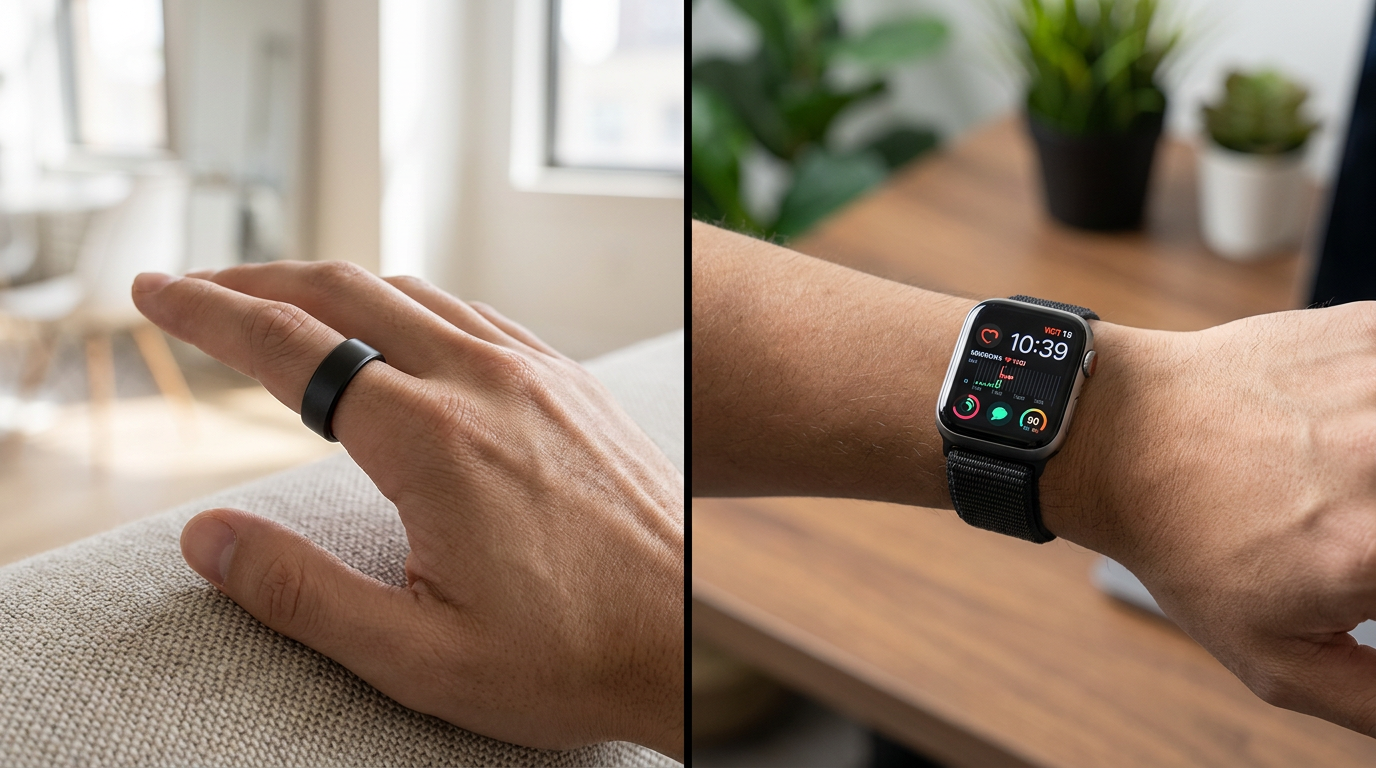
The wearable technology landscape in 2026 has definitively split into two distinct camps: the active companion and the passive observer. As consumers increasingly seek to quantify their health, the debate is no longer about whether to track biometrics, but how to wear the sensors. On one side is the smartwatch, a wrist-worn command center that delivers real-time data and smartphone connectivity. On the other is the smart ring, a screenless, ultra-lightweight band that quietly collects data in the background. Choosing between the two is a significant financial decision that hinges entirely on a user's daily habits, workout routines, and tolerance for digital noise.[5][6]
The hardware contenders defining this generation are formidable. The smartwatch category is dominated by the Apple Watch Series 11, the Samsung Galaxy Watch 7, and Garmin's fitness-first lineup. These devices boast bright OLED displays, GPS routing, and complex sensor arrays. Conversely, the smart ring market is led by the Oura Ring 4 and the Samsung Galaxy Ring, devices forged from titanium that weigh less than three grams. The fundamental philosophical difference between these form factors dictates their strengths: watches demand attention and interaction, while rings prioritize invisibility and continuous wear.[1][2][3]
The argument for the smart ring centers heavily on overnight comfort and the psychological benefits of passive tracking. Weighing a fraction of a smartwatch, a ring eliminates the bulky, sweaty presence on the wrist that causes many users to abandon their trackers before bed. This comfort translates directly into higher user compliance, ensuring that the device is actually worn consistently enough to build accurate long-term health baselines. Furthermore, the absence of a screen provides a form of digital minimalism, allowing users to review their recovery scores on their phone each morning without being bombarded by late-night notifications.[1][4][5]
The evidence supporting the smart ring's superiority in resting accuracy is rooted in human physiology. The arteries in the finger are situated closer to the skin surface and feature a denser capillary network than those in the wrist. This anatomical advantage allows the ring's photoplethysmography sensors to capture a much cleaner signal with significantly less motion artifact during sleep. Independent validation studies have shown that premium smart rings can achieve up to 79 percent accuracy in four-stage sleep classification, often outperforming wrist-worn counterparts in tracking resting heart rate, heart rate variability, and subtle deviations in overnight skin temperature.[6][7]

The argument against the smart ring becomes apparent the moment a user begins an intense workout. Without a screen, rings cannot provide real-time feedback; a runner cannot glance at their finger to check their current pace, distance, or heart rate zone. Additionally, rings lack the physical space for built-in GPS antennas, meaning users must still carry their smartphones to map a route. For strength training, the form factor is actively detrimental—gripping a heavy metal barbell while wearing a titanium ring can cause severe discomfort, pinch the skin, and potentially warp the device's internal sensors over time.[3][4][7]
The argument against the smart ring becomes apparent the moment a user begins an intense workout.
The argument for the smartwatch is built entirely around active exercise and real-time utility. During a workout, a smartwatch acts as a live coach on the wrist. It allows users to lock onto GPS signals, set interval timers, and monitor their exertion levels second by second. Beyond fitness, the smartwatch serves as a powerful extension of the smartphone, enabling users to dictate text messages, control music playback, and make contactless payments without reaching into their pockets. For those who want their technology to actively assist them throughout the day, the watch remains unmatched.[2][5][8]
The evidence supporting the smartwatch's dominance in active scenarios lies in its high-resolution sampling and advanced medical capabilities. Devices like Garmin watches record data at one-minute intervals or better during exercise, capturing rapid heart rate spikes that rings often miss due to sweat and finger movement. Furthermore, flagship smartwatches feature sophisticated health tools that rings cannot yet replicate, such as on-demand electrocardiograms to detect atrial fibrillation, and FDA-cleared algorithms capable of identifying signs of moderate to severe sleep apnea.[2][7]
The argument against the smartwatch focuses on battery anxiety and screen fatigue. Powering a bright display, GPS tracking, and constant Bluetooth syncing drains a smartwatch rapidly, typically resulting in an 18- to 36-hour battery life. This creates a daily charging chore, often forcing users to take the watch off right when they need it most—either during a morning workout or right before bed. In stark contrast, the screenless efficiency of a smart ring allows it to run for five to eight days on a single charge, providing a truly uninterrupted picture of a user's weekly health trends.[1][4][5]

When evaluating the trade-offs, consumers must also weigh the long-term financial evidence. While a smartwatch often requires a higher upfront investment—frequently starting around $400—it rarely demands ongoing payments. Smart rings, however, often obscure their true cost behind subscription models. For example, unlocking the full suite of insights on an Oura Ring requires a monthly fee, which adds over $200 to the cost of ownership across three years. While some newer entrants and tech giants have introduced subscription-free rings, buyers must carefully calculate the total cost over the device's lifespan.[2][5]
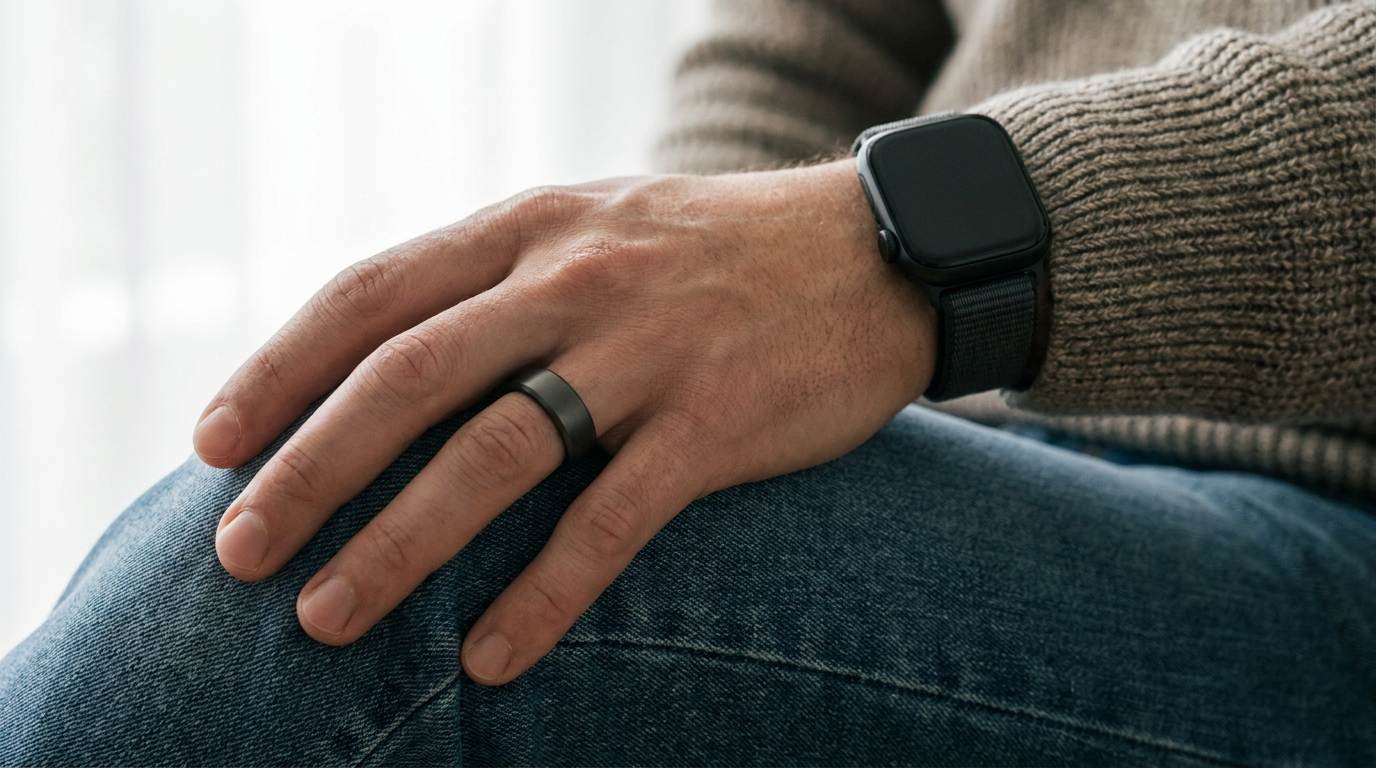
Rather than choosing sides, a growing segment of the market is adopting an ecosystem approach, utilizing both devices simultaneously. Tech giants are actively encouraging this dual-wielding strategy. When a user wears both a Samsung Galaxy Ring and a Galaxy Watch, the devices intelligently share the tracking workload. The ring handles the low-power background monitoring of heart rate and temperature, while the watch activates its heavy-duty sensors only during logged workouts. This seamless handoff can extend the smartwatch's battery life by up to 30 percent, offering the best of both worlds for those willing to pay a premium.[3][8]

Ultimately, the smart ring fits well when a user prioritizes overnight comfort, desires digital minimalism, and focuses primarily on long-term recovery metrics like resting heart rate and sleep staging. It is the ideal choice for those who suffer from tracker fatigue and simply want their data collected quietly in the background. However, the smart ring does not fit when a user requires real-time pacing data during a run, needs on-wrist smartphone notifications, or regularly engages in heavy weightlifting where a rigid metal band could cause physical pain or hardware damage.[1][5][6]
Conversely, the smartwatch fits well when the wearer is an active athlete who relies on GPS tracking, interval timers, and live heart-rate zones, or when they require FDA-cleared medical alerts like ECGs and sleep apnea detection. It is the superior tool for those who want to leave their phone at home while staying connected. The smartwatch does not fit when the user suffers from screen fatigue, finds bulky wristwear disruptive to their sleep architecture, or cannot commit to the rigid routine of daily charging.[2][7][8]
How we got here
2012
Pebble launches on Kickstarter, proving the mass-market viability of the modern smartwatch.
2015
The first generation Oura Ring is released, pioneering the screenless, finger-based health tracking category.
2020
Apple introduces native sleep tracking to the Apple Watch, intensifying the battle for overnight wrist real estate.
2024
Samsung launches the Galaxy Ring, signaling major tech ecosystem buy-in for the smart ring form factor.
2026
Apple Watch Series 11 introduces FDA-cleared sleep apnea detection, bridging the gap between fitness and medical diagnostics.
Viewpoints in depth
The Digital Minimalist's View
Prioritizing passive data collection and mental peace over real-time alerts.
For users suffering from screen fatigue, the smart ring represents a retreat from the constant barrage of notifications. This camp argues that health tracking should be an ambient background process rather than an active interruption. By removing the screen, rings force users to review their data intentionally—usually once a morning—rather than obsessing over real-time heart rate spikes or step counts throughout the day. They point to the psychological benefit of waking up to a single 'Readiness Score' rather than a wrist vibrating with emails.
The Active Athlete's View
Relying on immediate feedback and high-resolution tracking during intense physical exertion.
Athletes and fitness enthusiasts argue that a tracker is only as good as the actionable data it provides mid-workout. For this camp, a smart ring is fundamentally inadequate. They require the ability to glance at their wrist to check pace, monitor heart rate zones, and ensure they are hitting interval targets. Furthermore, they cite the physical limitations of rings during strength training, where gripping a barbell with a titanium band can cause discomfort or damage the device. For them, the smartwatch remains the undisputed command center.
The Medical Monitoring View
Focusing on clinical-grade alerts and FDA-cleared diagnostics.
Users managing specific health conditions prioritize the advanced sensor suites found in flagship smartwatches. This perspective highlights features like the Apple Watch's FDA-cleared sleep apnea detection and on-demand electrocardiograms (ECGs) that can flag atrial fibrillation. While they acknowledge that rings provide excellent baseline data for heart rate variability and temperature, they argue that the smartwatch's ability to actively alert a user to a sudden cardiac anomaly makes it a critical, potentially life-saving medical tool rather than just a wellness accessory.
What we don't know
- Whether Apple will eventually release its own smart ring to compete directly with Oura and Samsung.
- How long-term subscription fatigue will impact the market share of premium rings that require monthly fees.
- If future advancements in micro-batteries will eventually allow smartwatches to match the multi-day endurance of rings.
Key terms
- Photoplethysmography (PPG)
- Optical technology that uses green and red LEDs to detect blood volume changes through the skin, allowing wearables to measure heart rate.
- Heart Rate Variability (HRV)
- The variation in time between consecutive heartbeats, used by wearables as a key indicator of physical recovery and systemic stress.
- SpO2
- A measure of blood oxygen saturation, which is crucial for detecting breathing disturbances and sleep apnea during the night.
- Electrocardiogram (ECG)
- A sensor that records the electrical signal from the heart to check for irregular rhythms like atrial fibrillation, typically found only in high-end smartwatches.
Frequently asked
Can I wear a smart ring while lifting weights?
It is generally not recommended. Gripping heavy metal barbells while wearing a titanium ring can cause physical discomfort, pinch the skin, and potentially warp the internal sensors.
Do all smart rings require a monthly subscription?
No. While some market leaders like Oura charge a monthly fee for full data access, others like the Samsung Galaxy Ring and RingConn offer their insights subscription-free.
Which device is more accurate for heart rate?
Smart rings are generally more accurate at rest due to the stable finger placement, while smartwatches are far more accurate during active movement and intense exercise.
Can a smart ring completely replace my smartwatch?
Yes, if you only want passive health data and sleep tracking. No, if you rely on your wearable for GPS routing, real-time pacing, or smartphone notifications.
Sources
Source coverage
8 outlets
3 viewpoints surfaced








[1]ZDNETDigital Minimalists
I've worn the Oura Ring and Apple Watch for years: Here's which of two is more essential
Read on ZDNET →[2]ForbesActive Athletes
Oura Ring Vs. Apple Watch: Which Is The Better Health Tracker?
Read on Forbes →[3]9to5GoogleEcosystem Integrators
Galaxy Ring vs Galaxy Watch 7: Which should you buy?
Read on 9to5Google →[4]WareableEcosystem Integrators
Samsung Galaxy Ring review and comparison
Read on Wareable →[5]Smart Ring HQDigital Minimalists
Smart Ring vs Smartwatch: The Honest 2026 Comparison
Read on Smart Ring HQ →[6]AskVoraDigital Minimalists
Smart Ring vs Smartwatch: The 2026 Form Factor Debate
Read on AskVora →[7]SmartletActive Athletes
Sensor technology: tracking accuracy and workout performance
Read on Smartlet →[8]SamsungEcosystem Integrators
Smart ring vs smartwatch: Which is best for fitness & health tracking?
Read on Samsung →

Every angle. Every day.
Get shopping stories with full source coverage and perspective breakdowns delivered to your inbox.