
Scientists Uncover 1,121 New Marine Species in a Single Year, Accelerating the Race to Map Ocean Life
The Nippon Foundation-Nekton Ocean Census has identified over 1,100 previously unknown marine species, including a 'ghost shark' and a worm living in a deep-sea 'glass castle.' The milestone marks a 54% increase in the annual rate of ocean species discovery.
By Sofia Matos

In short
- Scientists discovered 1,121 new marine species between April 2025 and March 2026.
- The discoveries mark a 54% increase in the annual rate of ocean species identification.
- Finds include a 'ghost shark,' a carnivorous sponge, and a worm living in a 'glass castle.'
The vast majority of Earth's biosphere remains shrouded in darkness, but a global scientific alliance is rapidly illuminating the deep. Over the past year, researchers working with the Nippon Foundation-Nekton Ocean Census have identified 1,121 previously unknown marine species, marking a staggering 54 percent jump in the annual rate of ocean species discovery.
The findings, which span from microscopic organisms to ancient cartilaginous fish, confirm that deep-sea ecosystems once dismissed as barren are actually teeming with highly specialized life. This milestone not only expands the catalog of known biodiversity but also proves that new technologies can successfully break the historical bottlenecks that have long plagued marine taxonomy.
Launched in April 2023, the Ocean Census operates with a singular, ambitious mandate: to discover 100,000 new marine species by the end of the decade. Historically, the taxonomic process has been notoriously slow. The gap between a specimen being hauled onto a research vessel and its formal description in a scientific journal could stretch for an average of 13.5 years—and sometimes up to 24 years for complex organisms like sponges.
By integrating high-resolution digital imaging, rapid DNA sequencing, and an open-access data platform called NOVA, researchers are now processing discoveries in a fraction of the time. The initiative has mobilized more than 1,400 taxonomists and scientists from 660 institutions across 85 countries, creating a decentralized global engine for biological classification.
Among the most evocative discoveries of the past year is Dalhousiella yabukii, a newly identified polychaete bristle worm found at a depth of 791 meters. The worm was discovered during a joint expedition with the Japan Agency for Marine-Earth Science and Technology (JAMSTEC) exploring the Shichiyo Seamount Chain off the coast of Tokyo. Researchers deploying the Shinkai 6500, a crewed deep-sea submersible, observed the worm living in a highly specialized and visually stunning environment.
Rather than burrowing into the muddy seafloor like many of its shallow-water relatives, the polychaete makes its home inside the intricate, mesh-like silica skeleton of a hexactinellid sponge. Marine biologists have affectionately dubbed this translucent, naturally occurring structure a 'glass castle,' highlighting the bizarre and beautiful architectural forms that evolve in the deep ocean.[1][2]
The relationship between the bristle worm and its crystalline host represents a remarkable example of deep-sea symbiosis. The spiky silica spines of the glass sponge provide the worm with an impenetrable fortress, protecting it from the crushing pressure and predatory threats of the deep ocean environment.
In return, researchers believe the worm plays a crucial role in maintaining the sponge's structural integrity by cleaning its surface of accumulated debris and potentially providing it with vital nutrients. This delicate, mutually beneficial partnership highlights the complex ecological webs that exist thousands of feet below the surface. In an environment completely devoid of sunlight, organisms must frequently cooperate and co-evolve to survive, creating interdependent ecosystems that are highly vulnerable to external disruption.[2]
The recent expeditions also yielded discoveries that trace their lineage back hundreds of millions of years, offering a living window into the prehistoric ocean. In the Coral Sea Marine Park off the coast of Australia, scientists documented a new species of chimaera at depths exceeding 800 meters.
Commonly known as 'ghost sharks,' chimaeras are ancient cartilaginous fish that diverged from the evolutionary tree of true sharks and rays nearly 400 million years ago, long before the first dinosaurs walked the Earth. With their smooth, scaleless skin, wing-like pectoral fins, and large, glowing eyes adapted for the pitch-black depths, these elusive creatures are among the most mysterious inhabitants of the deep ocean. Finding a new species of chimaera underscores how much of the ocean's evolutionary history remains unmapped.
Not all of the newly discovered species rely on passive survival strategies; the deep sea also harbors highly specialized and aggressive predators. At an extreme depth of 3,601 meters off the uninhabited South Sandwich Islands in the South Atlantic Ocean, researchers found a carnivorous 'death ball' sponge. Unlike the vast majority of sponges, which survive as passive filter feeders drawing microscopic nutrients from the water column, this newly identified species is an active hunter.
It uses delicate, globe-tipped stalks covered in microscopic, velcro-like hooks to ensnare passing crustaceans. Once a victim is trapped, the sponge slowly envelopes and consumes its prey in the freezing darkness, demonstrating the extreme evolutionary adaptations required to secure food in one of the most nutrient-poor environments on the planet.
Beyond expanding our fundamental understanding of planetary biodiversity, these deep-sea discoveries hold tangible promise for biomedical research and pharmaceutical development. During an expedition off the coast of Timor-Leste, scientists identified a vibrant new species of ribbon worm in the shallow reef systems. While its vivid pigmentation likely serves as a visual warning to predators, the worm's true value lies in its potent chemical defenses.
Researchers are currently investigating the unique neurotoxins produced by the ribbon worm as potential foundational compounds for treating severe neurological conditions, including Alzheimer's disease and schizophrenia. The deep ocean is increasingly viewed by pharmacologists as the world's largest untapped medicine cabinet, harboring millions of novel chemical compounds that have evolved over millennia.[3]
The sheer scale of the Ocean Census effort is unprecedented in the history of modern marine biology. The 1,121 discoveries are the direct culmination of 13 separate expeditions conducted between April 2025 and March 2026, reaching depths of up to 6,575 meters in some of the planet's most remote and hostile waters.
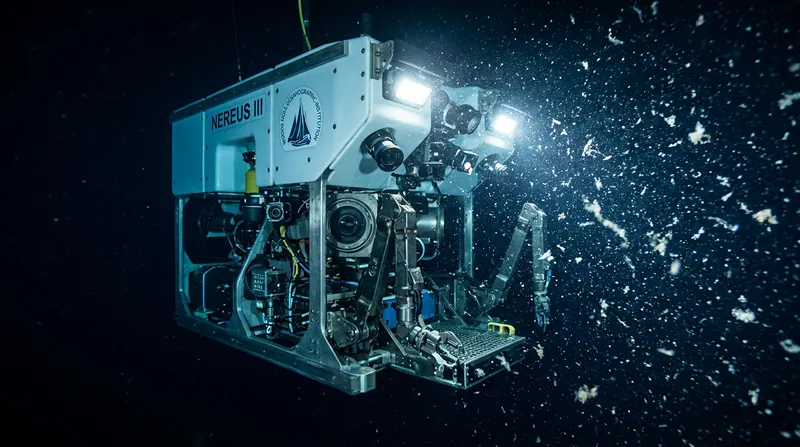
Partnering with leading research organizations like the Schmidt Ocean Institute and Australia's CSIRO, the Census utilized a fleet of advanced research vessels, remotely operated vehicles (ROVs), and mobile taxonomic laboratories. This infrastructure allowed scientists to process specimens on-site, ensuring that delicate biological data—such as tissue samples for DNA sequencing—was preserved immediately upon extraction, drastically reducing the time between discovery and formal classification.
The financial efficiency of this global biological survey stands in stark contrast to other frontiers of human exploration, prompting a debate about global research priorities. Oliver Steeds, Director of the Ocean Census, has pointedly emphasized the relative cost-effectiveness of marine discovery compared to space travel.
He noted that discovering the vast majority of unknown life on our own planet costs only a fraction of the $4.1 billion price tag associated with a single Artemis moon launch. For advocates of marine science, the rapid return on investment in ocean exploration underscores a critical misalignment in funding, arguing that understanding Earth's biosphere should command the same level of investment and public imagination as exploring the solar system.[2]
Documenting these species is not merely an academic exercise; it is an urgent race against time. Scientists estimate that up to 90 percent of marine life remains entirely unknown to science, leaving millions of species vulnerable to unrecorded extinction.
As commercial interests in deep-sea mining accelerate and climate change continues to alter ocean temperatures and chemistry, countless species are at risk of disappearing before they are ever named. The rapid cataloging of deep-sea ecosystems is essential to ensure that vulnerable habitats are not inadvertently destroyed by industrial activity before their ecological role and potential scientific value can be properly assessed by the international community.[3]
The high-quality taxonomic data generated by the Ocean Census serves as the foundational bedrock for international conservation policy. The findings will directly inform the implementation of the High Seas Treaty—the landmark agreement aimed at protecting marine biodiversity in areas beyond national jurisdiction—and the Kunming-Montreal Global Biodiversity Framework.
By providing marine managers and policymakers with concrete, geolocated evidence of where unique and fragile ecosystems exist, the Census empowers the international community to establish targeted, legally binding marine protected areas. Without this baseline data, regulatory bodies would be operating blind, unable to justify the restriction of commercial activities in biologically critical zones.[3]
Without this baseline data, regulatory bodies would be operating blind, unable to justify the restriction of commercial activities in biologically critical zones.
With the historical taxonomic bottleneck finally breaking, the pace of discovery is only expected to accelerate in the coming months. The Ocean Census has already scheduled six new deep-sea expeditions and five species discovery workshops for the remainder of 2026.
As the open-access NOVA platform continues to ingest vast quantities of genetic and morphological data from a global network of scientists, the marine biology community anticipates an even greater wave of classifications. For researchers and conservationists alike, the past year's success is a powerful reminder that the age of discovery on Earth is far from over—it is simply moving deeper into the blue.
Terms to know
- Taxonomy
- The branch of science concerned with classification, specifically the naming and describing of new organisms.
- Polychaete
- A class of segmented marine bristle worms that inhabit a wide range of ocean environments.
- Hexactinellid
- A type of deep-sea sponge, commonly known as a glass sponge, that builds its skeleton out of crystalline silica.
- Chimaera
- An ancient lineage of cartilaginous fish, often called ghost sharks, that diverged from true sharks nearly 400 million years ago.
- Symbiosis
- A close, prolonged biological interaction between two different biological organisms, which can be mutually beneficial.
Questions readers ask
Why does it usually take so long to name a new species?
Historically, the process of formally describing a species could take over a decade due to a shortage of taxonomic experts and the slow process of morphological comparison. New DNA sequencing technologies and AI are now accelerating this timeline.
What is the 'glass castle' worm?
Dalhousiella yabukii is a newly discovered bristle worm that lives symbiotically inside the silica skeleton of a deep-sea glass sponge, which protects it from predators.
How much of the ocean is still unexplored?
Scientists estimate that up to 90% of marine species remain undiscovered, and only a tiny fraction of the deep ocean floor has been directly observed.
Different angles
Marine Taxonomists
Focus on the technological acceleration of species classification.
For decades, taxonomy has been a painstaking, slow-moving field, with specimens often languishing in museum vaults for years before formal description. Taxonomists view the integration of AI, high-throughput DNA sequencing, and the open-access NOVA platform as a revolutionary shift that finally matches the urgency of the biodiversity crisis.
Conservation Policymakers
Emphasize the need for baseline data to establish protected areas.
International marine managers argue that you cannot protect what you do not know exists. For policymakers negotiating the implementation of the High Seas Treaty, the rapid identification of deep-sea ecosystems provides the critical legal and scientific justification required to designate marine protected areas and regulate emerging industries like deep-sea mining.
Biomedical Researchers
Highlight the pharmaceutical potential of deep-sea organisms.
Pharmacologists and medical researchers view the deep ocean as the world's largest untapped medicine cabinet. The unique chemical defenses evolved by extreme-environment organisms—such as the neurotoxins found in newly discovered ribbon worms—offer promising new pathways for developing treatments for neurodegenerative diseases and antibiotic-resistant infections.
- Marine Taxonomists
- Focus on the technological acceleration of species classification and open data sharing.
- Conservation Organizations
- Prioritize using the new biodiversity data to establish marine protected areas and inform policy.
- Biomedical Researchers
- View deep-sea discoveries as a vital source of novel compounds for pharmaceutical development.
- Ocean Exploration Advocates
- Argue that funding ocean discovery yields higher immediate returns for Earth's biosphere than space exploration.
Perspectives this story doesn't cover
- Deep-sea mining companies whose operations may be restricted by new biodiversity data
- Indigenous coastal communities whose traditional waters overlap with exploration zones
Sources
Source coverage
3 outlets
4 viewpoints surfaced



- [1]Zoological Journal of the Linnean SocietyMarine Taxonomists
New polychaete worm species living in glass sponges
Read on Zoological Journal of the Linnean Society → - [2]Miami HeraldOcean Exploration Advocates
New Worm Species in a 'Glass Castle'
Read on Miami Herald → - [3]Factlen Editorial TeamBiomedical Researchers
Synthesis by Factlen editorial team
Read on Factlen Editorial Team →
More in Science
See all →Martian Organics
Curiosity Rover Discovers Seven New Organic Molecules on Mars, Deepening Search for Past Life
4 sources

Bioelectronics
Artificial Neurons Successfully Interact with Real Brain Cells, Signaling New Era for Bio-Electronics
2 sources

Astrobiology
Scientists Unveil First Evidence of Extraterrestrial Intelligence and Complex Life
4 sources

Vaccine Tech
Single Nasal Vaccine Protects Against Flu, COVID, and Allergies in Early Trials
7 sources

Comments
Every angle. Every day.
Get Science stories with full source coverage and perspective breakdowns, free every day.