
Record $1.3 Trillion Outdoor Recreation Economy Driven by Historic Participation Surge and Demographic Shift
The U.S. outdoor recreation economy has reached a record $1.3 trillion, fueled by an unprecedented 183.2 million participants. While older adults and diverse communities are driving the expansion, the industry faces a new challenge as average outing frequency declines.
By Factlen Editorial Team
- Outdoor Industry Leaders
- Emphasize the need to solve the frequency gap by converting casual participants into lifelong outdoor enthusiasts.
- Economic Analysts
- Focus on the sector's outsized contribution to GDP and job creation compared to traditional industries.
- Infrastructure & Access Advocates
- Argue that the economic boom requires massive reinvestment in public lands, trails, and local access points.
What's not represented
- · Conservationists concerned about the ecological impact of 183 million people recreating on public lands.
- · Lower-income populations who may be priced out of the increasingly expensive outdoor gear and travel market.
Why this matters
Outdoor recreation is no longer just a lifestyle sector; it is a macroeconomic pillar supporting 5.2 million jobs and revitalizing rural communities. For consumers, the influx of older and more diverse participants is forcing a massive redesign of gear, park infrastructure, and wellness programming to prioritize accessibility over extreme performance.
Key points
- The U.S. outdoor recreation economy generated a record $1.3 trillion in 2024, supporting 5.2 million jobs nationwide.
- A record 183.2 million Americans participated in outdoor recreation in 2025, driven heavily by seniors and diverse demographics.
- Despite record overall participation, the average number of outings per person has dropped by five days annually since 2019.
- The industry is shifting its focus from acquiring new participants to retaining casual users through community programming and accessible gear.
For decades, outdoor recreation was viewed by economists as a peripheral lifestyle sector—a collection of niche hobbies disconnected from the heavy machinery of national GDP. That perception has been permanently dismantled. According to newly released data from the U.S. Bureau of Economic Analysis (BEA), the outdoor recreation economy generated a staggering $1.3 trillion in gross output in 2024, accounting for 2.4 percent of the nation's total gross domestic product. The sector's value-added contribution reached $696.7 billion, cementing its status as a macroeconomic heavyweight that consistently outpaces the growth of the broader U.S. economy.[1]
The employment footprint of this boom is equally massive. The outdoor industry now supports 5.2 million jobs, representing 3.2 percent of the entire U.S. workforce. This economic engine is no longer confined to iconic gateway communities near national parks or ski resorts; it has become a sustaining force across the country. From urban trail systems to rural manufacturing hubs, outdoor recreation employment grew in 36 states, proving highly resilient even as broader consumer spending softened in other retail categories.[1]

Driving this financial windfall is an unprecedented surge in human participation. The Outdoor Industry Association’s (OIA) 2026 Outdoor Participation Trends Report reveals that a record 183.2 million Americans—59 percent of the population ages six and older—engaged in outdoor recreation in 2025. This caps a years-long expansion that has added nearly 30 million new participants to the trails, waterways, and campgrounds since 2019. The sheer volume of people seeking nature-based experiences has transformed the industry's addressable market from a narrow demographic of adventure athletes to a broad cross-section of the American public.
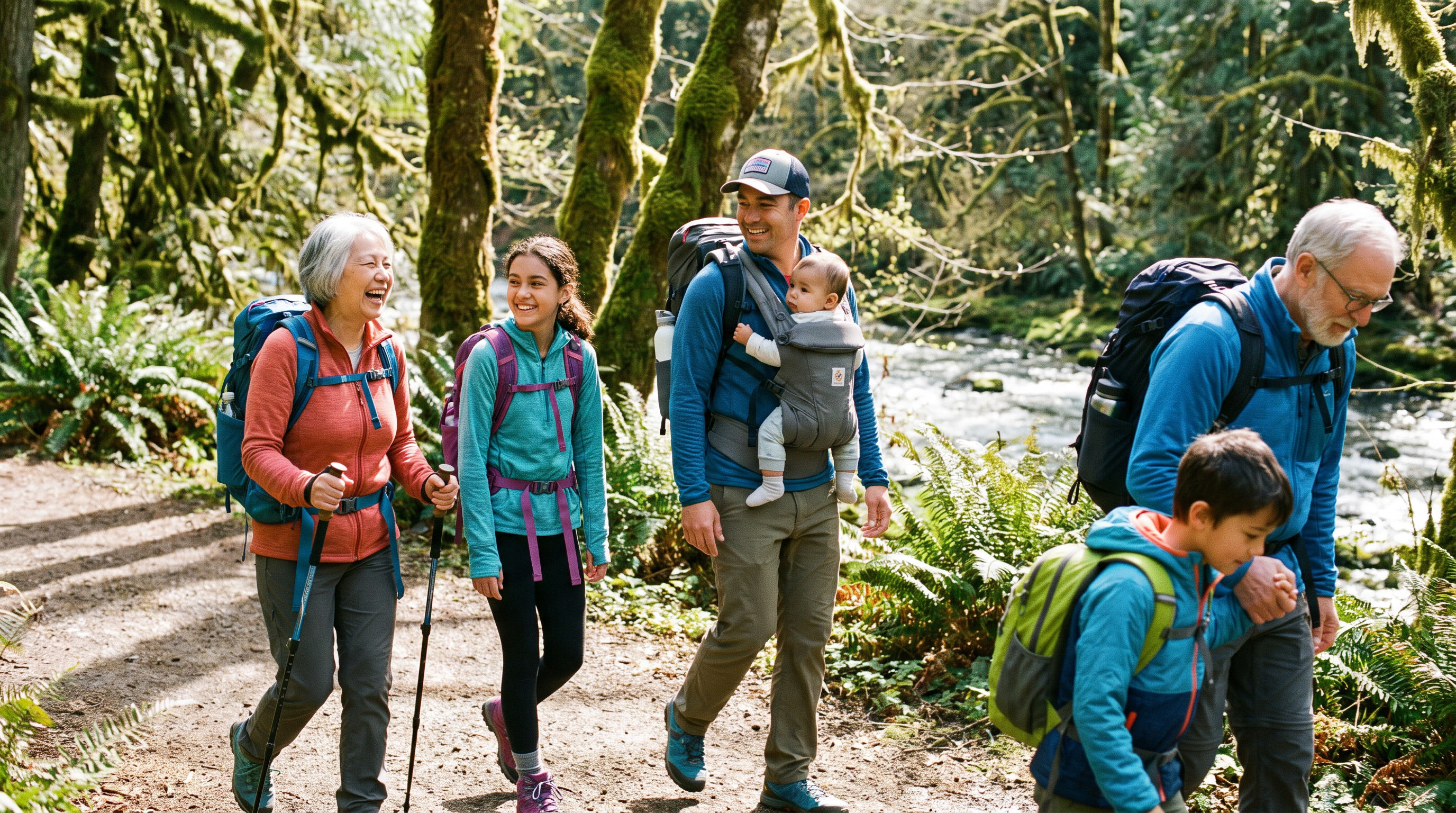
Beneath the headline participation numbers lies a profound demographic shift, led by an unexpected cohort: senior citizens. Americans aged 65 and older are currently the fastest-growing demographic in the outdoors. In 2025, 23.9 million seniors participated in outdoor activities, an increase of 12.1 million people over the past decade. The participation rate for this age group has skyrocketed from 25.7 percent in 2016 to 41.6 percent today, fundamentally altering how brands design equipment and how public land managers plan infrastructure.

This graying of the outdoors is driven by a confluence of technological advancements and shifting health paradigms. Innovations like lightweight composite materials, shock-absorbing footwear, and electric bicycles have dramatically lowered the physical barriers to entry for older adults. Activities that prioritize steady, low-impact movement—such as hiking, wildlife viewing, birding, and recreational vehicle (RV) travel—are seeing the steepest gains among seniors. The RV sector alone contributed $27.5 billion to the outdoor economy, heavily buoyed by retirees seeking comfortable access to remote landscapes.[3]
This graying of the outdoors is driven by a confluence of technological advancements and shifting health paradigms.
The diversification extends well beyond age. The 2026 data highlights a rapidly broadening base, with Hispanic participation rising by 6.5 percent year-over-year. Women also reached a historic high, with a 53.4 percent participation rate, while engagement among children ages 6 to 12 grew by 5 percent to reach 22.6 million. Today, approximately two-thirds of households with children participate in outdoor recreation, reinforcing the sector's transition toward family-centric, multigenerational experiences rather than solitary extreme sports.
However, this massive influx of new participants has introduced a complex new dynamic that industry analysts call the "frequency gap." While the absolute number of people going outside has never been higher, the average participant is actually venturing out less often than they did prior to the pandemic. According to the OIA report, the average outdoor enthusiast now takes five fewer outings per year compared to 2019. The participant base is wider than ever, but it is noticeably shallower, signaling a shift toward casual, intermittent engagement.

Several macroeconomic and logistical factors are driving this decline in frequency. The normalization of return-to-office mandates has restricted the flexible schedules that fueled the mid-week outdoor boom of the early 2020s. Additionally, the sheer popularity of outdoor spaces has created friction; crowded trailheads, fully booked campgrounds, and the proliferation of complex permit lotteries for national parks have made spontaneous outdoor recreation increasingly difficult. When getting outside requires months of advanced planning, casual participants simply go less often.
In response to the frequency gap, the $1.3 trillion industry is executing a massive strategic pivot. For years, outdoor brands and retailers focused heavily on "acquisition"—marketing designed to attract first-time buyers. Now, the focus has shifted entirely to "retention." Companies are investing in community programming, guided experiences, and lower-cost equipment rental models designed to help casual participants build lasting habits. The goal is no longer just selling a tent, but ensuring the buyer actually uses it more than once a summer.
At the state level, the economic dividends of this retention strategy are highly visible. While traditional outdoor meccas like Colorado saw the sector contribute $18.1 billion to their state economy, the wealth is spreading. Florida, California, and Texas led the nation in conventional outdoor recreation value, driven heavily by boating and fishing. Meanwhile, states like Indiana have become manufacturing powerhouses for the RV industry, proving that the economic benefits of outdoor recreation extend far beyond the states with the tallest mountains.[2][3]

This distributed growth is prompting a reevaluation of how public lands are funded and managed. The surge in casual, multigenerational users places immense strain on aging park infrastructure. Industry lobbying groups like PeopleForBikes and the Outdoor Recreation Roundtable are leveraging the new BEA data to push for federal and state investments in trail networks, accessible facilities, and supply chain resilience. They argue that funding public lands is no longer just an environmental imperative, but a critical economic defense strategy.[3]
Ultimately, the $1.3 trillion valuation reflects a permanent cultural realignment. Outdoor recreation has merged seamlessly with the broader wellness movement, transitioning from a discretionary leisure activity to an essential component of public health. As doctors increasingly issue "green prescriptions" for time in nature to combat chronic disease and mental fatigue, the sector's foundational demand continues to solidify. The outdoor industry has proven it can attract the masses; its next trillion dollars will depend on its ability to keep them coming back.[1][2]
How we got here
2016
The bipartisan Outdoor Recreation Jobs and Economic Impact Act is signed into law, requiring the federal government to measure the sector's economic impact.
2019
U.S. outdoor participation sits at roughly 153 million people before the pandemic triggers a massive surge in nature-based activities.
2024
The outdoor recreation economy reaches a record $1.3 trillion in gross output, growing faster than the overall U.S. economy.
March 2026
The Bureau of Economic Analysis officially releases the 2024 data, confirming the sector supports 5.2 million jobs.
June 2026
The Outdoor Industry Association releases its 2026 trends report, revealing a record 183.2 million participants but highlighting a drop in outing frequency.
Viewpoints in depth
Outdoor Industry Brands
Focusing on transitioning casual participants into lifelong outdoor enthusiasts.
For equipment manufacturers and retailers, the data presents a dual reality: a massive total addressable market, but a softening in repeat purchasing. Brands are responding to the 'frequency gap' by pivoting away from hyper-technical, extreme-performance marketing. Instead, they are prioritizing accessible, comfortable gear designed for older adults and families. Many are also launching rental programs and guided community events to lower the barrier to entry and encourage repeat outings.
Public Land Managers
Grappling with the infrastructure strain of a wider, more casual user base.
State and federal park agencies view the $1.3 trillion valuation as a double-edged sword. While the economic data provides powerful leverage for budget requests, the reality on the ground is one of immense strain. The influx of 30 million new participants—many of whom are casual users unfamiliar with 'Leave No Trace' principles—has overwhelmed parking lots, degraded trails, and necessitated complex permit lotteries. Managers are advocating for a portion of the outdoor economy's tax revenue to be aggressively reinvested into deferred maintenance and accessibility upgrades.
Rural Economy Advocates
Viewing outdoor recreation as a vital replacement for declining legacy industries.
Local governments and economic development boards in rural areas increasingly view trails and waterways as critical infrastructure. With outdoor recreation supporting 5.2 million jobs nationwide, many towns that previously relied on extraction or legacy manufacturing are rebranding as outdoor hubs. Advocates point to the BEA data showing growth in 36 states as proof that investing in local trail systems and river access directly correlates to job creation, increased property values, and the ability to attract remote workers.
What we don't know
- Whether the decline in outing frequency is a temporary post-pandemic stabilization or a permanent shift in consumer behavior.
- How effectively state and federal governments will fund the infrastructure needed to support 30 million new casual outdoor participants.
Key terms
- Gross Output
- A measure of total economic activity that includes the value of all goods and services produced by an industry, including intermediate inputs used in production.
- Value-Added
- The contribution of an industry to the overall Gross Domestic Product (GDP), calculated by subtracting the cost of intermediate inputs from gross output.
- Frequency Gap
- An industry term describing the phenomenon where the total number of outdoor participants is growing, but the average number of times each person goes outside is shrinking.
- Conventional Outdoor Recreation
- Traditional outdoor activities measured by the government, such as bicycling, boating, hiking, camping, and hunting, as opposed to peripheral activities like amusement parks.
Frequently asked
How much does outdoor recreation contribute to the U.S. economy?
According to the Bureau of Economic Analysis, the outdoor recreation economy generated $1.3 trillion in gross output in 2024, accounting for 2.4% of the U.S. GDP and supporting 5.2 million jobs.
What is the 'frequency gap' in outdoor recreation?
The frequency gap refers to the trend where the total number of people participating in outdoor activities is at a record high, but the average number of outings per person has decreased by five days per year since 2019.
Which demographic is growing the fastest in the outdoors?
Adults aged 65 and older are the fastest-growing demographic. Their participation rate jumped from 25.7% in 2016 to 41.6% in 2025, adding over 12 million new senior participants in the last decade.
What activities are driving the most economic value?
Conventional activities like boating and fishing are the largest contributors, generating $38.4 billion in value added, followed closely by RVing at $27.5 billion.
Sources
Source coverage
3 outlets
3 viewpoints surfaced



[1]Bureau of Economic AnalysisEconomic Analysts
Outdoor Recreation Economic Statistics, U.S. and States, 2024
Read on Bureau of Economic Analysis →[2]The Colorado SunEconomic Analysts
Colorado’s outdoor recreation economy grows to $18.1 billion
Read on The Colorado Sun →[3]RV Industry AssociationOutdoor Industry Leaders
New BEA Data Shows Outdoor Recreation is a $1.3 Trillion Economic Powerhouse
Read on RV Industry Association →
Every angle. Every day.
Get fitness stories with full source coverage and perspective breakdowns delivered to your inbox.