
The End of Global Governance: How the US Withdrawal from 66 International Bodies Rewrites the Rules of Cooperation
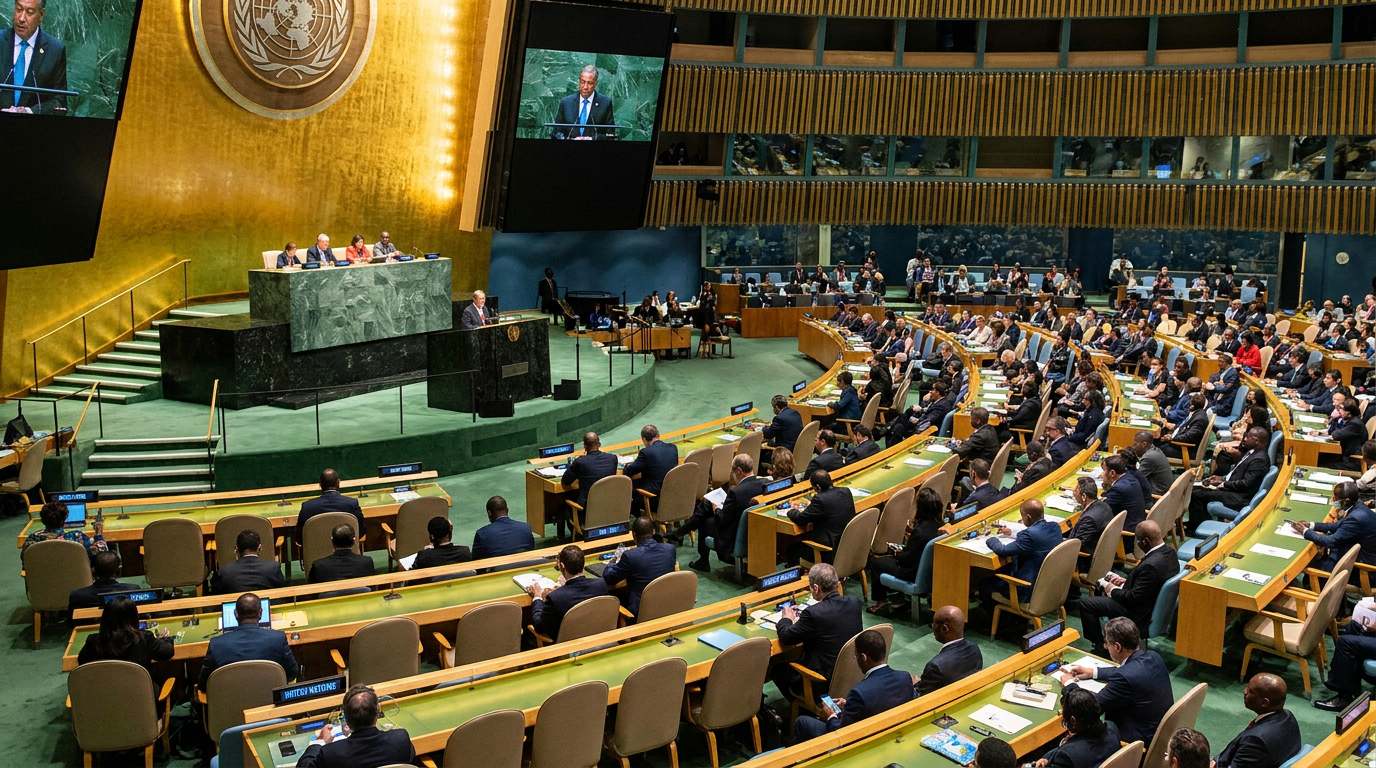
Following a year-long review, the United States has formally initiated its exit from 66 international organizations, including key climate, health, and development agencies. The move marks a historic shift in the architecture of global governance, prioritizing national sovereignty and bilateral agreements over universal multilateral frameworks.
By Factlen Editorial Team
- Sovereignty & Reform Advocates
- Argue that international organizations infringe on national autonomy and waste taxpayer funds on ideological agendas.
- Multilateralists & Global Governance Defenders
- Warn that withdrawing from global frameworks isolates the U.S. and cripples collective action on transnational crises.
- Scientific & Environmental Communities
- Express deep concern over the loss of U.S. expertise and funding in bodies like the IPCC and UNFCCC.
- Industry & Trade Pragmatists
- Support selective engagement in technical bodies where direct economic or strategic benefits to the U.S. are clear.
What's not represented
- · Developing nations reliant on UN development and climate funding
- · International humanitarian aid workers on the ground
Why this matters
The withdrawal removes the largest historical funder from dozens of UN and independent agencies, forcing a massive restructuring of global climate negotiations, international development, and scientific cooperation. It creates a leadership vacuum in the multilateral system that strategic competitors may fill, fundamentally altering how nations coordinate on transnational crises.
Key points
- The U.S. has formally initiated withdrawal from 66 international organizations, including 31 UN entities.
- The move follows a year-long review mandated by a February 2025 executive order.
- Key exits include the UN Framework Convention on Climate Change (UNFCCC) and the Intergovernmental Panel on Climate Change (IPCC).
- The administration cites redundancy, mismanagement, and threats to national sovereignty as reasons for the withdrawal.
- The U.S. will maintain membership in select technical and economic bodies like the Global Biofuels Alliance.
- The withdrawal removes billions in historical U.S. funding from the global multilateral system.
On January 7, 2026, the United States formally initiated its withdrawal from 66 international organizations, marking one of the most sweeping realignments of American foreign policy in modern history. The directive, issued via a Presidential Memorandum, instructs all executive departments and agencies to cease participation in and funding for 31 United Nations entities and 35 non-UN organizations. The mass exodus effectively dismantles decades of American integration into the multilateral system established after World War II, signaling a definitive pivot away from global governance frameworks in favor of national sovereignty and bilateral engagement. The move affects a broad spectrum of international cooperation, ranging from climate change and environmental conservation to gender equality, human rights, and regional security.[1][7]
The mass withdrawal is the culmination of a year-long review mandated by Executive Order 14199, signed in February 2025. That order directed the State Department, in consultation with the U.S. Ambassador to the United Nations, to evaluate all international intergovernmental organizations, conventions, and treaties. The goal of the review was to determine which memberships and financial contributions were "contrary to the interests of the United States." Following the submission of the State Department's findings, the administration concluded that continued participation in the 66 identified bodies offered little to no strategic or economic benefit to the American public, prompting the immediate issuance of the withdrawal memorandum.[7][8]
Secretary of State Marco Rubio outlined the administration's rationale, stating that the targeted institutions were found to be "redundant in their scope, mismanaged, unnecessary, wasteful, poorly run," or captured by actors advancing agendas contrary to American interests. The administration argues that the multilateral system has drifted from its original purpose of pragmatic cooperation into a sprawling architecture of global governance dominated by progressive ideologies. By severing ties with these organizations, the U.S. government asserts it will save billions in taxpayer dollars, which can be redirected toward domestic priorities, military readiness, and bilateral partnerships that yield measurable returns.[1][6]

Among the most significant and historically unprecedented exits is the United States' withdrawal from the United Nations Framework Convention on Climate Change (UNFCCC). Adopted in 1992 and ratified by the U.S. Senate, the UNFCCC serves as the foundational legal treaty for global climate negotiations, including the annual COP summits and the Paris Agreement. The United States is the first nation in history to initiate a withdrawal from the convention. Because the UNFCCC is a ratified treaty, the legal mechanics of the exit are complex and typically require a one-year waiting period, though the administration has instructed agencies to immediately cease funding and participation to the extent permitted by law.[3][8]
The U.S. is also pulling out of the Intergovernmental Panel on Climate Change (IPCC), the world's leading scientific authority on climate change. The IPCC, which was awarded the Nobel Peace Prize in 2007, relies heavily on American scientific expertise and financial backing to produce its comprehensive climate assessments. The withdrawal cuts off approximately $1.67 million in annual U.S. contributions to the IPCC trust fund. More significantly, it complicates the formal participation of American researchers—particularly those employed by federal agencies or public universities who require government travel authorizations—in drafting the reports that guide global environmental policy. While individual scientists may still contribute, the U.S. government will no longer have a formal voice in shaping or approving the panel's influential summaries for policymakers.[3][9]
The retreat from environmental cooperation extends well beyond the core UN system. The memorandum directs the U.S. to exit the International Renewable Energy Agency (IRENA), the International Union for Conservation of Nature (IUCN), and the International Solar Alliance, a joint initiative launched by India and France in 2015 to promote solar energy deployment across developing nations. By withdrawing from these technical and policy-advisory bodies, the United States is effectively removing itself from the primary international forums dedicated to managing the global energy transition, protecting biodiversity, and establishing standards for green technology. This leaves European and Asian nations to drive the agenda on renewable energy standards without formal American input.[3][5]
The retreat from environmental cooperation extends well beyond the core UN system.
In the realm of social policy and human rights, the directive mandates the U.S. exit from UN Women, the primary agency coordinating global gender equality initiatives, and the UN Population Fund (UNFPA), which focuses on reproductive and maternal health. The U.S. had already suspended its voluntary funding to UNFPA in 2025, halting an estimated $377 million in contributions that supported family planning and maternal care in developing nations. The formal withdrawal from these agencies reflects the administration's broader opposition to multilateral resolutions and programs that reference sexual and reproductive rights, which it views as conflicting with domestic policy priorities and ideological values.[8]

The withdrawal also severs U.S. ties with specialized technical, legal, and security forums that operate outside the public eye but play crucial roles in global governance. The list includes the Global Counterterrorism Forum, the Freedom Online Coalition, and the Venice Commission of the Council of Europe, an advisory body on constitutional law. Additionally, the U.S. is exiting several UN regional economic and social commissions covering Africa, Latin America, and the Asia-Pacific. These regional bodies have historically served as platforms for coordinating development assistance, infrastructure planning, and trade policies—areas where the U.S. will now rely almost exclusively on direct bilateral negotiations rather than multilateral consensus.[4][8]
Despite the sweeping nature of the memorandum, the administration is maintaining selective engagement in certain international bodies. The U.S. will remain a member of the Global Biofuels Alliance, the International Telecommunication Union (ITU), the International Maritime Organization (IMO), and the International Labour Organization (ILO). This selective approach indicates that the administration is not pursuing total isolationism, but rather a transactional model of multilateralism. The U.S. is choosing to participate only in organizations where direct economic, industrial, or strategic benefits to the United States are clear and immediate, particularly in sectors where maintaining a seat at the table is necessary to counter the influence of strategic competitors like China.[5]
The January 2026 directive builds upon a series of high-profile exits initiated during the administration's first year in office. In early 2025, the U.S. began the formal process of withdrawing from the World Health Organization (WHO), the Paris Agreement, the UN Human Rights Council (UNHRC), and the UN Educational, Scientific and Cultural Organization (UNESCO). Concurrently, the administration terminated all funding for the UN agency for Palestinian refugees (UNRWA). The latest memorandum consolidates these individual exits into a systemic dismantling of the U.S. relationship with the broader UN apparatus.[7][8]

The financial impact of the U.S. withdrawal on the global multilateral system is expected to be severe and immediate. As the world's largest economy, the United States has historically been the biggest single financial contributor to many of these institutions, often covering between 15 and 30 percent of their total operating budgets through assessed and voluntary contributions. Without American funding, dozens of agencies are now bracing for significant cuts to their programs, staff reductions, and a scaling back of humanitarian, scientific, and developmental initiatives worldwide. The sudden loss of revenue forces these organizations to either drastically reduce their global footprint or seek emergency funding from other member states.[2][8]
Critics of the withdrawal, including international scientific bodies, human rights organizations, and allied diplomats, argue that retreating from these forums isolates the United States and cedes critical influence to geopolitical rivals. They contend that transnational challenges—such as climate change, global health crises, and international security—require collective action and universal frameworks that no single nation can manage alone. From this perspective, the U.S. exit not only cripples the operational capacity of vital global agencies but also destabilizes the rules-based international order that America helped build after World War II, potentially leading to a more volatile and less cooperative global environment.[3][8][9]
Proponents of the move maintain that the multilateral system has become bloated, ideological, and fundamentally unaccountable to the citizens who fund it. By redirecting funds away from international bureaucracies that frequently criticize U.S. policies or advance agendas contrary to American interests, the administration asserts it can better invest in domestic infrastructure, border security, and targeted foreign assistance that directly serves strategic goals. Ultimately, the mass exodus fundamentally rewrites the rules of global cooperation, leaving the international community to navigate a fragmented landscape where ad-hoc coalitions and transactional bilateral agreements may increasingly replace universal governance frameworks.[1][6]
How we got here
February 2025
President Trump signs Executive Order 14199, initiating a review of U.S. participation in all international organizations.
Early 2025
The U.S. initiates withdrawals from the WHO, the Paris Agreement, the UN Human Rights Council, and UNESCO.
January 7, 2026
The White House issues a memorandum directing the immediate withdrawal from 66 additional international bodies.
Viewpoints in depth
The Sovereignty Argument
The perspective that international organizations infringe on national autonomy and waste taxpayer funds.
Proponents of the withdrawal argue that the multilateral system has morphed into an unaccountable bureaucracy that advances ideological agendas at the expense of American interests. By exiting these 66 organizations, they contend the U.S. is reclaiming its sovereignty and saving billions of dollars that can be redirected toward domestic priorities, military readiness, and bilateral agreements that offer tangible, measurable returns on investment.
The Multilateralist Warning
The perspective that withdrawing from global frameworks isolates the U.S. and weakens collective action.
Diplomats, UN officials, and international development advocates warn that the mass exodus creates a dangerous leadership vacuum. They argue that transnational challenges—such as climate change, pandemics, and global security—cannot be solved unilaterally. From this viewpoint, the withdrawal not only cripples the operational capacity of critical agencies by removing their largest funder, but also allows strategic competitors to rewrite the rules of global governance in America's absence.
The Scientific Community's Concern
The perspective that exiting bodies like the IPCC damages global scientific cooperation.
Researchers and environmental advocates emphasize the practical damage of withdrawing from the UNFCCC and the IPCC. The U.S. has historically provided not only crucial funding but also unparalleled scientific expertise to these bodies. Critics in this camp argue that severing formal ties isolates American scientists from the global consensus process, politicizes environmental research, and undermines the international community's ability to coordinate effective, evidence-based responses to the climate crisis.
What we don't know
- How the targeted UN agencies will replace the massive shortfall in funding previously provided by the United States.
- Whether the U.S. Congress will attempt to intervene or block the withdrawal from treaties that were originally ratified by the Senate, such as the UNFCCC.
- How strategic competitors like China will leverage the U.S. absence to expand their influence within these 66 organizations.
Key terms
- UNFCCC
- The United Nations Framework Convention on Climate Change, the foundational 1992 treaty that established the international process for negotiating climate agreements.
- IPCC
- The Intergovernmental Panel on Climate Change, the UN body responsible for assessing the science related to climate change and guiding global policy.
- Multilateralism
- The practice of coordinating national policies in groups of three or more states, typically through international organizations and universal frameworks.
- UNFPA
- The United Nations Population Fund, the primary UN agency focused on reproductive and maternal health worldwide.
Frequently asked
What is Executive Order 14199?
A February 2025 directive that mandated a comprehensive review of all international organizations and treaties the U.S. participates in, which ultimately led to the current withdrawals.
Is the U.S. leaving the United Nations entirely?
No. The U.S. is withdrawing from 31 specific UN-affiliated entities and programs, but it remains a member of the core United Nations and retains its seat on the UN Security Council.
How does this affect global climate efforts?
The U.S. is withdrawing from the UNFCCC and the IPCC, removing its funding and formal scientific participation from the world's primary climate negotiation and assessment bodies.
Are any international memberships being maintained?
Yes. The U.S. is maintaining its membership in organizations deemed strategically or economically beneficial, such as the Global Biofuels Alliance, the International Telecommunication Union, and the International Maritime Organization.
Sources
Source coverage
9 outlets
4 viewpoints surfaced








[1]NewsweekSovereignty & Reform Advocates
Trump Withdraws US From 66 International Organizations
Read on Newsweek →[2]ForbesIndustry & Trade Pragmatists
What The U.S. Withdrawal From 66 International Bodies Means For American Business
Read on Forbes →[3]Earth.orgScientific & Environmental Communities
Trump Withdraws US From 66 International Organizations, Including Pivotal Climate Treaties
Read on Earth.org →[4]The Media LineMultilateralists & Global Governance Defenders
US Withdraws From 66 International Organizations
Read on The Media Line →[5]BioEnergy TimesIndustry & Trade Pragmatists
US leaves 66 international bodies, including ISA; maintains membership in Global Biofuels Alliance
Read on BioEnergy Times →[6]PunchSovereignty & Reform Advocates
US withdraws from 66 international organisations
Read on Punch →[7]Federal RegisterSovereignty & Reform Advocates
Executive Order 14199 of February 4, 2025
Read on Federal Register →[8]Focus 2030Multilateralists & Global Governance Defenders
United States withdrawal from 66 international organizations: a new step in a disengagement initiated in 2025
Read on Focus 2030 →[9]Union of Concerned ScientistsScientific & Environmental Communities
Trump Sinks to New Low by Announcing US Withdrawal from 66 International Organizations, Including UNFCCC and IPCC
Read on Union of Concerned Scientists →

Every angle. Every day.
Get meta stories with full source coverage and perspective breakdowns delivered to your inbox.