
Fact-Check Finds No Evidence for Trump's Claim of 278,000 Non-Citizens on Voter Rolls, Despite Push for New Voting Law
A DHS review claiming 278,000 non-citizens are registered to vote relies on flawed database matching that flags naturalized citizens. Despite a localized software glitch in New Jersey, experts say non-citizen voting remains exceedingly rare.
By Factlen Editorial Team
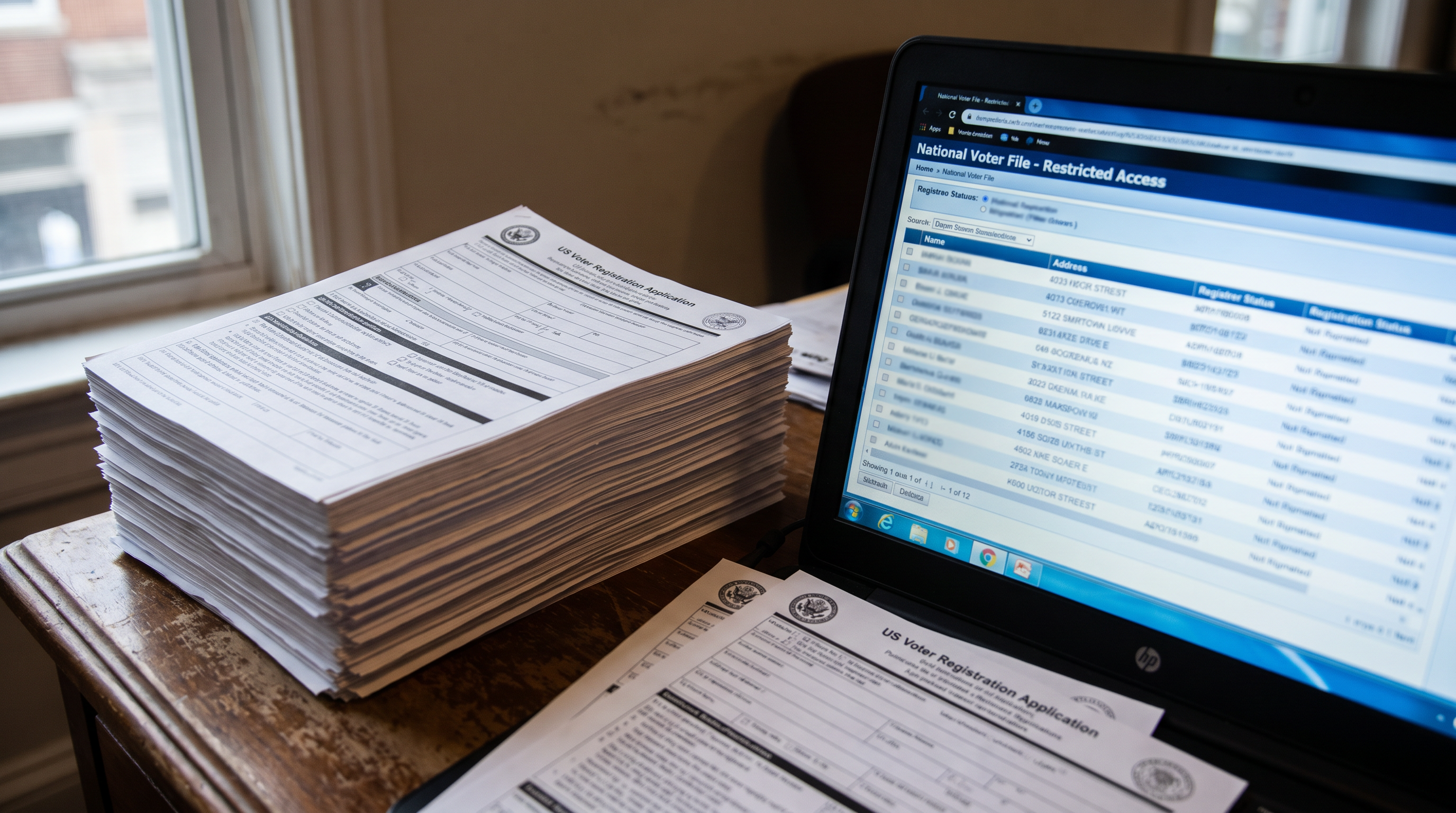
- Election Security Advocates
- Argues that the DHS findings and the New Jersey glitch prove systemic vulnerabilities that require immediate federal legislation like the SAVE America Act.
- Independent Fact-Checkers
- Emphasizes that non-citizen voting is statistically minuscule and that the 278,000 figure is a speculative ceiling rather than a confirmed count of illegal registrations.
- State Election Administrators
- Maintains that state-level verification is robust and that federal data dumps rely on flawed, outdated databases that mischaracterize eligible citizens.
What's not represented
- · Immigrant Rights Organizations
- · Voters Lacking Documentary Proof of Citizenship
Why this matters
The debate over non-citizen voting is driving a push for new federal laws that would require a passport or birth certificate to register to vote. Understanding the accuracy of these claims is crucial, as the proposed solutions could prevent millions of eligible Americans from casting ballots.
Key points
- President Trump claimed a DHS review found 278,000 non-citizens registered to vote in four states.
- Fact-checkers and state officials say the number is a speculative ceiling based on flawed database matching.
- The SAVE database frequently flags naturalized U.S. citizens as non-citizens because it tracks historical immigration status.
- A software glitch in New Jersey did accidentally register 6,600 non-citizens, with fewer than 400 casting ballots.
- Proponents are using the DHS figures to push the SAVE America Act, which requires proof of citizenship to vote.
- Voting rights advocates warn the proposed law could disenfranchise millions of legal citizens who lack immediate access to passports or birth certificates.
President Donald Trump and the Department of Homeland Security (DHS) have launched a renewed push for federal election overhauls, anchored by a startling claim: that a federal review identified approximately 278,000 non-citizens registered to vote in federal elections. The figure, highlighted in a primetime address, has become the central argument for the SAVE America Act, a legislative proposal requiring strict proof of citizenship to register to vote. However, independent fact-checkers, state election officials, and data analysts have found no evidence to support the 278,000 figure as a count of actual illegal registrations. Instead, the number represents a speculative ceiling generated by cross-referencing state voter rolls with federal immigration databases known to produce high rates of false positives.[1][2][3][5][6][8]
The controversy centers on formal letters sent by DHS Secretary Markwayne Mullin to top election officials in four states: California, Nevada, New Jersey, and Pennsylvania. According to a DHS press release accompanying the letters, preliminary reviews suggested there "may be as many as" 190,832 non-citizens registered in California, 35,152 in New Jersey, 15,903 in Nevada, and 14,576 in Pennsylvania. The White House has characterized these specific figures as undeniable proof of a "broken and vulnerable" election system, arguing that the true nationwide number is likely much higher because several Democratic-led states declined to share their sensitive voter files with the administration.[1][4][6]
The administration's claims gained significant political traction following a localized admission from New Jersey officials. Governor Mikie Sherrill announced that a software error in the state's Motor Vehicle Commission system had inadvertently registered roughly 6,600 non-citizens between June 2023 and June 2024. The individuals had correctly answered "no" when asked if they were U.S. citizens on the DMV keypad while applying for licenses, but the software registered them anyway. State officials confirmed that fewer than 400 of these individuals actually cast ballots before the error was discovered.[3][7]

Proponents of stricter voting laws immediately seized on the New Jersey glitch to bolster their national arguments. White House spokespeople and allied lawmakers cited the incident as undeniable proof that non-citizen registration is a systemic threat rather than a theoretical risk. Senator Marsha Blackburn argued that the New Jersey error underscores exactly why the SAVE America Act is necessary, stating that blue states "practically invite fraud" by lacking stringent identification requirements. For the administration, the 400 ballots cast in New Jersey validate the broader DHS investigation and justify immediate federal intervention.[6][7][8]
However, election administrators and independent fact-checkers caution against extrapolating a localized software bug into a nationwide conspiracy. In New Jersey, the 400 ballots cast by non-citizens represent less than 0.01% of the more than 4 million votes cast in the state's recent elections. Governor Sherrill emphasized that the state caught the error internally, corrected the software, and found absolutely no evidence that any election outcomes were swayed by the glitch. Furthermore, the individuals involved did not intentionally commit fraud; they were registered through no fault of their own due to a state coding error.[2][3][7]
The core of the national dispute lies in exactly how DHS arrived at the 278,000 figure. The agency has not publicly released its methodology, but election experts note that such federal reviews typically rely on the Systematic Alien Verification for Entitlements (SAVE) database. SAVE is a federal tool designed specifically to check immigration status for benefit eligibility, not to verify voter registration. When states run their voter rolls against SAVE, the system frequently flags naturalized U.S. citizens as non-citizens, creating massive lists of false positives.[1][5]
The core of the national dispute lies in exactly how DHS arrived at the 278,000 figure.
This false-positive phenomenon occurs because SAVE is a historical record, not a real-time citizenship tracker. If an individual obtains a driver's license while holding a green card, they are recorded in state systems as a non-citizen. If that individual later naturalizes and legally registers to vote, a crude cross-reference between the old DMV record and the SAVE database will flag them as an illegal registrant, even though they are now a fully eligible U.S. citizen. Federal judges have previously barred states from using the SAVE database for voter purges precisely because of these high error rates and the risk of disenfranchisement.[1][4][5]

State officials have forcefully pushed back against the DHS letters and the administration's public framing. In Nevada, where DHS alleged nearly 16,000 non-citizens might be on the rolls, Secretary of State Cisco Aguilar refuted the claims as "wildly speculative." Aguilar noted that out of Nevada's 2.1 million active voters, only 138 individuals had registered without providing a state driver's license or Social Security number, making it relatively easy for the state to verify eligibility. He characterized the DHS letter as a coordinated attempt to cast doubt on the integrity of the upcoming elections.[4]
The Guardian's review of the DHS letters revealed that the agency itself expressed significantly less certainty in private correspondence than the administration did in public broadcasts. The letters described the 278,000 figure as a "ceiling" of potential matches rather than a confirmed list of illegal voters, yet gave states just two weeks to respond to the data dump. Election experts have criticized this aggressive approach, arguing that dumping unverified, raw data on states without methodological transparency is designed to generate alarming headlines rather than genuinely clean voter rolls.[2]
Despite the lack of verified data, the 278,000 figure has become a cornerstone of the legislative push for the SAVE America Act. The bill would mandate documentary proof of citizenship—such as a passport or a birth certificate—to register to vote in federal elections. Supporters argue this is a common-sense safeguard to ensure only eligible Americans cast ballots, closing loopholes that currently exist. They point to the fact that 19 states currently allow undocumented immigrants to obtain driver's licenses, increasing the risk of accidental or intentional registration if safeguards are not absolute.[6][7][8]
Voting rights advocates, however, warn that the SAVE America Act would disenfranchise millions of legal U.S. citizens. Studies indicate that roughly one in ten eligible American voters does not have easy access to a passport or birth certificate on any given day. Requiring these specific documents to register would disproportionately impact low-income voters, married women who have changed their names and lack updated paperwork, and elderly citizens who may not have been issued official hospital birth certificates decades ago.[1][2][5]

Extensive research over the past two decades has consistently shown that non-citizen voting is exceedingly rare in federal elections. A comprehensive data analysis by Reuters found that when non-citizens do vote, it is almost always the result of misunderstanding or administrative errors—such as the New Jersey DMV glitch—rather than coordinated, intentional fraud. The penalties for a non-citizen casting a ballot are severe, including immediate deportation and a permanent ban on future citizenship, creating a massive deterrent against intentional illegal voting.[3][5]
Federal law, specifically the National Voter Registration Act of 1993, strictly regulates how and when states can remove voters from their rolls, prohibiting systemic purges within 90 days of a federal election. This legal framework is designed to prevent eligible voters from being mistakenly removed too close to Election Day to correct the error. Consequently, the DHS demand that states review tens of thousands of records on a two-week timeline places local election administrators in a precarious legal position, forcing them to choose between complying with federal pressure and adhering to established voter protection laws.[1][2][4]

The ongoing clash highlights a fundamental tension in American election administration: balancing the need for absolute security with the imperative of voter access. While the DHS investigation has successfully elevated the issue of non-citizen voting to the forefront of the national political conversation, the evidence provided thus far does not substantiate claims of widespread, systemic illegal registration. As the 2026 midterms approach, the debate over the 278,000 figure serves as a stark reminder of how raw data can be weaponized in the broader battle over election integrity and voter trust.[1][2][4]
How we got here
June 2023 - June 2024
A New Jersey DMV software glitch accidentally registers 6,600 non-citizens to vote.
July 16, 2026
President Trump claims a DHS review found 278,000 non-citizens on voter rolls.
July 17, 2026
DHS sends letters to California, Nevada, New Jersey, and Pennsylvania demanding voter roll reviews.
July 21, 2026
New Jersey Governor Mikie Sherrill publicly discloses the DMV software error.
Viewpoints in depth
Election Security Advocates
Argues that the DHS findings and the New Jersey glitch prove systemic vulnerabilities that require immediate federal legislation like the SAVE America Act.
Proponents of stricter voting laws argue that the current system operates too heavily on the honor system. They point to the 6,600 non-citizens accidentally registered in New Jersey as proof that state-level safeguards are failing. For this camp, the DHS figure of 278,000 potential non-citizens on the rolls is a conservative estimate, especially since several states refused to share their data. They argue that requiring documentary proof of citizenship is the only foolproof way to restore absolute confidence in federal elections.
State Election Administrators
Maintains that state-level verification is robust and that federal data dumps rely on flawed, outdated databases that mischaracterize eligible citizens.
State officials argue that managing voter rolls is a complex, continuous process that cannot be solved by crude cross-referencing with federal immigration databases. They point out that systems like SAVE were never designed for election administration and frequently flag naturalized citizens as non-citizens because the data is historical, not real-time. Administrators emphasize that when errors do occur—such as the New Jersey software glitch—they are caught and corrected internally, demonstrating that the system works rather than proving it is broken.
Independent Fact-Checkers
Emphasizes that non-citizen voting is statistically minuscule and that the 278,000 figure is a speculative ceiling rather than a confirmed count of illegal registrations.
Fact-checkers and voting rights organizations stress that decades of research show non-citizen voting is vanishingly rare. They argue that the 278,000 figure is being weaponized to push legislation that would disenfranchise millions of legal U.S. citizens who simply lack immediate access to a passport or birth certificate. This camp highlights that the severe penalties for non-citizen voting—including deportation—act as a massive deterrent, and that the few cases that do occur are almost universally the result of administrative errors rather than intentional fraud.
What we don't know
- The exact methodology DHS used to generate the 278,000 figure, as the agency has not released the underlying data.
- Whether the Senate will take up the SAVE America Act ahead of the 2026 midterm elections.
- How many of the 278,000 flagged individuals are actually naturalized U.S. citizens who were incorrectly identified by the SAVE database.
Key terms
- SAVE Database
- Systematic Alien Verification for Entitlements, a federal system used to check immigration status for benefits, which is often misapplied to voter rolls.
- SAVE America Act
- Proposed federal legislation that would require documentary proof of citizenship, such as a passport, to register to vote.
- False Positive
- An error in data matching where a legal, eligible citizen is incorrectly flagged as a non-citizen.
Frequently asked
Did 278,000 non-citizens register to vote?
There is no evidence to support this. The number is a speculative ceiling generated by flawed database matching, not a confirmed list of illegal voters.
What happened with the voter rolls in New Jersey?
A DMV software glitch accidentally registered about 6,600 non-citizens over a year, with fewer than 400 actually casting ballots before the error was caught and corrected.
Why does the SAVE database flag eligible citizens?
SAVE tracks historical immigration status. If an immigrant gets a driver's license, then later becomes a naturalized citizen, old DMV records cross-referenced with SAVE can falsely flag them as non-citizens.
Sources
Source coverage
8 outlets
3 viewpoints surfaced








[1]FactCheck.orgIndependent Fact-Checkers
DHS Claims of Noncitizens Registered to Vote
Read on FactCheck.org →[2]The GuardianIndependent Fact-Checkers
Trump seizes on New Jersey voter roll error to escalate false claims
Read on The Guardian →[3]ReutersState Election Administrators
New Jersey software error allowed non-citizens to vote, governor says
Read on Reuters →[4]The Nevada IndependentState Election Administrators
DHS alleges 15,000 noncitizens registered to vote in Nevada, echoing past claims
Read on The Nevada Independent →[5]PBSIndependent Fact-Checkers
Trump touts DHS investigation claiming 278,000 noncitizens registered to vote
Read on PBS →[6]White HouseElection Security Advocates
President Trump Exposes Vulnerabilities in America's Election Systems
Read on White House →[7]CBN NewsElection Security Advocates
Hundreds of Non-Citizens Voted in New Jersey, with 6,000 More on the Voter Rolls
Read on CBN News →[8]Senator Marsha BlackburnElection Security Advocates
Blackburn Leads Call to Pass SAVE America Act
Read on Senator Marsha Blackburn →
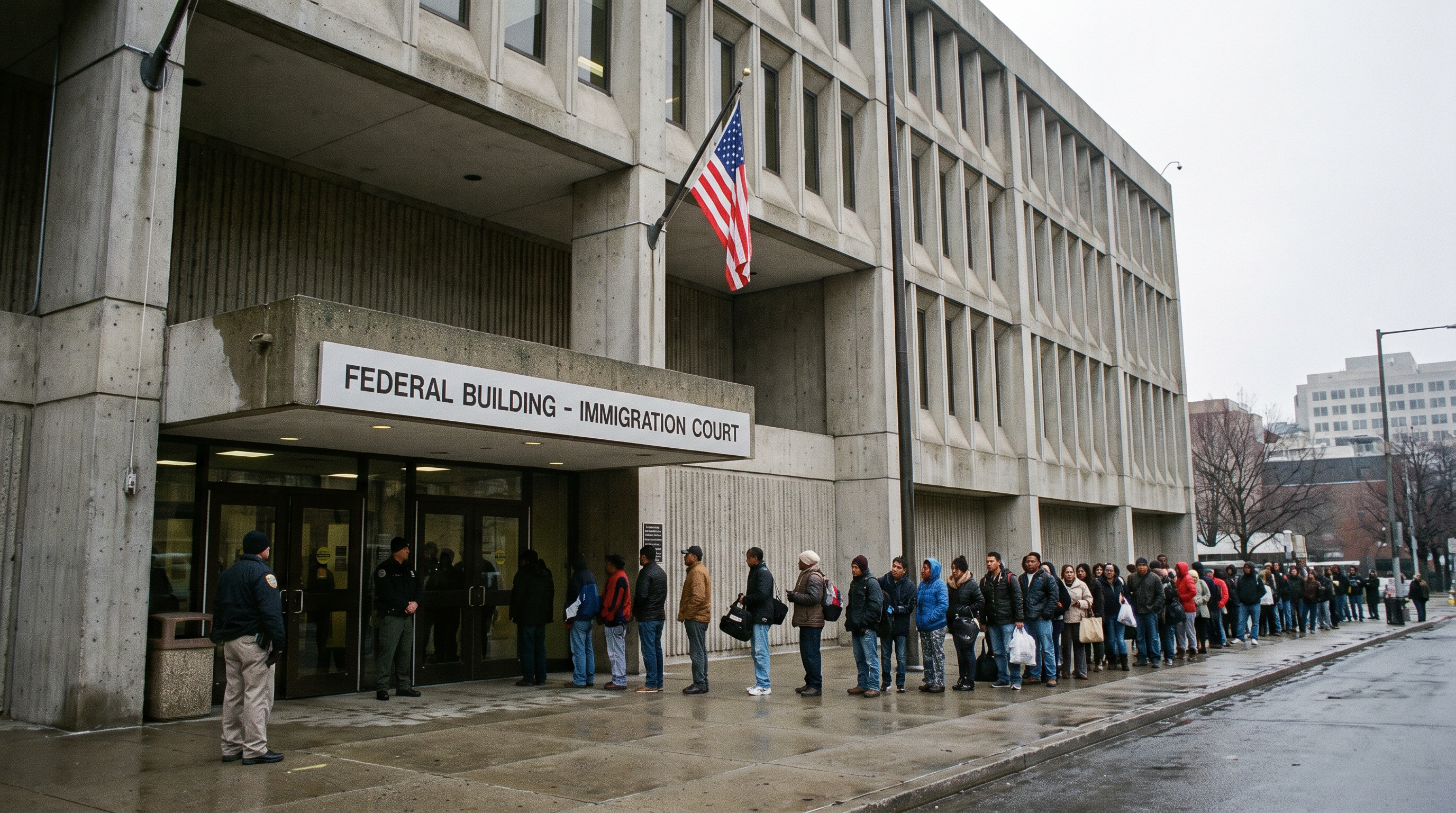
More in news politics
See all 5 stories →Gulf Conflict
Iran Rejects U.S. Ceasefire Proposal and Threatens Tel Aviv as Trump Weighs 'Massive Attack'
8 sources

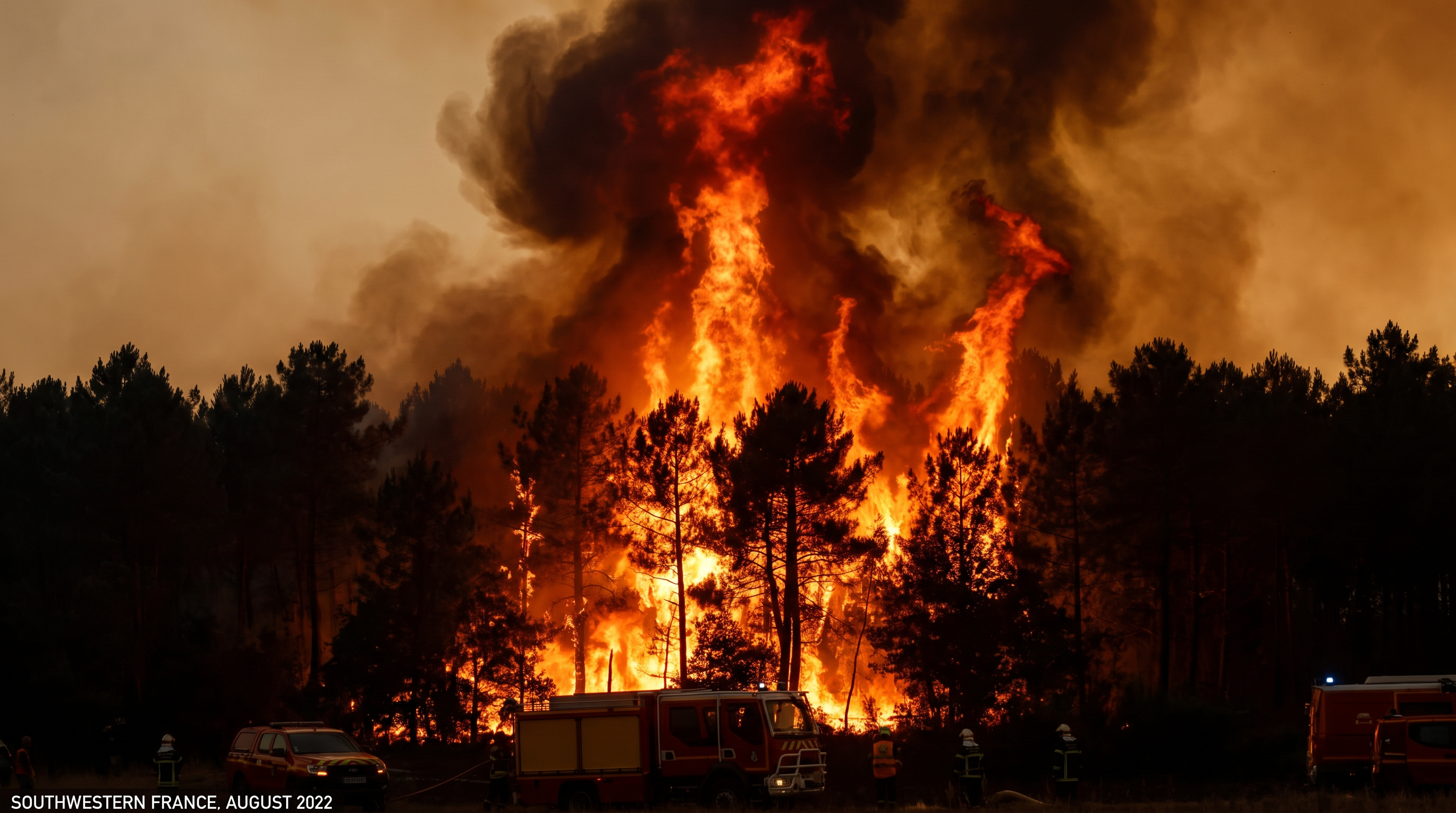
Europe Wildfires
Over 300,000 Evacuated as 'Monster' Wildfires and Fire Clouds Ravage France and Spain
7 sources
Party Infrastructure
DNC Faces Leadership Crisis and $18.5 Million Debt Ahead of Midterms
5 sources
Every angle. Every day.
Get news politics stories with full source coverage and perspective breakdowns delivered to your inbox.