
Quick-Service Restaurant Traffic Plummets 4.4% in May as Diners Seek Better Value
Fast-food visits saw their steepest decline of the year in May 2026, driven by a consumer shift toward casual dining and grocery alternatives.
By Irina Belova

Share this story
The American drive-thru lane is experiencing a noticeable quiet. In May 2026, traffic at quick-service restaurants (QSRs) plummeted by 4.4% year-over-year, marking the steepest monthly decline of the year. After months of subtle softening, the spring data confirmed what many franchise operators had feared: the pricing power of the fast-food industry has finally hit a wall.
The drop was even more pronounced for rapid, off-premise transactions. Visits lasting under 10 minutes—the hallmark of grab-and-go and drive-thru convenience—fell by a sharp 6.8%, signaling a deep shift in how consumers utilize fast food.
For decades, the fast-food industry has relied on a simple, recession-proof formula: unparalleled speed paired with unbeatable affordability. But as menu prices have climbed steadily since 2024 to offset rising labor, real estate, and ingredient costs, that core value proposition has fractured.
Consumers are not simply eating less; they are aggressively reallocating their dining dollars. While QSR traffic slid into negative territory, full-service casual dining restaurants actually saw a 0.7% increase in visits during the same period, proving that Americans are still willing to spend on food away from home when the value equation makes sense.[1]
This divergence highlights a structural shift in consumer psychology. Diners are increasingly adopting a 'barbell' approach to their food spending: trading down to value-focused grocery chains like Aldi for everyday meals, while trading up to sit-down restaurants when they choose to dine out.
At casual dining chains such as Chili's and Texas Roadhouse, aggressive marketing of bundled meals has successfully blurred the historical price gap with fast food. When a sit-down burger, fries, and drink costs nearly the same as a drive-thru combo, consumers are naturally opting for the hospitality, ambiance, and perceived quality of the dining room.[1]
Guests want more for their time than just speed—they want a tangible reason to leave the house. Location analytics suggest that diners are actively prioritizing the experience of dining out over the sheer convenience of picking up food to go. The quick-service industry has not taken the traffic erosion lightly. Major players have unleashed a barrage of promotions, from revamped value platforms to aggressive five-dollar meal deals across the pizza and burger segments, hoping to lure back the budget-conscious families that once formed their core demographic.[1]
Yet, these blanket discounts have yielded mixed results across the industry. Analysts warn of 'deal fatigue,' where a saturated promotional environment fails to drive sustained loyalty or meaningful traffic recovery. Consumers have become highly selective, utilizing apps to cherry-pick loss-leader deals without adding high-margin items like sodas or fries to their orders.
Furthermore, blunt discounting poses a severe risk to operator margins. Data shows that while QSR traffic was down in the spring of 2026, net sales actually rose slightly by 2.3%, driven entirely by a 2.7% increase in average check sizes.[1]
This increase in average check size indicates a complex reality: while fewer guests are visiting fast-food establishments, those who do are spending more per transaction. This is occurring either through modest price increases on premium menu items or through larger basket sizes as families consolidate their trips.
To navigate this challenging landscape, industry analysts are urging QSR brands to abandon across-the-board price hikes in favor of precision pricing. By leveraging artificial intelligence and data analytics, chains can identify exactly which items to hold steady and which to discount, protecting margins without alienating price-sensitive guests.
External economic pressures continue to complicate the industry's path to recovery. Elevated gas prices throughout the spring of 2026 have historically correlated with reduced drive-thru traffic, as lower- and middle-income consumers consolidate their errands to conserve fuel. When it costs more to drive to the restaurant, the convenience of the drive-thru becomes less appealing, further incentivizing diners to either eat at home or make a dedicated trip to a full-service restaurant where the overall experience justifies the transportation cost.[2]
Looking ahead, financial forecasts suggest that QSR same-store sales growth will remain sluggish in the second half of the year, as the combination of persistent inflation and tighter household budgets continues to curb demand. Ultimately, the May traffic slump serves as a critical wake-up call for the fast-food sector. Speed and convenience are no longer sufficient to guarantee customer loyalty; to win back the modern consumer, quick-service restaurants will need to fundamentally reinvent their approach to hospitality, menu innovation, and perceived value.[2]
Viewpoints in depth
Value-Conscious Consumers
Diners who are reallocating their budgets toward groceries or full-service experiences.
For the modern consumer, the definition of 'value' has evolved beyond just a low price point. Frustrated by years of incremental menu price hikes, many diners feel that fast food no longer offers a compelling bargain. Instead of accepting higher prices for drive-thru convenience, these consumers are either trading down to value-focused grocery stores for everyday meals or saving their discretionary income for casual dining restaurants where the quality of food and table service justifies the cost.
QSR Industry Analysts
Data experts advocating for strategic pricing over blanket discounting.
Industry analysts argue that the era of across-the-board price increases is over, but they also caution against panic-driven discounting. Firms like Revenue Management Solutions emphasize that blunt promotions can erode margins without building long-term loyalty. Instead, they advocate for precision pricing—using data analytics to selectively discount highly elastic items while maintaining premium pricing on core products, ensuring profitability even as overall foot traffic softens.
Casual Dining Operators
Sit-down restaurant chains capitalizing on the shrinking price gap.
Full-service operators view the current landscape as a historic opportunity to win back market share from quick-service competitors. By heavily promoting bundled meals—such as an appetizer, entree, and drink for a fixed price—casual dining chains have successfully highlighted how little difference remains between their prices and a fast-food combo. They argue that when the financial cost is nearly identical, consumers will naturally gravitate toward the superior hospitality and atmosphere of a sit-down meal.
Key points
- Quick-service restaurant traffic fell by 4.4% year-over-year in May 2026.
- Short visits under 10 minutes, typically associated with drive-thrus, dropped by an even sharper 6.8%.
- Full-service casual dining restaurants saw a 0.7% increase in traffic during the same period.
- Despite lower foot traffic, QSR net sales rose 2.3% due to higher average check sizes.
What we don’t know
- Whether the summer rollout of new $5 value meals will successfully reverse the traffic slide in the third quarter.
- How long casual dining chains can maintain their current price points before facing their own margin pressures.
- If the decline in short, off-premise visits represents a permanent shift in consumer habits or a temporary reaction to gas prices.
How we got here
Early 2024
Fast-food chains implement significant price increases to offset rising labor and ingredient costs.
Late 2025
QSR traffic begins to soften as consumer price sensitivity reaches a tipping point.
April 2026
Traffic declines slightly by 0.8%, though higher average checks keep net sales positive.
May 2026
QSR traffic plummets by 4.4%, marking the worst monthly decline of the year as consumers shift toward casual dining.
- Value-Conscious Consumers
- Diners who are reallocating their budgets toward groceries or full-service experiences.
- QSR Industry Analysts
- Data experts advocating for strategic pricing over blanket discounting.
- Casual Dining Operators
- Sit-down restaurant chains capitalizing on the shrinking price gap.
Perspectives this story doesn't cover
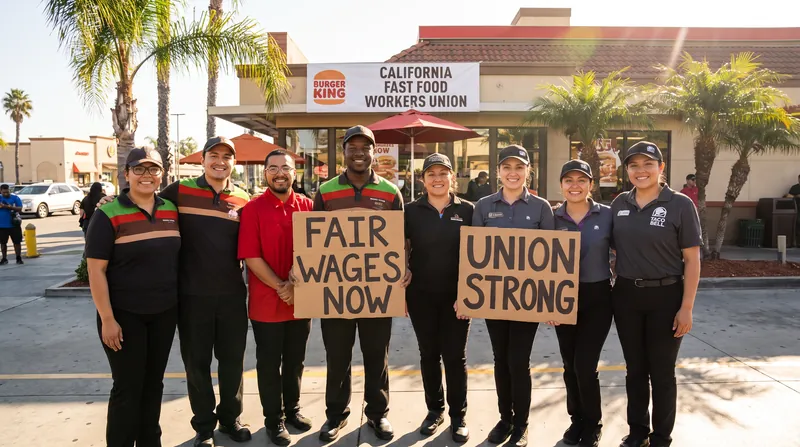
- Frontline fast-food workers managing the new promotional rollouts
- Independent restaurant owners competing with corporate value meals
Sources
Source coverage
2 outlets
3 viewpoints surfaced


- [1]Nation's Restaurant NewsValue-Conscious Consumers
QSR's traffic woes may be driven by deal fatigue
Read on Nation's Restaurant News → - [2]Bloomberg IntelligenceQSR Industry Analysts
US Quick-Service Restaurant Traffic and Sales Outlook H2 2026
Read on Bloomberg Intelligence →
More in Food & Drink
See all →Food Safety
The End of 'Forever Chemicals': How 2026 Became the Year PFAS Left the Drive-Thru
2 sources
Sustainable Packaging
Fast Food's Zero-Waste Era: How Seaweed and Microbial Plastics Are Finally Replacing the 'Forever Wrapper'
3 sources
Restaurant Traffic
US Restaurant Foot Traffic Falls 2.4% in August, Pressuring Dining Stocks
4 sources
GLP-1 Market Impact
GLP-1 Weight-Loss Drugs Put $73 Billion in Global Food Brand Value at Risk, Report Finds
4 sources
Comments
Every angle. Every day.
Get Food & Drink stories with full source coverage and perspective breakdowns, free every day.