
OPEC+ Agrees to Fully Unwind Voluntary Production Cuts, Boosting September Oil Supply by 188,000 BPD
Seven core OPEC+ members will increase their collective output by 188,000 barrels per day in September, completing the reversal of a 1.65 million bpd cut implemented in 2023. The group now faces a strategic choice between pausing further increases or continuing to restore market share.
By Hunter Cole

On August 2, 2026, seven core members of the OPEC+ alliance agreed to inject an additional 188,000 barrels per day into the global market starting in September. The decision, finalized during a virtual ministerial meeting, marks the sixth consecutive monthly quota increase for the producer group and signals a shift in its supply management strategy.[1][4]
This specific adjustment represents a structural milestone: it completes the full reversal of a 1.65 million barrel-per-day voluntary production cut that the group first implemented in April 2023. The rollback campaign has steadily returned sidelined capacity to the market over the course of the year, testing the resilience of global crude demand against a backdrop of macroeconomic uncertainty.[2][5]
The September allocation was approved by Saudi Arabia, Russia, Iraq, Kuwait, Kazakhstan, Algeria, and Oman. The proceedings advanced smoothly despite the absence of the United Arab Emirates, which formally departed the cartel in May 2026, leaving the remaining core members to execute the final phase of the restoration plan.[1][2]
Under the new framework, Saudi Arabia and Russia will each add 62,000 barrels per day to their respective targets. Iraq will follow with a 26,000-barrel increase, Kuwait with 16,000, Kazakhstan with 10,000, Algeria with 6,000, and Oman with 5,000.[3][4]
The alliance framed the decision as a reflection of healthy market fundamentals and a stable global economic outlook. The group's Joint Ministerial Monitoring Committee noted that the unwinding provides participating countries an opportunity to accelerate compensation for previous periods of overproduction, effectively resetting baselines.[4][6]
However, the translation of these paper quotas into physical barrels remains constrained by severe geopolitical friction. Ongoing hostilities between the United States and Iran, alongside persistent attacks on Red Sea shipping routes, have complicated maritime logistics and effectively capped export flows from the Middle East.[1][3]
Russia's output also continues to lag its official targets. Constrained by Western sanctions and repeated Ukrainian drone strikes on its domestic refining and export infrastructure, Russian production hovers near 9 million barrels per day—well below its newly adjusted 9.94 million target.[2][3]
The Joint Ministerial Monitoring Committee explicitly acknowledged these infrastructure vulnerabilities during the August meeting. The committee warned that repairing damaged energy assets is a highly capital-intensive and time-consuming process, which inherently limits supply availability and injects volatility into the market regardless of official quota expansions.[1][4]
With the 2023 voluntary cuts now fully reversed, OPEC+ still maintains a substantial buffer of withheld supply. A separate, broader layer of production cuts totaling roughly 2 million barrels per day—originally agreed upon in 2022—remains in effect and is scheduled to govern output through the end of 2026.[1][5]
The completion of the unwinding phase forces a strategic pivot for the alliance. Analysts widely expect the group to pause further quota increases in the fourth quarter to assess how the market absorbs the restored barrels, particularly as seasonal demand patterns shift heading into the winter months.[2][6]
Viewpoints in depth
Strategy A: Continued Output Restoration (Market Share Focus)
Prioritizing the return of sidelined capacity to prevent rival producers from capturing global demand growth.
For: Reclaiming market share from non-OPEC producers, utilizing idle infrastructure, and generating immediate volume-based revenue for member states. Against: Risks oversupplying the market if global macroeconomic growth slows, potentially triggering a price collapse that offsets any volume gains. Evidence: The successful absorption of the 1.65 million bpd rollback without crashing prices demonstrates market resilience and the viability of returning barrels. Fits well when: Global demand outpaces forecasts and geopolitical disruptions naturally constrain rival supply. Does not fit when: Inventories build rapidly or a global recession suppresses baseline consumption.
Strategy B: Pausing Increases (Price Defense Focus)
Halting further quota expansions to manage surplus and maintain a high price floor.
For: Defends per-barrel revenue, provides a buffer against sudden demand shocks, and maintains the cartel's pricing power in an uncertain macroeconomic environment. Against: Cedes market share to external competitors and frustrates members with high spare capacity (like Iraq and Kazakhstan) who want to monetize their reserves. Evidence: The retention of the 2 million bpd baseline cuts from 2022 shows the group's ongoing commitment to a price floor over pure volume. Fits well when: Export flows from disrupted regions normalize, threatening to flood the market with unexpected surplus. Does not fit when: High prices accelerate the transition to alternative energy sources or incentivize massive non-OPEC drilling campaigns.
Key points
- OPEC+ will increase September oil production by 188,000 barrels per day.
- The move completes the unwinding of 1.65 million bpd in voluntary cuts from 2023.
- Saudi Arabia and Russia will each add 62,000 bpd to their production targets.
- A separate 2 million bpd production cut from 2022 remains in place through 2026.
What we don’t know
- Whether OPEC+ will officially pause quota increases for the fourth quarter at its September 6 meeting.
- How quickly damaged Russian and Middle Eastern energy infrastructure can be repaired to allow physical exports to match the new paper quotas.
- Whether the departure of the UAE will impact the alliance's ability to enforce compliance on remaining members.
- Price Floor Defenders
- Focus on pausing increases to prevent a supply glut and defend per-barrel revenue.
- Volume Restoration Advocates
- Focus on unwinding cuts to regain market share and monetize spare capacity.
Perspectives this story doesn't cover
- Energy-importing developing nations facing inflation risks from sustained high oil prices.
- U.S. shale producers who benefit from OPEC+ price support.
Sources
Source coverage
6 outlets
2 viewpoints surfaced






- [1]ForbesVolume Restoration Advocates
OPEC+ To Rollback All 'Voluntary' Oil Production Cuts In September
Read on Forbes → - [2]Oil & Gas JournalPrice Floor Defenders
OPEC+ approves September quota increase, completing 2023 cut reversal
Read on Oil & Gas Journal → - [3]The NationalVolume Restoration Advocates
Opec+ agrees output rise in September amid uneasy pause in Iran war
Read on The National → - [4]Egypt Oil & GasPrice Floor Defenders
OPEC+ Agrees September Output Increase of 188,000 bbl/d
Read on Egypt Oil & Gas → - [5]Energies MediaVolume Restoration Advocates
OPEC+ approves final September output increase, completing rollback of 1.65 million bpd voluntary cut
Read on Energies Media → - [6]KplerPrice Floor Defenders
OPEC+ continues path towards unwinding cuts
Read on Kpler →
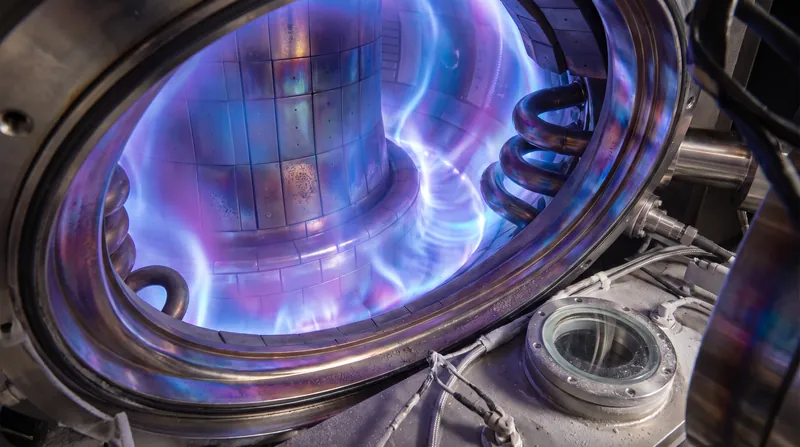
More in Energy
See all →Fuel Cell Physics
The Nernst Equation and the Proton Exchange Membrane That Dictate Fuel Cell Voltage and Efficiency
10 sources
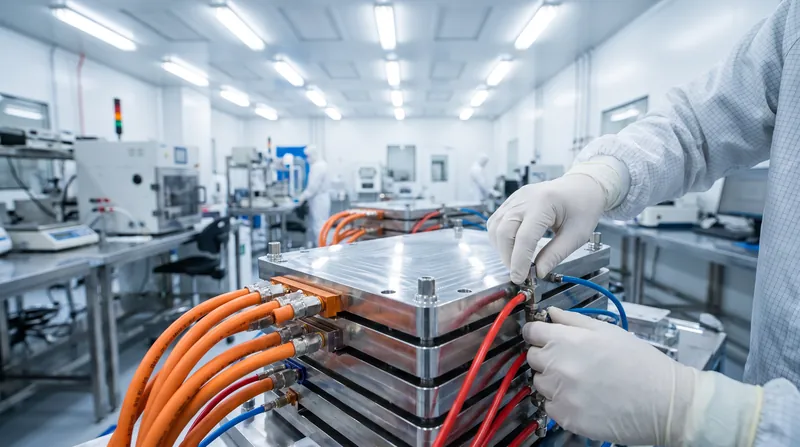
Benchmark Economics
Evaluating Brent and WTI Crude Benchmarks: Physical Properties Versus Financial Premiums
8 sources
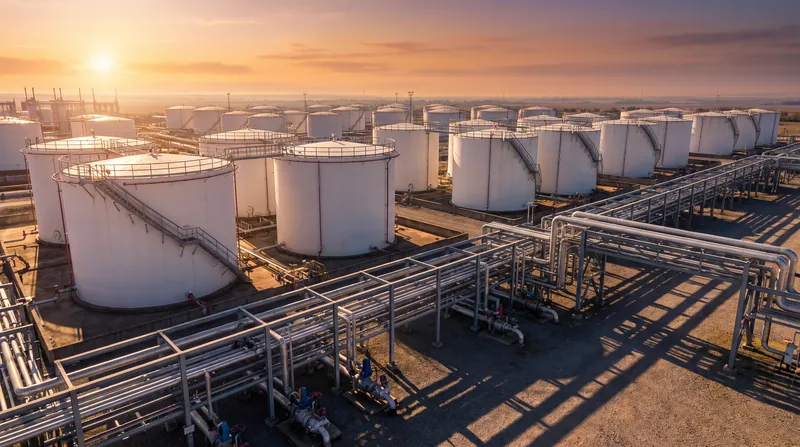
Refining Margins
The 3:2:1 Ratio and the Futures Contracts That Define the Refinery Crack Spread
7 sources
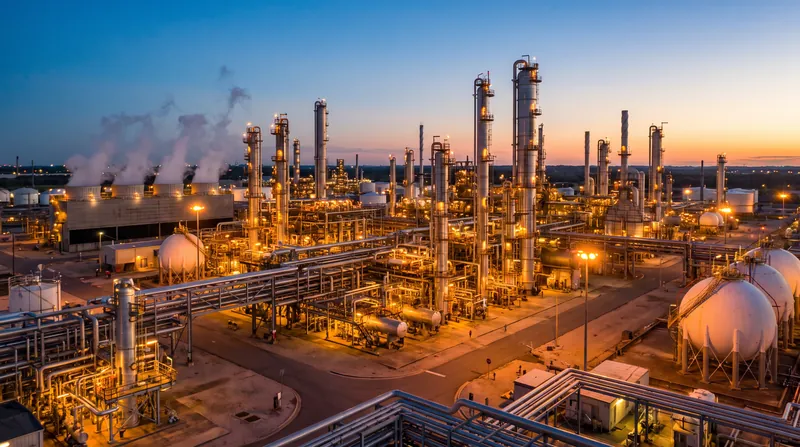
Refining Tech
The Zeolite Catalyst and 500°C Temperature That Dictate a Refinery's Gasoline-to-Fuel Oil Ratio
6 sources
Comments
Every angle. Every day.
Get Energy stories with full source coverage and perspective breakdowns, free every day.