
OLED vs. Mini-LED in 2026: The Complete Trade-Off Analysis
As Tandem OLED and RGB Mini-LED push display technology to new extremes, choosing the right premium TV now depends entirely on room lighting and viewing habits.
By Factlen Editorial Team
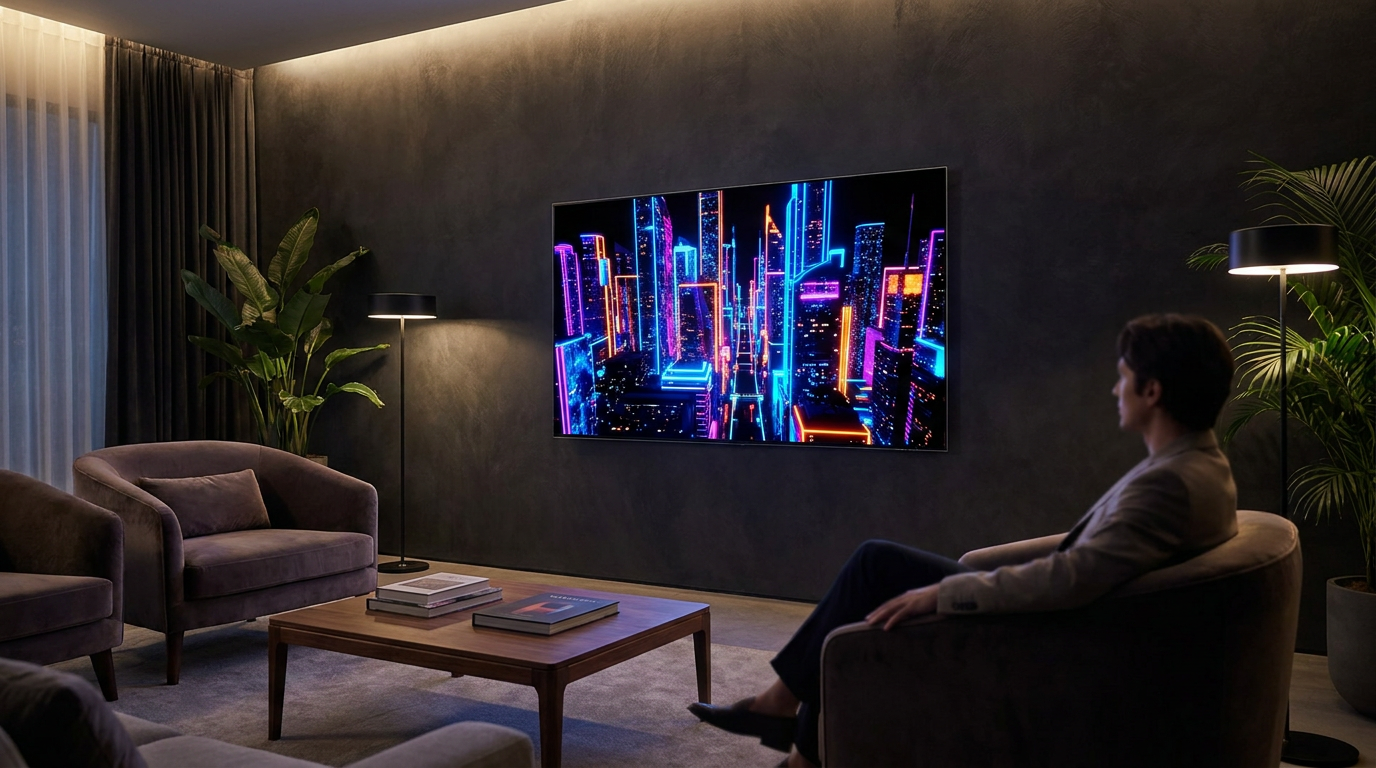
- Cinematic Purists
- Advocates who prioritize perfect black levels, micro-contrast, and director's intent above all else.
- Bright-Room Viewers
- Consumers and reviewers focused on daytime visibility, glare reduction, and high-impact HDR.
- Heavy Productivity Users
- Gamers, developers, and PC users who require static UI stability and zero burn-in risk.
What's not represented
- · Budget TV Buyers
- · Projector Enthusiasts
Why this matters
Premium televisions are a significant decade-long investment. Understanding the hard physical limits of these competing technologies ensures you don't spend thousands on a display that washes out in your sunny living room or suffers permanent burn-in from your daily workflow.
Key points
- Tandem OLED and RGB Mini-LED represent the absolute pinnacle of 2026 display technology, but they serve fundamentally different environments.
- OLED remains the undisputed champion for dark-room cinematic viewing, offering perfect black levels and pixel-level contrast without blooming.
- Mini-LED dominates in bright, sunlit rooms, capable of sustaining massive full-screen brightness that would force an OLED to aggressively dim.
- Burn-in remains a cumulative risk for OLED panels displaying static content, making Mini-LED the safer choice for heavy productivity and PC use.
- Buyers must choose based on their specific room lighting and daily habits, as neither technology is a universal winner for every scenario.
The golden age of display technology has arrived, but it has brought a paralyzing choice for consumers upgrading their living rooms or home offices. Just a few years ago, the premium TV and monitor market was a simple binary: accept the washed-out blacks of standard LCDs or pay a massive premium for the perfect contrast of OLED, while praying it would not suffer from permanent image retention. In 2026, that landscape has fundamentally shifted. The arrival of Tandem OLED and RGB Mini-LED architectures has elevated both technologies to unprecedented performance levels, turning a once-simple decision into a complex trade-off analysis. With flagship models from LG, Samsung, TCL, and Hisense pushing the boundaries of physics and thermal management, buyers must now weigh their exact lighting conditions, viewing habits, and long-term durability needs before making a four-figure investment.[4][7]
The core technological divergence between the two formats dictates their respective strengths. OLED, or Organic Light-Emitting Diode, relies on self-emissive pixels where each microscopic dot generates its own light and color. When an OLED pixel needs to display black, it simply turns off completely, resulting in an infinite contrast ratio and absolute black depth. Conversely, the 2026 iteration of Mini-LED utilizes a sophisticated backlight system. Instead of shining a single white light through a color filter, the newest RGB Mini-LED displays use clusters of independent red, green, and blue microscopic diodes. These panels pack upwards of 2,300 to 20,000 local dimming zones behind the liquid crystal layer, allowing the display to blast massive amounts of light into bright areas while shutting off zones behind dark areas to simulate OLED-like contrast.[2][4]
The case for OLED centers entirely on pixel-level precision and cinematic accuracy. Because every single pixel is its own independent light source, OLED panels deliver perfect micro-contrast without any light bleeding into adjacent dark areas. This makes the technology the undisputed champion for dark-room viewing, where the absolute black levels create a deeply immersive, three-dimensional image. Furthermore, OLED boasts near-instantaneous response times—often measured at 0.03 milliseconds—and ultra-wide viewing angles that ensure colors remain perfectly saturated even for guests sitting at the far edges of a living room couch. For purists who want to watch films exactly as the director graded them in a mastering suite, OLED remains the reference standard.[4][6]

The argument against OLED involves its inherent physical limitations regarding sustained brightness and organic degradation. To protect the organic materials from overheating and burning out, OLED panels employ an Auto Brightness Limiter (ABL). If a bright element—like a daytime sky, a hockey rink, or a white web browser—fills a large portion of the screen, the TV aggressively dims the entire image to protect itself. While 2026 models can hit 1,500 to 2,000 nits in tiny, momentary highlights, their full-screen sustained brightness often drops to a mere 250 to 400 nits. Additionally, the organic compounds degrade over time. Prolonged exposure to static elements, such as news tickers, sports scoreboards, or video game heads-up displays, carries a cumulative risk of permanent image retention, commonly known as burn-in.[3][4]
The evidence for OLED's current standing is found in the latest hardware testing and architectural leaps. LG's 2026 G5 series and Samsung's S95F utilize Tandem OLED and fourth-generation QD-OLED technologies, respectively, which stack multiple emissive layers and incorporate advanced heat dissipation layers. These innovations significantly slow the rate of organic wear and allow for brighter specular highlights than previous generations. However, independent testing confirms the underlying chemical limits remain. After 10,000 hours of strenuous testing, reviewers note that while 2026 OLED panels show strong mechanical reliability and lower outright failure rates than many LCDs, they still exhibit visible burn-in when subjected to prolonged, static light-mode productivity workloads or continuous news broadcasts.[3][6]
The evidence for OLED's current standing is found in the latest hardware testing and architectural leaps.
The case for Mini-LED is built on sheer, unadulterated luminance and absolute longevity. By removing the traditional color filter and utilizing pure RGB diodes, 2026 Mini-LED panels can achieve sustained, full-screen brightness levels that are physically impossible for organic displays. These televisions can effortlessly maintain 2,000 to 4,500 nits of brightness, with some flagship models from Chinese manufacturers like TCL and Hisense pushing toward the 10,000-nit theoretical limit of the HDR standard. This immense light output allows Mini-LED to completely overpower ambient sunlight in brightly lit living rooms, maintaining vibrant color volume and contrast where an OLED would simply look like a dark mirror. Crucially, because the backlight relies on robust inorganic materials, Mini-LED carries zero risk of permanent burn-in, making it a forever display for heavy users.[1][2]
The argument against Mini-LED focuses on the unavoidable compromises of zone-based backlighting. Even with 20,000 independent dimming zones, a 4K television still contains over 8.2 million individual pixels. This means that a single dimming zone must control the light for hundreds of pixels simultaneously. When a bright object, such as a white cursor or a streetlamp, moves across a pitch-black background, the backlight zone must illuminate, inevitably casting a faint halo of light into the surrounding dark pixels. While 2026 algorithmic processing has drastically minimized this blooming effect when viewed head-on, it remains visible when watching the screen from an off-axis angle. Furthermore, Mini-LED panels generally suffer from narrower viewing angles compared to OLED, meaning picture quality degrades for viewers seated to the side.[4][6]

The evidence supporting Mini-LED's dominance in bright environments is overwhelming in the 2026 market. At the Consumer Electronics Show, flagship models like the Hisense 116UXS and TCL's QM8K series demonstrated how RGB Mini-LED technology can cover up to 110 percent of the BT.2020 color spectrum at extreme brightness levels—a feat OLED struggles to match above 1,000 nits. Long-term testing data further validates the technology's durability; Mini-LED backlights show under three percent brightness drift after 10,000 hours of heavy use. Because the thermal load is distributed evenly across tens of thousands of diodes, the panels operate with cooler electric currents, reducing thermal stress and ensuring the display can maintain peak performance for over a decade without a single ghost image.[2][5]
Ultimately, OLED fits well when the primary viewing environment is a light-controlled or darkened room, such as a dedicated home theater or a cozy basement setup. It is the optimal choice for cinephiles who prioritize perfect black levels, nuanced shadow detail, and reference-level color accuracy over sheer brightness. Gamers who favor atmospheric, story-driven titles with dark environments will also benefit immensely from OLED's pixel-perfect contrast and near-zero response times. If the display will be used primarily for varied, dynamic content like movies and prestige television, and the buyer is willing to manage static elements to protect the panel, OLED remains the pinnacle of visual fidelity.[4][6]
Conversely, OLED does not fit well when the display will be placed in a sun-drenched living room with large windows and harsh daytime glare. The aggressive Auto Brightness Limiter will cause full-screen bright scenes, such as winter sports or daytime football games, to look noticeably dim and washed out. Furthermore, OLED is a poor choice for users who consume a high volume of static content. If the television will be left on all day tuned to a 24-hour news network with a persistent lower-third ticker, or if it will serve as a primary computer monitor for eight hours of daily coding and productivity work, the cumulative risk of burn-in makes the organic technology a ticking time bomb.[1][3]

Mini-LED fits well when the display must compete with significant ambient light. For open-concept living rooms flooded with natural sunlight, Mini-LED's retina-searing brightness ensures the picture remains punchy, vibrant, and completely legible regardless of the time of day. It is the superior choice for sports fans who host daytime watch parties, as the technology can sustain bright, full-screen images without any dimming penalties. Additionally, Mini-LED is the definitive recommendation for power users, software developers, and gamers who play HUD-heavy MMOs or sports titles. The complete absence of burn-in anxiety means the display can be used aggressively for static productivity tasks for a decade without any degradation in uniformity.[1][2]
Mini-LED does not fit well when the buyer is a contrast purist building a dedicated, pitch-black home theater. In a completely dark room, the extreme brightness of a Mini-LED can actually cause eye strain, and the slight blooming around bright objects on dark backgrounds becomes much more apparent and distracting. Viewers who are highly sensitive to backlight fluctuations or who frequently host large movie nights where guests are seated at wide angles will likely be frustrated by the technology's off-axis color shifting and contrast degradation. For those seeking the absolute most natural, cinematic image in a controlled environment, the brute force of Mini-LED cannot entirely replicate the delicate precision of self-emissive pixels.[4][6]
How we got here
2013
LG releases the first commercially viable large-format OLED televisions, establishing a new standard for perfect black levels.
2019
TCL introduces the first Mini-LED television, shrinking backlight diodes to improve LCD contrast.
2024
Tandem OLED technology debuts, stacking emissive layers to boost brightness and panel lifespan.
2026
RGB Mini-LED panels eliminate traditional color filters, allowing LCDs to hit unprecedented 10,000-nit peaks.
Viewpoints in depth
Cinematic Purists
Advocates who prioritize perfect black levels, micro-contrast, and director's intent above all else.
For this camp, the conversation begins and ends with pixel-level light control. They argue that while Mini-LED can get blindingly bright, the inherent blooming of zone-based backlights destroys the integrity of starfields, subtitles, and shadowy cinematic scenes. To a purist, a display that cannot produce absolute, zero-nit black is fundamentally flawed for prestige movie viewing, making OLED the only acceptable choice for a dedicated home theater.
Bright-Room Viewers
Consumers and reviewers focused on daytime visibility, glare reduction, and high-impact HDR.
This group contends that perfect blacks are irrelevant if the screen acts like a mirror during the day. They point out that modern living rooms are flooded with natural light, which completely washes out the subtle shadow details OLED excels at. By championing RGB Mini-LED, this camp values the brute-force ability to sustain 4,000+ nits across the entire screen, ensuring sports broadcasts and daytime gaming remain vibrant and punchy regardless of the sun's position.
Heavy Productivity Users
Gamers, developers, and PC users who require static UI stability and zero burn-in risk.
For users who leave their screens on for 10 to 12 hours a day with static elements—like coding environments, MMO interfaces, or news tickers—organic degradation is a dealbreaker. This camp relies on 10,000-hour stress tests to prove that even the most advanced 2026 Tandem OLEDs will eventually show ghosting. They advocate strictly for Mini-LED, valuing the peace of mind that comes with an inorganic backlight that can run at maximum brightness for a decade without permanent damage.
What we don't know
- Whether Micro-LED—a technology combining OLED's self-emissive pixels with Mini-LED's inorganic durability—will become affordable for average consumers before the end of the decade.
- How the long-term degradation curve of 2026 Tandem OLED panels will actually look after 20,000 hours of real-world use outside of accelerated lab testing.
- If future algorithmic processing can entirely eliminate the off-axis blooming effect inherent to Mini-LED zone dimming.
Key terms
- Auto Brightness Limiter (ABL)
- A protective software mechanism in OLED TVs that automatically dims the screen when a bright image fills too much of the display, preventing overheating.
- Blooming
- A visual artifact on Mini-LED TVs where light from a bright object bleeds into the surrounding dark pixels, creating a faint halo effect.
- Tandem OLED
- A 2026 panel technology that stacks multiple organic light-emitting layers to increase overall brightness and extend the lifespan of the display.
- Local Dimming Zones
- Specific clusters of backlight LEDs that can turn on or off independently to improve contrast on an LCD television.
- Nits
- A standard unit of measurement for display brightness; a higher number indicates a brighter screen.
Frequently asked
Does OLED still suffer from burn-in in 2026?
Yes. While Tandem OLED and software mitigations have drastically slowed the degradation process, prolonged exposure to static images over thousands of hours still carries a cumulative risk of permanent image retention.
What is RGB Mini-LED?
It is a new backlight architecture that removes traditional white LEDs and color filters, using pure red, green, and blue microscopic diodes to generate brighter, more accurate colors.
Which TV is better for a bright living room?
Mini-LED is significantly better for bright rooms. It can sustain much higher full-screen brightness to overpower daytime glare, whereas OLED panels will automatically dim to protect themselves.
Is OLED or Mini-LED better for gaming?
It depends on the game. OLED is superior for dark, atmospheric titles due to its near-instant response times and perfect blacks. Mini-LED is better for bright, HUD-heavy games where burn-in is a concern.
Sources
Source coverage
7 outlets
3 viewpoints surfaced







[1]PCWorldHeavy Productivity Users
Mini-LED vs OLED: Why it's time to look beyond organic displays in 2026
Read on PCWorld →[2]XDA DevelopersBright-Room Viewers
At CES 2026, RGB mini-LED rewrites how light and color are created
Read on XDA Developers →[3]KTC PlayHeavy Productivity Users
Tandem OLED vs. Mini-LED: Choosing the Best HDR Panel in 2026
Read on KTC Play →[4]Display MasterCinematic Purists
The 2026 Display Dilemma: Which Tech Reigns Supreme?
Read on Display Master →[5]BGRHeavy Productivity Users
Here's How Long You Can Expect Your Mini LED TV To Last
Read on BGR →[6]Data Wire SolutionsCinematic Purists
Best TVs for 2026: 10 OLED and Mini-LED Picks by Room and Brightness
Read on Data Wire Solutions →[7]CNETBright-Room Viewers
These Are the Most Head-Turning TVs of CES 2026
Read on CNET →
Every angle. Every day.
Get shopping stories with full source coverage and perspective breakdowns delivered to your inbox.