
Oil Prices Tumble and Global Markets Rally as US and Iran Reach Peace Deal
The United States and Iran have agreed to a peace deal brokered by Pakistan, ending months of conflict and reopening the critical Strait of Hormuz. The breakthrough immediately sent global oil prices plummeting and stock futures surging as the threat of a prolonged energy crisis faded.
By Factlen Editorial Team
- Market Optimists
- Investors and traders focused on immediate economic relief, equity rallies, and easing inflation.
- Geopolitical Realists
- Diplomats and analysts focused on the complexities of nuclear verification and conditional sanctions relief.
- Energy Logistics Sector
- Shipping companies and commodities experts focused on the physical hurdles of clearing the waterway.
What's not represented
- · Iranian domestic economic view
- · Asian energy importers' long-term strategy
Why this matters
The reopening of the Strait of Hormuz removes a massive bottleneck for global energy supplies, instantly lowering the cost of oil. For consumers, this translates to cheaper gasoline and reduced inflationary pressures, while businesses reliant on global shipping can resume normal operations.
Key points
- The US and Iran reached a peace deal brokered by Pakistan, halting regional conflict.
- The agreement will reopen the Strait of Hormuz, a critical chokepoint for global oil.
- Global oil prices plummeted and stock futures surged following the announcement.
- European allies are prepared to lift sanctions if Iran takes verifiable steps on its nuclear program.
- Trapped vessels, including LNG tankers, are already preparing to navigate the strait.
The global economy received a massive jolt of relief late Sunday as the United States and Iran reached an interim peace agreement, effectively halting a devastating regional war. Brokered with the help of Pakistani mediators, the deal promises to immediately reopen the Strait of Hormuz, the world's most critical energy chokepoint.[2][4]
The announcement triggered an instantaneous and dramatic reaction across global financial markets. Oil prices, which had surged to punishing highs during the blockade, tumbled sharply in overnight trading as traders priced in the return of millions of barrels of crude to the global supply chain.[1][3]
U.S. equity futures climbed in tandem with the drop in energy costs, signaling broad investor optimism. The prospect of cheaper fuel and stabilized supply chains offered a sudden reprieve from the inflationary pressures that have weighed heavily on the global economic outlook over the past several months.[1][3]
President Donald Trump declared the diplomatic effort a victory, stating that the peace deal is "complete" and that the Strait of Hormuz will officially reopen on Friday upon the formal signing of the agreement. The resolution follows weeks of highly volatile and mixed messaging from both Washington and Tehran regarding the trajectory of the conflict.[4][5][6]
To understand the sheer scale of the market's reaction, one must look at the geography of global energy. The Strait of Hormuz is a narrow waterway between the Persian Gulf and the Gulf of Oman, through which roughly a fifth of the world's total oil consumption passes.[2][5]

When the conflict escalated and the strait was blockaded, it effectively severed the primary artery for Middle Eastern crude exports. This artificial supply shock forced energy importers in Asia, Europe, and the Americas to scramble for alternative, more expensive sources, driving up costs across the board.[3][5]
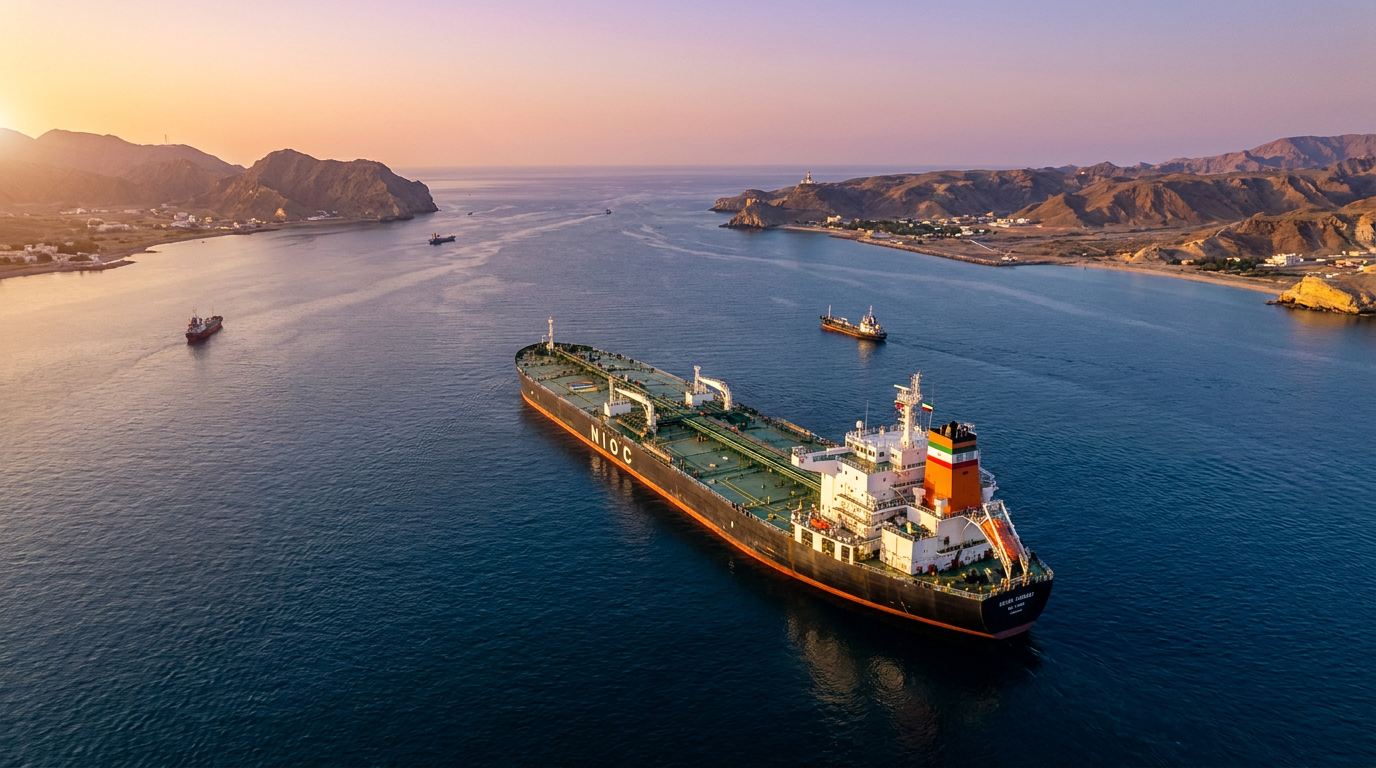
The logistical backlog created by the blockade is immense. For over three months, vessels have been trapped in the Persian Gulf, unable to safely navigate the contested waters. Among these are highly specialized liquefied natural gas (LNG) tankers, whose cargoes are vital for global power generation.[8]
For over three months, vessels have been trapped in the Persian Gulf, unable to safely navigate the contested waters.
Signs of physical movement are already emerging ahead of Friday's official reopening. Tracking data indicates that at least one LNG tanker, marooned in the Gulf since the conflict began, has already begun heading toward the Strait of Hormuz in anticipation of safe passage.[8]

Beyond the immediate resumption of shipping, the agreement sets the stage for broader geopolitical and economic realignments. The interim deal includes provisions for negotiations regarding the future of Iran's nuclear program, a long-standing flashpoint that has triggered multiple waves of economic sanctions.[1][4]
European allies have signaled their readiness to support the economic normalization process. In a joint statement, the leaders of the UK, France, Germany, and Italy announced they are prepared to lift relevant sanctions in response to "clear, verifiable steps by Iran on its nuclear programme."[7]
This coordinated European response highlights the dual nature of the agreement: it is both a military ceasefire and a framework for economic reintegration. If Iran complies with the verification mechanisms, the lifting of sanctions could unlock significant foreign investment and allow Iranian crude to officially re-enter Western markets.[7]

However, energy analysts caution that the physical reopening of the Strait of Hormuz will not happen overnight. The waterway must be cleared of any military hazards, and insurance premiums for commercial shipping in the region will likely remain elevated until a sustained period of peace is demonstrated.[5][8]
Furthermore, the broader macroeconomic impacts will take time to filter through the global economy. While the immediate drop in crude prices provides relief at the wholesale level, it may take weeks for consumers to see significantly lower prices at the gas pump or for businesses to adjust their logistics budgets.[3]
Central banks, including the U.S. Federal Reserve, will be closely monitoring the durability of this price drop. A sustained reduction in energy costs could ease headline inflation, potentially giving policymakers more breathing room to hold or even lower interest rates in the coming quarters.[3]

Ultimately, the US-Iran peace deal represents a profound de-escalation of one of the most severe threats to the global economy in recent years. As the ink dries on Friday, the focus will shift from diplomatic breakthroughs to the complex, grinding work of untangling a massive logistical backlog and verifying the terms of a fragile peace.[4][6]
How we got here
Over 3 months ago
The Strait of Hormuz was blockaded, trapping commercial vessels and spiking global oil prices.
Recent weeks
Washington and Tehran issued mixed messaging regarding the trajectory of the conflict.
Sunday
Pakistan announced a diplomatic breakthrough, and President Trump confirmed the peace deal was complete.
Friday
The formal agreement is scheduled to be signed, officially reopening the Strait of Hormuz.
Viewpoints in depth
Financial Markets' View
Investors see the deal as a massive relief valve for global inflation.
Equities traders and macroeconomic analysts are largely celebrating the agreement as a silver bullet for recent inflationary spikes. By removing the artificial supply shock caused by the blockade, markets anticipate a rapid normalization of energy costs. This optimism is reflected in the immediate surge of U.S. and Japanese equity futures, as cheaper oil translates directly to lower operating costs for transport and manufacturing sectors, potentially giving central banks room to pause interest rate hikes.
Energy Logistics Sector's View
Shipping companies remain focused on the physical and logistical hurdles of reopening.
While traders sell off oil futures, the physical energy market faces a more complex reality. Maritime logistics experts emphasize that declaring a waterway open is vastly different from safely navigating it. The sector is bracing for a slow, methodical clearing of the Strait of Hormuz, requiring the renegotiation of exorbitant maritime insurance premiums. The backlog of trapped vessels, including highly sensitive LNG tankers, will take weeks to untangle before normal flow rates are achieved.
European Diplomats' View
Allies are tying economic normalization strictly to verifiable nuclear compliance.
For European stakeholders, the reopening of the Strait is only the first step in a much broader geopolitical negotiation. Leaders from the UK, France, and Germany are emphasizing a conditional approach to the peace deal. They are prepared to lift crippling economic sanctions and allow Iranian crude back into Western markets, but only in direct exchange for transparent, verifiable steps regarding Iran's nuclear program. Their focus remains on long-term regional stability rather than short-term market relief.
What we don't know
- The exact timeline for the Strait of Hormuz to return to full, unimpeded shipping capacity.
- The specific concessions Iran has agreed to regarding its nuclear program.
- How quickly European and US sanctions will be formally lifted following verification.
Key terms
- Strait of Hormuz
- A vital, narrow shipping chokepoint between the Persian Gulf and the Gulf of Oman, crucial for the transport of Middle Eastern oil.
- LNG Tanker
- A specialized vessel designed to transport liquefied natural gas at sub-zero temperatures, heavily reliant on clear shipping lanes.
- Sanctions Relief
- The removal of economic and trade restrictions placed on a country, often used as an incentive in diplomatic negotiations.
Frequently asked
Why did oil prices drop so quickly?
Markets anticipate a massive influx of previously blocked oil returning to the global supply chain once the Strait of Hormuz reopens.
When will shipping resume?
President Trump indicated the Strait will officially reopen on Friday upon the formal signing of the agreement, though some vessels have already begun moving into position.
Will sanctions on Iran be lifted?
European leaders have stated they are prepared to lift relevant sanctions, but only in response to clear, verifiable steps by Iran regarding its nuclear program.
Sources
Source coverage
8 outlets
3 viewpoints surfaced






[1]BloombergEnergy Logistics Sector
Oil Slumps as Trump Says Iran Deal Agreed and Hormuz to Reopen
Read on Bloomberg →[2]BBCGeopolitical Realists
Oil prices slide after Pakistan announces deal between US and Iran
Read on BBC →[3]The New York TimesMarket Optimists
Oil Prices Tumble After Trump Announces Deal With Iran
Read on The New York Times →[4]CNBCMarket Optimists
U.S. and Iran agree on peace deal to end the war, Trump and Pakistan say
Read on CNBC →[5]ForbesEnergy Logistics Sector
Trump Says Iran Peace Deal ‘Complete’—Ends Strait Of Hormuz Blockade
Read on Forbes →[6]NPRGeopolitical Realists
Trump declares victory in Iran talks
Read on NPR →UK, France, Germany Ready to Lift Relevant Iran Sanctions
Read on Bloomberg UK →LNG Tanker Heads Toward Hormuz as Deal Raises Hopes of Reopening
Read on Bloomberg Energy →

More in business
See all 5 stories →AI Infrastructure
SpaceX Raises Record $85.7 Billion in Historic IPO to Fund Orbital AI Infrastructure
7 sources
AI Economics
The Compute-First Era: How AI is Rewriting the Rules of Venture Capital
6 sources
Fed Watch
Federal Reserve Holds Rates Steady as New Chair Kevin Warsh Signals Hawkish Pivot
8 sources
Every angle. Every day.
Get business stories with full source coverage and perspective breakdowns delivered to your inbox.