
Office Demolitions and Conversions Outpace New Construction for Second Year, Signaling Structural Recovery in Prime Markets
The U.S. commercial real estate market is shrinking its office footprint as developers aggressively tear down or convert obsolete buildings into housing, marking a historic shift that is stabilizing urban centers.
By Tao Yang

- Real Estate Analysts
- Focusing on the mathematical stabilization of the commercial property market.
- Housing Advocates & Urbanists
- Viewing the office contraction as a generational opportunity to build residential capacity.
- Commercial Developers
- Navigating the high costs and logistical hurdles of executing adaptive reuse.
Perspectives this story doesn't cover
- Local Tax Authorities
- Small Business Owners in Business Districts
For anyone hunting for an apartment in a major downtown, or wondering why the half-empty office tower down the street is suddenly surrounded by construction scaffolding, the commercial real estate market has quietly crossed a historic threshold. The era of endless glass-and-steel office construction is officially over. Instead, developers are aggressively tearing down obsolete workspaces or gutting them to build housing, fundamentally reshaping the urban core in the process. This shift represents a massive reallocation of city space, moving away from a rigid monoculture of commuter desks toward mixed-use, residential-heavy neighborhoods. For local residents, the abstract financial crisis of commercial real estate is manifesting as a tangible boom in downtown living options, altering the fabric of where and how people live.[4]
For the second consecutive year, the amount of U.S. office space being demolished or converted to other uses has outpaced new office construction. According to recent market data from major commercial real estate brokerages, this unprecedented contraction is actually a healthy signal for cities. It marks a structural recovery that is finally clearing out the pandemic-era glut of empty desks and replacing them with high-demand apartments. Rather than a sign of urban decay, the shrinking office footprint is a necessary right-sizing that allows the broader property market to find its footing after years of remote-work disruption.[1][2]
The shift represents a massive reversal of a decades-long trend that defined American urban development. Brokerage firm JLL reported that nearly 40 million square feet of office space was removed from national inventory over the past year for conversions or redevelopments, while deliveries of new office buildings fell to under 25 million square feet. Overall U.S. office inventory has now declined for two consecutive years, a phenomenon not seen since the turn of the millennium. The sheer scale of the removals is actively shrinking the denominator of total available space, which is a critical mathematical step for market stabilization. Without this aggressive pruning of dead weight, the market would remain trapped in a cycle of oversupply and plummeting valuations.[1]
CBRE’s tracking confirms the severity of the pivot. Across the 58 largest U.S. markets, the firm found that planned demolitions and conversions are roughly double the volume of new space coming online. Prior to the pandemic, new construction routinely outpaced removals by a factor of six to one. Now, the pipeline of new office groundbreakings has plummeted by more than 70% compared to 2019 levels. Developers have effectively halted speculative office projects, redirecting their capital toward asset classes with clearer demand profiles.[2][5]
For renters and prospective homebuyers, this commercial real estate correction is translating directly into a wave of new housing supply. More than 75% of the active office conversion projects nationwide are slated to become multifamily residential properties, according to industry tracking. With over 80 million square feet of office space currently moving through the conversion pipeline, developers are injecting tens of thousands of new apartments into supply-constrained urban centers. This influx of residential units is helping to cool rent growth in several major metropolitan areas while bringing much-needed evening and weekend foot traffic back to city streets that previously emptied out after five o'clock.[2][3]
For renters and prospective homebuyers, this commercial real estate correction is translating directly into a wave of new housing supply.
The buildings targeted for removal are overwhelmingly older, "Class B" and "Class C" properties that lack modern amenities and have struggled to attract tenants in the hybrid-work era. As the values of these aging assets have plummeted—often selling at steep discounts compared to their pre-2020 peaks—the financial math for residential conversion has finally started to make sense for developers. Even in a high-interest-rate environment, acquiring an empty 1980s office building at a fraction of its replacement cost provides enough margin to justify the expensive gut-renovation required for housing.[3][5]
Municipalities are actively accelerating the trend. Cities from New York to San Francisco have introduced zoning changes, tax abatements, and fast-track permitting to encourage developers to repurpose empty commercial buildings. Local governments view these conversions as a critical tool to avoid the dreaded urban doom loop, where vacant offices lead to plummeting property tax revenues, cuts to city services, and deteriorating downtown streetscapes. By subsidizing the transition, cities are protecting their tax base while solving their housing shortages.[3][4]
The removal of obsolete inventory is also stabilizing the broader commercial market. By shrinking the total denominator of available space, landlords are seeing occupancy rates begin to level off. Net absorption—the metric tracking whether more space is being leased than vacated—has turned positive in several prime markets over the last few quarters, signaling that the worst of the office leasing bleed may be over. Tenants are still signing leases, but they are doing so in a smaller, more competitive pool of high-quality buildings.[1][2]
This stabilization is creating a starkly bifurcated market. While older buildings face the wrecking ball or residential gut-jobs, top-tier "Class A" trophy buildings with premium amenities are seeing intense demand and record-high rents. Companies are willing to pay top dollar for high-quality spaces that encourage employees to commute, featuring outdoor terraces, high-end fitness centers, and advanced air filtration. They are, however, entirely abandoning the mediocre middle of the market, leaving those structures to be recycled into apartments.[1]
Looking ahead, industry analysts expect this contraction to persist through the end of the decade. As the pool of easily convertible buildings is gradually exhausted, outright demolitions are expected to take a larger share of the removals, making way for ground-up residential or mixed-use towers. For city dwellers, the ultimate legacy of the remote-work revolution will not just be a change in how they work, but a permanent transformation of the downtown skyline from a monoculture of cubicles into a diverse mix of living spaces.[2][5]
The stakes
For city residents and prospective renters, the historic contraction of office space is directly translating into tens of thousands of new downtown apartments, transforming 9-to-5 business districts into 24-hour residential neighborhoods while stabilizing the broader real estate market.
The essentials
- For the second consecutive year, the total square footage of U.S. office space removed via demolition or conversion has outpaced new construction.
- More than 75% of active office conversion projects are being redeveloped into multifamily residential housing.
- The pipeline of new office groundbreakings has plummeted by more than 70% compared to pre-pandemic levels.
- Removing obsolete, vacant buildings is helping stabilize occupancy rates for the remaining premium office properties.
Perspectives explored
Housing Advocates & Urbanists
Viewing the office contraction as a generational opportunity to build residential capacity.
For urban planners and housing advocates, the death of the mediocre office building is a necessary catalyst for downtown revitalization. They argue that central business districts were overly reliant on 9-to-5 commuter traffic, creating sterile environments that emptied out after dark. By converting millions of square feet into apartments, they believe cities can alleviate chronic housing shortages while creating vibrant, 24-hour neighborhoods that are more resilient to future economic shocks.
Real Estate Analysts
Focusing on the mathematical stabilization of the commercial property market.
Brokerages and market analysts view the trend through the lens of supply and demand mechanics. By aggressively removing obsolete inventory from the market, the commercial real estate sector is artificially tightening supply. Analysts argue this is the only viable path to stabilizing occupancy rates and protecting the asset values of remaining premium office spaces. They see the crossover of demolitions outpacing construction not as a defeat, but as a healthy, necessary market correction.
Commercial Developers
Navigating the high costs and logistical hurdles of executing adaptive reuse.
While developers acknowledge the necessity of conversions, they emphasize the severe financial and structural challenges involved. Not every office building can become an apartment; deep floor plates, centralized plumbing, and aging HVAC systems often make adaptive reuse prohibitively expensive. Developers argue that without significant municipal tax incentives and zoning relief, the math on many of these conversions simply does not work, forcing them to opt for outright demolition instead.
Sources
Source coverage
5 outlets
3 viewpoints surfaced



- [1]JLLReal Estate Analysts
U.S. Office Market Dynamics: Net inventory losses accelerate
Read on JLL → - [2]CBREReal Estate Analysts
Office conversions and demolitions now exceed new office construction
Read on CBRE → - [3]CoStarCommercial Developers
Office Demolitions and Conversions Overtake New Development
Read on CoStar → - [4]CNBCHousing Advocates & Urbanists
Office space sees net reduction as conversions and demolitions outpace new building
Read on CNBC → - [5]CommercialSearchReal Estate Analysts
Office Conversions, Demolitions to Far Exceed New Supply
Read on CommercialSearch →
Comments

More in Real Estate
See all →AI Infrastructure
World Economic Forum Links $7 Trillion AI Boom to $130 Billion in Stalled Data Center Projects
7 sources
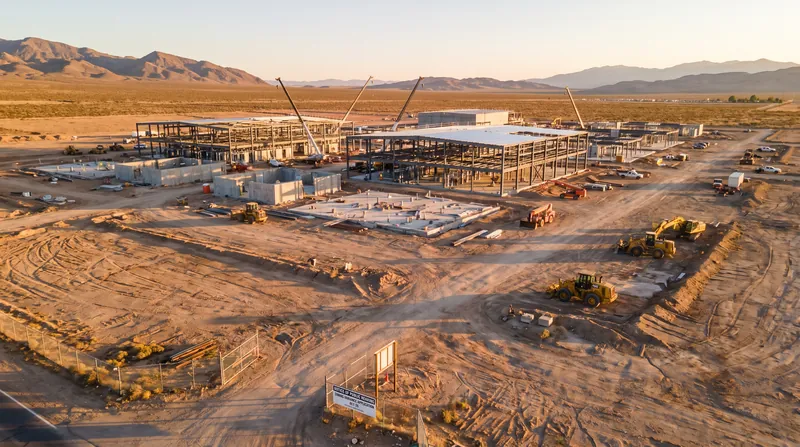
Mortgage Market
Major US Mortgage Lenders Face Collapse as FHA Delinquency Rate Hits 21% for Recent Loans
6 sources
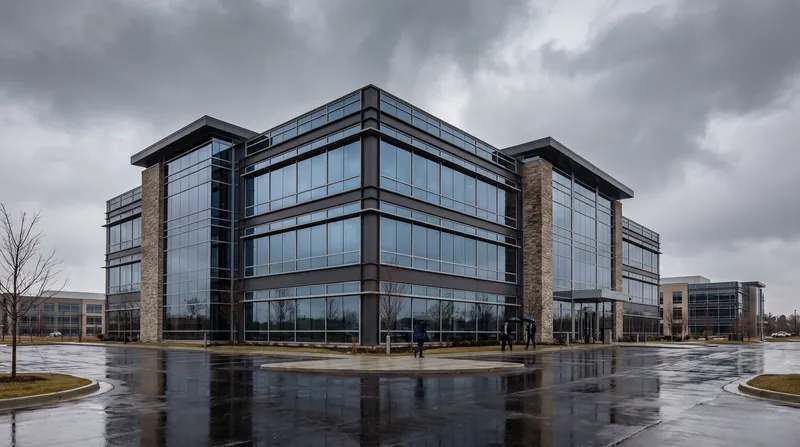
Tenant Protections
Madrid Community Rallies Behind 87-Year-Old Evictee as Corporate Landlord Sparks Mass Protests
3 sources

Private Markets
Blackstone Launches Perpetual Private Markets Fund for Non-US Investors
7 sources

Every angle. Every day.
Get Real Estate stories with full source coverage and perspective breakdowns delivered to your inbox.