
Corporate vs. Independent Landlords: Weighing the Trade-Offs in a 5.3% Vacancy Market
As the national apartment vacancy rate reaches 5.3 percent in 2026, renters face a stark choice between the predictability of institutional operators and the flexibility of mom-and-pop owners.
By Dev Anand

Share this story
In short
- The national apartment vacancy rate is projected to reach 5.3 percent in 2026 as nearly 497,760 new units enter the market.
- Institutional investors raise rents at a 60 percent higher rate than average when first acquiring a property.
- Corporate tenants are twice as likely to experience three or more rent hikes in a three-year period compared to those renting from independent owners.
Choosing between a 30-year fixed mortgage and an adjustable rate comes down to predictability versus initial cost. Choosing between an institutional landlord and an independent property owner operates on the same axis, but the stakes are measured in lease flexibility, maintenance speed, and the frequency of rent hikes.
As the U.S. rental market absorbs a historic wave of new supply—pushing the national apartment vacancy rate to a projected 5.3 percent in 2026—renters have more leverage to choose their management style than they did during the pandemic squeeze. Understanding the structural differences between these two ownership models is essential for anyone signing a new lease this year.[4]
According to U.S. Census Bureau data, 2026 will see nearly 497,760 new multifamily units completed, giving renters a wealth of options across major metropolitan areas. Yet the single-family rental market remains tight, and the underlying ownership structures fundamentally dictate the day-to-day tenant experience.
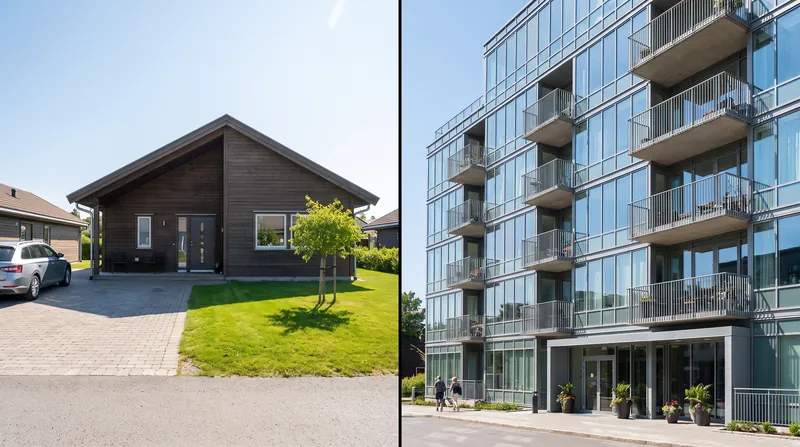
Independent 'mom-and-pop' landlords still own roughly 91 percent of investor-held properties—typically defined as those holding between one and ten units—while corporate landlords dominate large-scale multifamily complexes and are rapidly expanding their single-family portfolios. This division creates two distinct rental ecosystems, each with its own set of financial incentives and operational realities.[4][5]
The most quantifiable difference between the two models lies in pricing strategy and the frequency of lease adjustments. A July 2024 working paper from the Federal Reserve Bank of Philadelphia found that institutional investors raise rents at 60 percent higher rates than the average increase when first acquiring a property.
Furthermore, the data shows that 32 percent of corporate landlord tenants experience three or more rent hikes over a three-year period. This is exactly double the 16 percent rate reported by tenants of private landlords, highlighting a deliberate strategy of aggressive, algorithm-driven revenue extraction.[1]
This aggressive pricing approach directly impacts tenant satisfaction and long-term stability. A comprehensive 2024 survey by the National Residential Landlords Association (NRLA) revealed that 65 percent of tenants gave independent landlords the highest possible satisfaction scores—an 8 to 10 out of 10—compared to just 46 percent for corporate landlords. Crucially, the survey found that 36 percent of long-term tenants renting from independent owners had never experienced a single rent increase during their tenancy. For many renters, this pricing stability is the single most valuable feature of the mom-and-pop model.[2]
Allison Thompson, national lettings managing director at Leaders Romans Group, noted in a March 2025 Property118 report that 'most are committed to providing quality housing and building positive relationships with their tenants.' For independent owners, a single vacancy severely impacts cash flow, creating a strong financial incentive to retain reliable tenants by keeping rents flat. This dynamic often overrides the desire to maximize annual yield, resulting in a mutually beneficial arrangement where the landlord avoids turnover costs and the tenant avoids the stress of annual price hikes.[3]
However, corporate landlords hold a distinct advantage in operational efficiency and standardized service. Institutional operators utilize property tech deployment for digital payments, standardized tenant screening, and 24/7 emergency maintenance portals. Across the broader market, 75 percent of tenants see maintenance requests resolved within seven days, with 41 percent handled in under 48 hours. Corporate landlords, equipped with in-house maintenance teams and recurring contractor relationships, consistently hit these faster benchmarks, whereas independent landlords can be highly variable depending on their personal resources and geographic proximity to the property.[3]
Independent landlords offer a level of personal negotiation that institutional algorithms simply do not permit. Corporate leases are notoriously rigid, often imposing heavy fees for early termination or strict rules on pets and cosmetic modifications.
Independent owners, by contrast, can make individual decisions faster—whether that means allowing a tenant to pay rent a few days late without an automated penalty or negotiating a mid-lease roommate change. The primary risk for the tenant is inconsistency, as the quality of the living experience depends entirely on the owner's personal diligence and available capital.[6]
As 497,760 new multifamily units finish construction through the end of 2026, the balance of power in the rental market is shifting slightly back toward the tenant. Whether corporate landlords will temper their algorithmic rent increases to maintain occupancy in a 5.3 percent vacancy environment remains the defining question for the next leasing cycle. Until institutional operators adjust their pricing models to prioritize retention over yield, independent owners will continue to offer the most reliable path to long-term housing affordability and lease flexibility.[4]
Different angles
The Case for Institutional Operators
Corporate landlords offer scale, efficiency, and predictability.
Institutional landlords operate at a scale that enables professional property management systems. They employ standardized tenant screening, legal compliance expertise, and data-driven pricing models. For the tenant, this translates to 24/7 emergency maintenance lines, digital rent payment portals, and a strictly professional relationship devoid of the emotional friction that can complicate mom-and-pop rentals. The trade-off is rigidity: corporate operators rarely negotiate lease terms, strictly enforce late fees, and utilize algorithmic pricing that guarantees annual rent increases to match market rates.
The Case for Independent Owners
Mom-and-pop landlords prioritize tenant retention and offer flexible, personalized arrangements.
Independent landlords, who own the vast majority of investor-held properties, operate on a fundamentally different incentive structure. Because a single vacancy severely impacts their cash flow, they are highly motivated to retain reliable tenants. This dynamic explains why 36 percent of long-term tenants under independent owners never see a rent increase. Furthermore, independent landlords can negotiate lease terms, overlook minor credit blemishes for a good reference, and offer a level of empathy during financial hardships that a corporate portal cannot. The primary risk is inconsistency, as maintenance response times depend entirely on the owner's personal diligence and capital.
- Institutional Operators
- Focus on scale, efficiency, and maximizing yield through algorithmic pricing and professional management.
- Independent Owners
- Prioritize tenant retention, continuous cash flow, and flexible, relationship-based management.
- Tenant Advocates
- Highlight the risks of corporate consolidation, aggressive rent hikes, and rigid lease enforcement.
Perspectives this story doesn't cover
- First-Time Homebuyers Priced Out by Investors
- Property Management Software Developers
Sources
Source coverage
6 outlets
3 viewpoints surfaced





- [1]Federal Reserve Bank of PhiladelphiaTenant Advocates
Institutional Investors, Rents, and Neighborhood Change in the Single Family Residential Market
Read on Federal Reserve Bank of Philadelphia → - [2]National Residential Landlords AssociationIndependent Owners
Tenant satisfaction levels remain HIGH!
Read on National Residential Landlords Association → - [3]Property118Independent Owners
A tenant survey is overturning gloomy clichés about landlords
Read on Property118 → - [4]ClaightInstitutional Operators
Apartment Rental in the US - Market Size, Trends, and Forecasts
Read on Claight → - [5]American Economic Liberties ProjectTenant Advocates
Capital Crunch: How the Fall of Local Finance and the Rise of Shareholder Primacy Warped Single-Family Homebuilding in America
Read on American Economic Liberties Project → - [6]Factlen Editorial Team
Synthesis by Factlen editorial team
Read on Factlen Editorial Team →

More in Real Estate
See all →Build-to-Rent
Single-Family Build-to-Rent vs. Traditional Apartments: Quantifying the Space Premium in a 6.7% Rate Market
4 sources
License Law
How State Licensing Laws Divide Escrow Control and Liability Between Real Estate Brokers and Salespersons
4 sources

Property Yields
Mid-Term vs. Long-Term Rentals: Quantifying the Trade-Offs for Independent Landlords
6 sources

HOA Governance
Homeowners Associations: How Deed Covenants and Assessment Liens Enforce Compliance
7 sources

Comments
Every angle. Every day.
Get Real Estate stories with full source coverage and perspective breakdowns, free every day.