
The Neurological Hack That Outperforms Static Stretching for Immediate Flexibility
Proprioceptive neuromuscular facilitation (PNF) bypasses the body's natural stretch reflex to deliver rapid range-of-motion gains, offering a highly effective alternative to traditional static stretching.

Share this story
In short
- Proprioceptive neuromuscular facilitation (PNF) uses isometric contractions to trigger a neurological relaxation in the muscle.
- Static stretching relies on sustained tension over 20 to 60 seconds to gradually increase tissue compliance.
- PNF creates a 6- to 10-second window of extreme flexibility by hacking the inverse myotatic reflex.
At the Kabat-Kaiser Institute between 1946 and 1951, physician Herman Kabat and physical therapist Margaret Knott developed a rehabilitation protocol for polio and multiple sclerosis patients that relied on a neurological loophole.[2]
That loophole, now known as proprioceptive neuromuscular facilitation or PNF, has since migrated from clinical rehabilitation into mainstream athletic training as a premier tool for expanding mobility.[1][2]
Throughout the late twentieth century, the standard prescription for flexibility was the static stretch: holding a muscle in an elongated position for 20 to 60 seconds to gradually increase tissue compliance.[3]
As sports science has evolved, the debate over how to best increase range of motion has shifted from mechanical tissue stretching to active neurological manipulation.[4]
The core difference lies in how the body's nervous system responds to tension, governed primarily by 2 distinct mechanoreceptors: muscle spindles and Golgi tendon organs.[1][4]
When a muscle is stretched, muscle spindles detect the change in length and instantly signal the central nervous system that the tissue is at risk.[1]
This triggers the stretch reflex, a protective mechanism that causes the muscle to contract to prevent tearing. Static stretching simply waits this reflex out, holding the tension until the nervous system accepts the new length.[1][3]
PNF, by contrast, actively hacks this system. The most common PNF technique, the hold-relax method, begins with a 10-second passive pre-stretch to establish a baseline.[1][2]
The athlete then isometrically contracts the target muscle against resistance for 5 to 10 seconds without actually moving the joint.[1][2]
While early protocols called for a 100 percent maximum voluntary isometric contraction, modern physical therapists often recommend a safer 20 percent effort to achieve the exact same reflex.[4]
This contraction triggers the Golgi tendon organs, which sense dangerous levels of tension and override the muscle spindles, forcing the muscle to completely relax to prevent a tendon rupture.[1][4]
Fasciologist Ashley Black explains the mechanism plainly: 'PNF causes the brain to go "I don't want that muscle to tear" and sends a message to let the muscle relax a little more than it would normally.' This creates a 6- to 10-second window of opportunity where the muscle is neurologically inhibited, allowing the athlete to push into a significantly deeper stretch.[1]
A standard PNF session repeats this cycle 3 to 4 times per muscle group, yielding an immediate, measurable increase in range of motion that static stretching struggles to match in a single session.[4]
However, this neurological override comes with a physiological cost. Because PNF forces the muscle to relax beyond its normal protective limits, it introduces a higher risk of overstretching and micro-tearing if the partner applying the stretch pushes too aggressively.[1][4]
Static stretching, while slower to produce dramatic range-of-motion gains, carries a significantly lower risk profile and requires no partner or specialized equipment to perform safely.[3][4]
The choice between the two modalities therefore depends on the specific goal of the session. Athletes seeking an immediate range-of-motion expansion often deploy PNF, while those focused on gradual structural adaptation and joint lubrication rely on the steady tension of static holds.[4]
Analysis by camp
Static Stretching
The traditional method of holding a muscle in an elongated position to gradually increase tissue compliance.
For: Highly accessible, carries a low risk of injury, and effectively aligns collagen fibers in healing tissue. Against: Produces slower immediate range-of-motion gains and can temporarily reduce peak power output if performed immediately before explosive activity. Evidence: Sustained tension over 20 to 60 seconds allows the muscle spindles to adapt to the new length, reducing the stretch reflex over time. Fits well when: Used as a post-workout cool-down to maintain long-term joint health and flexibility. Does not fit when: An athlete requires an immediate, drastic increase in mobility right before a high-intensity performance.
Proprioceptive Neuromuscular Facilitation (PNF)
An active stretching technique that uses isometric contractions to trigger neurological relaxation.
For: Delivers rapid, measurable increases in range of motion by bypassing the body's natural stretch reflex. Against: Typically requires a trained partner, demands more physical effort, and introduces a higher risk of micro-tearing if pushed too far. Evidence: A 5- to 10-second isometric contraction activates the Golgi tendon organs, forcing a 6- to 10-second window of complete muscle relaxation via the inverse myotatic reflex. Fits well when: Conducted under the supervision of a physical therapist or coach to break through mobility plateaus. Does not fit when: Attempted by inexperienced individuals without a partner, or when dealing with highly inflamed or recently injured joints.
- Neurological Flexibility Advocates
- Prioritize PNF and active stretching to hack the nervous system for immediate range-of-motion gains.
- Structural Adaptation Proponents
- Favor static stretching for its safety profile and long-term benefits to collagen alignment and joint lubrication.
Perspectives this story doesn't cover
- Yoga practitioners who utilize active isolated stretching
- Fascial stretch therapists
Sources
Source coverage
4 outlets
2 viewpoints surfaced




- [1]HealthlineNeurological Flexibility Advocates
What Is PNF Stretching and How Do You Do It?
Read on Healthline → - [2]WebMDNeurological Flexibility Advocates
What Is PNF Stretching?
Read on WebMD → - [3]WikipediaStructural Adaptation Proponents
Stretching
Read on Wikipedia → - [4]Factlen Editorial Team
Synthesis by Factlen editorial team
Read on Factlen Editorial Team →

More in Fitness
See all →Flexibility Science
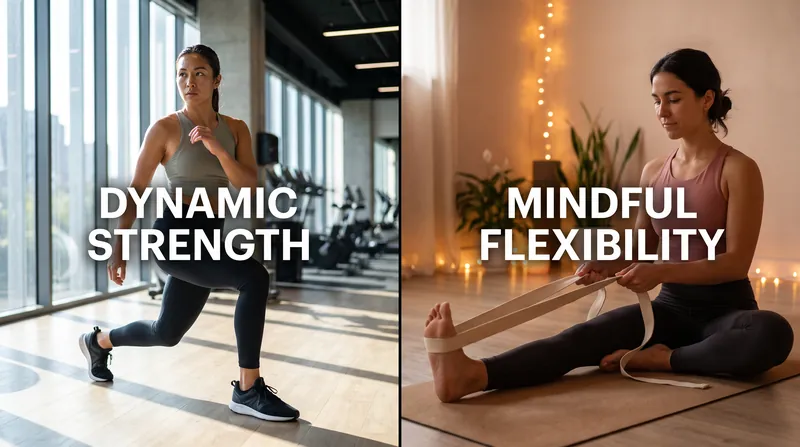
Active vs. Passive Flexibility: The Science of Stretching and Joint Control
3 sources
Anatomy Limits
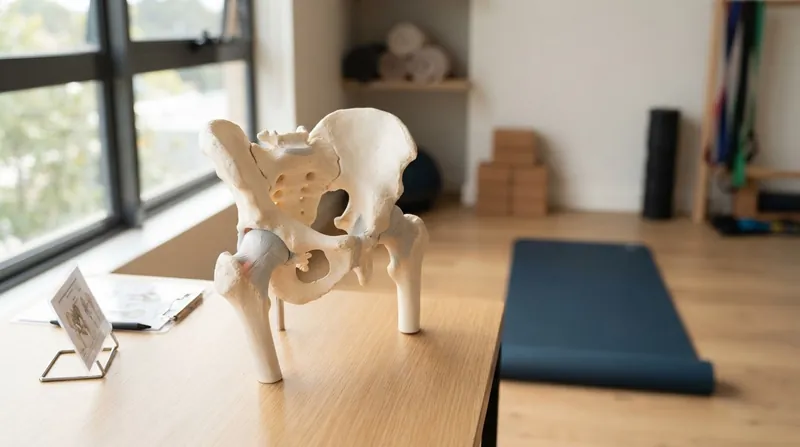
How Femoral Neck Impingement Sets a Hard Skeletal Limit on the Side Splits
5 sources
Injury Prevention
Muscle Strains Occur During Eccentric Contractions Within Normal Range: Why Pre-Exercise Static Stretching Fails to Prevent Sports Injuries
6 sources

Joint Biomechanics
The Antagonist Co-Contraction Brake: How Motor Control Limits Active Range of Motion to Prevent Joint Instability
7 sources
Comments
Every angle. Every day.
Get Fitness stories with full source coverage and perspective breakdowns, free every day.