
How the State Constitutional Right to Referendum Just Blocked a Gerrymandered Congressional Map
A coalition of Missouri voters successfully used a state veto referendum to freeze a partisan congressional map, a strategy the U.S. Supreme Court just allowed to stand for the 2026 midterms.

Share this story
The state constitutional right to a veto referendum just became the most effective check on partisan gerrymandering because it completely bypasses the legislature and freezes disputed maps before a single ballot is cast. By gathering more than 300,000 signatures, Missouri voters legally suspended a newly drawn congressional map, forcing the state to revert to older boundaries for the November 2026 election while the public decides the map's fate.[5]
The legal viability of this strategy was cemented on September 10, 2026, when the U.S. Supreme Court denied an emergency appeal from Missouri Secretary of State Denny Hoskins. Justice Brett Kavanaugh issued a brief order leaving in place a unanimous Missouri Supreme Court decision that validated the citizens' referendum petition and blocked the new districts.[4]
The conflict centers on House Bill 1, a congressional map passed by the Missouri General Assembly in 2025. The revised boundaries targeted the Kansas City-based 5th Congressional District, held by Democratic Representative Emanuel Cleaver, stretching it east into rural Osage County. The redesign would have shifted approximately 59 percent of the district's potential voters, aiming to secure seven of Missouri's eight House seats for Republicans.[4][5]
Rather than relying solely on traditional equal-protection lawsuits, which often drag on for years while disputed maps remain in use, the coalition People Not Politicians Missouri took a direct democratic route. They collected 305,000 signatures by December 2025 to trigger a veto referendum. Under the Missouri Constitution, a certified referendum automatically suspends the targeted law until voters can approve or reject it at the ballot box.[5]
Hoskins attempted to derail the effort by delaying certification for eight months, eventually rejecting the petition on the day of the August 2026 primary. He argued that the state's referendum powers do not legally apply to congressional redistricting. A lower court initially agreed with Hoskins, allowing the state to run its primary elections under the disputed 2025 boundaries.[4]
The Missouri Supreme Court dismantled that argument on September 3, 2026, ruling that the constitutional provision allowing a referendum on "any act" of the legislature explicitly includes redistricting. The court declared that because the citizens had met the signature threshold, the 2025 map "is not the law and has never been the law."[3]
"The law is the law, the Missouri constitution is clear as was the Missouri Supreme Court," said Richard von Glahn, executive director of People Not Politicians Missouri, following the federal ruling. "The courts have settled this, now it's up to Missouri voters to finish the job and vote NO on Proposition A."[4]
The logistical consequences of the citizen-led freeze are massive. Because the state used the 2025 map for the August primary, switching back to the 2022 map for the November general election will alter the candidate choices for more than one million potential voters—nearly 25 percent of the statewide electorate.[4]
State Republicans argued that changing the districts eight weeks before Election Day violates voters' federal rights, but the courts prioritized the constitutional mechanism of the referendum. The success of the Missouri petition provides a clear, tested mechanism for voters nationwide: when legislatures draw heavily skewed maps, a rapid signature campaign can freeze the lines and force a public vote before the gerrymander can dictate an election cycle.[4]
Viewpoints in depth
Direct Democracy Advocates
View the veto referendum as the ultimate constitutional safeguard against legislative self-dealing.
Voting rights organizations and citizen coalitions argue that traditional litigation is too slow to stop gerrymandering, often allowing unconstitutional maps to be used for multiple election cycles before a court issues a final ruling. By utilizing the state constitutional right to a veto referendum, citizens can instantly freeze a disputed map the moment enough signatures are verified. Advocates see the Missouri Supreme Court's validation of this tactic as a breakthrough blueprint that can be exported to other states with similar constitutional provisions, shifting the balance of power from map-drawing lawmakers directly back to the electorate.
State Election Officials
Highlight the severe logistical and legal disruptions caused by freezing a map mid-election cycle.
State officials and Republican lawmakers argue that applying the referendum process to redistricting creates an untenable environment for election administration. Because the 2025 map was used for the August primary, reverting to the 2022 map for the November general election means over a million Missourians will vote in different districts than the ones they just cast primary ballots in. Officials contend this mid-stream switch violates the federal rights of voters and creates massive confusion for county clerks who must rapidly reassign voters and reprint ballots just eight weeks before Election Day.
Key points
- The U.S. Supreme Court declined to block a Missouri Supreme Court ruling that suspended a 2025 congressional map.
- Citizens gathered over 305,000 signatures to trigger a veto referendum, which automatically freezes the targeted law under the state constitution.
- The state will revert to its 2022 congressional map for the November 2026 election, affecting over a million voters who cast primary ballots under the 2025 lines.
- Voters will decide the permanent fate of the 2025 map via Proposition A on the November 3 ballot.
How we got here
December 2025
People Not Politicians Missouri submits 305,000 signatures to trigger a veto referendum on the new congressional map.
August 2026
Secretary of State Denny Hoskins rejects the petition on the day of the state primary, arguing referendums do not apply to redistricting.
September 3, 2026
The Missouri Supreme Court rules the petition valid, suspending the 2025 map and ordering the 2022 map be used for the general election.
September 10, 2026
The U.S. Supreme Court denies an emergency appeal from the state, leaving the citizen-led freeze in place.
November 3, 2026
Missouri voters will decide whether to permanently approve or reject the 2025 map via Proposition A.
- Direct Democracy Advocates
- Argue that the veto referendum is a necessary and constitutional tool for citizens to override legislatures that insulate themselves through gerrymandering.
- State Election Officials
- Argue that applying referendums to redistricting creates logistical chaos, especially when maps are switched between a primary and a general election.
Perspectives this story doesn't cover
- Local county clerks managing the ballot switch
- Voters whose districts were changed between the primary and general election
Sources
Source coverage
5 outlets
2 viewpoints surfaced





- [1]St. Louis Post-DispatchState Election Officials
Missouri redistricting referendum fight puts Supreme Court precedent to the test
Read on St. Louis Post-Dispatch → - [2]KCURState Election Officials
Missouri redistricting referendum fight puts Supreme Court precedent to the test
Read on KCUR → - [3]Associated PressState Election Officials
Missouri court blocks Trump-backed US House map and orders it to be put to a vote
Read on Associated Press → - [4]PBSState Election Officials
Supreme Court rejects Missouri's push to use new Republican-drawn U.S. House map in November
Read on PBS → - [5]BallotpediaDirect Democracy Advocates
Missouri Proposition A, Congressional Map Referendum (2026)
Read on Ballotpedia →

More in Perspectives
See all →AI Governance
California Advances AI 'Kill Switch' Through Executive Order After Vetoing Legislative Mandate
5 sources

Sovereign Risk
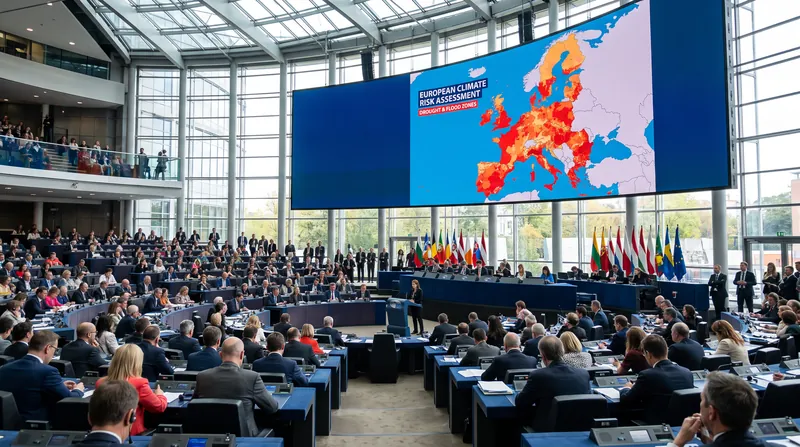
Why the EU's 'Climate Insurance Alliance' Is the Mathematical End of Sovereign Climate Risk
3 sources
Census Apportionment
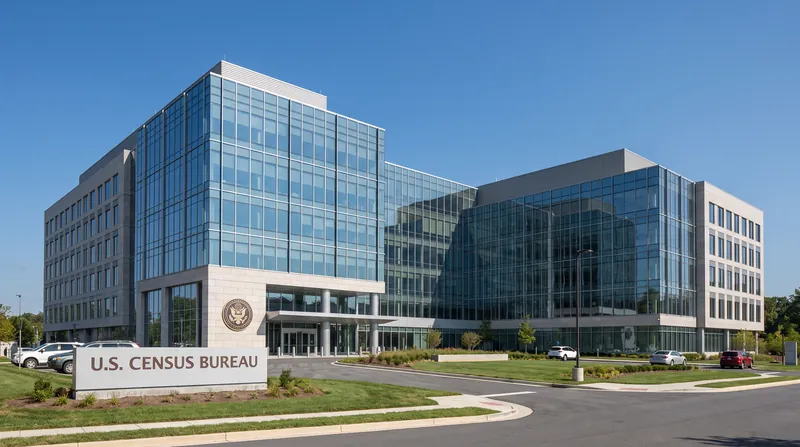
Trump Administration Proposes 2030 Census Overhaul Tied to Apportionment
6 sources
Catalysis Physics
The Sabatier Principle: Why the Optimal Catalyst Must Bind Reactants Neither Too Strongly Nor Too Weakly
8 sources

Comments
Every angle. Every day.
Get Perspectives stories with full source coverage and perspective breakdowns, free every day.