
Nvidia RTX 5090 Retail Prices Surpass $5,000 as AI Demand Drives 41% Series Premium
Nvidia's flagship RTX 5090 graphics card has crossed the $5,000 mark at retail, pushing the entire RTX 50 series to a 41% premium over MSRP as AI developers compete with gamers for consumer hardware.

Share this story
The consumer graphics card market has officially detached from traditional retail pricing. Nvidia's flagship GeForce RTX 5090 is now selling for over $5,000 at major retailers, representing a staggering 136% markup over its original manufacturer's suggested retail price.[1][4]
This isn't a simple supply chain hiccup. The massive price inflation is being driven by a relentless, cross-industry appetite for artificial intelligence compute power. With enterprise-grade AI accelerators backordered for months, smaller AI startups and independent researchers are buying up consumer-grade RTX 5090s in bulk, treating the high-end gaming cards as budget-friendly alternatives for training machine learning models.
The flagship's orbit is pulling the rest of the market up with it. Across the entire RTX 50 series stack, median retail prices have jumped 41% above MSRP, with the broader GPU market seeing a 15% month-over-month increase. The average graphics card across all tiers now sits 28% above its intended retail price.[1][4]
Retailers are struggling to maintain any semblance of normal inventory. Standard, non-overclocked models of the RTX 5090—cards that were meant to represent the baseline tier of the flagship—are routinely sailing past the $5,090 mark on secondary markets and third-party storefronts. The situation has effectively priced out the enthusiast gaming demographic the hardware was originally designed for.[2][3]
For the PC gaming ecosystem, the stakes are existential. If consumer GPUs remain viable substitutes for enterprise AI hardware, the traditional pricing model that sustained PC gaming for three decades may be permanently broken. Hardware manufacturers now face the complex challenge of either artificially segmenting their consumer and enterprise product lines or accepting that high-end PC gaming has become a collateral casualty of the AI revolution.
The speed of this price escalation has caught even seasoned hardware analysts off guard. Just weeks ago, the RTX 5090 was trading at a premium, but the sudden 15% spike across the broader GPU market in a single month signals a structural shift in how these components are valued by the broader tech industry.[1]
At the heart of the RTX 5090's appeal to AI developers is its massive VRAM buffer and memory bandwidth. While gamers use these specifications to push 4K resolution and ray tracing, AI researchers need them to load large language models into memory. At $5,000, an RTX 5090 is still vastly cheaper than a dedicated Nvidia H100 or B200 enterprise accelerator, making it a highly rational purchase for a well-funded tech startup.
The ripple effect down the product stack is where the average consumer feels the pain. As the 5090 becomes unobtainable, buyers with large budgets pivot to the RTX 5080 and 5070, artificially inflating demand and driving up prices for mid-tier components. This cascading demand has resulted in the 28% average markup currently strangling the broader GPU market.[4]
Industry watchers note that this dynamic mirrors the cryptocurrency mining booms of 2017 and 2021, but with a crucial difference. Crypto mining demand was volatile, tied directly to the fluctuating price of Bitcoin and Ethereum. AI compute demand, by contrast, is backed by billions in venture capital and represents a fundamental infrastructure build-out across the tech sector.
Moving forward, the pressure is squarely on Nvidia and its board partners to address the market distortion. Whether through software-level restrictions designed to limit AI workloads on consumer cards—similar to the LHR limiters used during the crypto boom—or through massive production increases, the current trajectory is unsustainable for the traditional PC gaming market.
Viewpoints in depth
The AI Sector's View
For machine learning startups, a $5,000 consumer GPU is still a bargain.
From the perspective of an AI developer, the RTX 5090 is not an overpriced gaming toy; it is a heavily discounted compute node. Dedicated enterprise accelerators like the H100 cost tens of thousands of dollars and come with massive lead times. By contrast, stringing together multiple RTX 5090s provides enough VRAM and tensor performance to train and run mid-sized language models at a fraction of the cost, making the $5,000 retail price an easy business expense to justify.
The PC Gaming Community's View
Gamers fear the permanent commercialization of their hobby.
Enthusiasts who have supported the PC gaming ecosystem for decades view the current market dynamics as a betrayal. Unlike the crypto booms—which eventually crashed and flooded the secondary market with cheap hardware—the AI infrastructure build-out appears permanent. Gamers are increasingly concerned that hardware manufacturers will have no incentive to return to traditional consumer pricing, effectively turning high-end PC gaming into an ultra-luxury niche.
The Retailer's View
Storefronts are caught between high margins and inventory chaos.
For hardware retailers, the AI boom is a double-edged sword. While they benefit from the massive margins on marked-up cards, they are also dealing with the logistical nightmare of scalper bots and bulk corporate buyers draining inventory meant for individual consumers. Many are struggling to implement verification systems to ensure that at least some of their stock reaches the gaming demographic that makes up their core, long-term customer base.
Key points
- Nvidia's RTX 5090 is currently selling for over $5,000, representing a 136% markup over MSRP.
- The broader RTX 50 series has seen a median price jump of 41% as demand cascades down the product stack.
- Overall GPU market prices have increased by 15% in a single month, averaging 28% above intended retail prices.
- The inflation is driven heavily by AI startups using consumer cards as cheaper alternatives to enterprise accelerators.
- PC Hardware Enthusiasts
- Frustrated by being priced out of their own hobby as gaming hardware becomes commercialized.
- Consumer Tech Analysts
- Viewing the price surge as a structural market failure where MSRP no longer reflects reality.
- AI Infrastructure Buyers
- Treating consumer GPUs as cost-effective, necessary compute alternatives to backordered enterprise accelerators.
Perspectives this story doesn't cover
- Enterprise AI Hardware Buyers
- Silicon Foundry Operators
Sources
Source coverage
4 outlets
3 viewpoints surfaced




- [1]TechPowerUpPC Hardware Enthusiasts
GPU Prices Jumped 15% in One Month, RTX 5090 Now 136% Above MSRP
Read on TechPowerUp → - [2]Gadget ReviewConsumer Tech Analysts
A Standard RTX 5090 Now Costs $5,090 - Nvidia's Flagship Accidentally Priced Itself
Read on Gadget Review → - [3]Club386Consumer Tech Analysts
Regular Nvidia GeForce RTX 5090 cards sail beyond $5090, now costing 2.5x MSRP
Read on Club386 → - [4]TweakTownPC Hardware Enthusiasts
GPU prices are now 28% above MSRP on average, RTX 5090 explodes to 136% above MSRP
Read on TweakTown →
More in Gaming & Esports
See all →Xbox Restructuring
Microsoft Proposes Closure of Ninja Theory as Activision Takes Over Halo Development
5 sources
Thermal Dynamics
The Arrhenius Equation and Thermal Design Power (TDP): How Heat Limits a Processor's Sustained Clock Speed
5 sources
PC Hardware
Control Resonant PC Performance Tests Reveal RTX 5090 Cannot Maintain 60 FPS at 4K Without Upscaling
5 sources
Hearthstone Esports
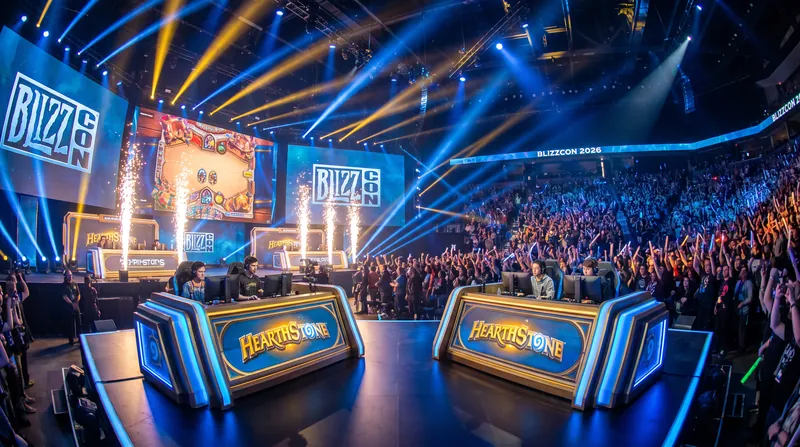
Hearthstone World Championship Hits Highest Peak Viewership in Six Years, Signaling Franchise Revival
6 sources
Comments
Every angle. Every day.
Get Gaming & Esports stories with full source coverage and perspective breakdowns, free every day.