
New 'Prime Assembly' Gene Editor Inserts Entire Genes Without Toxic DNA Breaks, Unlocking Therapy for Non-Dividing Cells
A breakthrough CRISPR technique called 'prime assembly' allows scientists to safely insert massive, gene-sized DNA sequences into the human genome. By avoiding toxic double-strand breaks, the method opens the door to universal therapies for complex genetic diseases in hard-to-treat tissues like the brain and heart.
By Sofia Matos

Share this story
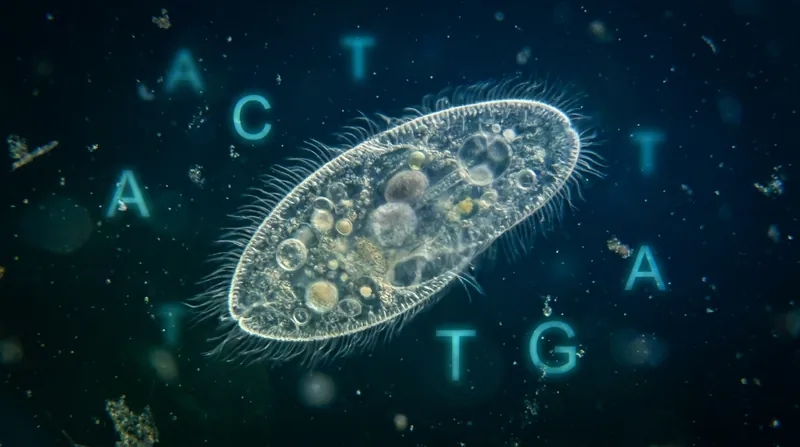
For the past decade, the CRISPR-Cas9 revolution has operated much like a molecular word processor, allowing scientists to find and replace single misspelled letters in the human genetic code. However, correcting a single typo is insufficient for many severe genetic diseases, where hundreds of different mutations can break a single gene. To truly cure these conditions, scientists need the ability to paste entire pages of text into the genome.[1]
Now, a multi-institutional research team from UMass Chan Medical School and The Ohio State University has developed a next-generation technology called "prime assembly." Published in the journal Nature, the technique successfully inserts massive, gene-sized DNA sequences into the human genome without severing the DNA double helix. This breakthrough effectively upgrades genetic medicine from a find-and-replace tool to a copy-and-paste system capable of rewriting entire chapters of the genetic code safely.[1]
The primary bottleneck in advanced genome engineering has been the sheer physical danger of inserting large DNA payloads. Traditional methods for pasting large sequences rely on creating double-strand breaks—literally snapping both rails of the DNA ladder to force the cell to stitch the new genetic material into the gap. While effective for simple gene knockouts, using double-strand breaks for large insertions is highly inefficient and dangerous.[2]
The danger stems from the cell's natural panic response to severed DNA. Double-strand breaks are highly toxic and frequently trigger the cell's p53 tumor-suppressor pathway, which can lead to cell death. Even when the cell survives, the chaotic repair process can cause gross chromosomal abnormalities, where large chunks of the genome are accidentally deleted, inverted, or rearranged. This toxicity has severely limited the clinical application of large-scale CRISPR insertions.[2]
Furthermore, traditional large-scale gene insertion relies on a cellular repair mechanism known as homology-directed repair (HDR). The critical flaw of HDR is that it is strictly tied to the DNA replication cycle, meaning it is only active during the S and G2 phases of cell division. If a cell is not actively dividing, HDR simply does not function, and the targeted gene insertion fails.[1][3]
Because most cells in the adult human body are terminally differentiated and no longer divide, HDR-mediated gene editing is virtually useless for treating many of the most devastating genetic disorders. Neurons in the brain, cardiomyocytes in the heart, and mature skeletal muscle cells cannot be effectively edited using HDR. Researchers have spent years searching for a way to bypass both the need for double-strand breaks and the reliance on dividing cells.[1][3]
Prime assembly solves both of these fundamental biological hurdles by building upon a newer, safer foundation known as prime editing. Originally developed to make small, precise edits without double-strand breaks, prime editing uses a modified Cas9 protein that only "nicks" one strand of the DNA, combined with a reverse transcriptase enzyme that writes new genetic information directly into the genome.[1][2][3]
To achieve massive insertions, the UMass Chan and Ohio State teams adapted a variant called "twin prime editing." Instead of breaking the DNA ladder entirely, the prime assembly system generates two adjacent nicks on opposite strands of the DNA. This creates two complementary, single-stranded DNA "flaps" at the target site.[1]
These programmable flaps act like molecular Velcro. When a healthy, lab-manufactured DNA donor sequence is introduced into the cell, its ends are designed to perfectly match the exposed flaps. The cell's natural enzymes then seamlessly stitch the new gene into place without ever triggering the toxic double-strand break alarm. The researchers named the technique "prime assembly" because it mimics Gibson assembly, a ubiquitous laboratory technique used to seamlessly join multiple DNA fragments together in a test tube.
The scale of the insertions achieved by prime assembly represents a paradigm shift for the field. Standard prime editing is typically limited to inserting a few dozen base pairs. Even advanced iterations have struggled to push past 800 base pairs. In their mammalian cell cultures, the research team successfully inserted DNA sequences up to 11,000 base pairs (11 kilobases) in length.
Because the vast majority of human protein-coding genes fall well under this 11-kilobase threshold, prime assembly theoretically possesses the capacity to insert a healthy copy of almost any gene in the human body. The evidence for prime assembly's efficacy is robust, with the Nature study reporting precise insertion efficiencies of up to 40 percent in human cell lines.[1]
Crucially, because the system does not rely on homology-directed repair, the researchers demonstrated that it functions highly effectively in non-dividing cells. This opens an entirely new frontier for genetic medicine, providing a viable mechanism to deliver large therapeutic genes directly into the brain, heart, and skeletal muscle without triggering the toxic stress responses associated with older technologies.[1][2]
The clinical implications of this capacity are profound, particularly for the regulatory and developmental economics of rare diseases. Currently, if a genetic disease is caused by 1,000 different mutations across the patient population, a traditional CRISPR approach might require developing, testing, and approving 1,000 distinct gene-editing drugs.
Prime assembly bypasses this fragmented approach entirely. By inserting a complete, healthy copy of the gene alongside the mutated version, a single prime assembly therapy could theoretically cure all patients with the disease, regardless of which specific mutation they carry. This universal approach could make treatments for rare diseases economically viable to develop.
Despite the transformative potential demonstrated in vitro, the evidence pack for prime assembly carries clear translational uncertainties. The most significant hurdle is delivery. While the prime assembly machinery works flawlessly once inside the cell, physically transporting the large prime editor proteins, the guide RNAs, and the massive 11-kilobase donor DNA into target tissues in a living human remains a formidable bioengineering challenge. Current delivery vehicles, such as adeno-associated viruses (AAVs) and lipid nanoparticles (LNPs), have strict cargo size limits.
Furthermore, while the 40 percent efficiency rate in cultured mammalian cells is unprecedented for large insertions without double-strand breaks, in vivo efficiency in animal models routinely drops significantly compared to the controlled environment of a petri dish. The research teams are currently focused on optimizing the system for animal trials to determine if the therapeutic insertion rates hold up in complex, living tissues. If these delivery bottlenecks can be resolved, prime assembly could serve as the universal platform that finally brings definitive cures to thousands of intractable genetic diseases.
Key points
- Prime assembly inserts up to 11,000 base pairs of DNA into the human genome without causing toxic double-strand breaks.
- The technique bypasses homology-directed repair, allowing it to function effectively in non-dividing cells like neurons and cardiomyocytes.
- By inserting entire healthy genes, the method could provide a universal cure for diseases caused by hundreds of different mutations.
- The primary remaining hurdle is developing delivery vehicles capable of transporting the massive DNA payloads into target tissues in vivo.
What we don’t know
- Whether the 40% insertion efficiency observed in cell cultures will translate to complex, living tissues in animal models.
- How the massive prime assembly machinery and 11-kilobase donor DNA will be efficiently delivered into target organs in human patients.
- The long-term stability and expression levels of the large DNA sequences inserted via prime assembly.
How we got here
2012
CRISPR-Cas9 is demonstrated as a programmable gene-editing tool, relying on double-strand breaks to alter DNA.
2019
Prime editing is first developed, allowing precise small edits without double-strand breaks.
2021
Twin prime editing is introduced, expanding the size of possible edits to roughly 800 base pairs.
April 2026
Researchers publish the Prime Assembly method in Nature, shattering the size limit by inserting up to 11,000 base pairs.
- Molecular Geneticists
- Focus on the technical achievement of bypassing double-strand breaks and HDR to enable safe large-scale edits.
- Rare Disease Advocates
- Value the potential for universal gene therapies that treat all mutations of a disease, solving commercial viability.
- Translational Bioengineers
- Highlight the remaining delivery bottlenecks, noting that editing machinery is only useful if it can reach target tissues.
Perspectives this story doesn't cover
- Regulatory Agencies
- In Vivo Delivery Specialists
Sources
Source coverage
3 outlets
3 viewpoints surfaced



- [1]NatureMolecular Geneticists
Prime assembly with linear DNA donors enables large genomic insertions
Read on Nature → - [2]CRISPR Medicine NewsTranslational Bioengineers
PRIME Editing: freeing CRISPR from double-stranded breaks
Read on CRISPR Medicine News → - [3]GenomeWebTranslational Bioengineers
Twin Prime Editing Promises More Precise DNA Changes Without Double-Strand Breaks
Read on GenomeWeb →
More in Science
See all →Genetic Medicine
First-Ever Bespoke Base-Editing Therapy Developed in Months Saves Infant with Rare Genetic Disease
5 sources

Genomic Medicine
Large-Scale Whole Genome Sequencing Identifies Six New Cancer Risk and Resistance Genes in Landmark Study
4 sources

Epigenetic Regulation
How Random X-Inactivation Silences a Chromosome to Equalize Gene Dosage in Females
5 sources
Mitochondrial Inheritance
Why Mammalian Eggs Use Ubiquitin to Destroy Paternal Mitochondria at Fertilization
10 sources
Comments
Every angle. Every day.
Get Science stories with full source coverage and perspective breakdowns, free every day.