
New Oral GLP-1 Pill Achieves 12% Weight Loss in Phase II Trial, Offering Scalable Alternative to Injectables
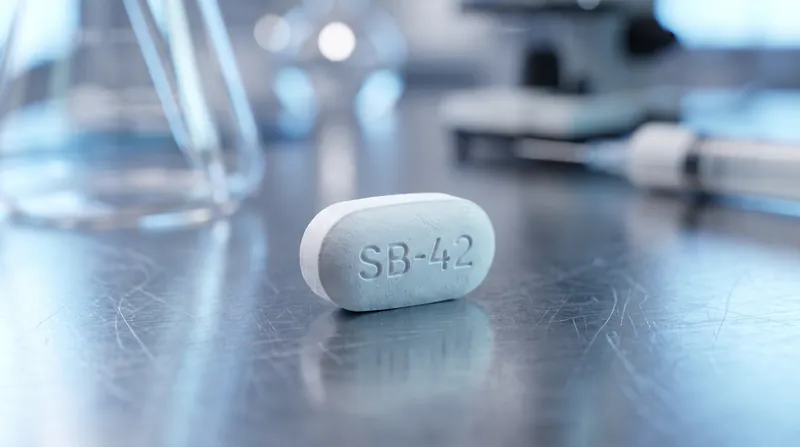
An experimental small-molecule pill called aleniglipron delivered up to 12.1% weight loss over 36 weeks in a Phase II trial. The once-daily oral medication could eliminate the cold-chain and manufacturing bottlenecks that currently limit access to injectable GLP-1 treatments.

- Clinical Researchers
- Focus on the trial's efficacy and safety data, validating that small molecules can match peptide performance.
- Biotech Industry Analysts
- Focus on the market disruption, emphasizing how scalable manufacturing could solve current supply shortages.
- Patient Access Advocates
- Highlight how a shelf-stable pill removes cold-chain barriers and needle anxiety, expanding global access.
Summary
- An experimental oral GLP-1 pill, aleniglipron, achieved up to 12.1% weight loss in a 36-week Phase II trial.
- Unlike current injectable treatments, the drug is a small molecule that does not require refrigeration or complex manufacturing.
- The 120-milligram dose showed no signs of a weight-loss plateau, with extension data showing continued reduction up to 15.3% at 56 weeks.
- The safety profile was consistent with existing GLP-1s, primarily featuring mild to moderate gastrointestinal side effects.
- Phase III trials are required to confirm these results in a larger population and assess long-term cardiovascular impacts.
The defining narrative of the modern weight-loss revolution has been that effective, transformative treatment requires a needle. Because the breakthrough GLP-1 receptor agonists that have fundamentally altered obesity care—such as semaglutide, marketed as Wegovy, and tirzepatide, sold as Zepbound—are complex peptide molecules, they are inherently fragile. They must be injected directly into the body to avoid being destroyed by stomach acid, they require strict cold-chain refrigeration to survive transport from factory to pharmacy, and they are notoriously difficult to manufacture at the massive scale required by global demand. This biological fragility has led to persistent, multi-year global shortages, leaving millions of patients unable to access the medications and forcing healthcare systems to ration supplies. The assumption has long been that the profound metabolic benefits of GLP-1 activation simply could not be packaged into a standard, shelf-stable pill without severe compromises in efficacy.[6]
But the chemical architecture of obesity treatment is now undergoing a significant shift. Data recently published in the peer-reviewed journal Nature Medicine reveals that an experimental, once-daily pill called aleniglipron achieved up to 12.1% body weight loss in adults over a 36-week period. Unlike its injectable predecessors, aleniglipron is a small-molecule drug—a highly stable chemical compound that can be pressed into a standard tablet, stored indefinitely in a bathroom cabinet, and manufactured in massive quantities using traditional pharmaceutical infrastructure. This development represents a critical proof-of-concept: it demonstrates that the profound weight-loss effects of GLP-1 receptor activation do not strictly require a large, complex biologic agent. By proving that a synthetic chemical can achieve double-digit weight reduction, the trial opens the door to a future where highly effective obesity medication is as accessible and easy to produce as daily blood pressure medication or over-the-counter aspirin.[1][3]
To understand the significance of this breakthrough, it is necessary to look at the underlying mechanism of action. GLP-1 drugs work by mimicking the naturally occurring glucagon-like peptide 1 hormone, which the body releases after eating. This hormone stimulates insulin secretion, slows the rate at which the stomach empties, and signals powerful feelings of fullness to the brain's appetite centers. Historically, scientists believed that only large, peptide-based molecules could successfully bind to and activate the complex GLP-1 receptor on the surface of cells. Aleniglipron bypasses this structural limitation entirely. Using advanced structure-based drug design, researchers engineered a synthetic small molecule that selectively fits into the receptor's binding pocket and activates the specific G-protein signaling pathway required for appetite suppression, all without needing the bulky peptide backbone that makes traditional GLP-1s so difficult to deliver orally.[3][6]
The clinical evidence supporting this new approach comes from the Phase II ACCESS trial, a rigorously designed randomized, double-blind, placebo-controlled study. The trial enrolled 230 adults who were living with obesity or overweight and had at least one weight-related comorbidity, such as hypertension or dyslipidemia. Participants were divided into three active dose cohorts—receiving 45, 90, or 120 milligrams of the drug—and a control group receiving a placebo. Over the course of 36 weeks, the results demonstrated a clear, dose-dependent response. The 120-milligram cohort achieved a placebo-adjusted weight reduction of 11.3%, with their absolute weight loss reaching 12.1% from their baseline. The responder rates were particularly striking: in that highest-dose group, 86% of participants lost at least 5% of their body weight, and 70% lost at least 10%, compared to just 7% of participants in the placebo group.[1][3][4]
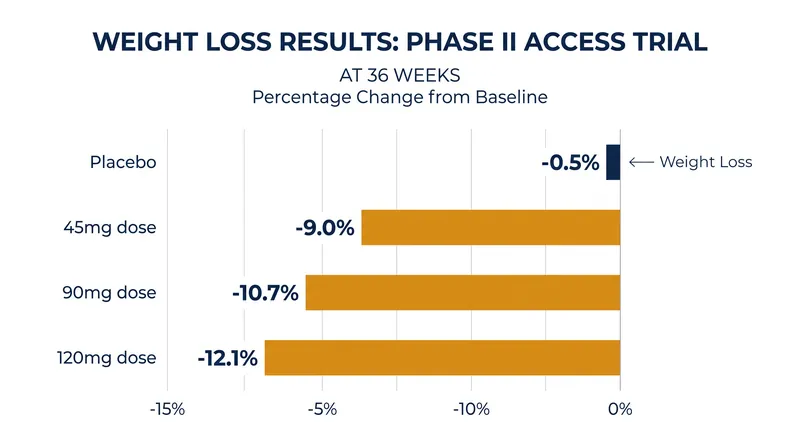
The clinical evidence supporting this new approach comes from the Phase II ACCESS trial, a rigorously designed randomized, double-blind, placebo-controlled study.
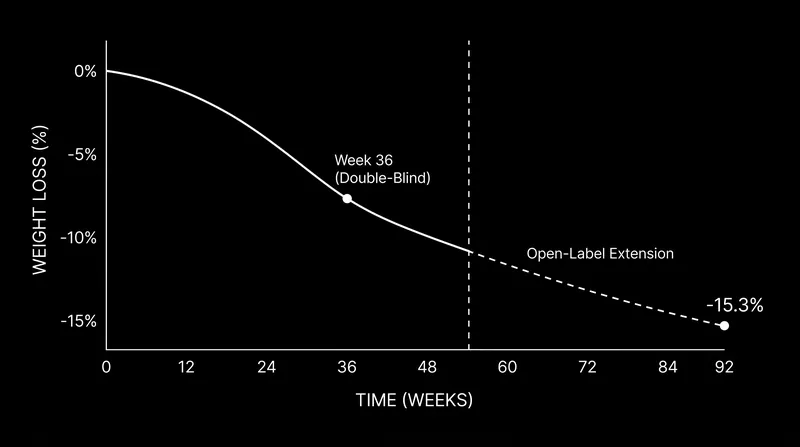
Crucially, the clinical data indicates that the weight loss induced by aleniglipron did not appear to plateau at the 36-week mark, a common issue with older generations of weight-loss interventions. Interim data from an ongoing open-label extension study—where participants from the double-blind phase continued receiving the medication—showed that those titrated to the 120-milligram dose reached an average weight loss of 15.3% after 56 weeks of continuous treatment. This sustained downward trajectory closely mirrors the efficacy curves seen in trials of injectable GLP-1 therapies, suggesting that the convenience of a daily pill does not require a compromise in long-term clinical outcomes. Furthermore, exploratory analyses revealed clinically relevant improvements in secondary metabolic markers, including significant reductions in systolic blood pressure and high-sensitivity C-reactive protein, an important marker of systemic inflammation.[3][5]
The safety and tolerability profile of aleniglipron aligned closely with the established side effects of the broader GLP-1 class, which is a vital metric for any new entrant in this space. The most common adverse events reported by participants were mild to moderate gastrointestinal issues, primarily nausea and vomiting, which occurred most frequently during the initial four-week dose-escalation phase and generally subsided over time. Across all the active treatment arms, the discontinuation rate due to adverse events was 10.4%, a figure considered manageable and comparable to existing therapies. Most notably, researchers observed zero instances of drug-induced liver injury or persistent liver enzyme elevations. Because orally administered medications must pass through the liver before entering systemic circulation—a process known as first-pass metabolism—proving hepatic safety was a critical hurdle for aleniglipron to clear.[2][3]
Despite the highly promising topline numbers, the clinical evidence remains in its early stages, and significant uncertainties persist. The Phase II ACCESS trial evaluated only 230 participants, which is a mere fraction of the thousands of diverse patients required for Phase III registrational studies. While the trial demonstrated substantial weight reduction and improvements in blood pressure, it did not measure long-term cardiovascular outcomes. Injectable GLP-1s like Wegovy have already cleared this high bar, proving in massive, multi-year trials that they actively reduce the risk of major adverse cardiovascular events such as heart attacks and strokes. It remains entirely unknown whether aleniglipron's small-molecule activation of the receptor will translate into those same life-saving cardiovascular benefits, or if its effects are strictly limited to weight reduction and glycemic control.[4][6]
There are also vital open questions regarding real-world patient adherence and the pharmacokinetic realities of oral delivery. While a daily pill completely eliminates needle anxiety and the logistical nightmare of cold-chain shipping, it requires patients to remember to take a dose every single day, whereas current injectables are administered just once a week. It remains to be seen whether the daily peaks and troughs of an oral small molecule will provide the same steady, uninterrupted appetite suppression as a sustained-release injectable in a broader, less-monitored population. Additionally, the trial data noted that starting patients on a lower 2.5-milligram dose before titrating upward significantly improved tolerability, suggesting that finding the exact optimal dosing schedule will be critical to keeping patients on the medication long-term.[5][6]
If aleniglipron successfully navigates the upcoming Phase III trials scheduled to begin later this year, it could fundamentally alter the economics and accessibility of global obesity care. Small-molecule drugs are vastly cheaper to synthesize, package, and distribute than complex biologics. By completely removing the need for specialized auto-injector pens, sterile manufacturing environments, and refrigerated transport, oral GLP-1s could democratize access to metabolic treatment. This shift would allow highly effective obesity medications to reach primary care clinics, rural pharmacies, and developing nations without the severe supply bottlenecks and exorbitant costs that currently define the market, potentially transforming obesity from a specialized condition into a routinely managed aspect of primary care.[6]
Definitions
- GLP-1 receptor agonist
- A class of medications that mimic the GLP-1 hormone to stimulate insulin, slow digestion, and reduce appetite.
- Small-molecule drug
- A medication with a low molecular weight that can easily enter cells and is typically manufactured through chemical synthesis into a pill, unlike complex biologics.
- Peptide
- A short chain of amino acids; current injectable weight-loss drugs use peptide structures that are fragile and require refrigeration.
- Placebo-adjusted
- A statistical measure that subtracts the effect seen in the control group from the effect seen in the active drug group to determine the drug's true impact.
Chronology
2023
Structure Therapeutics advances aleniglipron into clinical trials as an oral small-molecule GLP-1 receptor agonist.
June 2026
Topline data from the Phase IIb ACCESS trial is presented at the American Diabetes Association Scientific Sessions.
August 2026
Full peer-reviewed results of the 36-week trial are published in Nature Medicine.
Late 2026
Phase III registrational trials are scheduled to begin, testing the drug in a larger global population.
Analysis by camp
Clinical Researchers
Focus on the efficacy and safety data from the Phase II trial.
Medical researchers emphasize that the 12.1% weight loss at 36 weeks proves small molecules can successfully mimic the complex receptor-binding of peptide-based GLP-1s. They highlight the lack of liver toxicity as a major milestone for oral delivery, as first-pass metabolism often derails small-molecule candidates. However, they caution that Phase III trials are necessary to confirm these results and determine if the pill offers the same cardiovascular protections as injectables.
Biotech Industry Analysts
View the development as a critical shift in the economics of the obesity drug market.
Industry analysts argue that the true value of aleniglipron lies in its manufacturing scalability. They predict that small-molecule pills will eventually capture the majority of the market by eliminating the severe supply chain constraints associated with injectable pens. Because pills can be manufactured cheaply and rapidly using existing global infrastructure, analysts believe this class of drugs will force a massive expansion of the total addressable market.
Patient Access Advocates
Emphasize the democratization of treatment and the removal of physical barriers.
Advocates point out that a shelf-stable pill removes the cold-chain requirements that make current GLP-1s difficult to distribute in lower-resource settings and rural areas. Furthermore, they highlight that a daily pill provides a crucial alternative for the significant percentage of patients who experience needle anxiety or struggle with the mechanics of self-administering weekly injections.
Limits of the evidence
- Whether the daily pill will match the long-term cardiovascular benefits (reduced heart attacks and strokes) already proven by injectable GLP-1s.
- How real-world patient adherence to a daily oral medication will compare to a once-weekly injection.
- The safety and efficacy profile in a broader, more diverse population, which will require Phase III trials involving thousands of participants.
Significance
Current GLP-1 weight-loss drugs are highly effective but rely on complex peptide structures that require refrigeration and specialized injectable pens, creating massive supply shortages. A small-molecule pill that can be mass-produced like aspirin would dramatically expand global access to obesity treatment and lower costs.
Sources
Source coverage
6 outlets
3 viewpoints surfaced






[1]Science DailyClinical Researchers
New GLP-1 pill delivers up to 12% weight loss in 36 weeks
Read on Science Daily →[2]SciTechDailyPatient Access Advocates
Oral Weight Loss Pill Helps Patients Lose up to 12% of Body Weight
Read on SciTechDaily →[3]Nature MedicineClinical Researchers
Oral small molecule GLP-1 receptor agonist aleniglipron in people with overweight or obesity: a randomized, double-blind, placebo-controlled phase 2b trial
Read on Nature Medicine →[4]ClinicalTrials.govClinical Researchers
Aleniglipron Phase 2 in Type 2 Diabetes Mellitus (GSBR-1290)
Read on ClinicalTrials.gov →[5]Structure TherapeuticsBiotech Industry Analysts
Structure Therapeutics Announces Publication in Nature Medicine Highlighting Phase 2b ACCESS Program of Aleniglipron for Obesity
Read on Structure Therapeutics →[6]Factlen Editorial TeamBiotech Industry Analysts
Synthesis by Factlen editorial team
Read on Factlen Editorial Team →
Comments

Every angle. Every day.
Get science stories with full source coverage and perspective breakdowns delivered to your inbox.