
Iran's Supreme Leader Appoints New Military, IRGC Chiefs Following US-Israeli Strikes
Mojtaba Khamenei has named six new commanders to lead Iran's Armed Forces and the IRGC, replacing leadership killed in recent airstrikes.

- Israeli Press
- Highlights the appointments as a forced reconstitution following the successful decapitation of Iran's top military leadership.
- Iranian State Media
- Frames the appointments as a demonstration of resilience and continuity in the face of foreign aggression.
- Regional Arab Media
- Focuses on the implications for regional stability, particularly the threat to the Strait of Hormuz and potential proxy escalation.
- International Observers
- Provides neutral reporting on the structural changes within the Iranian armed forces and IRGC.
Perspectives this story doesn't cover
- Iranian Civilian Population
- Regional Proxy Commanders
Fast facts
- Supreme Leader Mojtaba Khamenei appointed six new commanders to lead Iran's Armed Forces and IRGC.
- The overhaul replaces top generals killed during US-Israeli strikes in February and March.
- Maj. Gen. Ali Abdollahi takes over the Armed Forces, focusing on conventional military coordination.
- Maj. Gen. Ahmad Vahidi assumes command of the IRGC, signaling a continued reliance on asymmetric warfare.
- The appointments reflect an urgent effort to stabilize Iran's military hierarchy amid ongoing regional conflict.
On Monday, Iranian Supreme Leader Mojtaba Khamenei issued decrees appointing six senior commanders to the highest echelons of the country's military and the Islamic Revolutionary Guard Corps (IRGC). The sweeping overhaul replaces a generation of leadership wiped out during the US-Israeli "Operations Roaring Lion and Epic Fury," which began on February 28. Those strikes resulted in the deaths of former Supreme Leader Ayatollah Ali Khamenei and top generals, fundamentally altering the region's security architecture. The new appointments represent the first major structural reorganization under the new Supreme Leader, signaling an urgent effort to reconstitute a shattered command hierarchy and project operational continuity amid an ongoing, multi-front conflict.[1][4]
The scale of the leadership vacuum necessitated immediate and comprehensive action across both the conventional military and the paramilitary forces. Maj. Gen. Ali Abdollahi was named Armed Forces Chief of Staff, succeeding Lt. Gen. Abdul Rahim Mousavi, who was killed in the initial February 28 airstrikes. The decrees also elevated Brig. Gen. Kiumars Heidari to Deputy Chief of Staff. Parallel to the conventional armed forces, the IRGC saw its top tier completely replaced. Maj. Gen. Ahmad Vahidi was appointed Commander-in-Chief of the IRGC, replacing Lt. Gen. Mohammad Pakpour, who also perished in the February strikes, while Maj. Gen. Mostafa Izadi was named as his deputy.[1][2][3]
Further appointments underscore an acute focus on internal security and asymmetric naval capabilities. Hossein Taeb, a former IRGC intelligence chief, has been named head of the Basij volunteer force, replacing the slain Gholamreza Soleimani. Meanwhile, Admiral Ali Ozmaei takes command of the IRGC Navy, succeeding Alireza Tangsiri, who was killed in a March airstrike. The political dimension of the military restructuring is equally significant, with Mohsen Rezaei, a former IRGC head, appointed secretary of the Supreme National Security Council. This consolidation of power by Mojtaba Khamenei places battle-tested loyalists in key advisory and operational roles, ensuring ideological alignment during a period of unprecedented vulnerability.[1][2][5]
The selection of Abdollahi brings extensive experience in coordinating joint operations across Iran's disparate military branches. He previously led the Khatam al-Anbia Central Headquarters, the nerve center for inter-branch coordination. His mandate is to rebuild a shattered conventional command structure, integrate surviving air defense networks, and establish a credible deterrent against further decapitation strikes. Abdollahi has already issued bellicose warnings, stating that any regional nation serving as a defensive shield for the United States or Israel will be engulfed by the conflict, indicating a posture of aggressive conventional deterrence.[5]
The selection of Abdollahi brings extensive experience in coordinating joint operations across Iran's disparate military branches.
Conversely, Vahidi's elevation to the top of the IRGC places a veteran of asymmetric warfare in charge of Iran's most potent paramilitary organization. Vahidi, a former Defense Minister and Quds Force commander, represents the foundational generation of the IRGC. His appointment suggests a continued reliance on proxy networks and unconventional tactics to exact a toll on US and Israeli interests without committing degraded conventional forces to a direct confrontation. Vahidi's history of managing external operations aligns with the IRGC's historical preference for decentralized, deniable retaliation.[1][3]
The new leadership faces an immediate and severe strategic dilemma. They must respond to the US-Israeli strikes to satisfy domestic hardliners and maintain credibility with regional proxies, yet avoid triggering a wider conventional war that could threaten the regime's survival. The dual appointments of a conventional coordinator in Abdollahi and an asymmetric specialist in Vahidi reflect this tension. Tehran is attempting to balance the need for a unified, defensive military shield with the desire to maintain offensive pressure through the IRGC's regional network.[1][4]
Ozmaei's appointment to the IRGC Navy comes amid a tense standoff over the Strait of Hormuz, a critical chokepoint for global energy supplies. The IRGC Navy has historically been the vanguard of Iran's asymmetric maritime strategy, utilizing fast attack craft, naval mines, and anti-ship missiles to harass commercial and military vessels. Ozmaei will be tasked with maintaining pressure in the Gulf, potentially threatening transit routes to impose economic costs on adversaries, without crossing the threshold into open naval warfare that would invite overwhelming retaliatory strikes.[1][2]
Taeb's return to a prominent role as head of the Basij highlights the regime's acute concern over internal stability. The Basij, a paramilitary volunteer militia, is the primary instrument for suppressing domestic dissent. In the wake of the leadership decapitation and the ongoing economic strain of the conflict, Taeb's intelligence background will be crucial in preempting and neutralizing internal threats. Ultimately, these appointments represent Mojtaba Khamenei's attempt to stabilize a reeling state apparatus, signaling an intent to absorb the devastating losses of the past months and prepare for a protracted confrontation.[1]
Viewpoints in depth
Strategy A: Asymmetric Escalation (The IRGC Doctrine)
Prioritizing immediate, decentralized retaliation through proxy networks and naval disruption in the Strait of Hormuz.
For: Leverages Iran's surviving asymmetric capabilities; imposes immediate economic costs on adversaries; satisfies domestic hardline demands for vengeance following the February 28 decapitation strikes. Against: Risks triggering a wider, regime-threatening conventional war; exposes remaining command nodes to further US-Israeli targeting; alienates neutral regional actors. Evidence: The elevation of Ahmad Vahidi to IRGC Commander-in-Chief and Hossein Taeb to head the Basij signals a doubling down on unconventional warfare and internal security. Vahidi's history with the Quds Force and Taeb's intelligence background suggest a preference for covert, high-impact operations over conventional set-piece battles. Fits well when: Iran needs to project strength without committing its degraded conventional forces, and when proxy networks remain intact. Does not fit when: Adversaries possess overwhelming air superiority and demonstrated willingness to strike leadership targets directly.
Strategy B: Conventional Consolidation (The Armed Forces Doctrine)
Focusing on rebuilding shattered command structures, integrating air defenses, and deterring further direct strikes.
For: Preserves remaining military assets; buys time to reconstitute leadership; establishes a credible defensive shield against further decapitation operations. Against: Appears weak to domestic hardliners; cedes the initiative to US and Israeli forces; requires significant time and resources that Iran currently lacks. Evidence: The appointment of Maj. Gen. Ali Abdollahi as Armed Forces Chief of Staff points to a desire for centralized control. Abdollahi previously commanded the Khatam al-Anbia Central Headquarters, which coordinates operations across all military branches. His recent warning that 'any country serving as a defensive shield... will be engulfed' suggests a focus on conventional deterrence rather than immediate proxy attacks. Fits well when: The primary goal is regime survival and preventing the total collapse of the national military apparatus. Does not fit when: The domestic political environment demands immediate, visible retaliation for the deaths of top leaders.
What we don’t know
- Whether the new command structure can effectively coordinate operations between the conventional military and the IRGC.
- How quickly Iran can reconstitute its air defense networks following the February strikes.
- The extent to which proxy groups will operate independently while the central command is rebuilt.
Sources
Source coverage
5 outlets
4 viewpoints surfaced





- [1]The NationalRegional Arab Media
Iran appoints new military chiefs amid US-Iran stand-off
Read on The National → - [2]Anadolu AgencyInternational Observers
Iran appoints Abdollahi Armed Forces chief, Vahidi IRGC commander
Read on Anadolu Agency → - [3]Times of IsraelIsraeli Press
Iran announces several new military appointments, including for head of military
Read on Times of Israel → - [4]Jerusalem PostIsraeli Press
Khamenei names new Iran military, IRGC chiefs after commanders killed in Israeli-US strikes
Read on Jerusalem Post → - [5]Al ArabiyaRegional Arab Media
Iranian supreme leader Mojtaba Khamenei names new armed forces, IRGC chiefs
Read on Al Arabiya →
Comments

More in World
See all →Defense Modernization
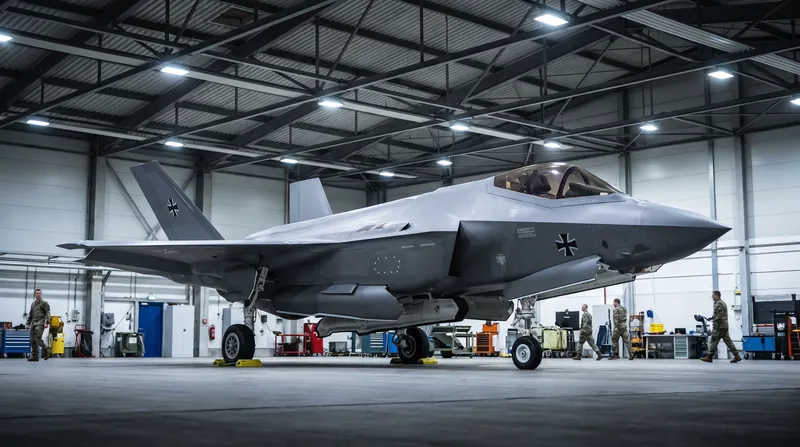
Germany Receives First F-35A, Beginning €10 Billion Shift to Stealth Airpower and NATO Nuclear Role
2 sources
Poverty Rate
Argentina's Poverty Rate Jumps to 32.3%, Marking First Increase Under Milei
5 sources

Italian Education
Italy Bans Burqas in Schools and Caps Foreign Student Enrollment per Classroom
6 sources

Trade Diversification
India Accelerates Trade Talks With Canada and Mexico Amid US Tariff Disruption
3 sources
Every angle. Every day.
Get World stories with full source coverage and perspective breakdowns delivered to your inbox.