
full timeline
Alleged Iranian cyberattacks in Europe
European critical infrastructure and cold-storage facilities face cyber disruptions that French authorities attribute to state-sponsored Iranian actors.
Follow Alleged Iranian cyberattacks in Europe in the Factlen app and get an alert when there is news. Get the app
Share this story
Latest report
France Summons Iranian Envoy and Threatens Retaliation Over Supermarket Cyberattacks
The French government has formally attributed a wave of cyberattacks targeting commercial refrigeration systems to Tehran, summoning the Iranian ambassador to deliver a warning of impending European sanctions. The diplomatic escalation follows an unprecedented breach that disrupted grocery supply chains across multiple European nations last month.
- France summoned the Iranian ambassador to deliver a formal diplomatic reprimand over the October cyberattacks on commercial refrigeration systems.
- The French government officially attributed the coordinated infrastructure breach to the Islamic Revolutionary Guard Corps.
- Paris is actively lobbying the European Union to impose targeted economic sanctions against Iranian state-backed cyber entities.
- Tehran has categorically denied the accusations, warning that any new European penalties will trigger reciprocal diplomatic measures.
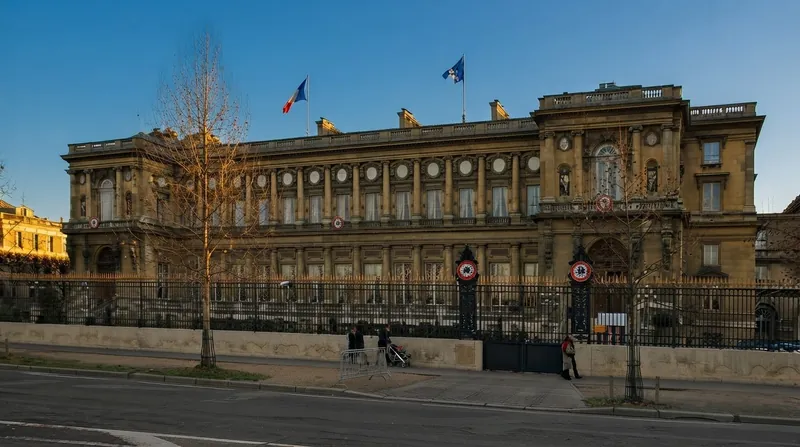
The French Foreign Ministry summoned the Iranian ambassador to Paris on Tuesday, delivering a formal diplomatic reprimand over a coordinated cyberattack that compromised commercial refrigeration systems across the country. The summons marks the first official attribution of the October infrastructure breach to a foreign state actor.[1][2]
French authorities informed the envoy that Paris holds the Islamic Revolutionary Guard Corps directly responsible for the intrusions, which targeted internet-connected temperature controls in hundreds of supermarkets. The government warned that the operation would not go unanswered.[3][4]
"France will not tolerate state-sponsored sabotage of its civilian food supply networks, and we are actively coordinating a severe response with our European partners," the French foreign minister stated during a press briefing on Monday.
The diplomatic escalation follows a forensic investigation by France's national cybersecurity agency, ANSSI, into a wave of digital intrusions that began in late October 2026. The attacks systematically disabled the cooling mechanisms in commercial freezers, causing significant localized food spoilage.[4]
Vulnerabilities in Civilian Infrastructure
The operation exploited known vulnerabilities in a specific brand of industrial IoT controllers used widely across European grocery chains. By gaining remote access to the temperature management software, the attackers were able to override local safety protocols and force the units to defrost.[4]
Investigators traced the digital footprint of the intrusion back to IP addresses and command-and-control infrastructure previously associated with Iranian state-backed hacking groups. The forensic report concluded that the complexity of the coordinated breach required resources typically available only to state intelligence services.[5]
The targeting of supermarket refrigeration represents a notable shift in cyber warfare tactics, moving away from traditional espionage or financial extortion toward direct disruption of civilian daily life. Security analysts note that food supply chains have historically been considered off-limits in unacknowledged state conflicts.[3][4]
While the initial reports focused heavily on French retailers, the October cyberattacks simultaneously affected commercial refrigeration systems in five other European nations. The coordinated nature of the breach forced grocery chains across the continent to scramble emergency IT patches to secure their remaining inventory.
In response to the attribution, France is now leading a diplomatic push within the European Union to impose a new round of targeted economic sanctions against Tehran. The proposed measures would specifically target individuals and entities associated with the IRGC's cyber warfare division.
European Sanctions Push
The French foreign minister indicated that the evidence gathered by national cybersecurity teams has already been shared with allied intelligence agencies in Berlin, London, and Washington. The intelligence sharing aims to build a unified Western consensus on the origin of the attacks.[4]
"This was an unprecedented attempt to weaponize the basic logistical infrastructure that European citizens rely on every day," the foreign minister told reporters, emphasizing that the European bloc must establish clear deterrents against civilian infrastructure targeting.
The Iranian government has categorically rejected the French accusations, describing the attribution as a politically motivated fabrication designed to justify further economic pressure. Tehran maintains that it does not engage in offensive cyber operations against civilian targets.[5]
Iranian state media outlets characterized the summons of their ambassador as a theatrical gesture, suggesting that European governments are attempting to deflect blame for their own domestic cybersecurity failures and vulnerable commercial networks.[5]
The diplomatic confrontation arrives at a period of already heightened friction between the European Union and the Islamic Republic. Recent months have seen relations deteriorate over Iran's expanding nuclear enrichment program and its military support for allied proxy groups across the Middle East.[3]
Escalating Regional Tensions
European capitals have grown increasingly frustrated with Tehran's posture, leading to a gradual hardening of the EU's diplomatic approach. The supermarket cyberattacks have provided French hardliners with concrete domestic evidence to argue for a complete reassessment of European engagement with Iran.[1]
The financial toll of the October breach remains under assessment, but retail industry associations estimate the initial losses from spoiled perishable goods and emergency IT remediation at several million euros. The disruption forced some regional supermarket branches to temporarily halt the sale of dairy and frozen products.[4]
Cybersecurity experts warn that the incident exposes the fragile security architecture underlying modern, highly connected logistical networks. Many commercial refrigeration units are installed with default administrative passwords and are rarely updated with security patches, making them soft targets for sophisticated actors.[4]
In the wake of the attacks, the French government has issued emergency directives requiring critical retail infrastructure operators to segment their operational technology networks from public internet access. The mandate aims to prevent remote attackers from bridging into physical control systems.[4]
Retailers are now facing pressure from both regulators and insurance providers to conduct comprehensive audits of their connected hardware. The sudden focus on IoT security has prompted a surge in demand for specialized industrial cybersecurity consultants across the European retail sector.[4]
Securing the Supply Chain
The diplomatic fallout is expected to dominate the agenda at the upcoming European Council security summit, where French diplomats plan to formally present their forensic findings. Paris is seeking a unanimous declaration condemning the use of cyber operations against civilian food supplies.[1]
If the European Union proceeds with the proposed sanctions package, it would mark the first time the bloc has levied economic penalties against a foreign state specifically for a cyberattack on commercial retail infrastructure. The move would establish a new threshold for European cyber deterrence.
The Iranian foreign ministry has warned that any new European sanctions will be met with reciprocal diplomatic and economic measures. Tehran has previously responded to Western penalties by restricting the access of international nuclear inspectors and accelerating its uranium enrichment activities.[3][5]
As the diplomatic standoff deepens, cybersecurity agencies across NATO member states have issued joint advisories urging critical infrastructure operators to remain on high alert. The bulletins warn that retaliatory cyber operations could target other vulnerable sectors, including municipal water treatment and local power distribution.[2][4]
The attribution of the supermarket hacks underscores the growing difficulty of maintaining the distinction between civilian and military targets in the digital domain. As everyday appliances become increasingly connected, the attack surface available to state-sponsored hackers continues to expand exponentially.[4]
The Broader Cyber Landscape
The technical analysis provided by French authorities revealed that the hackers utilized a custom malware payload specifically designed to manipulate the defrost cycles of industrial freezers. The malicious code was engineered to bypass standard temperature alarms, delaying the detection of the failure until the merchandise had already thawed.[4]
This incident is part of a broader pattern of escalating cyber skirmishes between Western nations and Iranian state-aligned groups. Over the past two years, similar threat actors have been implicated in disruptive attacks against Albanian government networks and Israeli municipal water systems.[3][5]
The willingness to target civilian food distribution networks indicates a shift in the perceived rules of engagement among state-sponsored cyber units. Intelligence analysts suggest that the operation may have been intended as a low-level demonstration of capability, signaling the potential for more severe economic disruption.[4]
French retail executives have called for state subsidies to help offset the costs of upgrading their legacy refrigeration systems to meet the new security standards. The industry argues that defending against military-grade cyber threats should not be the sole financial responsibility of private grocery chains.[4]
Industry Financial Demands
As the November deadline for the European Council meeting approaches, the diplomatic maneuvering between Paris and Tehran is intensifying. The outcome of the sanctions vote will likely set a precedent for how the international community responds to state-sponsored sabotage of commercial internet-of-things infrastructure.[1]
For now, the French government maintains that its primary objective is to establish a credible deterrent without triggering a broader escalation. However, the explicit threat of retaliation delivered to the Iranian envoy suggests that Paris is prepared to escalate its response if further intrusions are detected.[1][2]
Sources
- [1]The Irish Times — France summons Iran envoy over supermarket fridge hack Read on The Irish Times →
- [2]The Star — France summons Iran envoy over supermarket fridge hack, warns of response Read on The Star →
- [3]The Media Line — France Summons Iranian Ambassador Over Supermarket Cyberattacks, Threatens Retaliation Read on The Media Line →
- [4]The Washington Post — Iran hacked hundreds of French supermarket refrigerators, France says Read on The Washington Post →
- [5]Iran International — France warns Iran of retaliation over IRGC hack of supermarket freezers Read on Iran International →
What to watch
- The European Commission's Security College will evaluate the resilience of supermarket cooling systems.
- French authorities are pursuing international arrest warrants for the head of the Shahid Kaveh cyber unit and his deputies.
- France is lobbying the European Union to impose targeted economic sanctions against Iranian state-backed cyber entities.
- Tehran has warned it will trigger reciprocal diplomatic measures if new European penalties are imposed.
Where things stand
France Blames Iran for Cyberattacks on Supermarket Refrigerators and Blood Banks
Key point: French authorities have accused an Iranian cyber warfare unit of hacking refrigeration systems at hundreds of supermarkets and blood banks, prompting calls for European sanctions.
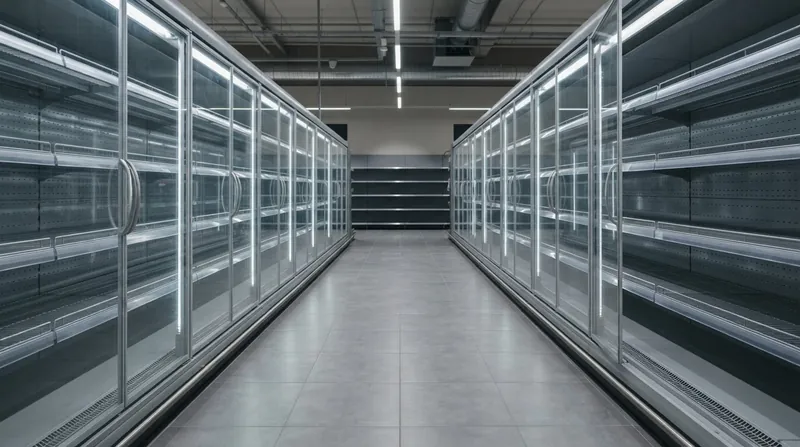
AIIllustration: The October cyberattacks targeted the internet-connected temperature controllers of commercial freezers across six European nations.From: France Summons Iranian Envoy and Threatens Retaliation Over Supermarket Cyberattacks French authorities have formally accused Iran's Islamic Revolutionary Guard Corps of orchestrating a massive wave of cyberattacks that sabotaged refrigeration systems at hundreds of supermarkets and blood banks across the country. The attribution marks the first official confirmation of responsibility for the October hacks, which caused widespread food spoilage and triggered multiple fires in retail locations.
The Paris prosecutor's office stated that investigators traced the attacks to Shahid Kaveh, a cyber warfare unit affiliated with the Electronic and Cyber Center of the Islamic Revolutionary Guard Corps. French Foreign Minister Jean-Noel Barrot confirmed the findings during a G7 meeting in Paris, describing the sabotage as an act of unprecedented scale and aggression. Barrot also announced that France had summoned the Iranian ambassador to protest the severe violation of national interests.
In response to the attacks, Barrot vowed to pursue Europe-wide sanctions against those responsible, escalating diplomatic tensions between Paris and Tehran. Concurrently, the Paris prosecutor's office opened a judicial investigation into the head of the Shahid Kaveh unit and his deputies. Authorities have requested international arrest warrants for the suspects on charges of fraudulent interference with data systems, causing damage dangerous to persons, and serving a foreign power.
The initial wave of cyberattacks on October 11 and 12 targeted digital thermostats in roughly 700 French grocery stores, disabling safety alerts and pushing freezer temperatures above 50 degrees Celsius. Similar refrigeration hacks subsequently struck supermarkets in several other European countries, including Belgium, Luxembourg, and Sweden. Hackers also targeted cold storage facilities operated by the national blood service of France, though technicians were able to disconnect the systems before blood products were destroyed.
Sources:France Blames Iran for Cyberattacks on Commercial Refrigeration Systems
Key point: French authorities have formally accused Iran of launching unprecedented cyberattacks that crippled industrial freezers in European grocery stores and blood banks.
French prosecutors and the country's foreign minister have formally accused Iran of orchestrating at least two waves of cyberattacks against commercial refrigeration systems. The hacks targeted industrial freezers and refrigerators across France and the wider European region.
The cyberattacks crippled cooling infrastructure in grocery stores and blood banks. French authorities described the hacking campaign as unprecedented, noting that the remote breaches caused physical fires in some of the compromised facilities.
The formal attribution by prosecutors and the foreign ministry marks an escalation from initial accusations made earlier in the month. While France had previously blamed Iran for isolated cyberattacks on supermarket fridges, the latest findings reveal a broader, more destructive campaign.
Earlier updates
1 update
Hackers Attempt to Boil French Blood Bank Supplies in Cyberattack
Key point: Cybercriminals breached temperature controls at three French national blood service sites and attempted to heat plasma storage to 110°C, though alarms prevented any samples from being destroyed.
AIIllustration: European blood banks were forced to relocate thousands of units of blood after hackers targeted the temperature control software of their refrigeration systems.From: Cyberattacks Disable Cold Chain Refrigeration at French and European Blood Banks Hackers infiltrated the cold storage systems at three facilities operated by France's national blood service, the Établissement français du sang (EFS), and maliciously altered the temperature controls. The cyberattackers reprogrammed the refrigeration units holding blood plasma, attempting to raise the storage temperatures to a staggering 110°C in a deliberate effort to boil and destroy the critical medical supplies.
Despite the extreme temperature adjustments initiated by the hackers, automated safety alarms successfully detected the environmental anomalies before any blood plasma or patient samples could be compromised. EFS officials confirmed in a statement on Tuesday that the medical inventory remained entirely safe and fully viable for use. The agency also noted that the national blood service itself was not the primary target of the network breach, suggesting the attackers may have pivoted from a compromised third-party system.
The attack has triggered alarm among international security officials regarding the vulnerability of physical infrastructure to digital intrusion. The UK's cybersecurity chief characterized the incident as a "sliding doors" moment, warning that this unprecedented threat to medical cold storage could have had catastrophic consequences. Concurrently, the Russian hacktivist collectives Noname and Z-Pentest Alliance have publicly claimed responsibility for the freezer hacks, though industry experts are treating these assertions with significant skepticism.
This incident marks a concerning escalation in a broader wave of cyberattacks targeting critical infrastructure and healthcare systems across Europe. By specifically targeting refrigeration and cold storage units, cybercriminals are demonstrating a willingness to bridge the gap between digital breaches and physical destruction, posing a direct threat to life-saving medical supply chains.
1 update
EU Commission to Review Supermarket Cyber Defenses After Fridge Hacks
Key point: The European Commission's Security College will evaluate the resilience of supermarket cooling systems following widespread cyberattacks.
AIIllustration: Supermarkets across six European nations were forced to dispose of perishable inventory after hackers compromised their refrigeration controllers.From: Coordinated Cyberattacks Target Supermarket Refrigeration Systems Across Six European Nations The European Commission will examine the cybersecurity defenses of supermarkets across the continent following a wave of attacks on commercial refrigeration systems. Agriculture and Food Commissioner Christophe Hansen stated that the Commission's Security College will discuss the recent incidents to assess how well retailers can withstand such vulnerabilities.
The regulatory review comes after suspected hackers compromised smart fridges and freezers in nine European countries, intentionally raising temperatures to as high as 50 degrees Celsius. The coordinated breaches have destroyed large quantities of food stocks at major grocery chains, prompting urgent calls for improved security standards in retail infrastructure.
Charts, maps and images
Timeline
November 2026
France Summons Iranian Envoy and Threatens Retaliation Over Supermarket Cyberattacks
European critical infrastructure and cold-storage facilities face cyber disruptions that French authorities attribute to state-sponsored Iranian actors.
- France Blames Iran for Cyberattacks on Commercial Refrigeration SystemsKey point: French authorities have formally accused Iran of launching unprecedented cyberattacks that crippled industrial freezers in European grocery stores and blood banks.
- France Blames Iran for Cyberattacks on Supermarket Refrigerators and Blood BanksKey point: French authorities have accused an Iranian cyber warfare unit of hacking refrigeration systems at hundreds of supermarkets and blood banks, prompting calls for European sanctions.
Cyberattacks Disable Cold Chain Refrigeration at French and European Blood Banks
Hackers Attempt to Boil French Blood Bank Supplies in Cyberattack
- Hackers Attempt to Boil French Blood Bank Supplies in CyberattackKey point: Cybercriminals breached temperature controls at three French national blood service sites and attempted to heat plasma storage to 110°C, though alarms prevented any samples from being destroyed.
Supermarket Cyberattack Expands to Nine European Countries, Spoiling Millions in Food
AI- EU Commission to Review Supermarket Cyber Defenses After Fridge HacksKey point: The European Commission's Security College will evaluate the resilience of supermarket cooling systems following widespread cyberattacks.
Coordinated Cyberattacks Target Supermarket Refrigeration Systems Across Six European Nations


October 2026
Hackers Spoil Food Across Hundreds of French Supermarkets by Breaching Refrigeration Controllers

How the story developed
The cyberattacks began on October 11 and 12, targeting digital thermostats in approximately 700 French grocery stores. Hackers breached internet-connected refrigeration controllers that lacked proper segmentation from the public internet. The attackers disabled safety alerts and altered temperature setpoints, pushing cooling units to 50 degrees Celsius. The intrusion caused minor electrical fires as the hardware strained and forced stores to discard massive quantities of perishable goods.
The sabotage campaign expanded transnationally on November 2, breaching temperature control systems in grocery chains across six European countries. By November 3, the attacks had reached nine European nations, including Belgium, Luxembourg, and Sweden, affecting major chains such as Carrefour and SuperValu. Hackers remotely triggered continuous defrost cycles in the internet-exposed legacy refrigeration controllers. Cybersecurity agencies advised retailers to physically disconnect their temperature management systems from external networks to prevent further spoilage.
The targeting shifted from retail to healthcare infrastructure on November 4. Cybercriminals breached temperature controls at three French national blood service sites, attempting to heat plasma storage to 110 degrees Celsius. Alarms alerted technicians, who were able to disconnect the systems before any blood products were destroyed.
By November 6, the coordinated cyberattacks had disrupted operational technology networks controlling refrigeration units at additional French and European blood storage facilities. Facility managers successfully relocated more than 14,000 units of blood to backup storage before temperature fluctuations could spoil the critical supplies. EU officials condemned the sabotage as a deliberate strike on the food supply chain and physical healthcare infrastructure.