
New Federal Law Bans Large Institutional Investors From Purchasing Single-Family Homes
A landmark federal law now prohibits large corporate entities from buying single-family homes, forcing mega-landlords to gradually sell off their existing portfolios over the next decade. The legislation aims to level the playing field for everyday homebuyers and unlock hundreds of thousands of properties for retail mortgage markets.

- First-Time Buyers & Advocates
- Views the law as a necessary intervention to restore the American dream of homeownership by removing unfair, all-cash corporate competition.
- Corporate Landlords
- Argues the ban infringes on free-market property rights and will severely damage the single-family rental market, hurting families who cannot afford to buy.
- Mortgage & Real Estate Industry
- Focuses on the market mechanics, anticipating a massive boom in retail loan originations as corporate inventory is unlocked for everyday buyers.
Why this matters
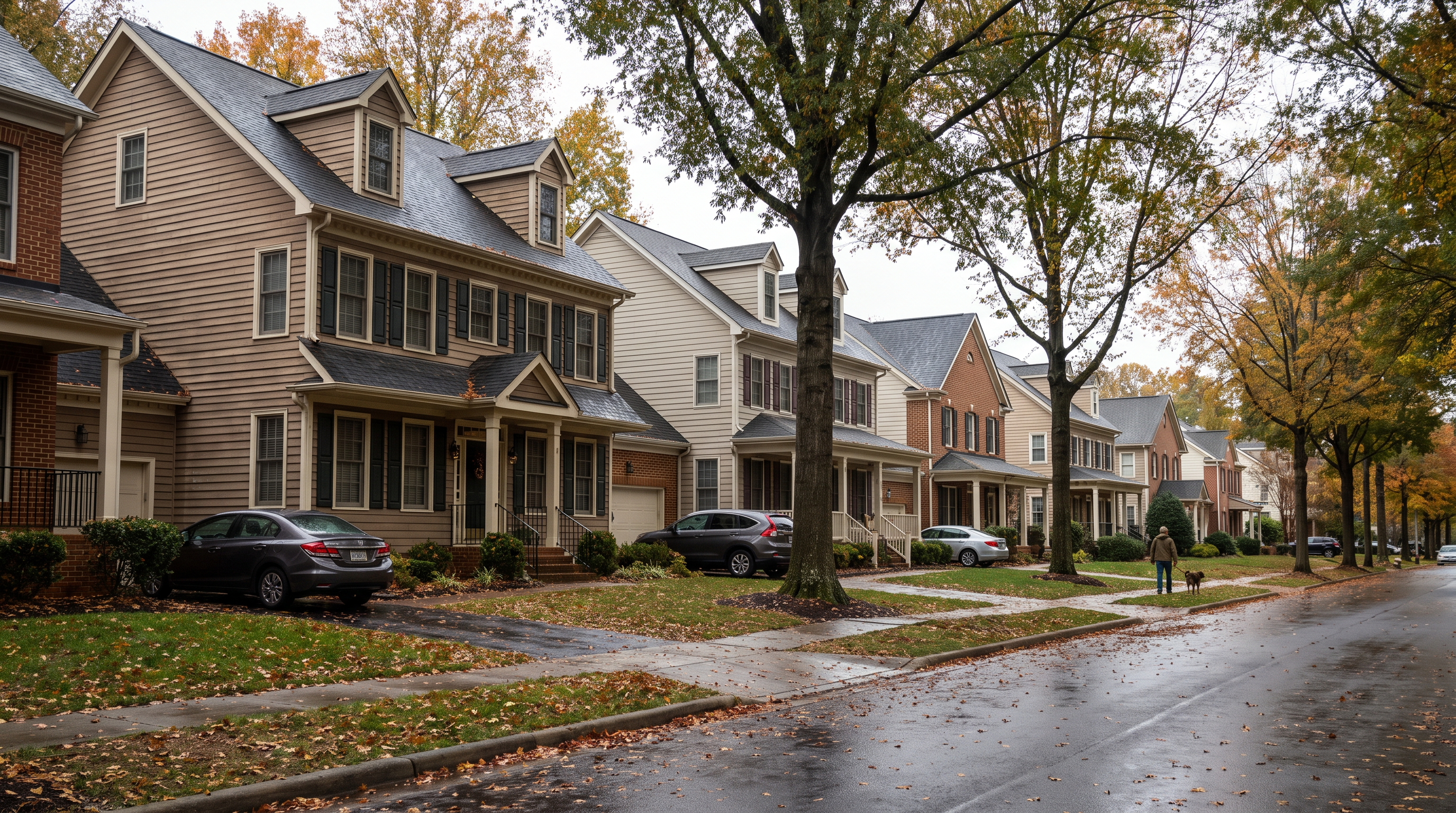
For the last decade, regular families relying on mortgages have routinely lost bidding wars to private equity firms making all-cash offers. This law fundamentally rewrites the rules of American real estate, effectively reserving existing single-family homes for individual buyers and local mom-and-pop landlords.
Key points
- A new federal law bans corporate entities from buying existing single-family homes.
- The ban applies to investors owning more than 100 single-family properties.
- Mega-landlords must sell off their existing portfolios over a 10-year period.
- Violators face a $50,000 annual excise tax per non-compliant home.
- Apartment buildings and new 'build-to-rent' construction are exempt.
- Mortgage lenders expect a surge in retail loan originations as inventory unlocks.
The American housing market is undergoing its most significant structural shift since the 2008 financial crisis. A newly enacted federal law, the Stop Wall Street Landlords Act of 2026, officially prohibits large institutional investors from purchasing existing single-family homes. The legislation targets a specific, highly capitalized segment of the market: corporate entities, private equity firms, and hedge funds that manage massive portfolios of residential real estate, effectively removing them from the bidding pool for neighborhood homes.[1][2]
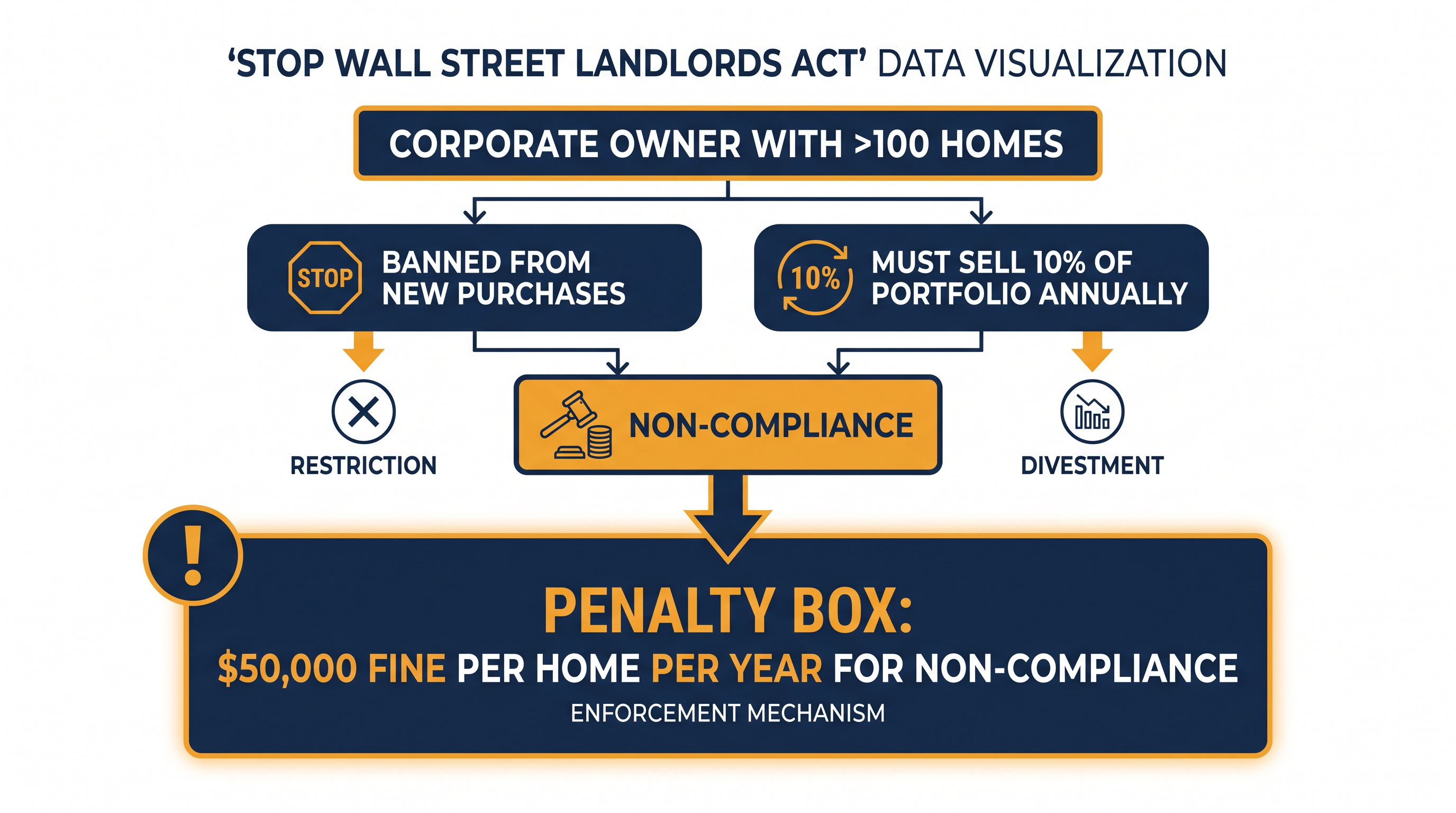
The mechanics of the ban are straightforward but sweeping. Any corporate entity or network of affiliated LLCs that owns more than 100 single-family properties is now legally barred from acquiring additional existing homes. The threshold was carefully calibrated to exempt small-scale "mom-and-pop" landlords, who typically own fewer than ten properties, while capturing the mega-landlords who have spent the last decade buying up entire subdivisions with all-cash offers.[2][3]
Crucially, the law is not just a freeze on future purchases; it is a forced divestment. Institutional investors currently holding more than 100 single-family homes are required to sell off their excess inventory over a ten-year transition period. To prevent a sudden market crash, the law mandates a phased approach, requiring firms to divest 10% of their qualifying portfolios annually. Failure to comply triggers a punitive excise tax of $50,000 per home, per year, making it financially unviable to simply hold the properties and absorb the fines.[1][2]
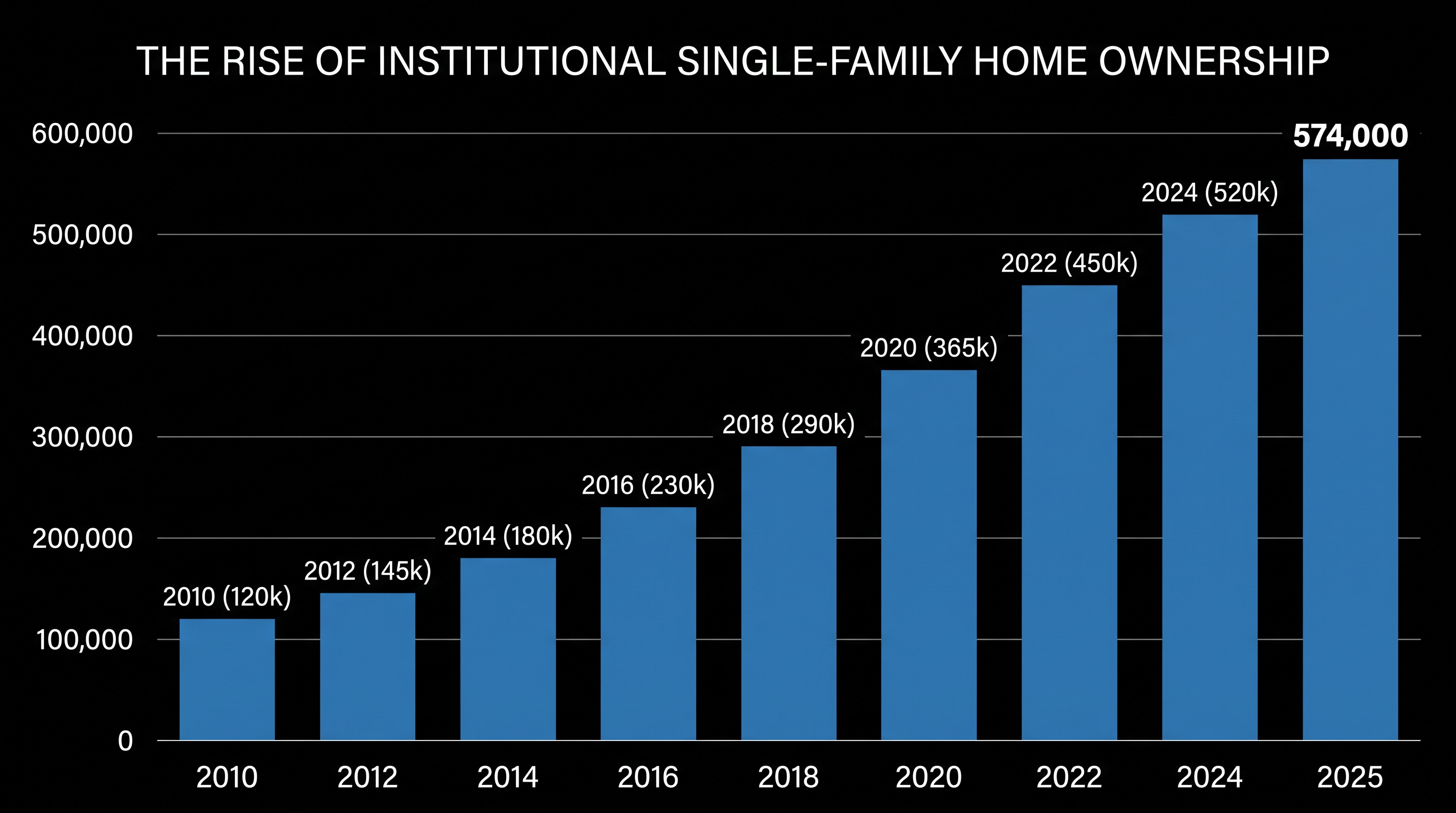
The backstory of this legislation is rooted in the aftermath of the subprime mortgage crisis. In the early 2010s, federal agencies actively encouraged heavily capitalized firms to buy up foreclosed properties to stabilize plummeting home prices. What began as a crisis-era intervention evolved into a permanent asset class. By late 2025, institutional investors owned an estimated 574,000 single-family homes nationwide, heavily concentrated in fast-growing Sun Belt markets like Atlanta, Phoenix, and Charlotte.[3]
For everyday homebuyers, the presence of these mega-landlords created an almost insurmountable hurdle. A family utilizing a conventional or FHA mortgage, requiring appraisals and financing contingencies, simply could not compete with a private equity firm offering cash, waiving all inspections, and closing in seven days. This dynamic artificially constrained the supply of starter homes, driving up prices and keeping a generation of prospective buyers trapped in the rental market.[3]
For everyday homebuyers, the presence of these mega-landlords created an almost insurmountable hurdle.
The mortgage industry is already reacting to the legislation with overwhelming optimism. Lenders anticipate a sustained boom in retail mortgage originations as hundreds of thousands of corporate-owned homes transition back into the hands of individual buyers. Because institutional investors rarely use traditional residential mortgages, their exit from the market unlocks a massive volume of potential loan business for local banks, credit unions, and independent mortgage brokers.
However, the transition presents complex macroeconomic questions. Critics of the ban point out that institutional investors provide a necessary service by offering single-family rental options to families who cannot afford a down payment, have poor credit, or simply prefer the flexibility of renting. By forcing the sale of these properties, the law could inadvertently shrink the supply of single-family rentals, potentially driving up rental rates for those who are not yet ready to buy.[1]
To mitigate this, lawmakers included a critical exemption: "Build-to-Rent" communities. Institutional investors are still permitted to purchase single-family homes if they directly finance the construction of new housing stock. This loophole is designed to redirect Wall Street capital away from cannibalizing existing neighborhoods and toward expanding the overall housing supply, aligning corporate profit motives with the national need for more homes.[2]
The law also explicitly exempts multi-family properties, such as apartment complexes and condominiums, which have historically been the domain of corporate ownership. Non-profit organizations, community land trusts, and government housing agencies are similarly excluded from the 100-property cap, ensuring that affordable housing initiatives are not caught in the crossfire of the institutional ban.[2]
Enforcement will rely on a newly established federal database tracking the beneficial ownership of residential real estate. Because large investors frequently use complex webs of anonymous LLCs to hold properties, the Treasury Department and the IRS have been granted expanded authority to pierce corporate veils. Any entity attempting to bypass the 100-home limit by splitting its portfolio across shell companies will face severe federal penalties, including asset forfeiture.[1][2]
The U.S. is not the first nation to experiment with restricting corporate homeownership, but it is by far the largest market to attempt it. Policymakers closely studied similar interventions in Canada and New Zealand, learning that partial bans often fail due to loopholes. The comprehensive nature of the U.S. law, combining a hard purchasing cap with forced divestment and strict beneficial ownership tracking, represents a highly aggressive regulatory approach.[3]
As the law takes immediate effect regarding new purchases, the real estate market is bracing for the first wave of divestments. While it will take years for the full 574,000 homes to change hands, the psychological shift is already palpable. For the first time in over a decade, a family putting an offer on a starter home can be reasonably certain they are bidding against another family, rather than a multi-billion-dollar algorithm.[1][3]
How we got here
2008-2012
Following the subprime mortgage crisis, federal agencies encourage institutional investors to buy foreclosed homes to stabilize the market.
2020-2022
A pandemic-era housing boom sees Wall Street firms aggressively outbidding retail buyers with all-cash offers.
2024
Early versions of the Stop Wall Street Landlords Act are introduced in Congress amid growing public frustration over housing affordability.
August 2026
The federal ban officially passes, immediately halting new corporate purchases and starting the 10-year divestment clock.
Viewpoints in depth
First-Time Buyers & Advocates
Views the law as a necessary intervention to restore the American dream of homeownership.
Housing advocates argue that the commodification of single-family homes by Wall Street fundamentally broke the housing ladder. For years, families pre-approved for FHA or conventional loans found themselves outmatched by algorithms generating instant, all-cash offers with waived inspections. By removing this hyper-capitalized competition, advocates believe the law restores a natural market equilibrium where local buyers compete against other local buyers, stabilizing prices and making homeownership attainable again.
Corporate Landlords
Argues the ban infringes on free-market property rights and will severely damage the single-family rental market.
Institutional investors contend they are being scapegoated for a broader national housing shortage caused by restrictive local zoning laws, not corporate buying. They argue that their operations professionalized the rental market, providing high-quality, well-maintained single-family homes to families who prefer to rent, are transient, or lack the credit for a mortgage. By forcing a massive sell-off, they warn the law will decimate the supply of single-family rentals, driving up lease rates for millions of Americans who rely on them.
Mortgage & Real Estate Industry
Focuses on the market mechanics, anticipating a massive boom in retail loan originations.
For mortgage lenders, the law represents a massive unlocking of frozen capital. Because institutional investors buy in cash or use commercial debt facilities, every home they acquired was effectively removed from the retail mortgage ecosystem. Economists and lenders project that as these 574,000 homes are forcibly divested over the next decade, it will generate billions of dollars in new residential mortgage originations, revitalizing local lending markets and providing a steady stream of inventory to satisfy pent-up buyer demand.
What we don't know
- Whether the IRS and Treasury can successfully track and prevent investors from hiding ownership through complex, multi-layered shell companies.
- How the sudden reduction in single-family rental inventory will impact lease prices for families who cannot qualify for a mortgage.
- If the 10-year phased divestment will be slow enough to prevent localized housing market crashes in Sun Belt cities where corporate ownership is heavily concentrated.
Key terms
- Institutional Investor
- In this context, a large corporate entity, private equity firm, or hedge fund that purchases real estate at scale, defined by the law as owning over 100 single-family homes.
- Forced Divestment
- A legal requirement compelling a company to sell off specific assets—in this case, requiring mega-landlords to sell 10% of their housing portfolios annually.
- Beneficial Ownership
- The true individual or group that ultimately owns or controls a property, even if the title is held under a shell company or anonymous LLC.
- Build-to-Rent
- A real estate model where developers construct entire neighborhoods of single-family homes specifically intended for long-term corporate rental rather than individual sale.
Frequently asked
Does this law affect apartment buildings?
No. The ban strictly applies to existing single-family homes. Multi-family properties like apartment complexes and condos are exempt.
What if I own a few rental houses?
Small-scale landlords are unaffected. The law only targets entities that own more than 100 single-family properties.
Will this make home prices drop immediately?
Unlikely. The law mandates a 10-year phased divestment (selling 10% of portfolios annually) specifically to prevent a sudden glut of inventory from crashing the market.
Can corporations still build new homes to rent?
Yes. The 'Build-to-Rent' exemption allows institutional investors to finance and build new single-family housing stock, provided they are adding to the overall housing supply.
Sources
Source coverage
3 outlets
3 viewpoints surfaced



[1]BloombergCorporate Landlords
US Bans Wall Street From Buying Single-Family Homes in Historic Market Shift
Read on Bloomberg →[2]Congress.govFirst-Time Buyers & Advocates
H.R. 8240 - Stop Wall Street Landlords Act of 2026
Read on Congress.gov →[3]Factlen Editorial TeamFirst-Time Buyers & Advocates
Synthesis by Factlen editorial team
Read on Factlen Editorial Team →
Comments


Every angle. Every day.
Get finance stories with full source coverage and perspective breakdowns delivered to your inbox.