
DOT Proposes Two-Year Extension for Automaker Compliance with Mandatory AEB Rule
The Department of Transportation is proposing to delay the deadline for mandatory high-speed automatic emergency braking from 2029 to 2031, citing the technical challenges of preventing false activations at highway speeds.

The U.S. Department of Transportation has proposed a two-year extension for automakers to comply with a sweeping federal safety mandate, pushing the deadline for advanced Automatic Emergency Braking (AEB) systems from September 2029 to September 2031. The proposed amendment to Federal Motor Vehicle Safety Standard (FMVSS) 127 aims to give manufacturers more time to overcome the technical hurdles of high-speed collision avoidance.[1][5]
Finalized in May 2024, the original rule represented one of the most aggressive safety regulations in decades. It required all new passenger vehicles to automatically stop and completely avoid contact with a lead vehicle at speeds up to 62 mph. Furthermore, vehicles had to detect and avoid pedestrians at speeds up to 45 mph, even in complete darkness.[1]
The decision to extend the deadline sets up a stark trade-off between rapid safety deployment and technological feasibility. A side-by-side analysis of the two timelines reveals competing priorities: forcing immediate adoption of lifesaving technology versus mitigating the unintended risks of premature deployment.
The argument for maintaining the 2029 timeline centers on the immediate preservation of life. Safety advocates point out that traffic fatalities remain historically high, with over 42,000 deaths recorded in 2022. The National Highway Traffic Safety Administration (NHTSA) originally estimated that the 2029 mandate would save at least 360 lives and prevent over 24,000 injuries annually.[1][7]
The evidence supporting the faster timeline relies on the fact that the underlying technology already exists. Organizations like Consumer Reports argue that advanced AEB is already deployed in select premium vehicles—such as the Tesla Model Y, which recently passed updated federal criteria—and that a strict deadline forces the industry to scale production, thereby driving down costs. They argue that delaying the rule simply allows automakers to prioritize profit margins over pedestrian safety.[3][6]
Against the 2029 timeline, the automotive industry argues that the mandate is practically impossible to achieve across all vehicle classes without introducing new dangers. The Alliance for Automotive Innovation, which sued the DOT over the rule in early 2025, contends that current radar and camera fusion systems drop to between 60 and 70 percent accuracy when detecting pedestrians at high speeds or in low light.[2][4]
The evidence supporting the automakers' position is found in the rising phenomenon of "phantom braking." When systems are calibrated to be hyper-sensitive at 62 mph to meet the zero-contact requirement, they often falsely identify shadows, metal signs, or overpasses as obstacles. This triggers unexpected, violent braking on highways, which can cause severe rear-end collisions.[4]
To eliminate these false positives while meeting the strict 62 mph threshold, automakers would likely need to equip every vehicle with expensive LiDAR sensors. Industry estimates suggest this could add between $200 and $4,200 to the cost of a new car, potentially pricing entry-level buyers out of the new vehicle market entirely.[2]
The 2029 timeline fits well when the primary goal is to force a rapid paradigm shift in pedestrian safety, accepting that early iterations of the technology might be overly cautious or expensive. It assumes that regulatory pressure will accelerate sensor innovation faster than organic market forces.
Conversely, the 2031 extension fits well when prioritizing the stability of the technology and the affordability of the broader vehicle market. It acknowledges the physics of stopping a 5,000-pound vehicle at highway speeds and provides the necessary runway for advanced computing to become cheap enough for standard deployment without triggering dangerous false activations.
Where opinion splits
Automakers and Suppliers
Manufacturers argue the original timeline demands impossible physics from current sensors.
The Alliance for Automotive Innovation asserts that while they support AEB technology, the requirement to completely avoid a vehicle at 62 mph using current radar and cameras will result in 'phantom braking.' They argue that forcing the mandate by 2029 will require expensive LiDAR systems, adding thousands of dollars to the cost of a new car and frustrating drivers with overly aggressive, unpredictable braking.
Consumer Safety Advocates
Advocates argue that delaying the mandate costs lives and caters to industry profit margins.
Groups like Consumer Reports and Advocates for Highway and Auto Safety point to the 42,500 traffic fatalities in 2022 as proof that immediate action is necessary. They argue that the technology is already proven in premium vehicles and that giving automakers a two-year extension simply allows them to delay necessary safety investments. They maintain that everyone on the road deserves a baseline of reliable emergency braking.
Federal Regulators
The DOT is attempting to balance aggressive safety goals with the realities of automotive engineering.
NHTSA originally designed FMVSS 127 to be one of the most impactful roadway safety regulations in years, specifically targeting the rise in pedestrian fatalities. However, facing a lawsuit and mounting evidence regarding false activations, the agency is using the extension to ensure the technology matures enough to be deployed safely without causing secondary accidents.
Key points
- The DOT has proposed extending the compliance deadline for mandatory high-speed automatic emergency braking from September 2029 to September 2031.
- The original rule requires vehicles to completely avoid a lead vehicle at 62 mph and detect pedestrians in darkness at 45 mph.
- Automakers sued to block the rule, arguing that achieving zero-contact stops at 62 mph with current sensors will cause dangerous 'phantom braking.'
- Safety advocates strongly oppose the delay, citing the 42,500 traffic fatalities in 2022 and the estimated 360 lives the rule would save annually.
Unanswered questions
- Whether the D.C. Circuit Court will formally pause the ongoing litigation from automakers now that the DOT is amending the rule.
- How much the cost of advanced sensors like LiDAR will drop by 2031 to make compliance economically viable for entry-level vehicles.
- Whether the final amended rule will also lower the 62 mph speed threshold, or simply extend the timeline to achieve it.
How we got here
June 2023
NHTSA proposes the initial AEB mandate for passenger vehicles.
May 2024
NHTSA finalizes FMVSS 127, setting a September 2029 compliance deadline.
January 2025
The Alliance for Automotive Innovation sues the DOT to block the rule.
March 2026
DOT announces it is preparing a notice to amend the rule and extend the deadline.
August 2026
DOT formally proposes the two-year extension to September 2031.
- Automotive Industry
- Manufacturers argue the original timeline demands impossible physics from current sensors.
- Safety Advocates
- Advocates argue that delaying the mandate costs lives and caters to industry profit margins.
- Federal Regulators
- The DOT is attempting to balance aggressive safety goals with the realities of automotive engineering.
Perspectives this story doesn't cover
- Used car buyers, who may be priced out of the new vehicle market if AEB mandates significantly increase base model prices.
- Collision repair shops, which will face complex and expensive calibration requirements for the new high-speed sensors.
Sources
Source coverage
7 outlets
3 viewpoints surfaced






- [1]NHTSAFederal Regulators
Federal Motor Vehicle Safety Standard 127
Read on NHTSA → - [2]Alliance for Automotive InnovationAutomotive Industry
Petition for Reconsideration on AEB Rule
Read on Alliance for Automotive Innovation → - [3]Consumer ReportsSafety Advocates
Statement on the Lawsuit to Review the Automatic Emergency Braking Rule
Read on Consumer Reports → - [4]Automotive FleetAutomotive Industry
New AEB Rule Practically Impossible
Read on Automotive Fleet → - [5]Safety and Health MagazineFederal Regulators
DOT anticipates publishing supplemental notice for AEB
Read on Safety and Health Magazine → - [6]The Brake ReportFederal Regulators
Tesla Model Y passes new NCAP criteria
Read on The Brake Report → - [7]Advocates for Highway and Auto SafetySafety Advocates
Statement on the Lawsuit to Review the Automatic Emergency Braking (AEB) Rule
Read on Advocates for Highway and Auto Safety →
More in Automotive & Transportation
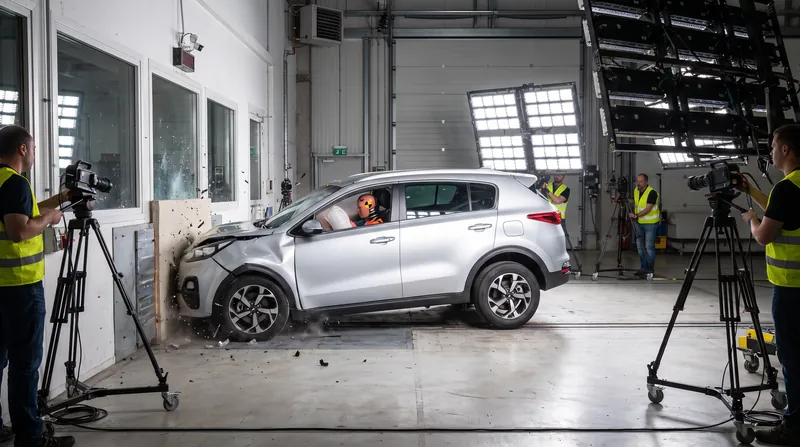
See all →SUV Architecture
The Hidden Engineering Divide: Why Your Next SUV's Architecture Dictates Its True Cost
5 sources
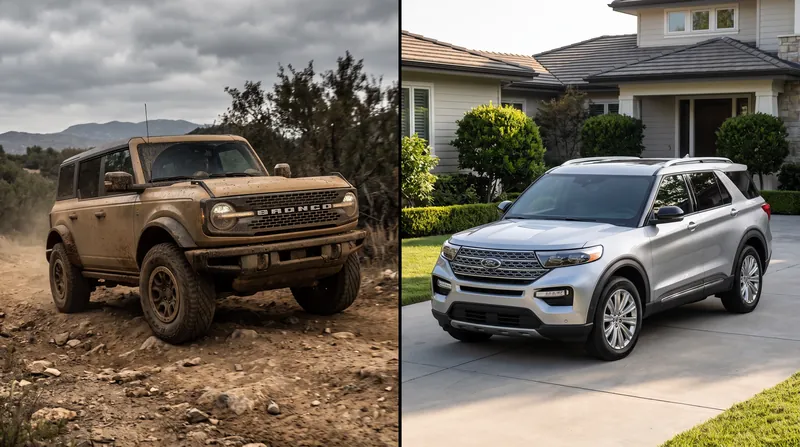
Aftermarket Upgrades
The Mechanics of the Differential: How a Car Turns a Corner and Why It Needs a Limited-Slip Upgrade
6 sources
Generative Design
AI-Driven Generative Design Algorithms Slash Vehicle Development Cycles by 70%, Forcing Safety Certification Overhaul
5 sources
EV Economics
US EV Market Fractures Regionally as Tax Credit Expiration Exposes Local Cost Divides
7 sources
Comments
Every angle. Every day.
Get Automotive & Transportation stories with full source coverage and perspective breakdowns, free every day.