
House to Vote Next Week on Formalizing Biden Impeachment Inquiry to Strengthen Subpoena Power
House Speaker Mike Johnson announced a full floor vote to formally authorize the ongoing impeachment inquiry into Joe Biden, aiming to bolster Republicans' legal leverage to enforce subpoenas.
By Javier Cruz

House Speaker Mike Johnson has announced that the chamber will hold a floor vote next week to formally authorize the ongoing impeachment inquiry into Joe Biden. The decision marks a significant escalation in the Republican-led investigation, which has spent months scrutinizing the foreign business dealings of the Biden family.
By putting the inquiry to a full chamber vote, GOP leadership aims to cement the legitimacy of their probe and silence critics who have argued the investigation lacks a proper constitutional mandate. The move sets the stage for a high-stakes political showdown on Capitol Hill, testing the unity of a deeply fractured Republican conference.[3][4]
The primary catalyst for the impending vote is a protracted legal standoff over congressional subpoena power. Since former Speaker Kevin McCarthy unilaterally launched the inquiry in September without a floor vote, the White House has aggressively pushed back against requests for documents and witness testimony.
Administration lawyers have repeatedly argued that the subpoenas issued by Republican committee chairs are constitutionally invalid precisely because the full House never formally authorized the investigation. This legal defense has effectively stalled key aspects of the probe, frustrating conservative lawmakers who are eager to compel cooperation from reluctant witnesses.[1][2]
Addressing reporters, Speaker Johnson framed the upcoming vote as a procedural necessity rather than a declaration of guilt. He argued that the House has no choice but to formally adopt the inquiry on the floor to ensure that when their subpoenas are inevitably challenged in federal court, Congress will be operating at the apex of its constitutional authority. Johnson emphasized that the vote is not an endorsement of articles of impeachment, but rather a necessary legal maneuver to break through what he characterized as unprecedented stonewalling by the executive branch.[3][5]
The investigation itself is being spearheaded by a triad of powerful panels: the House Oversight, Judiciary, and Ways and Means committees. Led by Chairmen James Comer and Jim Jordan, the probe has meticulously tracked millions of dollars flowing from foreign entities in China, Ukraine, and Romania to shell companies associated with Hunter Biden and the president's brother, James Biden.
Republicans allege that these business ventures traded on the Biden family name and suggest that Joe Biden was intimately involved in, and potentially benefited from, these arrangements during and after his tenure as vice president.[1][6]
Despite reviewing thousands of pages of bank records and conducting numerous closed-door interviews, Republican investigators have yet to produce direct evidence that Joe Biden personally profited from his family's business dealings or altered U.S. policy to benefit their clients.
The lack of a definitive smoking gun has been a persistent vulnerability for the inquiry, drawing sharp criticism from Democrats and skepticism from some moderate Republicans. Investigators have uncovered instances where Joe Biden casually interacted with his son's business associates, but no proof of the bribery or high crimes required to meet the constitutional standard for impeachment.[2][4]
The White House and congressional Democrats have vehemently denounced the inquiry as a baseless political stunt engineered to appease the right-wing base and exact retribution for the two impeachments of Donald Trump. Representative Jamie Raskin, the top Democrat on the Oversight Committee, has accused Republicans of attempting to cherry-pick evidence and distort facts to construct a false narrative of corruption. Democrats argue that the GOP is wasting valuable legislative time on a partisan fishing expedition while ignoring pressing domestic and international issues.[2][5]
The tension surrounding the inquiry has been further inflamed by a high-profile clash with Hunter Biden. The president's son recently defied a congressional subpoena demanding his appearance for a closed-door deposition, offering instead to testify in a public hearing.
Hunter Biden argued that a closed-door setting would allow Republicans to selectively leak portions of his testimony to manipulate public perception. In response, Chairmen Comer and Jordan rejected the offer for a public hearing and threatened to initiate contempt of Congress proceedings, arguing that witnesses do not get to dictate the terms of congressional subpoenas.[1][2]
Politically, the upcoming vote presents a precarious tightrope for the House GOP. With a razor-thin majority, Speaker Johnson can afford almost no defections if the resolution is to pass. The vote will force vulnerable moderate Republicans—particularly those representing swing districts that Joe Biden won in the last election—to go on the record supporting an investigation that remains deeply polarizing.
While many of these moderates have expressed private reservations about the lack of concrete evidence, party leadership has heavily pressured them to view the vote strictly as a tool to gather more information.[1][4]
If the resolution passes as expected along party lines, the investigating committees will emerge with bolstered legal standing to enforce their subpoenas in federal court. This could trigger a series of protracted legal battles over executive privilege and congressional oversight, potentially dragging the impeachment drama deep into the upcoming election cycle. Conversely, a failure to pass the resolution would be a catastrophic embarrassment for Republican leadership, effectively kneecapping their investigative efforts and exposing deep fractures within the party ranks.[3][6]
Key points
- The House will vote next week to formally authorize the impeachment inquiry into Joe Biden.
- The move is designed to strengthen Republicans' legal standing to enforce subpoenas in court.
- The White House has previously argued the inquiry is illegitimate without a full House vote.
- Investigators have focused on the Biden family's business dealings but have not produced direct evidence of wrongdoing by the president.
What we don’t know
- Whether the formalized inquiry will successfully compel testimony from key witnesses like Hunter Biden.
- How federal courts will rule on the enforcement of congressional subpoenas once the inquiry is formally authorized.
- Whether the investigation will ultimately lead to the drafting of formal articles of impeachment.
How we got here
January 2023
House Republicans launch investigations into the Biden family's business dealings after taking the majority.
September 2023
Former Speaker Kevin McCarthy unilaterally declares an impeachment inquiry without a full House vote.
November 2023
The White House rebuffs subpoenas, arguing the inquiry lacks constitutional legitimacy without a floor vote.
Next Week
The House is scheduled to hold a formal floor vote to authorize the ongoing inquiry.
- Republican Investigators
- Seeking to compel witness testimony and overcome White House resistance.
- Democratic Defenders
- Dismissing the probe as a partisan stunt lacking factual basis.
- Neutral Legal Analysts
- Focusing on the constitutional mechanics of subpoena enforcement.
Perspectives this story doesn't cover
- Independent voters in swing districts who may view the inquiry as a distraction from legislative priorities.
- Legal scholars debating the exact constitutional threshold required to enforce congressional subpoenas.
Sources
Source coverage
6 outlets
3 viewpoints surfaced






- [1]CBS NewsNeutral Legal Analysts
House votes to formalize Biden impeachment inquiry
Read on CBS News → - [2]The GuardianDemocratic Defenders
House Republicans vote to formally launch Biden impeachment inquiry
Read on The Guardian → - [3]BreitbartRepublican Investigators
Mike Johnson: House Will Vote Next Week on Formalizing Joe Biden Impeachment Inquiry
Read on Breitbart → - [4]Associated PressNeutral Legal Analysts
House to vote next week on formalizing Biden impeachment inquiry
Read on Associated Press → - [5]NBC NewsDemocratic Defenders
House Republicans plan vote to formalize Biden impeachment inquiry
Read on NBC News → - [6]Fox NewsRepublican Investigators
House GOP to hold vote formalizing Biden impeachment inquiry
Read on Fox News →
More in News & Politics
See all →Climate Liability
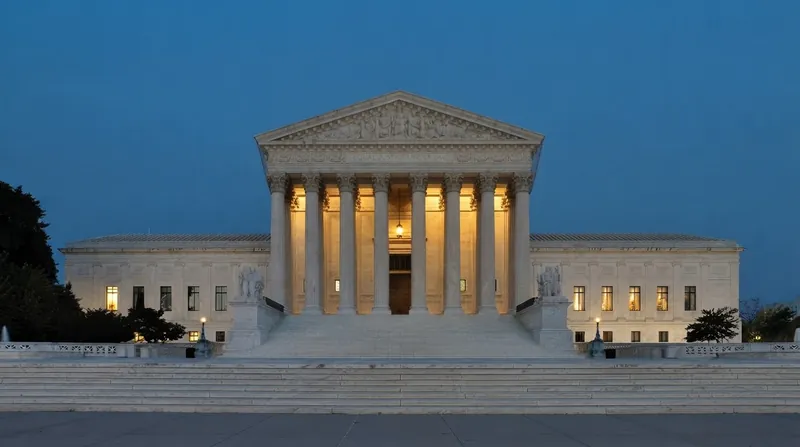
Supreme Court Hears Landmark Arguments on Whether Cities Can Sue Big Oil Over Climate Damages
4 sources
Executive Power
Trump Directs $2 Billion From Medicare Fund for $90 Senior Rebates Ahead of Midterms
7 sources
Federal Savings Programs
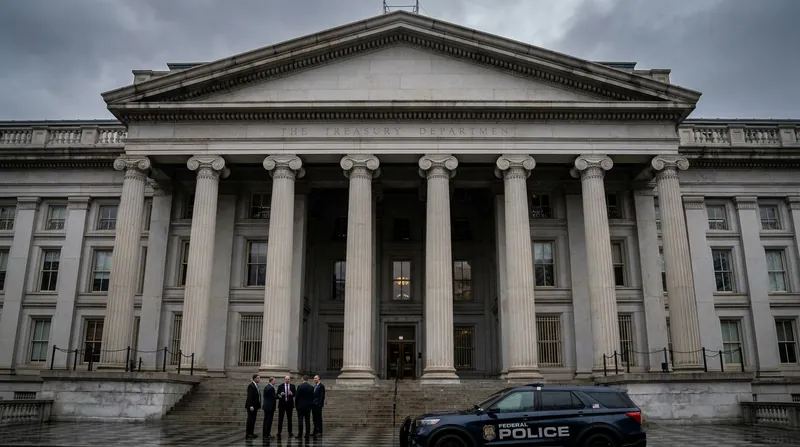
Treasury Department Completes Automatic Enrollment of 60 Million Children in Trump Accounts
8 sources
Executive Power
Trump Cancels $810 Million in Domestic Spending Using 'Pocket Rescission' Maneuver
5 sources

Comments
Every angle. Every day.
Get News & Politics stories with full source coverage and perspective breakdowns, free every day.