
Morocco and Algeria Secure Historic 2027 World Cup Qualification After Reaching WAFCON Semifinals
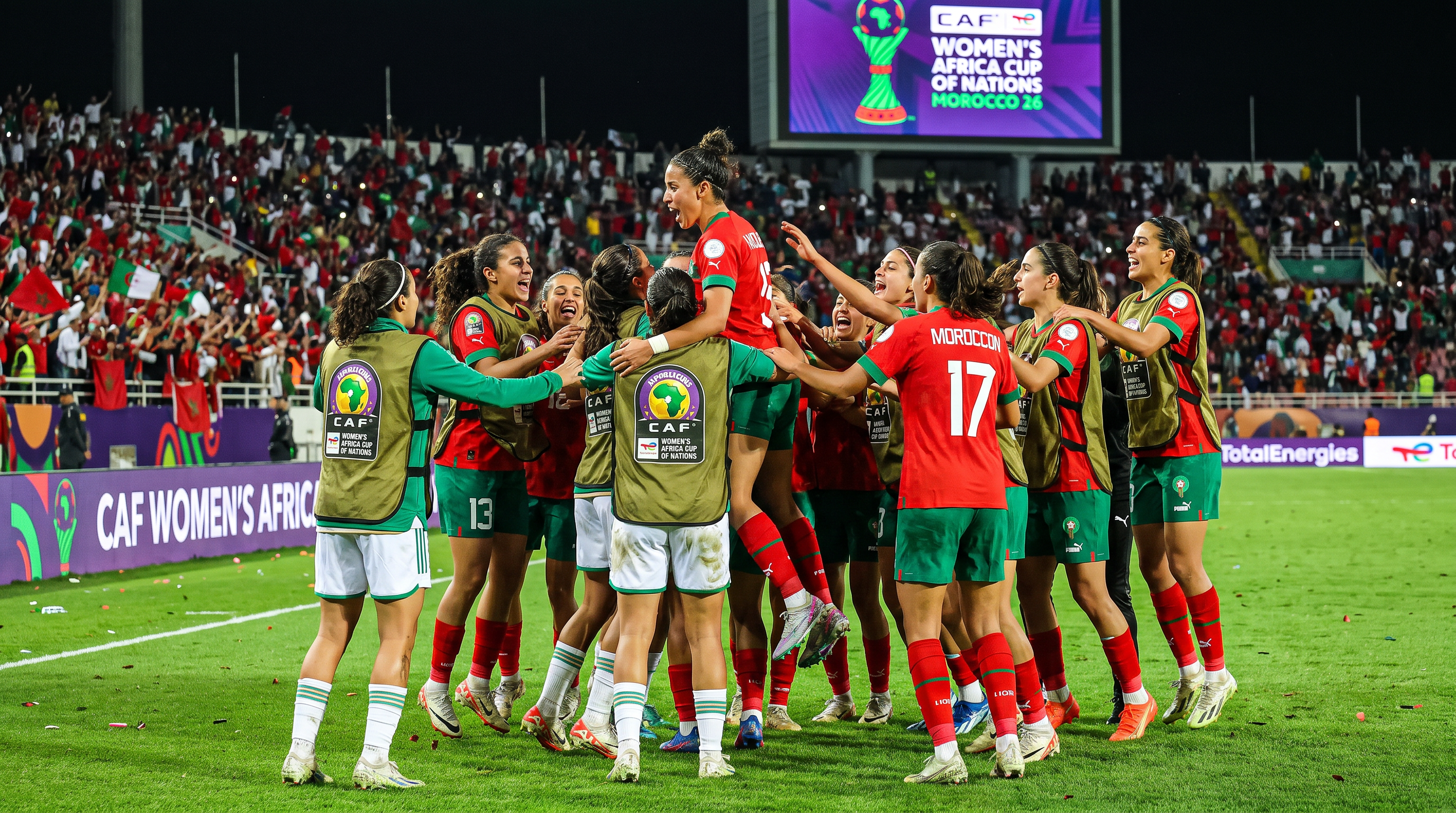
Morocco and Algeria have punched their tickets to the 2027 FIFA Women's World Cup in Brazil following dramatic 2-1 quarterfinal victories at the 2026 Women's Africa Cup of Nations.
By Ryder James

- Moroccan Football Federation
- Focuses on the return on investment in domestic professionalization and consecutive World Cup appearances.
- Algerian National Team
- Focuses on the historic breakthrough, defensive resilience, and overcoming past tournament heartbreaks.
- Sub-Saharan Traditional Powers
- Acknowledges the shifting balance of power in African women's football as North African teams rise.
Fast facts
- Morocco and Algeria both secured automatic qualification for the 2027 FIFA Women's World Cup by reaching the WAFCON semifinals.
- Morocco defeated defending champions South Africa 2-1, securing their second consecutive World Cup appearance.
- Algeria overcame a 1-0 deficit to beat a 10-player Ivory Coast side 2-1, earning their first-ever World Cup berth.
- The dual victories mark a historic shift in African women's football, elevating North African nations on the global stage.
- Morocco will face either Nigeria or Cameroon in the semifinals, while Algeria awaits the winner of Ghana versus Malawi.
Why this matters
The dual qualifications signal a major power shift in African women's football, elevating North African nations to the global stage and guaranteeing them a spot at the 2027 World Cup in Brazil.
North Africa is sending two formidable teams to the 2027 FIFA Women's World Cup. In a single, historic night of knockout football, both the host nation and neighboring Algeria won their Women's Africa Cup of Nations (WAFCON) quarterfinals, securing automatic berths to the global tournament in Brazil. For Morocco, a hard-fought 2-1 victory over defending champions South Africa cements their status as a rising continental power with back-to-back World Cup appearances. For Algeria, a dramatic 2-1 comeback against Ivory Coast ends a decades-long wait, sending the Fennecs to the sport's biggest stage for the very first time in their history.[1][4]
The stakes were absolute heading into Saturday's quarterfinals in Rabat and Casablanca. Under the expanded WAFCON format, reaching the final four guarantees a ticket to the 2027 World Cup, transforming the matches into winner-take-all showdowns. Morocco stepped onto the pitch at the Moulay El Hassan Stadium carrying the immense weight of home expectations and the lingering memory of their 2022 final defeat to South Africa. They delivered a statement performance, built on early aggression and sustained tactical discipline against the reigning champions, proving they can handle the pressure of the moment.[1][5]
Sakina Ouzraoui ignited the home crowd just past the half-hour mark, executing a flawless first-time lob over South African goalkeeper Kaylin Swart to open the scoring. The Atlas Lionesses doubled their advantage early in the second half when Hanane Ait El Haj converted a penalty following a foul on Ghizlane Chebbak. Though South African star Thembi Kgatlana pulled a goal back in the 67th minute to set up a tense finale, Morocco’s defensive block held firm through eight grueling minutes of stoppage time, neutralizing the champions and punching their ticket to Brazil.[1][4]
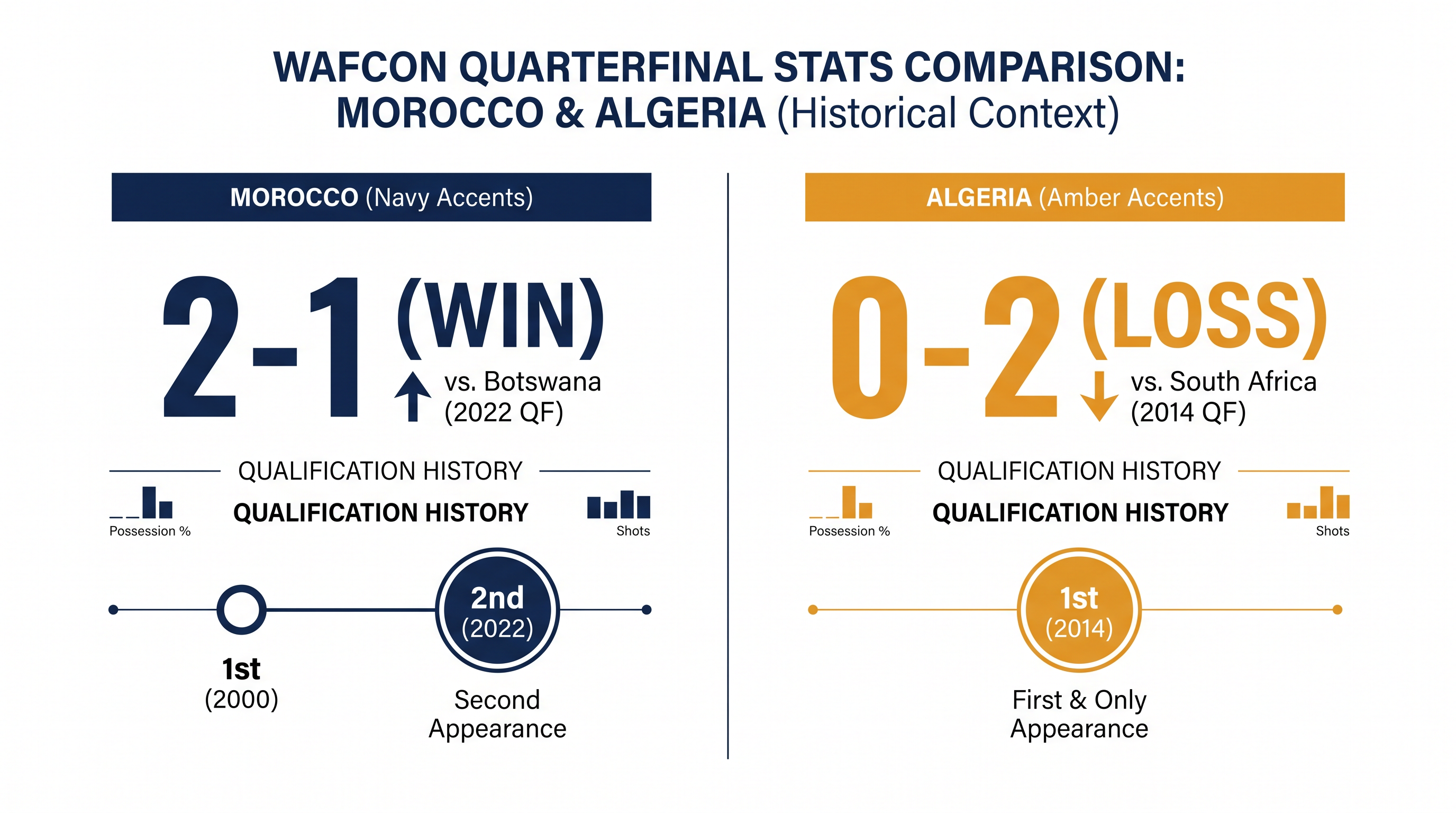
Ninety miles away in Casablanca, Algeria’s path to history required a massive second-half turnaround. Facing a dynamic Ivory Coast side that had scored eight goals in the group stage, the Algerians fell behind in the 30th minute to a clinical finish from Ines Konan. The momentum shifted drastically just before halftime when Ivorian defender N'Sira Ouedraogo was shown a red card for a high boot on Algerian goalkeeper Chloé N'Gazi. The dismissal left the Lady Elephants with ten players and provided Algeria with the lifeline they desperately needed.[2][3][6]
Ninety miles away in Casablanca, Algeria’s path to history required a massive second-half turnaround.
Algerian head coach Farid Benstiti ruthlessly exploited the numerical advantage after the break, introducing Ikram Adjabi and Ines Khiri to overload the Ivorian defensive lines. The tactical shift paid off in the 58th minute when Khiri looped an equalizer over the goalkeeper, completely changing the complexion of the contest. Six minutes later, Amira Ould Braham completed the comeback, driving a long-range strike into the bottom corner. Algeria survived a late scare when Ivory Coast missed a crucial penalty, holding on to secure the 2-1 win and their maiden World Cup berth.[2][3][4]
The dual qualifications represent a seismic shift in the balance of African women's football, which has historically been dominated by West and Central African nations like Nigeria and Equatorial Guinea. Morocco’s success validates the Royal Moroccan Football Federation’s massive financial investment in women’s domestic leagues and grassroots academies over the last five years. Algeria’s triumph, meanwhile, highlights the impact of targeted diaspora recruitment and a highly organized, defensively resilient tactical identity that has rapidly closed the gap with the continent's elite.[1][3]
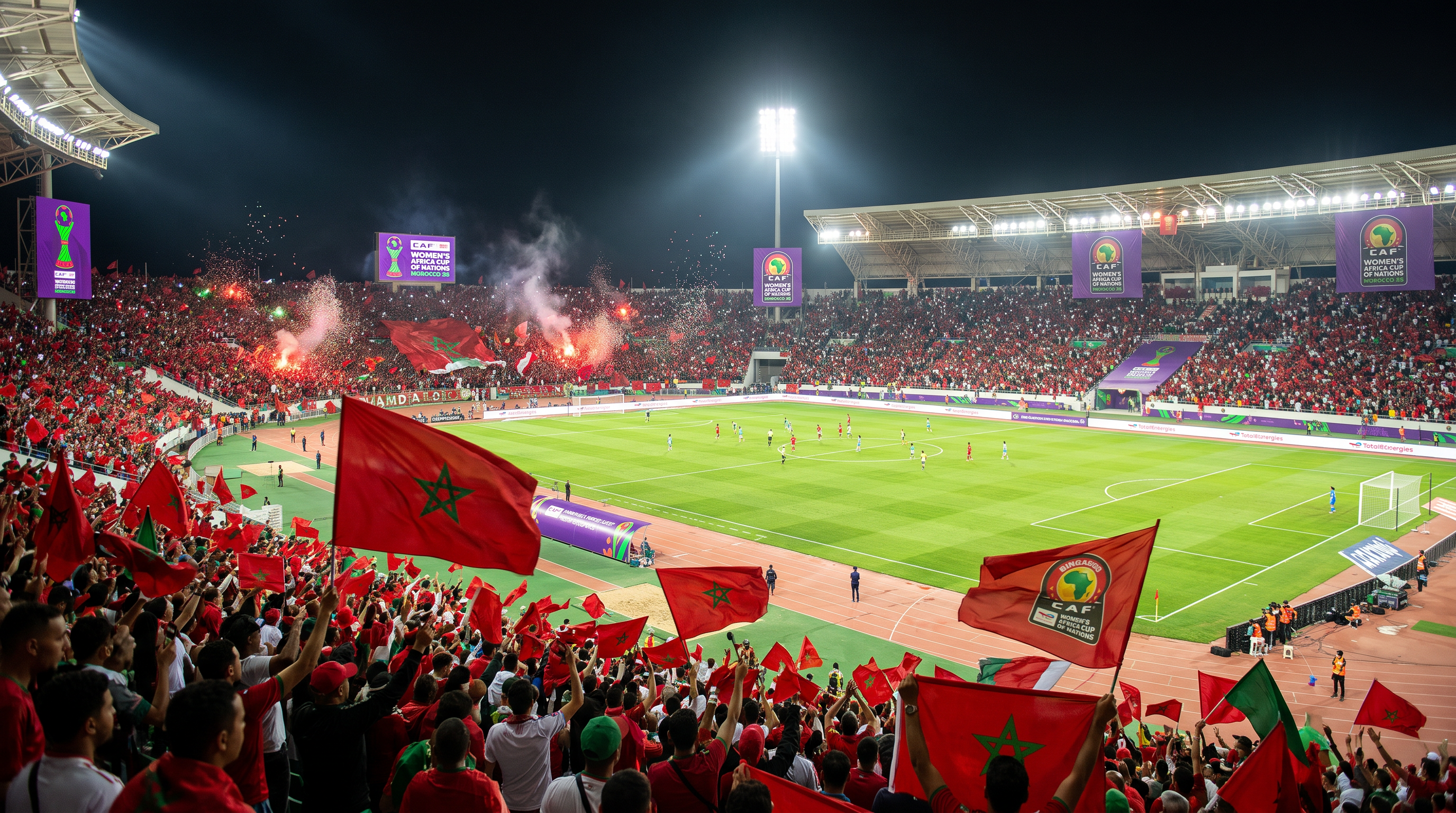
Both nations now turn their attention to the WAFCON semifinals on Wednesday, unburdened by World Cup qualification pressure but hungry for continental silverware. Morocco will face the winner of the heavyweight clash between Nigeria and Cameroon, while Algeria prepares for either Ghana or Malawi. Regardless of who lifts the trophy at the end of the tournament, the defining legacy of the 2026 edition is already written: North Africa has firmly arrived on the global stage, and they are bringing two distinct tactical philosophies to South America.[1][5]
As the 2027 World Cup in Brazil comes into focus, the contrast between the two North African qualifiers offers a fascinating tactical study. Morocco will bring a possession-oriented, highly technical style honed through heavy federation investment, while Algeria will rely on the defensive solidity and rapid transitions that broke Ivorian hearts. Both blueprints have proven successful in navigating the grueling African qualification gauntlet, setting up a compelling narrative for their respective global campaigns as they prepare to test their systems against the world's best.[3][4][6]
Viewpoints in depth
The Moroccan Blueprint: High-Investment Possession
A federation-backed model prioritizing technical dominance, domestic league professionalization, and sustained attacking pressure.
FOR: Unmatched technical cohesion and the ability to dictate game tempo. Morocco's domestic professionalization ensures players operate in high-level tactical systems year-round, creating a squad that controls the ball and the clock. AGAINST: Vulnerable to physical, direct counter-attacks when possession is turned over in the middle third, requiring center-backs to cover massive amounts of space. EVIDENCE: Morocco controlled the tempo against defending champion South Africa, generating a 2-0 lead through sustained pressure and a 52nd-minute penalty drawn by intricate, relentless box play. FITS WELL WHEN: Playing against teams that sit in a low block, allowing the Atlas Lionesses to patiently probe, exploit half-spaces, and exhaust the opposition. DOES NOT FIT WHEN: Facing high-pressing, physically dominant opponents who can disrupt their passing rhythm and force turnovers in dangerous areas.
The Algerian Blueprint: Defensive Resilience & Transitions
A pragmatic, transition-heavy model built on defensive solidity, exploiting numerical advantages, and clinical counter-attacks.
FOR: Highly resilient under pressure and capable of absorbing long periods of opposition dominance without breaking structural shape. They punish mistakes instantly. AGAINST: Can struggle to break down organized, conservative defenses when forced to hold the majority of possession and dictate the play themselves. EVIDENCE: Algeria absorbed intense early pressure from a dynamic Ivory Coast side, capitalized immediately on a red card, and scored twice in six minutes through rapid transition play and long-range execution. FITS WELL WHEN: Playing as the underdog against possession-heavy teams, utilizing a low block, frustrating the opponent, and striking quickly on the counter. DOES NOT FIT WHEN: Tasked with breaking down a deeply entrenched defense that refuses to leave space in behind for transition attacks.
What we don’t know
- Whether Morocco or Algeria can translate their continental success into deep runs at the 2027 World Cup in Brazil.
- Which teams they will face in the WAFCON semifinals, pending the results of the remaining quarterfinals.
- How traditional African powerhouses like Nigeria will respond to the tactical rise of the North African programs.
Sources
Source coverage
6 outlets
3 viewpoints surfaced





[1]Al JazeeraMoroccan Football Federation
Morocco, Algeria reach WAFCON semifinals and qualify for FIFA World Cup
Read on Al Jazeera →[2]Premium TimesAlgerian National Team
Algeria overturn Côte d'Ivoire's deficit to make history
Read on Premium Times →[3]CAF OnlineMoroccan Football Federation
Algeria fight back to end Côte d'Ivoire dream and reach historic WAFCON semi-finals
Read on CAF Online →[4]Vanguard NGRSub-Saharan Traditional Powers
Algeria, Morocco Seal Women's World Cup Qualification
Read on Vanguard NGR →[5]Olympics.comSub-Saharan Traditional Powers
Women's Africa Cup of Nations 2026: Full schedule, all results and group standings
Read on Olympics.com →[6]Sport News AfricaAlgerian National Team
Women's AFCON 2026: Algeria and Morocco qualify for the semifinals
Read on Sport News Africa →
Comments
Every angle. Every day.
Get sports stories with full source coverage and perspective breakdowns delivered to your inbox.