
Alibaba and Payment Processor Pay $600M to DOJ Over Failure to Prevent Illegal Drug Sales
Alibaba Group and its U.S. payment processor have agreed to a $600 million settlement with the Justice Department after failing to stop third-party merchants from importing illegal pharmaceuticals and pill presses into the U.S.
By Madison Lane

Share this story
Alibaba Group and its U.S. payment processor, AUS Merchant Services, will pay $600 million to the U.S. Department of Justice to resolve allegations that they failed to stop third-party merchants from selling illegal pharmaceuticals and pill-making equipment to American buyers. The settlement, announced Wednesday, ends a multi-year federal probe into the Chinese e-commerce giant's platform controls. The resolution includes $210 million in criminal penalties and $390 million in forfeitures split between the two entities.
Between January 2016 and December 2024, Alibaba's platforms facilitated roughly 80,000 transactions involving unapproved drugs, controlled substances, and regulated chemicals, generating over $200 million in gross merchandise value. The agreement marks a significant milestone in federal efforts to hold digital platforms accountable for the illicit activities of their users, signaling a shift in how the government approaches cross-border e-commerce enforcement.[1][2][4]
This non-prosecution agreement establishes a rigorous new standard for digital marketplaces and cross-border payment processors. By applying the Federal Food, Drug, and Cosmetic Act—a strict liability statute that does not require prosecutors to prove criminal intent—the Justice Department is demonstrating that platforms cannot shield themselves behind their third-party merchants. If a marketplace's payment rails or messaging systems are used to import illegal goods, the platform itself faces direct criminal exposure.
The practical stakes for the e-commerce sector are massive: companies must now proactively police their ecosystems or face hundreds of millions in fines, regardless of whether they directly sold the prohibited items. Legal analysts note that this application of strict liability effectively forces tech companies to act as deputized regulators over their own massive user bases.[5]
The scale of the illicit commerce facilitated through the platforms was substantial. Over the nearly nine-year period covered by the investigation, overseas merchants utilized Alibaba.com and AliExpress.com to ship a wide array of prohibited items into the United States. These products included unapproved prescription drugs, controlled substances, listed chemicals often used in the manufacturing of synthetic narcotics, and industrial pill presses.
The sheer volume of transactions—totaling 80,000 individual sales—highlights the vulnerability of global supply chains when digital marketplaces lack rigorous oversight. While Alibaba did not manufacture or directly sell these items, its infrastructure provided the critical bridge connecting foreign suppliers of illicit materials with American buyers, bypassing traditional customs and regulatory checkpoints.[1][3]
The mechanism of the compliance failure highlights the immense challenges of policing global mega-platforms. According to court documents, Alibaba maintained explicit policies prohibiting the sale of illegal drugs, listed chemicals, and counterfeit equipment. However, the implementation of these controls proved inadequate against determined bad actors. Merchants actively circumvented automated filtering systems, sometimes using Alibaba's in-platform messaging service to direct buyers to encrypted third-party apps to finalize illicit sales.
The Justice Department noted that Alibaba employees had internally raised concerns about the adequacy of the platform's filtering systems and the persistent presence of prohibited goods. Despite these internal warnings, the transactions continued to flow through the marketplace, exposing a critical gap between written corporate policy and operational reality.[1][4]
To build the case against the e-commerce giant, federal law enforcement agencies launched a coordinated, multi-year investigation. Agents from the Food and Drug Administration, IRS Criminal Investigation, and the Federal Deposit Insurance Corporation conducted more than 40 undercover purchases of illegal pharmaceuticals and pill presses.
These operations confirmed that the platform's safeguards were easily bypassed by overseas sellers targeting the U.S. market. The undercover purchases provided prosecutors with undeniable evidence that the marketplace's infrastructure was actively facilitating the importation of restricted goods. IRS Criminal Investigation officials emphasized that following the financial footprint of these transactions was crucial to unraveling the network of merchants exploiting the platform's vulnerabilities.[1][4]
AUS Merchant Services, an Ant Group subsidiary formerly known as Alipay US, was specifically cited for severe failures in its anti-money laundering program. The Justice Department found that the payment processor did not systematically restrict the activity of merchants who had already been flagged for selling illegal goods.
Instead of terminating their access to the financial system, the processor allowed them to continue processing payments, thereby facilitating the ongoing importation of prohibited products into the United States. In one instance highlighted by prosecutors, a merchant was permitted to continue selling restricted items even after their illicit activity had been explicitly reported to Alibaba, demonstrating a profound breakdown in communication and enforcement between the marketplace and its financial partner.[5]
In exchange for the non-prosecution agreement, both companies admitted to misdemeanor criminal violations of the Federal Food, Drug, and Cosmetic Act. They avoided formal felony prosecution due to their extensive cooperation with federal investigators, their comprehensive remediation efforts, and their lack of prior criminal history.
Under the terms of the settlement, Alibaba will pay a $125 million criminal penalty and forfeit $200 million, while AUS Merchant Services will pay an $85 million criminal penalty and forfeit $190 million. The companies also agreed to ongoing compliance monitoring and reporting obligations, ensuring that federal authorities maintain visibility into their efforts to clean up the marketplace and prevent future violations.[2][5]
A critical component of the mandated remediation is the integration of advanced technology to police the platform. The settlement requires Alibaba and AUS to implement stringent, ongoing compliance measures, notably including the deployment of artificial intelligence to proactively detect and block the advertisement and sale of illegal products.
This requirement reflects a forward-leaning regulatory approach, acknowledging that human moderation alone is insufficient to monitor platforms processing millions of transactions daily. An Alibaba spokesperson stated that the resolution reflects the company's commitment to "best-in-class standards of control, policies, and measures against non-compliant product sales," signaling a massive internal overhaul of their trust and safety infrastructure.[3][5]
The $600 million penalty represents one of the largest Justice Department enforcement actions against a foreign technology company for platform compliance failures. It follows a similar, though smaller, $59 million civil settlement with eBay earlier in the year over the sale of pill presses, cementing a clear regulatory trend.
The $600 million penalty represents one of the largest Justice Department enforcement actions against a foreign technology company for platform compliance failures.
Federal authorities are increasingly targeting the digital infrastructure—the marketplaces, the messaging systems, and the payment rails—that enables the cross-border flow of illicit goods. For the broader business landscape, the message is unequivocal: facilitating illegal commerce through willful blindness or inadequate technology is no longer a viable defense, and the financial sector must ensure its services are not weaponized by illicit supply chains.[5]
Key points
- Alibaba and AUS Merchant Services will pay $600 million to resolve DOJ allegations of facilitating illegal drug sales.
- The platforms allowed 80,000 transactions of unapproved drugs and pill presses between 2016 and 2024.
- The DOJ applied the strict liability standard of the Federal Food, Drug, and Cosmetic Act.
- Federal agents conducted over 40 undercover purchases to prove the platforms' safeguards were inadequate.
What we don’t know
- Whether the DOJ will pursue criminal charges against the individual overseas merchants who sold the illegal goods.
- How the mandated AI compliance systems will balance aggressive filtering with the legitimate operations of millions of lawful merchants.
- If other major e-commerce platforms are currently under similar federal investigations for FDCA violations.
How we got here
January 2016
The period begins during which third-party merchants successfully circumvent Alibaba's filters to sell illegal pharmaceuticals.
2016–2024
Federal agents from the FDA, IRS-CI, and FDIC conduct more than 40 undercover purchases of illegal drugs and pill presses on the platforms.
January 2024
The DOJ reaches a $59 million civil settlement with eBay over similar allegations involving the sale of pill presses.
July 1, 2026
The DOJ announces the $600 million non-prosecution agreement with Alibaba and AUS Merchant Services.
- Federal Prosecutors
- The Justice Department views the settlement as a necessary enforcement of strict liability to force platforms to police their own ecosystems.
- E-Commerce Platforms
- Tech companies emphasize the immense technical challenge of perfectly policing millions of third-party transactions and advocate for cooperative remediation.
- Legal & Compliance Analysts
- Corporate legal experts warn that the settlement sets a costly precedent that will require sweeping overhauls of corporate trust and safety programs.
Perspectives this story doesn't cover
- Third-Party Merchants
- Consumer Protection Advocates
Sources
Source coverage
5 outlets
3 viewpoints surfaced





- [1]AP NewsFederal Prosecutors
Alibaba to pay $600M to settle claims of illegal drug sales
- [2]Fox BusinessLegal & Compliance Analysts
Alibaba pays $600M in DOJ deal over illegal online marketplace sales
- [3]PYMNTSE-Commerce Platforms
Alibaba Group Holding and its U.S.-based payment processor... have agreed to pay $600 million
- [4]The Washington PostFederal Prosecutors
Alibaba to pay $600M to settle allegations it allowed illegal drug and equipment sales
- [5]Paul HastingsLegal & Compliance Analysts
Summary of the DOJ Resolutions

More in Business
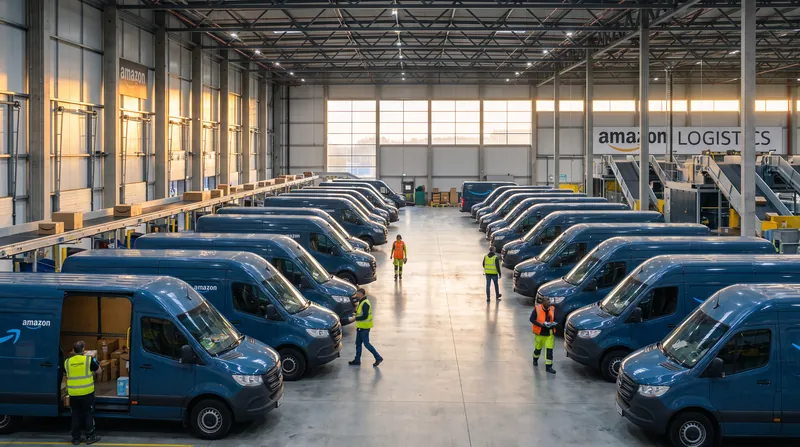
See all →Logistics Empire
Inside Amazon's Push to Deliver 90% of Its Own Packages by 2029
4 sources
Tax Compliance
Economic Nexus: How State Thresholds Dictate Remote Sales Tax After Wayfair
3 sources
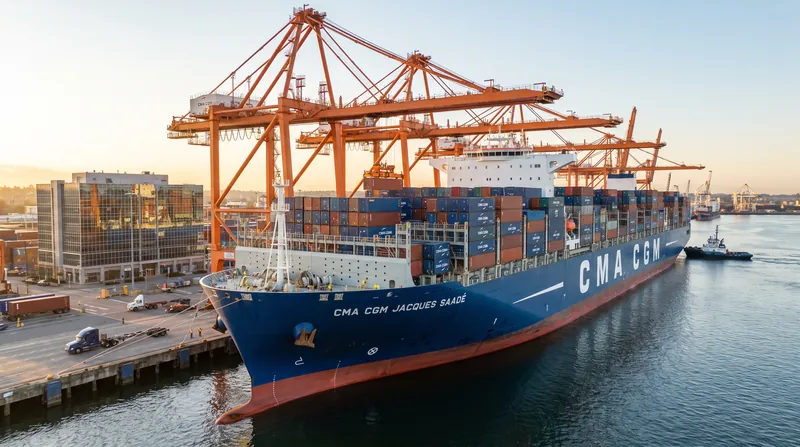
Logistics M&A
CMA CGM to Acquire FedEx Supply Chain for $1.4 Billion, Tripling North American Logistics Footprint
6 sources
Agentic Commerce
Google Maps Upgrades to Agentic Commerce, Enabling Direct Food and Ticket Purchases via Gemini
8 sources

Comments
Every angle. Every day.
Get Business stories with full source coverage and perspective breakdowns, free every day.