
CATL Clears Major eVTOL Safety Hurdle: The Battery Trade-Offs Facing Fleet Buyers
CATL's high-density aviation battery has successfully passed a rigorous dual-cell thermal runaway test, clearing a major regulatory hurdle for electric flight. The breakthrough forces fleet operators to weigh the benefits of next-generation condensed cells against the predictability of legacy lithium-ion packs.
By Tao Yang

- High-Density Adopters
- Operators and manufacturers favoring condensed or semi-solid batteries to maximize range and unit economics.
- Proven-Chemistry Advocates
- Conservative fleet buyers prioritizing the known safety and degradation curves of traditional lithium-ion packs.
- Aviation Regulators & Safety Analysts
- Stakeholders focused strictly on thermal runaway prevention, airworthiness certification, and operational safety.
Perspectives this story doesn't cover
- Municipal Zoning Boards
- Aviation Insurance Underwriters
At a glance
- CATL's 350 Wh/kg aviation battery passed a dual-cell thermal runaway test witnessed by the CAAC.
- The test proves that high-density eVTOL packs can contain a multi-cell failure without triggering a catastrophic fire.
- The battery is ready for mass production and will debut in Autoflight's passenger aircraft.
- Fleet operators now face a choice between high-density condensed cells and heavier, proven lithium-ion packs.
- Advanced thermal management systems could save operators up to $85,000 per aircraft over its service life.
- 350 Wh/kg
- Energy density of CATL's new aviation cell
- 2
- Adjacent cells triggered simultaneously in the CAAC test
- $40,000–$85,000
- Potential operational savings per aircraft via advanced thermal management
The abstract promise of electric flight just became a concrete hardware decision. On Sunday, CATL—the world’s largest battery manufacturer—announced that its 350 Wh/kg aviation battery system passed a grueling dual-cell thermal runaway test. Witnessed by the Civil Aviation Administration of China (CAAC), the test triggered two adjacent cells simultaneously without causing a pack-wide fire. For fleet operators and regional transit authorities mapping out their next decade of procurement, this clears the single largest regulatory hurdle hanging over the electric vertical takeoff and landing (eVTOL) market.[1]
Until now, the math for urban air mobility has been frustratingly theoretical. If you are an operator looking to purchase a fleet of air taxis, thermal runaway—the domino-effect fire that occurs when one failing battery cell ignites its neighbors—has been the ultimate dealbreaker. Aviation regulators understandably demand absolute certainty that a mid-air battery failure will not bring down the aircraft. By proving that a high-density pack can swallow a dual-cell failure without propagating, CATL has essentially handed fleet buyers the safety documentation needed to underwrite massive capital investments.[1][3][4][6]
The implications for route planning and real estate are immediate. Vertiport developers have been locked in a holding pattern, unsure if they need to build infrastructure for short-hop, low-capacity aircraft or regional, high-capacity transports. The 350 Wh/kg energy density of these new condensed-state prismatic cells changes the equation. It allows eVTOLs to carry more passengers over longer distances—turning a marginal 20-mile airport shuttle service into a highly profitable 100-mile inter-city network.[1][2][6]
CATL confirmed the battery is ready for mass production and will debut in passenger aircraft built by Autoflight. For a fleet buyer, this means the technology is no longer confined to laboratory press releases; it is entering the commercial supply chain. However, integrating these advanced packs requires sophisticated thermal management systems. Active cooling and phase-change materials must monitor individual cell temperatures with extreme precision, adding upfront complexity to the aircraft's design.[1][3][4]
CATL confirmed the battery is ready for mass production and will debut in passenger aircraft built by Autoflight.
Yet, the long-term operational savings are compelling. Advanced thermal management not only prevents catastrophic fires but also extends the cycle life of the battery. Industry data suggests that keeping these high-density cells within optimal temperature bands can save operators between $40,000 and $85,000 per aircraft over its service life. For a regional operator managing a fleet of fifty eVTOLs, that translates to millions in preserved capital.[4]
Despite the breakthrough, the procurement landscape remains divided. Buyers must now weigh whether to adopt these cutting-edge condensed batteries or stick with older, heavier, but deeply understood lithium-ion chemistries. Traditional lithium iron phosphate (LFP) packs offer lower energy density—typically capping out around 250 Wh/kg—but their degradation curves are a known quantity. For a conservative fleet manager, predictability often trumps peak performance.[2][5]
The choice ultimately dictates the business model. An operator utilizing legacy batteries will be forced to run high-frequency, low-passenger routes to offset the weight penalty. Conversely, those who adopt the new 350 Wh/kg standard can sell premium, longer-distance tickets, but they take on the operational risk of managing a first-generation aerospace technology. It is the classic early-adopter dilemma, now playing out at 3,000 feet.[2][3][6]
As the CAAC moves closer to granting full airworthiness certifications based on these tests, Western regulators like the FAA and EASA will be forced to respond. For local transit authorities and private fleet buyers, the window for theoretical planning has closed. The hardware is ready, the safety benchmarks are being met, and the next phase of urban mobility will belong to those who make the right procurement call today.[1][4]
Different angles
Option 1: Condensed-State Aviation Batteries (350+ Wh/kg)
The emerging standard for long-range, high-capacity eVTOL operations, utilizing semi-solid or condensed electrolytes.
FOR: Unlocks 150+ mile ranges and higher payload capacities; enables profitable inter-city routes. AGAINST: Unproven long-term cycle life in commercial fleet conditions; higher upfront capital cost per kWh. EVIDENCE: CATL's CAAC-witnessed test proves thermal safety is solvable, with 350 Wh/kg packs surviving dual-cell runaway triggers without propagation. FITS WELL WHEN: Operators are building regional networks (e.g., city-to-suburb) where range and passenger count dictate unit economics. DOES NOT FIT WHEN: Running ultra-short, high-frequency intra-city hops where rapid cycle degradation outpaces the revenue benefit of extra range.
Option 2: Proven Aviation-Grade Lithium-Ion (200–250 Wh/kg)
The legacy approach relying on heavily modified, automotive-derived NMC or LFP chemistries.
FOR: Deeply understood degradation curves; lower replacement costs; existing global supply chains. AGAINST: Severe weight penalties limit passenger capacity; restricts operations to short intra-city hops (under 50 miles). EVIDENCE: Current generation eVTOL prototypes heavily rely on these packs, but operators report that the weight-to-payload ratio severely limits profit margins. FITS WELL WHEN: A fleet owner is launching initial, short-distance air taxi routes (like airport-to-downtown) and prioritizes predictable maintenance schedules over maximum range. DOES NOT FIT WHEN: The business model requires carrying four or more passengers across regional distances, where the battery weight makes the aircraft aerodynamically unviable.
Sources
Source coverage
6 outlets
3 viewpoints surfaced






- [1]CnEVPostHigh-Density Adopters
CATL aviation battery clears key safety test, paving way for use in eVTOLs
Read on CnEVPost → - [2]NewareHigh-Density Adopters
CATL Condensed Battery: Tech Deep Dive & Scalability
Read on Neware → - [3]36KrProven-Chemistry Advocates
CATL: The 'Definite Leader' in Flight - Grade Batteries
Read on 36Kr → - [4]Data InteloAviation Regulators & Safety Analysts
Battery Thermal Management for eVTOL Market Outlook 2025-2033
Read on Data Intelo → - [5]Battery Tech OnlineProven-Chemistry Advocates
CATL announces electric aircraft range breakthrough and advances in sodium-ion battery technology
Read on Battery Tech Online → - [6]Factlen Editorial TeamHigh-Density Adopters
Synthesis by Factlen editorial team
Read on Factlen Editorial Team →
Comments

More in Automotive & Transportation
See all →Suspension Dynamics
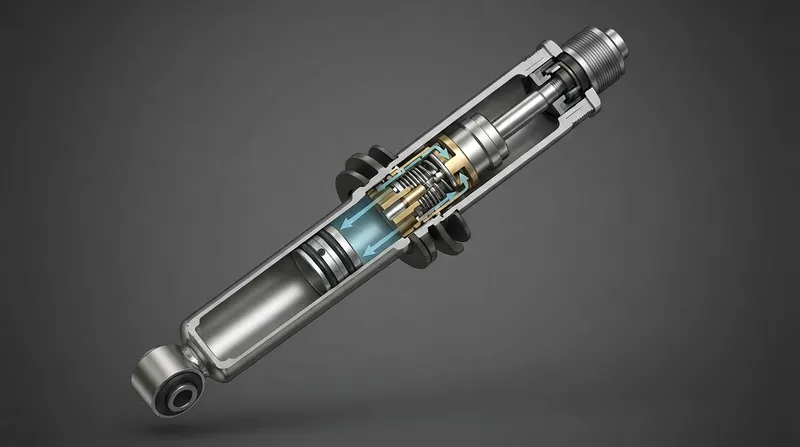
The Trade-Off Between High-Frequency and Low-Frequency Damping: How Shock Absorber Valving Dictates Ride and Handling
7 sources
Infrastructure Standard
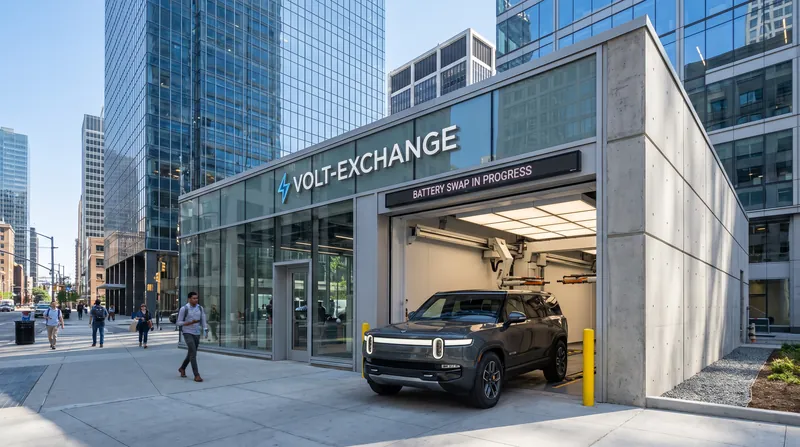
Geely Takes 30 Percent Stake in Nio Power at $2.4 Billion Valuation to Expand Battery Swapping
7 sources
Charging Infrastructure
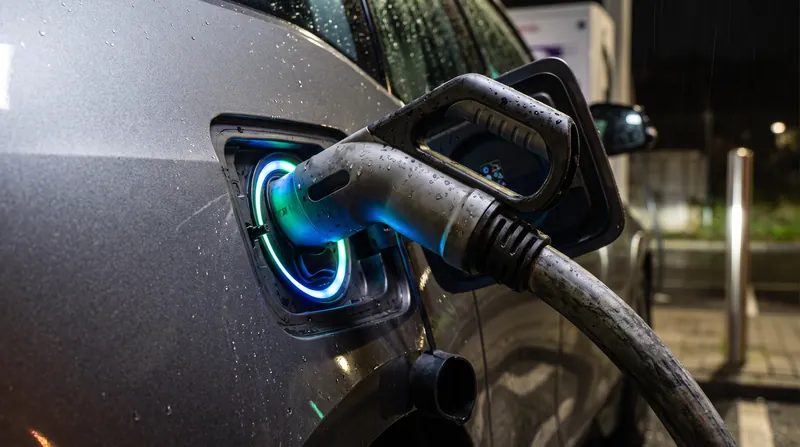
CCS, CHAdeMO, and GB/T: The Three Global Standards for EV Charging Connectors
6 sources
Solid-State Batteries
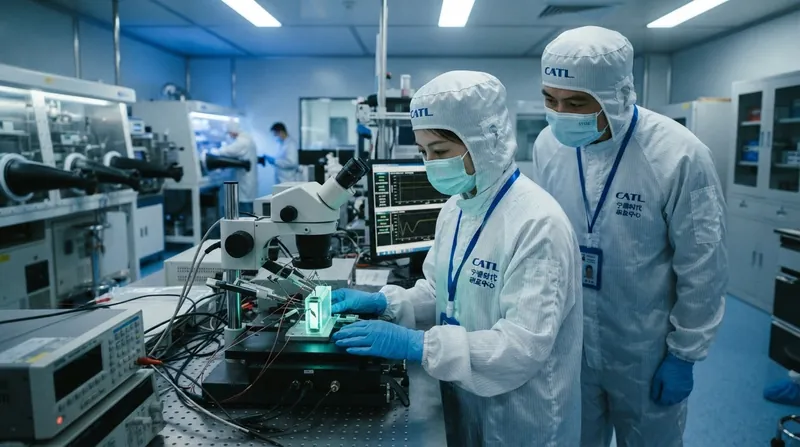
China Unveils National 5-Year Plan to Lead Global Solid-State Battery Mass Deployment by 2030
8 sources
Every angle. Every day.
Get Automotive & Transportation stories with full source coverage and perspective breakdowns delivered to your inbox.