
Mesh vs. Cushion Office Chairs: The Definitive Ergonomic Trade-Off Analysis
Choosing between a breathable mesh office chair and a plush upholstered seat fundamentally alters your daily comfort and posture. This deep dive explores the physiological and environmental trade-offs of the two dominant ergonomic materials.
By Factlen Editorial Team
- Airflow & Tension Advocates
- Prioritize thermal regulation, long-term durability, and firm posture correction.
- Plush Support Traditionalists
- Value immediate pressure relief, aesthetic versatility, and soft cushioning.
- Hybrid Design Proponents
- Advocate for combining a breathable mesh back with a pressure-relieving foam seat.
What's not represented
- · Sustainability advocates focusing on the recyclability of synthetic mesh vs. polyurethane foam
Why this matters
The average office worker spends thousands of hours a year in their chair, making it the most critical tool for preventing chronic back pain and fatigue. Choosing the wrong material can lead to severe thermal discomfort, restricted blood flow, or premature physical degradation of a costly investment.
Key points
- Mesh chairs provide superior airflow and thermal regulation, making them ideal for hot climates.
- Cushioned chairs offer immediate, plush comfort and are better suited for targeted tailbone pressure relief.
- High-quality mesh retains its structural tension for 4 to 6 years, outlasting standard foam.
- Foam seat pans typically compress and lose their supportive rebound within 12 to 18 months.
- Hybrid chairs combine a breathable mesh back with a cushioned seat to offer the best of both materials.
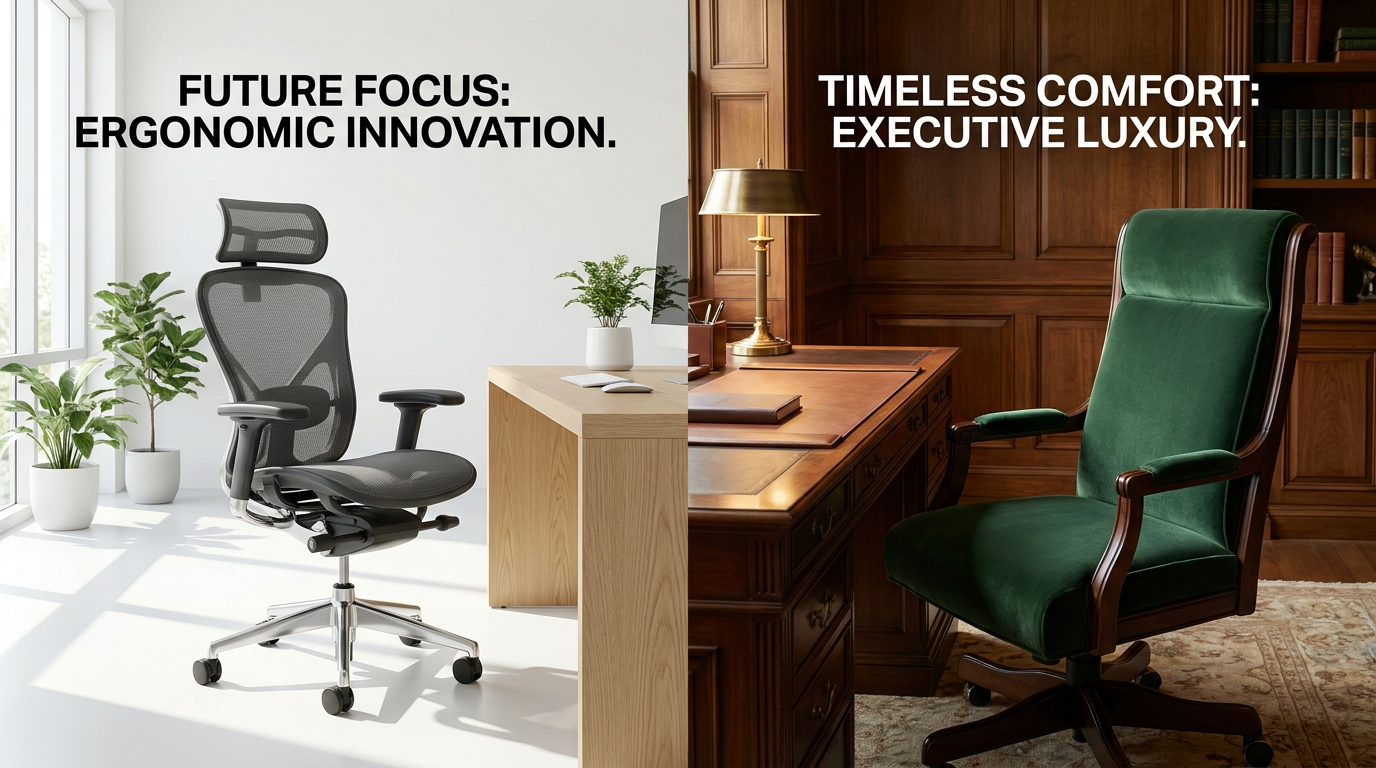
The modern office worker spends more time in their chair than in their bed, making the selection of an ergonomic seat one of the most consequential health and productivity decisions of a career. At the center of this high-stakes furniture decision is a fundamental material divide: the breathable, tensioned support of a mesh chair versus the plush, structured embrace of a cushioned, upholstered seat. Both designs dominate the premium ergonomic market, yet they serve entirely different physiological needs, climates, and sitting habits. Buyers are often forced to choose between the sleek, modern appeal of a suspended mesh net and the traditional, executive comfort of high-density foam. Understanding the precise trade-offs between these two materials is essential for anyone looking to invest in a workspace foundation that will support them through thousands of hours of focused labor.[2][7][8]
The primary argument for mesh seating begins with its superior thermal regulation and dynamic flexibility. High-tensile mesh provides continuous, unobstructed ventilation, preventing the heat buildup that inevitably occurs when a human body rests against a solid surface for hours. This open-weave synthetic fabric allows ambient air to circulate freely across the back and thighs, effectively wicking away body heat. Furthermore, premium mesh is designed to act like a firm trampoline, dynamically contouring to the user's unique spinal curve without the need for thick padding. This adaptive tension encourages a more active, upright sitting posture, subtly shifting as the user reaches for a mouse or leans back to take a phone call.[2][3]
The argument against mesh centers heavily on its unyielding firmness and the potential for localized pressure points. Because mesh relies on high tension stretched tightly across a rigid plastic or metal frame, it can feel harsh to users who prefer a softer, more forgiving landing. If the chair is poorly engineered, the hard front lip of the seat frame can press uncomfortably into the back of the user's thighs, restricting blood flow and causing numbness. Additionally, some users find that the textured surface of certain synthetic meshes can be abrasive, causing pilling on delicate clothing fabrics or feeling rough against bare skin during warmer months.[5][6]

The evidence supporting the mesh advantage is starkest in warmer climates and among users who naturally run hot. Ergonomic studies and user reports from regions like the Middle East and India consistently show that mesh prevents the fatigue, sweating, and severe discomfort associated with trapped body heat. However, the evidence also shows that cheap, low-tension mesh degrades rapidly. While a premium, multi-layered mesh back can retain its supportive profile for four to six years, budget single-weave mesh often stretches and sags within a few months, leaving the user sitting in a hammock-like depression that ruins lumbar alignment and exacerbates lower back pain.[1][4]
Conversely, the argument for cushioned, upholstered chairs rests on immediate, plush comfort and highly targeted pressure relief. High-density molded foam contours gently to the body, offering a familiar, cozy seating experience that many associate with executive luxury and traditional office aesthetics. Unlike the trampoline effect of mesh, a thick foam seat pan provides a structured, padded buffer between the user's skeletal frame and the chair's mechanics. This makes upholstered chairs incredibly versatile, as they can be wrapped in an endless variety of fabrics, bonded leathers, or premium top-grain leathers to perfectly match specific interior design themes, from minimalist tech startups to formal law offices.[1][7]
Conversely, the argument for cushioned, upholstered chairs rests on immediate, plush comfort and highly targeted pressure relief.
The primary argument against cushioned chairs is their inherent tendency to trap heat and their inevitable physical degradation over time. Foam acts as a highly effective thermal insulator, absorbing and retaining body heat. During an eight-hour workday, this can lead to uncomfortable sweating and a feeling of sluggishness, particularly in poorly air-conditioned environments. Furthermore, even the most premium high-density foam is subject to the laws of physics; it eventually succumbs to gravity and constant body weight. A standard foam seat pan will noticeably compress, flatten, and lose its supportive rebound within twelve to eighteen months of daily use, fundamentally altering the chair's ergonomic profile.[4][7]

The evidence supporting cushioned seats is particularly strong for users suffering from specific localized pain, such as tailbone sensitivity or sciatica. Clinical and ergonomic feedback indicates that memory foam or gel-infused seat cushions distribute pelvic pressure far more effectively than a taut mesh net, providing crucial relief for the coccyx. However, the evidence regarding maintenance heavily favors mesh. Fabric upholstery acts as a sponge for dust, allergens, and odors, and it can sustain permanent stains from accidental coffee spills. While a mesh chair requires only a quick weekly wipe with a damp cloth, a fabric chair demands regular vacuuming and occasional deep cleaning to remain hygienic.[5][7]
For buyers unwilling to compromise between thermal regulation and pelvic pressure relief, the hybrid ergonomic chair has emerged as a highly compelling middle ground. These models strategically pair a breathable, high-tensile mesh backrest with a high-density foam or gel-infused seat pan. This configuration delivers the best of both worlds: it keeps the user's back cool and ventilated during intense, high-focus work sessions while providing the plush, structured support necessary to protect the tailbone and thighs from the harsh frame edges often found on full-mesh seats. This hybrid approach has become the standard for many flagship ergonomic lines seeking universal appeal.[7][8]

Ultimately, the decision requires matching the material to the specific environmental and physiological conditions of the user. A full-mesh chair fits perfectly when the user works in a warm or humid climate, sits for extended eight-hour stretches, runs naturally hot, and prioritizes firm, posture-correcting tension over plush softness. It is the ideal tool for the modern, fast-paced tech worker who values breathability, low maintenance, and a sleek, minimalist aesthetic that visually lightens the footprint of a home office. For those who view their chair as a high-performance athletic tool rather than a lounge seat, high-tensile mesh delivers the necessary structural discipline to keep the spine aligned without overheating the body.[2][4][8]
Conversely, a fully cushioned or upholstered chair fits perfectly when the user works in a heavily air-conditioned or naturally cool environment, requires specific tailbone pressure relief, prefers a traditional executive aesthetic, and values immediate, enveloping comfort. It does not fit well in hot, unventilated spaces or for users who heavily perspire, as the insulating properties of foam will quickly turn the seat into a heat trap. The choice is never about which material is objectively superior in a vacuum, but rather which specific set of physical trade-offs best aligns with the daily reality, climate, and anatomical needs of the person occupying the seat.[1][7][8]
Viewpoints in depth
Mesh Purists
Advocates who prioritize thermal regulation and firm, active posture support.
This camp argues that the primary enemy of long-term sitting is heat buildup and the resulting fatigue. They view plush foam as a deceptive comfort that encourages slouching and inevitably degrades. For mesh purists, a chair should act like a high-performance suspension system—firm, breathable, and unyielding to bad posture. They point to the dominance of mesh in high-end ergonomic designs as proof that tension, not padding, is the key to spinal health.
Plush Comfort Advocates
Users who prioritize immediate pressure relief and a softer, more traditional seating experience.
This perspective highlights the harsh reality that high-tensile mesh can be unforgiving on the tailbone and thighs. They argue that true comfort requires a buffer between the human skeleton and the chair's rigid frame. By utilizing high-density memory foam or gel layers, these advocates believe that cushioned chairs provide superior localized pressure relief, particularly for those with pre-existing lower back or sciatic nerve sensitivity, making the trade-off in breathability well worth it.
Hybrid Ergonomists
Designers and users who believe combining both materials yields the optimal seating solution.
Rejecting the binary choice, this camp advocates for chairs that utilize a mesh backrest paired with a cushioned seat pan. They argue this configuration perfectly maps to human physiology: the back requires maximum ventilation to prevent sweating, while the pelvis and thighs require structured padding to distribute body weight and prevent nerve compression. They point to the increasing market share of hybrid models as evidence that this compromise offers the most universally tolerated seating experience.
What we don't know
- Whether emerging 3D-printed elastomer materials will eventually render both traditional mesh and foam obsolete.
- How long cooling gel-infused foams can genuinely maintain their temperature regulation before absorbing ambient heat.
Key terms
- High-tensile mesh
- A tightly woven, highly durable synthetic fabric designed to be stretched across a frame to provide firm, flexible support without sagging.
- Seat pan
- The horizontal part of the chair where the user sits, which plays a critical role in distributing body weight and relieving pressure on the thighs.
- Lumbar support
- An ergonomic feature designed to fill the natural inward curve of the lower back, preventing slouching and reducing spinal strain.
- Synchro-tilt mechanism
- A mechanical feature where the backrest and seat pan recline at different ratios (usually 2:1), keeping the user's feet flat on the floor while leaning back.
Frequently asked
Does mesh or cushion last longer in an office chair?
High-quality mesh generally outlasts standard foam. While foam seat pans typically compress and lose their rebound within 12 to 18 months, premium tensioned mesh can retain its supportive profile for four to six years.
Which chair material is better for tailbone pain?
Cushioned seats, particularly those utilizing high-density memory foam or gel inserts, are generally better for tailbone pain. They distribute localized pelvic pressure more effectively than the taut, trampoline-like surface of a mesh seat.
Are mesh chairs hard to clean?
No, mesh chairs are actually easier to maintain than fabric upholstery. They do not absorb liquid spills or trap odors, and can typically be cleaned with a simple wipe of a damp cloth.
Why do some mesh chairs hurt the back of my legs?
Poorly designed mesh chairs often have a hard plastic or metal frame at the front edge of the seat. If the mesh lacks sufficient tension, the user sinks down and their thighs press uncomfortably against this rigid frame, restricting blood flow.
Sources
Source coverage
8 outlets
3 viewpoints surfaced







[1]ErgospaceAirflow & Tension Advocates
Mesh vs Cushion: What Works Better in Dubai?
Read on Ergospace →[2]Navo ErgonomicsAirflow & Tension Advocates
Which Chair Is Better for Hot Weather and Sweating?
Read on Navo Ergonomics →[3]DeskyAirflow & Tension Advocates
What Is The Best Ergonomic Office Chair?
Read on Desky →[4]Green SoulHybrid Design Proponents
Mesh vs Cushioned Office Chair: Which Is Right for India?
Read on Green Soul →[5]Comfort SeatingPlush Support Traditionalists
Mesh vs. fabric: the final verdict
Read on Comfort Seating →[6]ErgolinkHybrid Design Proponents
Mesh Vs Fabric Chairs – Which is Best?
Read on Ergolink →[7]AutonomousPlush Support Traditionalists
Mesh vs Cushion vs Foam vs Upholstered Chair Compared
Read on Autonomous →[8]Factlen Editorial TeamHybrid Design Proponents
Synthesis by Factlen editorial team
Read on Factlen Editorial Team →

Every angle. Every day.
Get shopping stories with full source coverage and perspective breakdowns delivered to your inbox.