
Landmark Study Finds Coffee Protects Liver from Scarring and Cancer, Identifying Biological Mechanism
A comprehensive analysis of nearly 355,000 adults reveals that regular coffee consumption significantly lowers the risk of cirrhosis and liver cancer by actively suppressing the cellular mechanisms that cause hepatic scarring.


- Clinical Hepatologists
- Focus on the measurable clinical outcomes and the practical application of coffee as a dietary complement to liver disease prevention.
- Nutritional Scientists
- Emphasize the complex chemical makeup of coffee, including polyphenols and diterpenes, and how these non-caffeine compounds reduce oxidative stress.
- Biomedical Researchers
- Highlight the proteomic profiling and the specific cellular mechanisms, such as the suppression of hepatic stellate cells and TGF-beta pathways.
Why this matters
Liver disease is a silent, progressive condition that affects millions globally, often going undetected until irreversible damage occurs. Understanding that a daily, accessible beverage actively halts the biological scarring process provides a simple, evidence-backed tool for long-term organ protection.
Key points
- A study of 355,000 adults found that drinking five or more cups of coffee daily reduced the risk of liver cancer by 47 percent.
- MRI scans revealed that regular coffee drinkers have significantly lower levels of liver fat, iron, and fibroinflammation.
- Coffee compounds actively inhibit the cellular signaling pathways that command hepatic stellate cells to build scar tissue.
- Decaffeinated coffee offered similar protective benefits, indicating that antioxidants like chlorogenic acid play a crucial role alongside caffeine.
For decades, coffee has been celebrated primarily as a central nervous system stimulant, the indispensable fuel of the modern morning. However, a quiet consensus has been building within the medical community that the world's most popular beverage is also a potent, active protector of human organs.[7]
The liver serves as the body's primary filtration system, constantly exposed to dietary toxins, metabolic stress, and systemic inflammation. Over time, this relentless exposure can trigger a defensive response that leads to scarring, known clinically as fibrosis, which can eventually progress to cirrhosis and hepatocellular carcinoma, the most common form of liver cancer.[5]
While observational data has long hinted that coffee drinkers possess unusually resilient livers, the exact biological reasons remained elusive. Now, a landmark 2026 study led by investigators at Cedars-Sinai Health Sciences University and published in Clinical Gastroenterology and Hepatology has mapped exactly how this protection works at the cellular level.[1][2]
The research team analyzed health data from nearly 355,000 participants in the UK Biobank over a median follow-up period of 13 years. By combining long-term clinical outcomes with advanced magnetic resonance imaging and extensive proteomic profiling, they created the most comprehensive picture to date of coffee's interaction with hepatic tissue.[3]
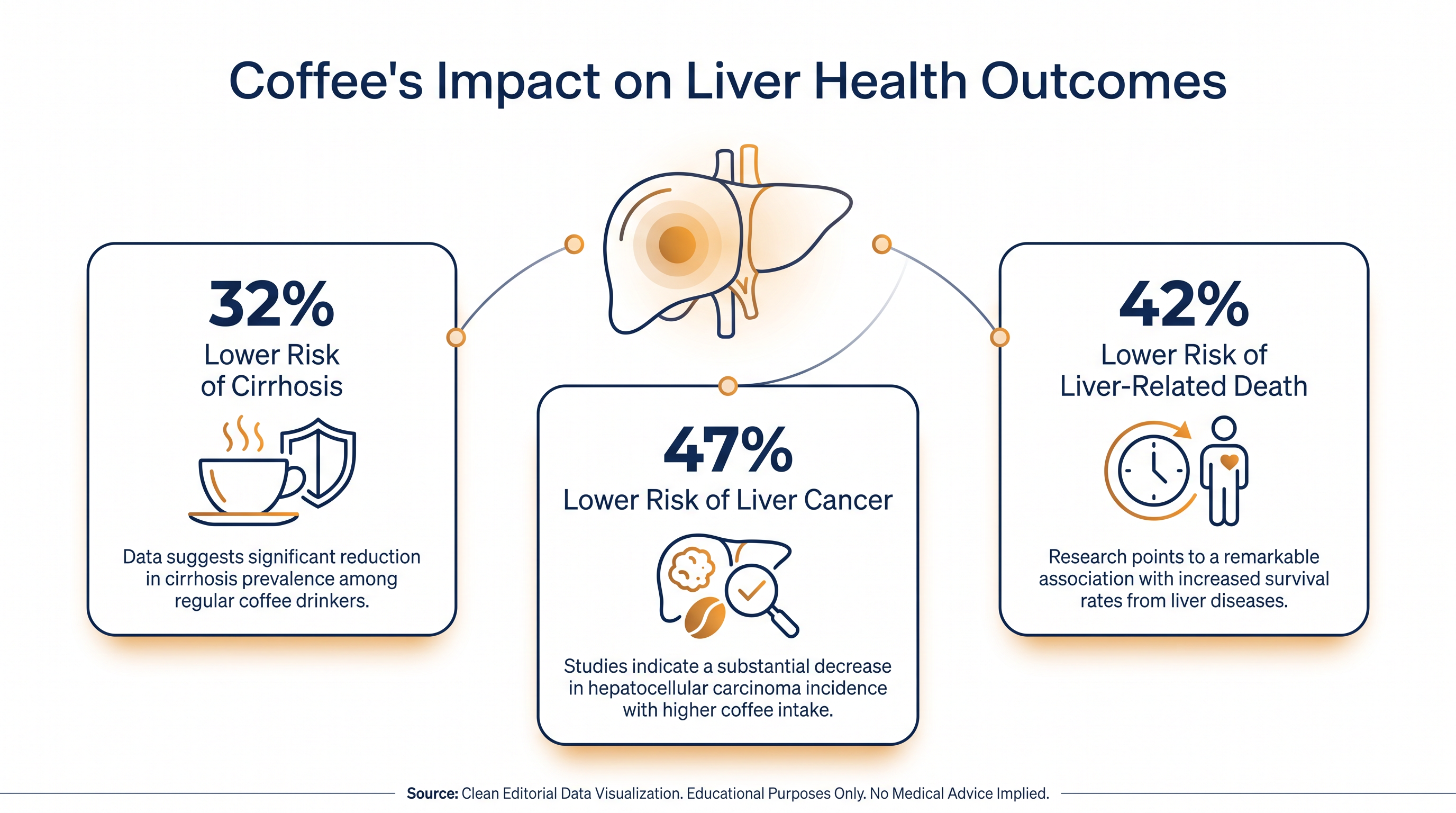
The clinical outcomes observed in the cohort were striking. Compared to individuals who did not drink coffee, participants who consumed five or more cups daily exhibited a 32 percent lower risk of developing cirrhosis.[1][2]
This protective effect extended to the most severe and fatal hepatic outcomes. The same high-intake group demonstrated a 47 percent lower risk of developing hepatocellular carcinoma and a 42 percent lower risk of liver-related mortality.[1]
Crucially, the benefits followed a clear dose-response pattern. While the most dramatic risk reductions were recorded at five cups, measurable protection began at just one to two cups per day, with the most practical protective threshold appearing around three to four cups.[2]
To understand the biological mechanisms driving these numbers, researchers turned to magnetic resonance imaging. MRI scans of nearly 29,000 participants revealed that higher coffee intake correlated with significantly lower levels of liver fat and hepatic iron accumulation.[1][3]
To understand the biological mechanisms driving these numbers, researchers turned to magnetic resonance imaging.
More importantly, the scans showed reduced fibroinflammation, which is the direct precursor to permanent scarring. This is where the biological mechanism comes into sharp focus, as liver scarring is primarily driven by hepatic stellate cells that activate in response to injury and begin laying down excess collagen.[3][7]
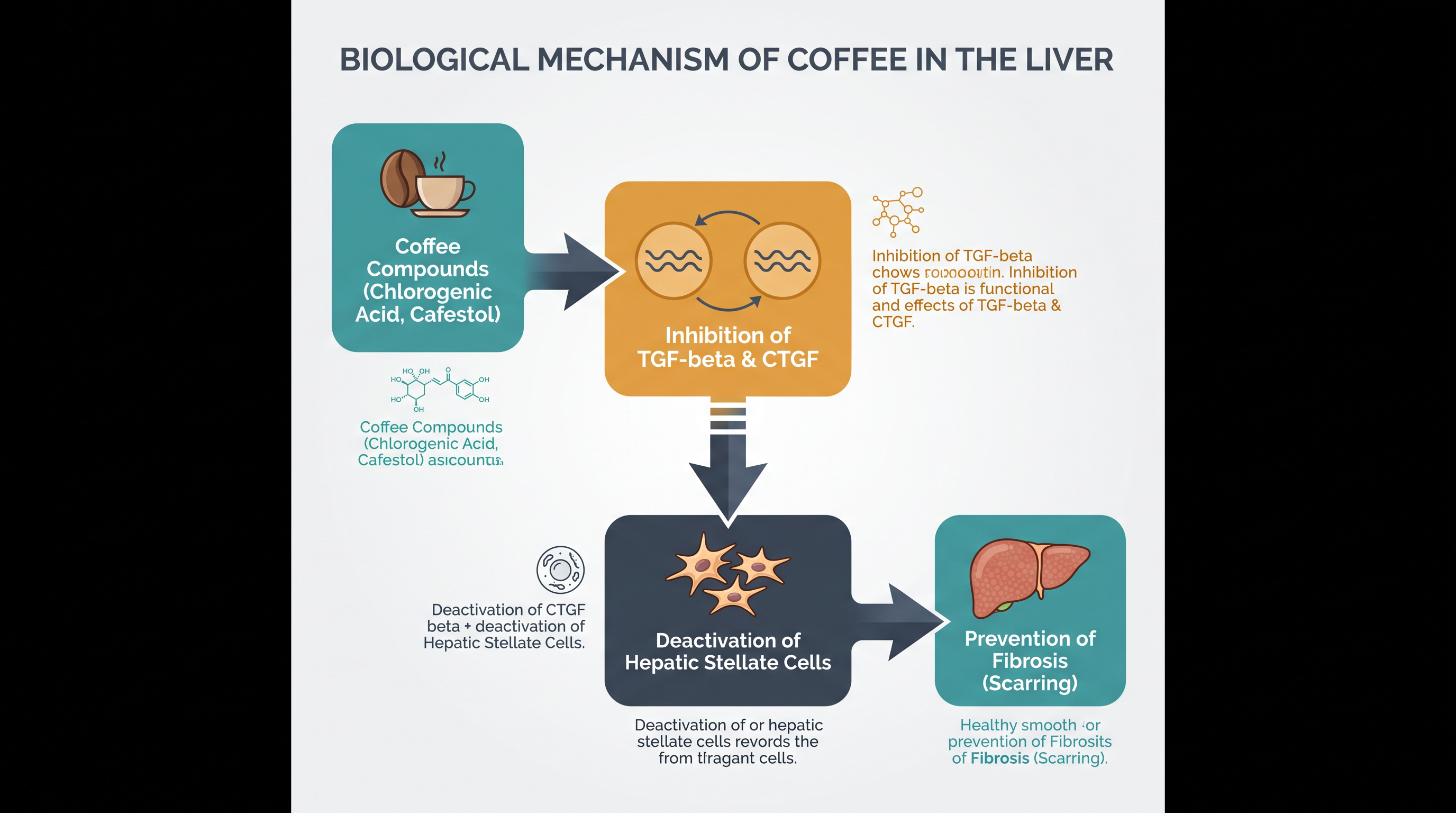
Coffee appears to actively suppress this destructive process. Mechanistic evidence indicates that compounds in the beverage inhibit the expression of transforming growth factor-beta and connective tissue growth factor, effectively commanding the stellate cells to stand down and halting the fibrotic cascade before it causes permanent damage.[5][7]
The study's proteomic analysis, which screened approximately 2,900 circulating proteins in over 44,000 patients, added an unprecedented layer of molecular evidence to the imaging data.[3]
Researchers identified 74 specific proteins associated with both coffee intake and a reduced risk of cirrhosis. These proteins map directly to biological pathways governing liver function, immune regulation, and the suppression of inflammation, showing that regular coffee drinkers maintain a fundamentally different, healthier protein profile.[1][3]
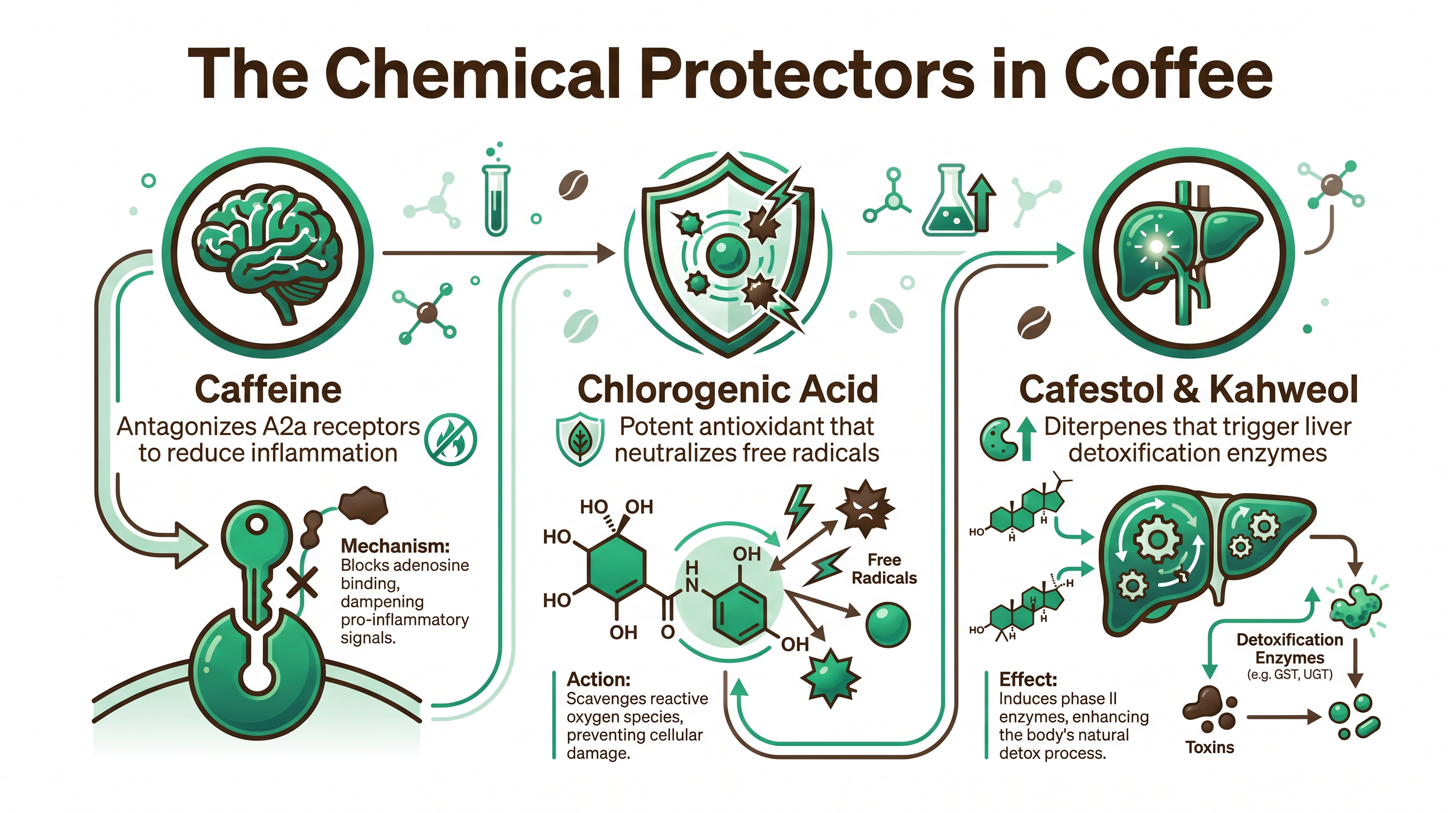
A surprising twist in the findings is that decaffeinated coffee offered similar protective associations against cirrhosis and liver cancer. This strongly suggests that while caffeine plays a known role—specifically by antagonizing the adenosine A2a receptor to reduce inflammation—it is far from the only active ingredient.[1][5]
Coffee is a highly complex chemical matrix containing over a thousand bioactive compounds. Chief among these is chlorogenic acid, a potent polyphenol that reduces oxidative stress within liver cells, neutralizing free radicals before they can damage cellular DNA.[4][7]
Additionally, coffee contains unique diterpenes like cafestol and kahweol. Experimental models have shown that these specific compounds trigger the liver's own detoxification enzymes, enhancing the organ's ability to clear carcinogens and potentially triggering programmed cell death in emerging tumor cells.[4][6]
The researchers also investigated the real-world impact of additives like sugar and artificial sweeteners. While patients who added sweeteners still enjoyed similar overall reductions in the risk of cirrhosis and liver cancer, their MRI data showed slightly higher odds of elevated liver inflammation compared to those who drank their coffee black.[1]
Despite the robust findings, researchers emphasize transparent caveats regarding the data. The study is observational, relying on self-reported coffee intake, and the predominantly European ancestry of the UK Biobank cohort may limit its generalizability to other populations.[1]
Nevertheless, the consensus among hepatologists is definitively shifting. While physicians do not recommend that non-drinkers suddenly start consuming five cups a day, regular coffee intake is increasingly viewed as a legitimate, evidence-backed complement to established liver health practices.[2]
How we got here
2013
Meta-analyses begin showing a consistent 40% protective effect of coffee against hepatocellular carcinoma.
2017
Experimental animal studies demonstrate that caffeine and chlorogenic acid can reduce toxin-induced liver fibrosis.
2024
Researchers confirm that coffee's protective effects apply across various liver diseases, including viral hepatitis and fatty liver disease.
July 2026
Cedars-Sinai publishes a landmark UK Biobank study combining MRI and proteomic data to map the exact biological mechanisms of coffee's liver protection.
Viewpoints in depth
Clinical Hepatologists' View
Argue that the scale of the data moves coffee from a 'possible benefit' to a highly reliable dietary intervention.
Clinical hepatologists emphasize that the sheer scale of the UK Biobank data, combined with objective MRI scans, provides undeniable evidence of coffee's utility. They view regular coffee intake as a legitimate, evidence-backed complement to established liver health practices. However, they are careful to note that while coffee is protective, it cannot out-compete severe alcohol abuse or advanced metabolic syndrome, positioning it strictly as a complement rather than a cure-all.
Biomedical Researchers' View
Focus on how coffee compounds actively interfere with the signaling pathways that command scar tissue formation.
Biomedical researchers are most interested in the cellular mechanics uncovered by the study. They highlight how coffee compounds actively inhibit the expression of transforming growth factor-beta (TGF-beta), effectively commanding hepatic stellate cells to stop building scar tissue. They view the identification of 74 specific circulating proteins as the crucial bridge between observational epidemiology and hard biological proof, though they stress the need for controlled in-vitro confirmation to map the exact binding sites.
Nutritional Scientists' View
Highlight that decaffeinated coffee's benefits prove the beverage is a complex delivery system for powerful antioxidants.
Nutritional scientists focus on the chemical matrix of the coffee bean itself. They argue that because decaffeinated coffee offers similar protective associations, the true heroes of the story are potent polyphenols like chlorogenic acid and diterpenes like cafestol and kahweol. They caution, however, that the method of preparation—such as paper-filtered versus unfiltered brewing—and the addition of heavy sugars can alter this chemical profile and introduce competing inflammatory risks.
What we don't know
- Whether the protective effects differ significantly based on the specific brewing method (e.g., espresso, paper-filtered, or French press).
- The exact threshold at which the addition of sugar or artificial sweeteners begins to counteract the anti-inflammatory benefits of the coffee itself.
- How genetic variations in caffeine metabolism might alter an individual's specific risk reduction for liver fibrosis.
Key terms
- Cirrhosis
- Late-stage scarring of the liver caused by long-term damage, which impairs the organ's ability to function.
- Hepatocellular Carcinoma (HCC)
- The most common type of primary liver cancer, often developing in people with chronic liver disease or cirrhosis.
- Hepatic Stellate Cells
- Specialized cells in the liver that, when activated by injury or inflammation, produce excess collagen and cause scarring.
- Proteomic Profiling
- The large-scale study of proteins—their structures, functions, and interactions—within a biological system.
- Chlorogenic Acid
- A potent antioxidant compound found in high concentrations in coffee beans, known to reduce oxidative stress.
- Fibroinflammation
- A combined state of chronic inflammation and the formation of fibrous scar tissue in an organ.
Frequently asked
Does decaf coffee protect the liver too?
Yes, the study found similar protective associations for decaffeinated coffee, suggesting that antioxidants like chlorogenic acid play a major role alongside caffeine.
How much coffee is needed to see benefits?
While the highest risk reductions were seen at five or more cups a day, measurable benefits began at just one to two cups, with a strong protective effect around three to four cups.
Does adding sugar or milk cancel out the benefits?
Participants who added sweeteners still saw reduced risks for cirrhosis and cancer, though MRI scans showed slightly higher markers for liver inflammation compared to those drinking black coffee.
Can coffee reverse existing liver damage?
Coffee helps prevent the progression of scarring (fibrosis) and reduces inflammation, but it is not a cure for advanced, irreversible cirrhosis.
Sources
Source coverage
7 outlets
3 viewpoints surfaced







[1]American Gastroenterological AssociationClinical Hepatologists
Higher coffee consumption associated with lower risks of cirrhosis, liver cancer
Read on American Gastroenterological Association →[2]ScienceDaily
Coffee May Help Shield the Liver
Read on ScienceDaily →[3]NutraIngredientsNutritional Scientists
UK Biobank study provides fresh insights on coffee's liver health mechanisms
Read on NutraIngredients →[4]News-MedicalNutritional Scientists
Coffee protects the liver by blocking inflammation and scarring, review finds
Read on News-Medical →[5]Pharmacy TimesBiomedical Researchers
Protective Effects of Coffee on the Liver
Read on Pharmacy Times →[6]EMJ ReviewsBiomedical Researchers
Coffee Components Shed Light on Liver Cancer Protection
Read on EMJ Reviews →[7]National Institutes of HealthBiomedical Researchers
Coffee and the Liver: A Comprehensive Review of Epidemiology, Mechanisms, and Clinical Implications
Read on National Institutes of Health →
Every angle. Every day.
Get lifestyle stories with full source coverage and perspective breakdowns delivered to your inbox.