
August 2026 Golf Injury Report: Bailey Shoemaker's Triumphant Return and Brooks Koepka's Lingering Issues
As the global golf calendar enters August, inspiring comebacks from career-threatening nerve and ligament injuries share the spotlight with a wave of late-summer tournament withdrawals.
By Meera Iyer

- Players & Competitors
- Focuses on the mental toll of injuries, the fear of career-ending diagnoses, and the profound gratitude that accompanies a successful return to competition.
- Rehabilitation Specialists
- Emphasizes the necessity of gradual, structured physical therapy and the dangers of rushing back to the course before tissues have fully healed.
- Tour Analysts
- Monitors how injury-enforced withdrawals impact playoff races, field strengths, and season-long standings across the major tours.
Perspectives this story doesn't cover
- Surgical Orthopedists specializing in sports medicine
- Equipment manufacturers designing vibration-dampening clubs for injured players
How we got here
March 2025
Bailey Shoemaker suffers a severe tingling sensation in her arm after hitting a 3-wood, marking the start of her nerve injury.
July 2025
Alena Sharp tears her left meniscus but continues to play through the injury for five more events.
January 2026
Richard Mansell damages his ankle ligaments falling off a curb at the Dubai Invitational, prompting a four-month layoff.
June 2026
Brooks Koepka withdraws from the RBC Canadian Open due to hand numbness affecting his grip.
July 2026
Koepka, Patrick Rodgers, and Taylor Moore withdraw from the Rocket Classic amid a wave of late-summer attrition.
August 2026
Shoemaker makes a triumphant, fully-healed return to elite competition at the U.S. Women's Amateur.
As the global golf calendar pushes into the grueling dog days of August 2026, the physical toll of the season is coming into sharp focus. Across the professional and elite amateur circuits, leaderboards are being shaped just as much by physical therapy and surgical interventions as they are by swing mechanics. While the late-summer stretch has forced several prominent players to step away and heal, the month is ultimately defined by remarkable stories of resilience, highlighted by athletes teeing it up after months of agonizing rehabilitation.
The most inspiring comeback of the month belongs to 21-year-old Bailey Shoemaker, who is making her triumphant return at the U.S. Women's Amateur at The Honors Course in Tennessee. Seventeen months ago, Shoemaker faced a diagnosis that strikes fear into any athlete: a potentially career-ending injury. During the Charles Schwab Women's Collegiate in March 2025, the University of Southern California standout hit a standard 3-wood on the second hole, only to feel an excruciating tingling sensation shoot down her right arm.[1]
The pain was immediate and unlike standard tendonitis. Despite wearing a wrist brace and relying heavily on ibuprofen, the discomfort refused to subside. Shoemaker remarkably played through the remainder of her collegiate season to support a thin Trojan squad, but her condition steadily deteriorated. Multiple MRIs failed to provide a definitive diagnosis, and cortisone injections only exacerbated the pain, leaving the young golfer struggling to even get a good night's sleep.[1]
The breakthrough finally came when surgeons identified a severe ulnar nerve impingement in her elbow. A mass of tissue had wrapped around the nerve, severely compressing it and causing the debilitating symptoms. Surgeons successfully cut the tissue loose, kicking off a grueling two-month rehabilitation process. Shoemaker slowly progressed from hitting a few gentle putts on Christmas Day to playing nine holes, eventually earning her way back to full competitive strength for the USGA's premier amateur showcase this August.[1]
Shoemaker's ordeal has fundamentally altered her perspective on the sport. The fear of losing her career has been replaced by a profound sense of gratitude, a sentiment she carried through a viral, emotional moment at the Augusta National Women's Amateur earlier this year and into this week's U.S. Women's Amateur. Her successful return underscores the critical importance of accurate orthopedic diagnosis and the patience required to let nerve tissue fully heal before facing the violent forces of a golf swing.[1]
Shoemaker's ordeal has fundamentally altered her perspective on the sport.
While Shoemaker celebrates her return, the professional men's circuit is currently grappling with a wave of late-summer attrition. At the Rocket Classic in late July, five-time major champion Brooks Koepka abruptly withdrew from the field without citing an official reason. The withdrawal immediately raised concerns given Koepka's recent medical history; he had previously pulled out before the final round of the RBC Canadian Open in June due to a hand injury that caused numbness and severely affected his grip.
Koepka's lingering physical issues have derailed his summer momentum. Following the Canadian Open withdrawal, he missed the cut at both the U.S. Open and the Genesis Scottish Open before managing a T28 finish at the Open Championship. Now fighting for his playoff life, the recurrence of hand and grip issues highlights the fragile nature of a golfer's kinetic chain, where even minor nerve or tendon inflammation in the extremities can completely dismantle elite clubface control.
The Rocket Classic saw several other notable casualties as the season's wear and tear compounded. Patrick Rodgers withdrew following the first round with an undisclosed issue, while Taylor Moore and Dan Brown both pulled their names from the field prior to their opening tee times. The sudden cluster of withdrawals has forced tour alternates like Lanto Griffin to step in at the last minute, reshuffling the competitive deck as players scramble to secure their postseason positioning.
Across the Atlantic, the DP World Tour is celebrating a major medical victory of its own. Englishman Richard Mansell has successfully returned to full, pain-free competition after a bizarre and frustrating start to his 2026 campaign. Mansell had been sidelined for four months after severely damaging his ankle ligaments by falling off a curb on the 18th tee during the first round of the Dubai Invitational in January.[2]
Rather than simply waiting for his ankle to heal, Mansell took a proactive approach to his body's maintenance. He used the enforced layoff to undergo a hip operation in mid-February, addressing a persistent, nagging issue that had troubled his swing mechanics for seasons. After missing 13 tournaments on the Race to Dubai schedule, the intensive, dual-joint rehabilitation paid off, allowing Mansell to return to the European Swing significantly ahead of his initial medical timeline.[2]
On the LPGA Tour, veteran resilience remains a central theme. Three-time Canadian Olympian Alena Sharp is steadily working her way back to full strength after a grueling battle with a torn left meniscus. Sharp remarkably played through the injury for five events late last season, including the CPKC Women's Open, before finally undergoing necessary surgical repair. Her commitment to a structured, long-term physical therapy program has her on track for a full competitive return, proving that age is no barrier to recovery when paired with elite medical care.
Ultimately, the August 2026 injury landscape serves as a stark reminder of golf's hidden brutality. The modern swing generates immense torque, placing extraordinary stress on the lower back, hips, wrists, and elbows. Yet, as athletes like Shoemaker, Mansell, and Sharp demonstrate, advancements in orthopedic surgery and biomechanical physical therapy are allowing golfers to rewrite the narrative on "career-ending" injuries, returning to the fairways stronger and more grateful than before.[1][2]
- 17 months
- Time since Shoemaker's initial nerve injury
- 6 months
- Typical recovery timeline for major golf joint surgeries
- 5 events
- Tournaments Sharp played with a torn meniscus
Where opinion splits
Rehabilitation Specialists
Medical professionals stress that patience and structured physical therapy are non-negotiable for a successful return.
Physical therapists and orthopedic specialists emphasize that returning to golf isn't just about waiting for surgical incisions to heal; it requires retraining the body's entire kinetic chain. Rushing back to the course before tissues have regained their tensile strength often leads to compensatory swing mechanics, which can trigger secondary injuries in the back or opposite hip. A gradual return—starting with putting and chipping before progressing to full driver swings over several months—is considered the gold standard for long-term joint health.
Players & Competitors
Athletes highlight the immense mental toll of prolonged injuries and the profound gratitude of returning to the course.
For elite golfers, an injury is not just a physical setback; it is an existential threat to their livelihood and identity. Players like Bailey Shoemaker have spoken openly about the frustration of misdiagnoses and the dark periods where a career-ending outcome seemed likely. When these athletes finally return to competition, they often report a renewed appreciation for the game, playing with less fear and more joy, having realized how quickly their ability to compete can be taken away.
Tour Analysts
Observers note how late-season injuries drastically alter playoff races and tour standings.
From a competitive standpoint, the timing of an injury can be devastating. Analysts point out that late-summer withdrawals—such as those seen at the Rocket Classic—can completely upend the FedEx Cup playoffs and the Race to Dubai standings. When marquee players like Brooks Koepka are forced to step away, it opens the door for bubble players and alternates to secure life-changing status for the following season, proving that durability is just as vital as scoring average in professional golf.
Unanswered questions
- The exact nature of the undisclosed injuries that forced Patrick Rodgers and Taylor Moore to withdraw from the Rocket Classic.
- Whether Brooks Koepka's recurring hand numbness will require surgical intervention or if it can be managed with rest.
- How Bailey Shoemaker's surgically repaired elbow will hold up to the grueling volume of a full professional schedule if she transitions to the LPGA Tour.
Sources
Source coverage
2 outlets
3 viewpoints surfaced


- [1]USGAPlayers & Competitors
Shoemaker Overcomes Career-Threatening Injury to Compete at U.S. Women's Amateur
Read on USGA → - [2]DP World TourPlayers & Competitors
Richard Mansell thrilled to be back competing again after four-month injury lay-off
Read on DP World Tour →
Comments
More in Sports
See all →Race Format Overhaul
F1 Commission Approves Shorter Races and Removes Three-Hour Limit for 2027 Season
7 sources
Fencing Rules
The Sequence of Priority: How Attack, Parry, and Riposte Decide a Fencing Bout
8 sources
Oceania Qualifiers
Samoa and Tonga Secure Netball World Cup 2027 Qualification at Oceania Qualifiers
5 sources
Boxing Governance
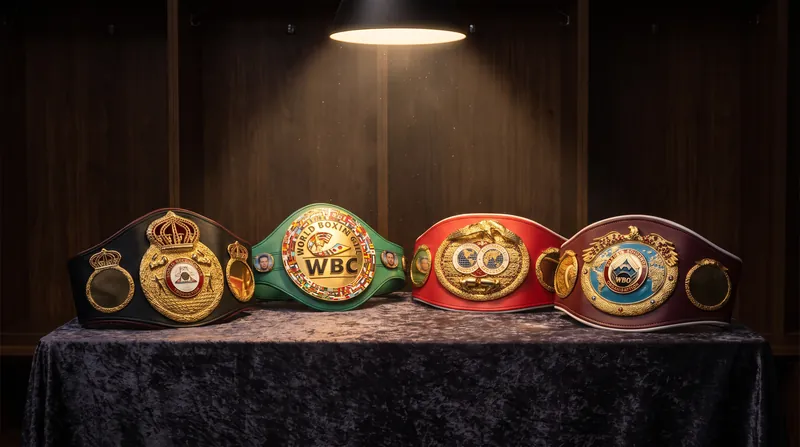
The Four Major Sanctioning Bodies and How They Govern Professional Boxing's World Titles
6 sources
Every angle. Every day.
Get Sports stories with full source coverage and perspective breakdowns delivered to your inbox.