
June 2026 Golf Injury Report: C.T. Pan's 453-Day Comeback and Poulter's Resilience Highlight the Summer Stretch
As the global golf season enters its grueling summer stretch, players are demonstrating remarkable resilience, highlighted by C.T. Pan's emotional return to competition and Ian Poulter playing through a bizarre knee injury.
By Meera Iyer

Share this story
The modern professional golf swing is a marvel of biomechanics, but it exacts a heavy toll on the human body. As the 2026 global golf calendar enters its demanding summer stretch, injury reports across the PGA Tour, LIV Golf, and the DP World Tour are testing the depth of the sport's elite. Yet, rather than a narrative of attrition, this month's updates are defined by remarkable athletic resilience and strategic body management.
The most uplifting news of the month comes from the Korn Ferry Tour, where PGA Tour veteran C.T. Pan is officially ending a grueling 453-day exile from competitive golf. The 34-year-old, whose lone PGA Tour victory came at the 2019 RBC Heritage, has been sidelined for well over a year following complex wrist surgery that threatened to derail his promising career.[1]
Pan's journey back to the tee box has been anything but linear. In a candid statement announcing his return, he described the recovery process as a "constant tug-of-war, full of trial and error." He noted that there were days he felt he had taken a step forward, only for his body to force a frustrating step back.
Now fully cleared, Pan will utilize his 19 remaining starts on a major medical extension to reclaim his standing on the PGA Tour, stepping onto a "battlefield that feels completely familiar, yet entirely brand new."[1]
While Pan celebrates the end of a long rehabilitation, resilience on the LIV Golf circuit is taking a decidedly different form. English veteran Ian Poulter revealed that he is currently competing with a torn meniscus, an injury he sustained in a bizarre off-course accident. Poulter tore the cartilage simply by "hopping up two steps" during the LIV Golf Virginia event earlier in the season.[2]
Despite the structural damage, which will require surgery in September, Poulter has refused to step away from the course. Bizarrely, the 50-year-old noted that he feels "no sensation throughout the golf swing that there's anything wrong with it." He backed up that claim with his play, carding an impressive four-under 66 in the opening round of LIV Golf Korea, proving that grit can sometimes override biomechanical setbacks.[2]
Contrast Poulter's gritty persistence with the calculated precaution of Bryson DeChambeau. While chasing a historic third consecutive victory at LIV Golf Mexico City, DeChambeau made the difficult decision to withdraw prior to the final round. Trailing Jon Rahm by 16 shots after a poor start, DeChambeau opted to protect a nagging wrist injury rather than risk long-term damage in a tournament he was unlikely to win.[3]
"I experienced some discomfort in my wrist during yesterday's round and have decided to withdraw... to prevent further injury," DeChambeau explained to his fans. In the modern era of sports medicine, such precautionary withdrawals are increasingly viewed as smart asset management, ensuring stars remain healthy for the grueling major championship season rather than burning out in a single weekend.[3]
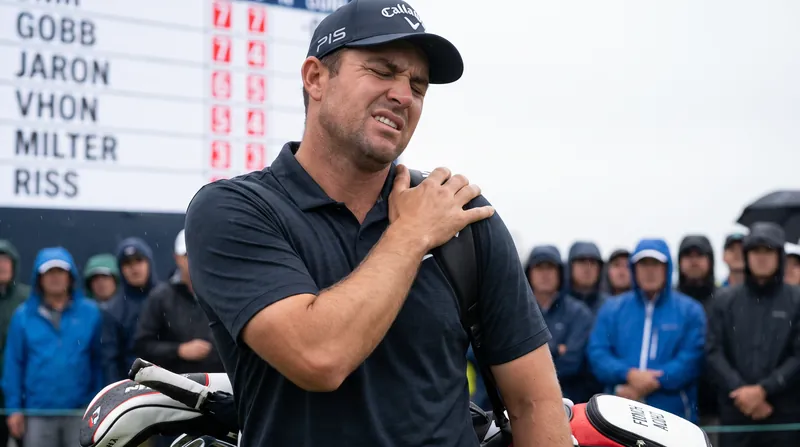
DeChambeau is not the only LIV star managing upper-body ailments as the summer heats up. Paul Casey was forced to sit out both the Andalucia and Korea events due to a persistent wrist injury of his own. Meanwhile, South African Louis Oosthuizen had to bow out of the final round in Andalucia after his back seized up, a frustrating but common ailment for players navigating the rotational forces of the modern swing.
On a more positive note, Bubba Watson is successfully ramping up his physical activity following a minor left hand surgery late last year. The RangeGoats captain used the offseason to address the lingering issue and is now fully integrated back into the 2026 LIV schedule, demonstrating the value of proactive surgical interventions to extend a player's competitive window.
Across the Atlantic, DP World Tour hopeful Marco Penge is nearing his own triumphant return. Penge was forced to withdraw from the U.S. Open qualifiers due to recurring vertigo and sinus issues stemming from a severe viral infection. After a clean MRI and months of rest, Penge recently announced he is "battling to get fully fit again" and is "not too far away" from rejoining the tour.[4]
The sheer volume of wrist, back, and knee injuries across the global tours highlights a fundamental shift in how the game is played. Orthopedic specialists note that the modern pursuit of 330-yard drives requires players to generate massive torque by disassociating their upper and lower bodies. This violent whipping action places unprecedented stress on the lumbar spine and the tiny bones of the wrists, making injuries an inherent occupational hazard.
Ultimately, the June 2026 injury report is a testament to the evolving nature of professional golf. It is no longer just a game of touch and strategy; it is a high-performance athletic endeavor that demands rigorous physical maintenance. Whether it is C.T. Pan grinding through 453 days of rehab or Bryson DeChambeau smartly listening to his body, today's golfers are proving that managing health is just as critical as sinking putts.[1][3]
Key points
- C.T. Pan is returning to competitive golf on the Korn Ferry Tour after a 453-day absence due to severe wrist surgery.
- Ian Poulter is playing through a torn meniscus sustained in a freak off-course accident, delaying surgery until September.
- Bryson DeChambeau opted for a precautionary withdrawal at LIV Golf Mexico City to protect a nagging wrist injury.
- The sheer volume of upper-body injuries highlights the immense physical toll of the modern, high-torque golf swing.
How we got here
Oct 2025
Bubba Watson undergoes minor left hand surgery to address lingering issues.
May 2026
Ian Poulter tears his meniscus hopping up stairs at the LIV Golf Virginia event.
June 2026
Bryson DeChambeau withdraws from LIV Golf Mexico City to protect a wrist injury.
Late June 2026
C.T. Pan officially returns to the Korn Ferry Tour after a 453-day absence.
- Player Resilience
- Focuses on the mental and physical grit required to return from long-term injuries or play through pain.
- Precautionary Management
- Values long-term health and strategic withdrawals over risking further damage in a single event.
- Sports Medicine & Biomechanics
- Analyzes how the violent torque of the modern golf swing inherently leads to overuse injuries.
Perspectives this story doesn't cover
- Caddies managing player workloads
- Equipment manufacturers adjusting club specs for injured players
Sources
Source coverage
4 outlets
3 viewpoints surfaced




- [1]The MirrorPlayer Resilience
PGA Tour winner announces comeback after 453 days of injury hell
Read on The Mirror → - [2]Daily Express USPlayer Resilience
LIV star requires knee surgery after 'hopping up stairs'
Read on Daily Express US → - [3]Fox NewsPrecautionary Management
Bryson DeChambeau admits to turning to AI to help fix his swing after struggles at LIV Golf Korea
Read on Fox News → - [4]Establish The RunSports Medicine & Biomechanics
Golf Injury Report
Read on Establish The Run →
More in Sports
See all →LIV Golf Exit
Jon Rahm Forfeits £75 Million to Finalize Separation Agreement and Exit LIV Golf
7 sources

Preview
2026 Alfred Dunhill Links Championship Preview: MacIntyre Defends as LIV Stars Return to St Andrews
6 sources

World Handicap System
The Mathematics of the World Handicap System: Inside the 8-of-20 Differential Average
6 sources
Recap
Matt Fitzpatrick Claims 11th DP World Tour Title With Gritty Open de France Victory
4 sources
Comments
Every angle. Every day.
Get Sports stories with full source coverage and perspective breakdowns, free every day.