
Apollo Data: AI Exposure Linked to 6.7% Decline in Real Wage Growth for High-Risk Jobs Since 2023
A new analysis of real-world AI usage reveals that artificial intelligence is suppressing wage growth rather than eliminating jobs, with lower-income workers bearing the brunt of the impact.
By Logan Price


- Macroeconomists & Researchers
- Focus on the aggregate data showing wage compression as the primary mechanism of AI labor disruption.
- Labor & Workforce Advocates
- Highlight the regressive nature of the wage hits, which disproportionately affect the most vulnerable workers.
- Methodological Skeptics
- Question the direct causality and statistical robustness of the 6.7 percent headline figure.
Why this matters
As companies integrate generative AI, the immediate economic threat to workers is not mass unemployment but wage stagnation. Understanding this shift empowers professionals to pivot toward roles requiring 'tacit knowledge' that AI cannot easily replicate.
For years, the dominant anxiety surrounding artificial intelligence has been the threat of mass unemployment. However, newly released empirical data suggests a different reality is unfolding across the U.S. labor market: AI is keeping workers at their desks, but it is quietly shrinking their raises. According to a comprehensive white paper published by Apollo Global Management, companies are capturing the productivity gains of generative AI through wage compression rather than workforce reduction.[1][3]
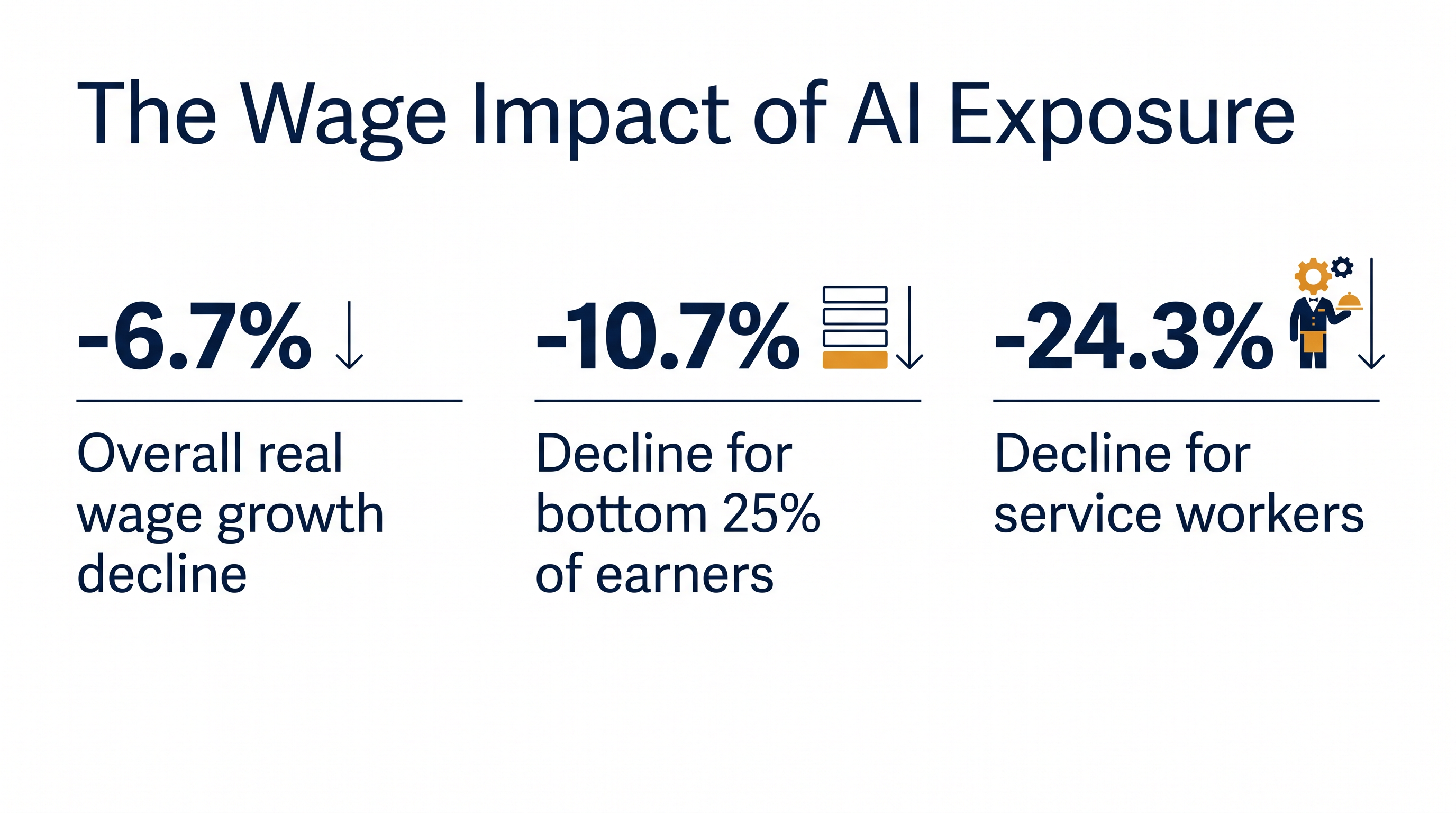
The Apollo study, authored by analyst Sania Edlich and Chief Economist Torsten Sløk, tracked wage and employment data across 321 matched occupations from 2015 to 2025. By utilizing the Anthropic Economic Index—which measures observed, real-world usage of AI tools like Claude rather than theoretical exposure—the researchers isolated the economic shifts that occurred after ChatGPT went viral in late 2022. They found that jobs with the highest exposure to AI experienced an average 6.7 percent decline in real wage growth post-2023.[1][2]
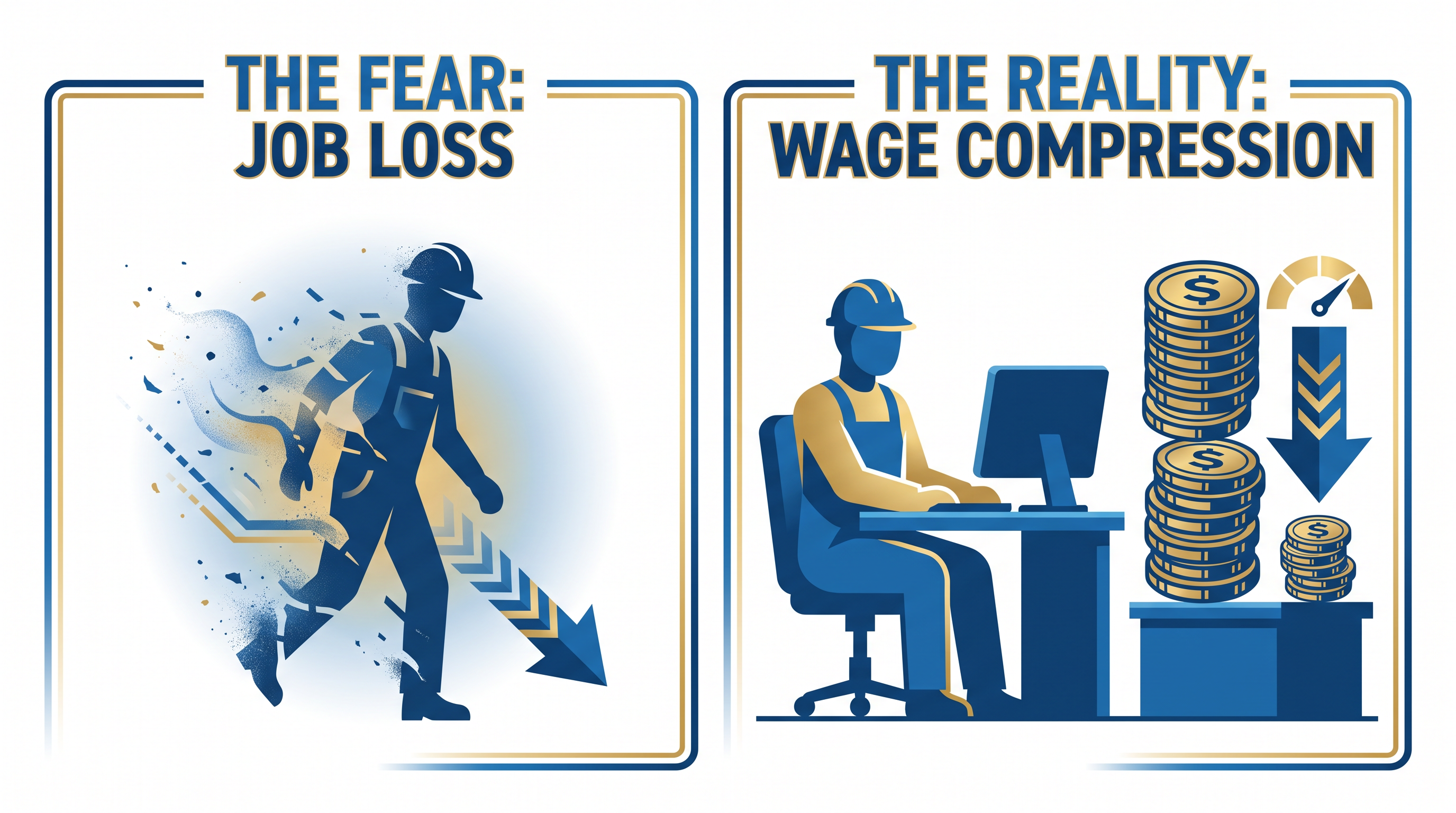
Crucially, the data revealed no statistically significant decline in overall employment levels for these highly exposed roles. This indicates a structural shift in corporate strategy. Instead of triggering the mass layoffs that many labor advocates feared, firms appear to be retaining their human headcount while using AI-driven efficiencies to justify capping labor costs and withholding standard pay increases.[1][3]
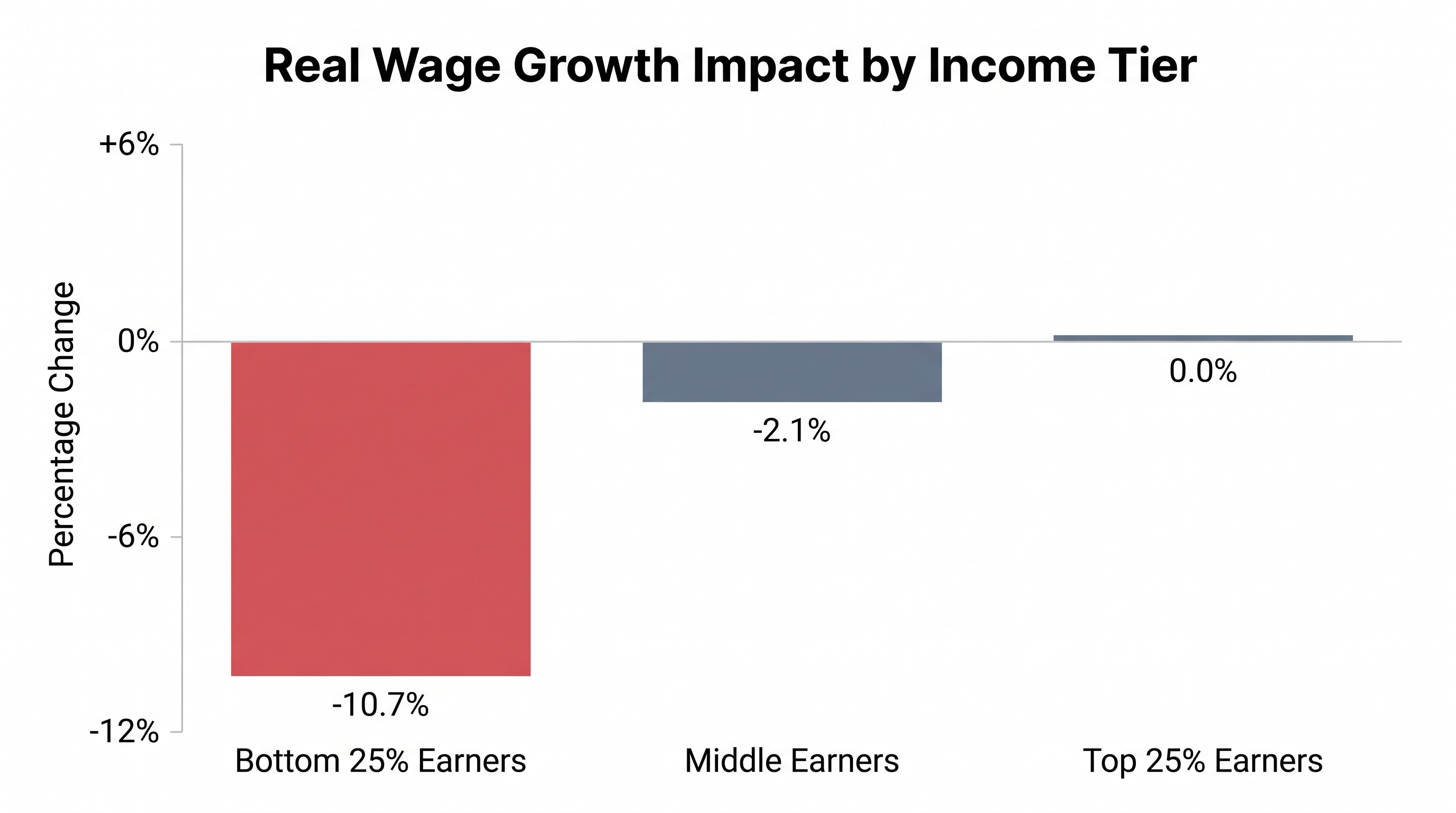
The financial burden of this wage compression is not distributed evenly. The Apollo data shows a highly regressive impact, with lower-income professionals bearing the brunt of the adjustment. Service workers—a category that includes concierges, childcare workers, and administrative support—faced a staggering 24.3 percent drop in real wage growth. Similarly, workers in the bottom 25 percent of earners saw their wage growth decline by 10.7 percent over the same period.[1][2]
In stark contrast, the highest-paid workers registered no significant negative impact on their wages. This divergence suggests that top earners are better positioned to absorb AI tools as productivity enhancers that augment their existing workflows, rather than as direct substitutes for their core tasks. The findings point to AI acting as a widening wedge for income inequality, insulating higher-paid professionals while squeezing the margins of those at the bottom of the wage scale.[1][3]
In stark contrast, the highest-paid workers registered no significant negative impact on their wages.
The distinction between who gets replaced and who gets augmented often comes down to the type of knowledge a job requires. Research from the Federal Reserve Bank of Dallas highlights the difference between 'codified knowledge'—established information found in textbooks or manuals—and 'tacit knowledge,' which is gained through hands-on experience and complex human interaction. AI excels at replicating codified tasks, substituting for entry-level or routine work, but struggles to replace the experiential judgment required in roles heavily reliant on tacit knowledge.[5]
This dynamic explains why some moderately AI-exposed professions have actually seen their pay increase. For example, personal finance advisors experienced an 8.4 percent increase in real wages, and administrative law judges saw wages surge 17.5 percent. In these roles, AI automates the routine data-gathering and preliminary analysis, freeing up the human professional to focus on high-value, complex decision-making that commands a premium in the market.
However, the headline 6.7 percent wage decline figure is not without its methodological skeptics. Independent analysis notes that Apollo's findings are highly sensitive to the statistical thresholds used to define 'high exposure.' When the exposure cutoff is broadened to include a wider array of jobs, the estimated wage hit shrinks to 1.89 percent. Under an even stricter cutoff, the negative effect becomes statistically insignificant, suggesting that the 6.7 percent metric should be viewed as a conditional warning rather than a universal law of the new economy.[4]
Furthermore, because the Apollo study relies on a difference-in-differences design comparing occupations rather than individual adopting firms, it cannot definitively prove that AI alone caused the relative wage gap. Broader post-pandemic macroeconomic forces, including inflation adjustments and shifting consumer demand, are also actively shaping relative pay scales across different sectors.[4]
Despite these methodological nuances, the broader trend remains clear. Apollo estimates that roughly 5.8 million American workers currently hold jobs with high AI exposure. As enterprise AI tools become more deeply embedded in corporate America, that number is expected to grow substantially. For the modern workforce, the immediate challenge is no longer proving that a human can do a job better than a machine, but proving that human expertise is still worth a premium raise.[1][2]
Viewpoints in depth
Macroeconomists & Researchers
Focus on the aggregate data showing wage compression as the primary mechanism of AI labor disruption.
From a macroeconomic perspective, the Apollo data provides a crucial missing piece to the AI productivity puzzle. Economists note that while AI is clearly making firms more efficient, those gains are not being passed down to workers in the form of higher pay. Instead, companies are engaging in 'wage compression'—retaining their human capital but using the reduced time-cost of tasks to justify smaller annual raises. This viewpoint emphasizes that the labor market is absorbing the AI shock through price (wages) rather than quantity (employment).
Labor & Workforce Advocates
Highlight the regressive nature of the wage hits, which disproportionately affect the most vulnerable workers.
Labor advocates view the 6.7 percent average decline as masking a much more severe crisis at the bottom of the economic ladder. With service workers facing a 24.3 percent drop in real wage growth and the bottom quartile losing 10.7 percent, advocates argue that AI is rapidly accelerating income inequality. They warn that without policy interventions or updated collective bargaining strategies, AI will systematically devalue entry-level and service-oriented labor while insulating the highest-paid executives and specialized professionals.
Methodological Skeptics
Question the direct causality and statistical robustness of the 6.7 percent headline figure.
Data skeptics caution against treating the Apollo findings as definitive proof that AI is the sole cause of shrinking paychecks. They point out that the 6.7 percent figure is highly sensitive to where the researchers drew the line for 'high exposure.' When the threshold is adjusted slightly, the wage impact drops to under 2 percent or becomes statistically insignificant. Furthermore, they argue that broader post-pandemic factors—such as inflation, remote work shifts, and industry-specific boom-and-bust cycles—make it incredibly difficult to isolate AI as the single variable driving wage stagnation.
What we don't know
- Whether the wage compression is a temporary adjustment phase or a permanent structural change in the labor market.
- How much of the wage decline is strictly caused by AI versus broader post-pandemic macroeconomic trends.
- How quickly the number of 'high-exposure' workers will scale beyond the current 5.8 million estimate.
Sources
Source coverage
5 outlets
3 viewpoints surfaced





[1]Apollo Global ManagementMacroeconomists & Researchers
AI Lowers Wages But Doesn't Cut Jobs
Read on Apollo Global Management →[2]Seeking AlphaMacroeconomists & Researchers
Apollo breaks down the impact of AI on the U.S. labor market
Read on Seeking Alpha →[3]Financial ExpressMacroeconomists & Researchers
AI is not causing widespread job losses but it is slowing pay raises, study says
Read on Financial Express →[4]MagicaMethodological Skeptics
Apollo's AI Wage Estimate Narrows Under a Broader Exposure Test
Read on Magica →[5]Dallas Fed
Artificial intelligence's impact on the labor market will depend on whether the technology automates or augments worker tasks
Read on Dallas Fed →
Every angle. Every day.
Get data analysis stories with full source coverage and perspective breakdowns delivered to your inbox.