
Mauricio Pochettino Signs Extension to Coach USMNT Through 2030 World Cup
The U.S. Soccer Federation has secured Mauricio Pochettino through the 2030 World Cup cycle, extending the Argentine manager's contract to build upon the tactical foundation laid during the 2026 campaign.

Share this story
The United States Soccer Federation has officially secured the cornerstone of its men's national team program, announcing a multi-year contract extension for head coach Mauricio Pochettino that will keep the Argentine tactician at the helm through the 2030 FIFA World Cup.
The agreement, finalized early Monday morning in Chicago, preempts any post-2026 uncertainty and locks in a manager who has fundamentally reshaped the squad's tactical identity. By committing to a second cycle, the federation is signaling a departure from its historical pattern of high-turnover leadership, opting instead for the kind of long-term stability typically reserved for elite European and South American powerhouses.[1][2]
Coming off a highly scrutinized 2026 World Cup campaign on home soil, USSF Sporting Director Matt Crocker moved aggressively to retain Pochettino amid rumored interest from several top-flight European clubs. Crocker, who originally spearheaded the ambitious push to hire the former Chelsea and Tottenham Hotspur boss in late 2024, viewed continuity as the non-negotiable ingredient for the program's next evolutionary step.
Federation insiders noted that the swift negotiations were designed to capitalize on the momentum generated over the past two years, ensuring that the tactical foundation laid by Pochettino would not be dismantled by a transitional period.
Financing the extension required a sophisticated collaborative effort between the federation and its network of high-net-worth donors. Much like his initial groundbreaking contract, which shattered previous USMNT salary records, this new deal was heavily subsidized by philanthropic contributions to U.S. Soccer.
This financial structure allows the federation to offer compensation packages that rival those of UEFA Champions League clubs, effectively neutralizing the financial allure of a return to European club football. The willingness of donors to double down on Pochettino underscores a unified belief in his overarching vision for the American player pool.
In a statement released by the federation, Pochettino expressed a deep, personal investment in the project he began two years ago. He highlighted the unique camaraderie within the locker room and the untapped potential of a generation of players just entering their athletic prime.
"We have built something special, a culture of absolute belief and relentless standard-setting," Pochettino remarked. "The ceiling for this group is incredibly high, and the opportunity to guide them toward 2030, to finish the work we have started, was an opportunity I could not walk away from."[1]
The locker room's response to the extension has been overwhelmingly positive, with core veterans reportedly playing an active role in lobbying for his return. Players like Christian Pulisic, Weston McKennie, and Tyler Adams have publicly praised Pochettino's demanding training sessions and elite man-management skills, crediting him with elevating the squad's collective footballing IQ. For a player pool that predominantly plies its trade in Europe's top five leagues, having a manager with Pochettino's pedigree provides an immediate layer of mutual respect and tactical alignment that previous regimes occasionally struggled to maintain.[1]
The road to the 2030 World Cup presents a starkly different challenge than the 2026 cycle. While the United States enjoyed automatic qualification as a co-host for the recent tournament, the team must now navigate the grueling CONCACAF qualification gauntlet to secure their ticket to the unprecedented tri-continental tournament spanning Spain, Portugal, Morocco, Argentina, Paraguay, and Uruguay.
Pochettino and his staff view this rigorous qualification process not as a burden, but as a necessary crucible to forge the mental toughness required to compete deep into the knockout stages of a World Cup.
Tactically, analysts anticipate that a second four-year cycle will allow Pochettino to fully implement the high-octane, possession-dominant system that became his hallmark in the English Premier League. International management often forces coaches into pragmatic compromises due to limited training time, but a prolonged tenure affords the repetition necessary to ingrain complex pressing triggers and fluid attacking rotations. Observers note that the USMNT has already begun shedding its historical reliance on counter-attacking football, transitioning into a side capable of dictating the tempo against top-tier opposition.
Beyond the senior squad, Pochettino's extended mandate includes a significantly expanded role in shaping the nation's broader footballing infrastructure. The new contract grants him increased oversight over the youth national team pathways, ensuring that the Under-20 and Under-23 squads operate in tactical lockstep with the senior team. This holistic approach aims to create a seamless pipeline of talent, where young prospects arrive at the senior camp already fluent in Pochettino's positional play principles, ultimately accelerating their integration into the starting lineup.[2]
Beyond the senior squad, Pochettino's extended mandate includes a significantly expanded role in shaping the nation's broader footballing infrastructure.
The international reaction to the extension has framed the move as a definitive statement of intent from the United States. Major European and South American sporting outlets, which once viewed the USMNT job as a lucrative semi-retirement post or a brief stepping stone, are now acknowledging the program as a premier destination for elite coaching talent. By retaining a manager of Pochettino's caliber against the gravitational pull of the European club game, U.S. Soccer has cemented its status as a serious, ambitious player on the global stage.
Key points
- Mauricio Pochettino has signed a contract extension to coach the USMNT through the 2030 World Cup.
- The deal was heavily supported by high-net-worth USSF donors to match elite European club salaries.
- Pochettino will take on an expanded role overseeing the tactical development of U.S. youth national teams.
- Core USMNT players actively lobbied for his return following the 2026 World Cup campaign.
- The U.S. will return to the standard CONCACAF qualification process for the 2030 tournament.
How we got here
Late 2024
Mauricio Pochettino is initially hired as the head coach of the USMNT, backed by significant donor funding.
June-July 2026
Pochettino leads the USMNT through the 2026 FIFA World Cup hosted on home soil.
August 2026
The USSF announces a multi-year contract extension, securing Pochettino through the 2030 World Cup cycle.
- USSF Leadership
- Views the extension as a necessary investment in stability to elevate the program to elite global status.
- Tactical Analysts
- Argues that a second cycle is required to fully implement Pochettino's complex, possession-based pressing system.
- International Observers
- Sees the retention of a top-tier manager as proof that the U.S. is becoming a premier destination in world football.
Perspectives this story doesn't cover
- Domestic MLS coaches
- Youth development directors
Sources
Source coverage
2 outlets
3 viewpoints surfaced


- [1]ESPNInternational Observers
Mauricio Pochettino signs USMNT extension through 2030 World Cup
Read on ESPN → - [2]Fox SportsUSSF Leadership
US Soccer locks down Pochettino for 2030 World Cup cycle
Read on Fox Sports →

More in Sports
See all →Football Governance
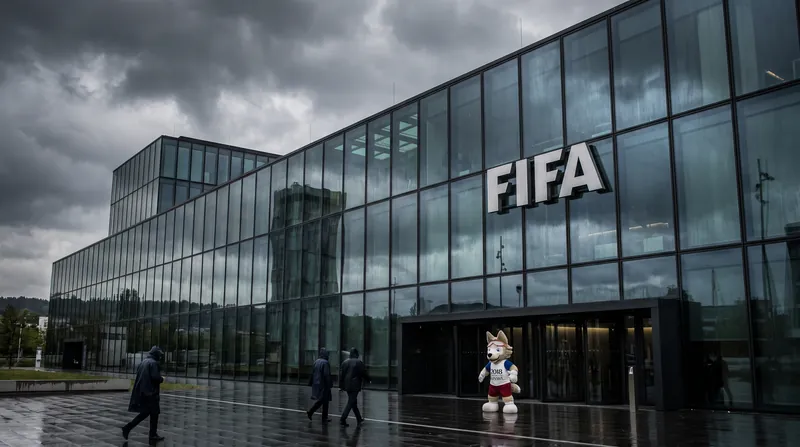
UEFA Issues November 2 Ultimatum to FIFA Over Secret World Cup Documents
5 sources
Executive Compensation
US Filings Reveal Undisclosed $1.76 Million World Cup Payment to FIFA President
4 sources

Pitch Geometry
Enforcing Law 14's 9.15-Metre Buffer: Why Soccer's Penalty Arc Extends Four Yards Beyond the Box
4 sources

Nations League
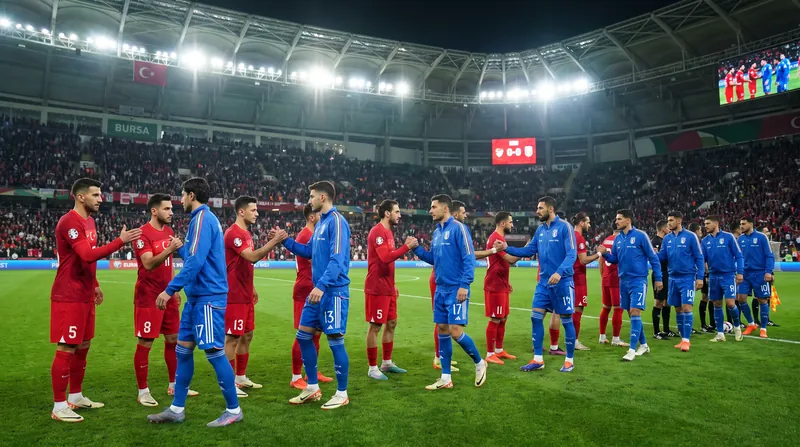
Can Turkey Finally Break Their Winless Curse Against Italy in Nations League Clash?
6 sources
Comments
Every angle. Every day.
Get Sports stories with full source coverage and perspective breakdowns, free every day.