
Enforcing Law 14's 9.15-Metre Buffer: Why Soccer's Penalty Arc Extends Four Yards Beyond the Box
The semi-circle at the top of the penalty area exists to solve a specific geometric flaw in the 18-yard box. Without it, defending players could legally stand just six yards behind the kicker during a penalty.
By Jackson Reed

In short
- The penalty arc exists solely to enforce the universal 10-yard buffer rule, as the rectangular 18-yard box leaves players just six yards behind the penalty spot.
- By extending four yards beyond the penalty area, the arc covers a 16.5-square-yard blind spot that would otherwise allow defenders to crowd the kicker.
- Strict VAR enforcement of the arc has transformed how teams approach penalties, turning the curved line into a rigid starting block for rebound sprints.
When a referee points to the spot, the entire geometry of a soccer pitch suddenly revolves around a single painted dot. Players immediately scramble to the edge of the penalty area, jostling for position to pounce on a potential rebound. But they do not just stand on the straight line of the 18-yard box.
Instead, they crowd against the curved white line that caps the top of the penalty area. This semi-circle, universally known as the "D" or the penalty arc, dictates exactly where every player except the kicker and the goalkeeper must stand. It is a boundary that routinely triggers Video Assistant Referee interventions.
The arc is not a decorative flourish, nor is it actually part of the penalty area itself. It exists to solve a specific mathematical problem created by the rectangular shape of the 18-yard box. Without it, the fundamental fairness of the penalty kick would collapse under the rules of the game.
According to the International Football Association Board, the penalty arc enforces a strict buffer zone. It ensures that no defending or attacking player can gain an unfair proximity to the ball before it is struck. Understanding its dimensions reveals the precise engineering behind soccer's most dramatic set piece.[1][2]
The Geometry of the Buffer Zone
IFAB Law 14 governs the execution of the penalty kick, establishing rigid constraints for all 22 players on the pitch. The law mandates that everyone other than the designated kicker and the defending goalkeeper must remain outside the penalty area. Crucially, they must also remain at least 9.15 metres from the penalty mark.[2]
That 9.15-metre distance translates to exactly 10 yards, which is the universal buffer required for any free kick in soccer. Whether it is a foul in the midfield or a corner kick, opponents must grant the kicker a 10-yard radius of clear space. The penalty kick is simply a direct free kick taken from a fixed location.[2]
"The kicker must be clearly identified, and the defending goalkeeper must remain on the goal line," states the IFAB protocol for the set piece. But while the penalty area keeps players away from the sides of the kicker, it fails to protect the space directly behind them. This is where the pitch's geometry requires an intervention.[2]
The penalty mark sits exactly 11 metres, or 12 yards, from the goal line. Meanwhile, the outer boundary of the penalty area extends 16.5 metres, or 18 yards, into the field of play. Subtracting those distances leaves a gap of just six yards between the penalty spot and the edge of the box.[1]
If the pitch only featured the rectangular penalty area, players standing on the line directly behind the kicker would be only six yards away from the ball. That violates the 10-yard buffer rule by four full yards. The penalty arc is drawn specifically to push those players back to the legally required distance.[1][2][4]
Drawing the Ten-Yard Radius
To enforce the rule, groundskeepers draw a circle with a 10-yard radius centered directly on the penalty spot. The portion of this circle that falls inside the penalty area is invisible, as players are already barred from entering the box. The portion that spills outside the box becomes the penalty arc.[1][4]
Because the edge of the box is six yards from the spot, the arc extends exactly four yards beyond the straight line of the penalty area. This creates a curved boundary that perfectly maps the 10-yard perimeter. Anyone standing outside both the box and the arc is legally positioned.[1][4]
"The field of play must be rectangular and marked with continuous lines," IFAB Law 1 dictates, specifying that the penalty mark is measured from the center of the mark to the back edge of the goal line. The arc is the only curved line on the pitch other than the center circle and the corner flags.[1]
This specific shape creates a unique tactical environment during a penalty kick. Players naturally congregate at the very apex of the arc, as it represents the absolute closest legal position to the ball while maintaining a direct line of sight to the goal. It is the prime real estate for anticipating a rebound.[4]
The arc covers an area of roughly 16.5 square yards that would otherwise be a legal standing zone. By sealing off this blind spot, the arc prevents defenders from breathing down the kicker's neck. It preserves the isolation that makes a penalty kick a pure duel between the shooter and the goalkeeper.[4]
The Challenge of Strict Enforcement
Despite the clear painted line, enforcing the penalty arc has historically been one of the most difficult tasks for a referee. In the heat of the moment, players routinely inch their boots over the white paint before the ball is struck. Referees, focused entirely on the goalkeeper's movement and the kicker's run-up, often miss this encroachment.
The introduction of VAR has fundamentally changed how the penalty arc is policed. Cameras now provide definitive proof of exactly where every player's foot is planted at the moment of contact. If a player encroaches into the arc and subsequently becomes involved in the play, the technology intervenes.[4]
If a defending player steps into the arc before the kick and then clears a rebound, the penalty is retaken. Conversely, if an attacking player encroaches and then scores from a saved shot, the goal is disallowed and an indirect free kick is awarded to the defense. The margins are absolute.[2]
"If the goalkeeper and kicker offend at the same time, it results in a retake and two cautions if no goal is scored," notes the updated refereeing guidance from the Tri-Cities Referee Association. The rules demand simultaneous compliance from every player, making the arc a critical tripwire for infractions.
This strict technological enforcement has forced teams to adjust their behavior. Coaches now drill players to time their runs from behind the arc, treating the white line as a physical barrier rather than a suggestion. The days of casually drifting into the semi-circle are largely over in top-flight soccer.[4]
Tactical Exploitation of the Arc
The penalty arc does more than just keep players away; it shapes the physical race for the rebound. Because the arc curves away from the goal, players standing at its apex have a longer distance to run than players standing at the corners of the penalty box. This geometry influences where teams position their fastest sprinters.[4]
Defending teams typically place their quickest center-backs at the corners of the 18-yard box, where the distance to the goal is shorter. Attacking teams, meanwhile, often place their most aggressive rebounders at the top of the arc. They sacrifice distance for a central, unobstructed path to the penalty spot.[4]
During a penalty shoot-out, the arc serves a completely different purpose. According to the procedures outlined by Coaching American Soccer, all players other than the kicker and the goalkeepers must remain in the center circle. The penalty arc is left entirely empty, serving only as a visual anchor for the isolated kicker.[3]
"The goalkeeper and the kicker must follow the penalty-kick procedures as contained in Law 14," the guidelines state, emphasizing that neither the kicker nor any other player may play the ball again once it has been kicked during a shoot-out. In these moments, the arc's encroachment function is temporarily suspended.[3]
Yet, during regulation play, the arc remains a hotbed of kinetic energy. It is the starting block for a chaotic sprint that occurs the millisecond the ball is struck. The four-yard extension ensures that this sprint begins from a fair distance, preserving the kicker's advantage.[4]
A Century of Pitch Evolution
The penalty arc was not part of the original Laws of the Game when the penalty kick was introduced in 1891. Early pitches featured a penalty line rather than a spot, and the 18-yard box did not exist in its current form until 1902. The arc was a later addition, born of necessity.[4]
It was introduced in 1937 to resolve the exact geometrical flaw that allowed players to stand six yards behind the kicker. For decades prior, kickers complained of opponents crowding them from behind, disrupting their run-ups and gaining an unfair advantage on rebounds. The arc formalized the 10-yard rule across the entire pitch.[4]
Today, the penalty arc stands as a testament to the precise engineering of the soccer field. Every line serves a distinct regulatory purpose, translating the abstract rules of IFAB into physical boundaries. The arc ensures that the penalty kick remains the ultimate test of nerve, free from the interference of the trailing pack.[1][4]
Today, the penalty arc stands as a testament to the precise engineering of the soccer field.
As the game continues to evolve with new technologies and faster players, the 9.15-metre buffer remains a sacred constant. The four yards of painted grass extending beyond the penalty area will continue to dictate the drama of the sport's most decisive moments. It is a small curve with massive consequences.[2][4]
How we did this
- Method
- Geometrical derivation of the penalty arc's radius and area relative to the penalty spot, comparing the encroachment zones defined by IFAB Law 14 against the physical dimensions of the 18-yard box defined in Law 1.
- What we found
- The arc specifically covers an encroachment blind spot that the rectangular penalty area fails to protect, meaning without the arc, players could legally stand within 6 yards of the kicker directly behind the play.
- What we worked from
- Limits of this analysis
- This analysis assumes a perfectly marked pitch and does not account for referee positioning or VAR margin of error in real-time enforcement.
Terms to know
- Penalty Arc
- The semi-circular line at the top of the penalty area, drawn with a 10-yard radius from the penalty mark to enforce player distance.
- Encroachment
- The illegal act of a player entering the penalty area or the penalty arc before the ball is kicked during a penalty.
- IFAB
- The International Football Association Board, the universal body that determines and updates the Laws of the Game for association football.
- Penalty Mark
- The painted spot located exactly 11 metres (12 yards) from the center of the goal line, from which penalty kicks are taken.
- VAR
- Video Assistant Referee, the technological system used to review decisions, including checking for player encroachment into the penalty arc.
Questions readers ask
Is the penalty arc considered part of the penalty area?
No. The penalty arc is entirely outside the penalty area. Its sole purpose is to enforce the 9.15-metre (10-yard) distance from the penalty mark, and a foul committed inside the arc does not result in a penalty kick unless it is also inside the rectangular box.
What happens if a player steps inside the arc before the penalty is kicked?
If a defending player encroaches and the penalty is missed or saved, the kick is retaken. If an attacking player encroaches and a goal is scored, the goal is disallowed and the kick is retaken.
Why doesn't the arc form a complete circle?
The portion of the 10-yard radius circle that falls inside the penalty area is unnecessary, as all players (except the kicker and goalkeeper) are already required to stay completely outside the 18-yard box during a penalty kick.
Do players use the penalty arc during a post-match shoot-out?
No. During a penalty shoot-out to decide a match, all players except the kicker and the two goalkeepers must remain inside the center circle at the halfway line. The penalty arc is left completely empty.
Different angles
Rules Purists & Referees
Advocates for strict technological enforcement of the 9.15-metre buffer to preserve the integrity of the penalty kick.
For match officials and regulatory bodies like IFAB, the penalty arc is an absolute boundary that demands rigid compliance. They argue that the 10-yard buffer is a fundamental right of the kicker, and any encroachment—even by a fraction of an inch—compromises the fairness of the set piece. From this perspective, the introduction of VAR is a necessary evolution that removes human error from policing the arc, ensuring that players cannot gain an illegal head start on rebounds.
Traditionalists & Players
Critics of hyper-strict VAR enforcement who argue that millimeter-level encroachment calls disrupt the natural flow of the game.
Many players and traditionalist fans view the modern, forensic policing of the penalty arc as an overreach that violates the spirit of the game. They argue that punishing a player for a toe resting on the white line before the ball is struck penalizes natural athletic momentum without addressing any genuine sporting advantage. This camp contends that the arc should serve as a practical visual guide rather than a technological tripwire that triggers endless retakes and disallowed goals.
Tactical Analysts
Strategists who view the penalty arc as a geometric puzzle to be exploited for positional advantage during rebounds.
For coaches and tactical analysts, the penalty arc is less about the rules and more about spatial optimization. They study the varying distances created by the curve of the arc versus the straight lines of the penalty box, placing their fastest sprinters at the optimal angles to reach a saved shot first. This viewpoint treats the 9.15-metre buffer as a starting block, focusing entirely on how to legally manipulate player positioning to win the chaotic race to the ball.
- Rules Purists & Referees
- Advocates for strict technological enforcement of the 9.15-metre buffer to preserve the integrity of the penalty kick.
- Traditionalists & Players
- Critics of hyper-strict VAR enforcement who argue that millimeter-level encroachment calls disrupt the natural flow of the game.
- Tactical Analysts
- Strategists who view the penalty arc as a geometric puzzle to be exploited for positional advantage during rebounds.
Perspectives this story doesn't cover
- Goalkeepers
- Pitch Groundskeepers
Sources
Source coverage
4 outlets
3 viewpoints surfaced



- [1]The FARules Purists & Referees
Law 1: The Field of Play
Read on The FA → - [2]The FARules Purists & Referees
Law 14: The Penalty Kick
Read on The FA → - [3]Coaching American SoccerTactical Analysts
The Penalty Kick Shoot-out
Read on Coaching American Soccer → - [4]Factlen Editorial TeamTraditionalists & Players
Synthesis by Factlen editorial team
Read on Factlen Editorial Team →
More in Sports
See all →Nations League
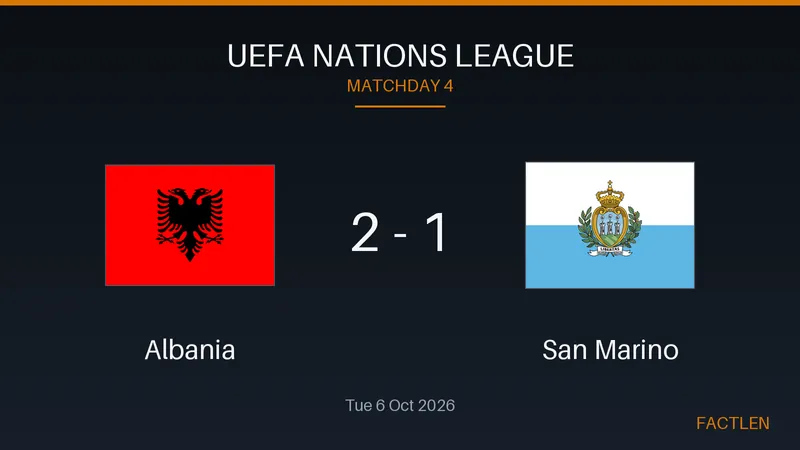
Asllani's 93rd-Minute Penalty Rescues Albania in 2-1 Win Over San Marino
4 sources
UEFA Nations League
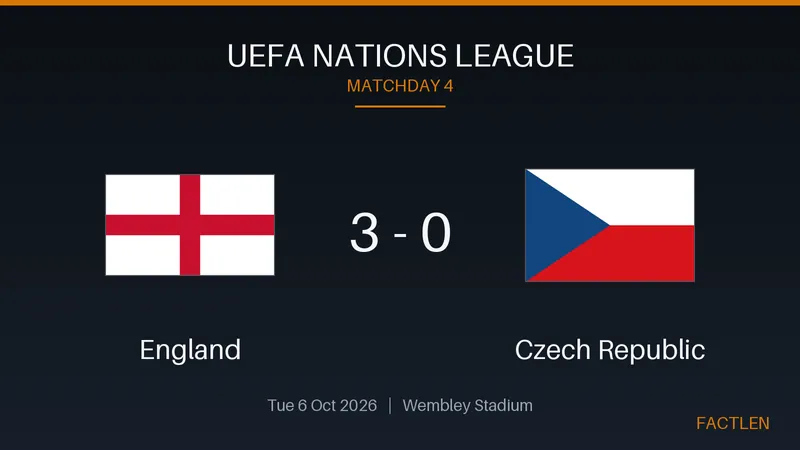
Harry Kane Scores Twice as England Defeats Czech Republic 3-0 in Nations League
7 sources
MLS Playoffs Race
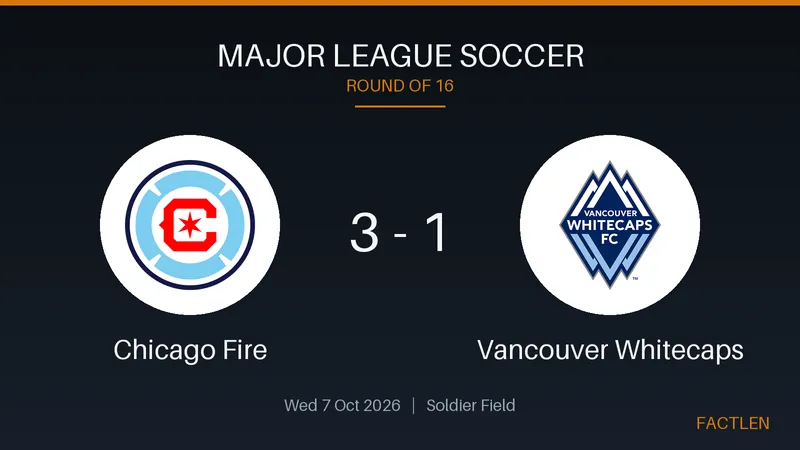
Chicago's Attacking Trio Dismantles Vancouver 3-1 as Fire Surge into Eastern Top Four
6 sources
Player-Manager Conflict
Cristiano Ronaldo Accuses Portugal Coach Jorge Jesus of Broken Promises in Walkout Statement
3 sources
Comments
Every angle. Every day.
Get Sports stories with full source coverage and perspective breakdowns, free every day.