
FDA Moves to Define 'Ultra-Processed Foods,' Setting Stage for Labeling Overhaul
The FDA is finalizing the first federal definition of ultra-processed foods, paving the way for front-of-pack warning labels and industry-wide recipe reformulations.

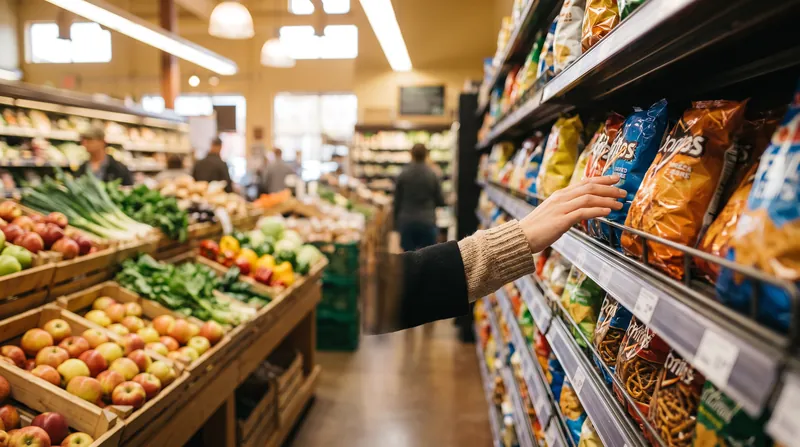
The American grocery store aisle is about to undergo its most significant visual transformation in three decades. The U.S. Food and Drug Administration (FDA) is finalizing a formal federal definition for "ultra-processed foods" (UPFs), a regulatory milestone that will trigger a massive overhaul of how packaged foods are labeled, marketed, and formulated.
For years, the term "ultra-processed" has dominated nutritional science and public health debates, yet it has lacked a legally binding definition in the United States. Following a joint Request for Information with the USDA that garnered thousands of public comments, the FDA has prioritized establishing this definition as a core 2026 deliverable, with a final framework currently awaiting approval from the Office of Management and Budget.
The stakes for public health and the food industry are monumental. An estimated 70% of the packaged products in the U.S. food supply fall into the colloquial category of ultra-processed. More alarmingly, these highly engineered items account for more than 60% of the daily calories consumed by American children, driving a nationwide epidemic of diet-related chronic diseases.
Currently, the scientific community largely relies on the NOVA classification system, a framework developed by researchers in Brazil. NOVA categorizes food into four distinct groups, with Group 4—ultra-processed foods—defined as industrial formulations made entirely or mostly from substances extracted from foods. These products typically contain additives like emulsifiers, artificial colors, and preservatives that are rarely, if ever, used in home kitchens.[2]
However, translating a broad academic framework into enforceable federal policy is proving complex. Donald Prater, the FDA's acting deputy commissioner for food, recently acknowledged that crafting a regulatory definition is "quite challenging." The agency must carefully distinguish between foods that are heavily processed for necessary safety and shelf-life versus those engineered primarily for hyper-palatability and cost reduction.
The core mechanism of the upcoming regulation hinges on front-of-pack (FOP) labeling. Once the FDA establishes the legal parameters of a UPF, the agency plans to mandate standardized visual warnings on the front of packaging. This shift is designed to move the burden of nutritional deciphering away from the dense, mathematical back-of-box Nutrition Facts panel, which many consumers struggle to interpret.
Health and Human Services (HHS) leadership has signaled strong support for a "traffic-light" style system. By using intuitive red, yellow, and green indicators, the new labels would instantly communicate the levels of saturated fat, sodium, and added sugars. The goal is to allow shoppers to gauge a product's health impact at a glance, empowering them to make informed choices without needing a degree in nutrition.
The legislative branch is simultaneously accelerating this shift to ensure it becomes law. Lawmakers recently introduced the Food Labeling Modernization Act of 2026, a sweeping bipartisan bill that would legally mandate these front-of-pack warnings. The legislation also requires prominent disclosures for non-nutritive sweeteners, specifically warning that such ingredients are not recommended for children.[1]
Crucially, the bill seeks to regulate the emerging "Wild West" of "Non-UPF" marketing claims. As public awareness of ultra-processed foods has grown, several third-party certifications have appeared on packaging, each using vastly different criteria. The new legislation would require the FDA to standardize what qualifies as "Non-UPF," preventing companies from applying misleading health halos to heavily engineered snacks.[1]
The food industry is not waiting for the final ink to dry. Anticipating the regulatory shift and responding to changing consumer preferences, major manufacturers are already initiating massive portfolio reformulations to clean up their ingredient lists before the new labels become mandatory.[2]
For example, Bimbo Bakeries USA—the owner of household brands like Sara Lee—recently announced a comprehensive clean-label overhaul. The company is actively stripping artificial preservatives and emulsifiers from five of its top brands. By simplifying their recipes, food conglomerates hope to escape the impending UPF designation and avoid the dreaded "red light" warnings on their packaging.
Yet, the transition is not without scientific and logistical friction. Food scientists and industry advocates caution that processing itself is not inherently detrimental. Certain products, such as fortified infant formulas, plant-based meat alternatives, and commercially baked whole-grain breads, often require extensive processing and emulsification to ensure nutritional density, safety, and affordability.[2]
Regulators face the delicate task of penalizing nutrient-poor, hyper-palatable junk foods without inadvertently stigmatizing accessible staples that lower-income households rely on. As the FDA finalizes its framework, the ultimate success of the overhaul will depend on its ability to balance scientific nuance with consumer clarity, fundamentally rewriting the rules of the American grocery sector.[2]
Key points
- The FDA is finalizing a federal definition for 'ultra-processed foods' (UPFs) to standardize U.S. nutrition policy.
- The definition will pave the way for mandatory front-of-pack warning labels, likely using a traffic-light system.
- An estimated 70% of the U.S. packaged food supply currently falls under the colloquial UPF umbrella.
- New legislation aims to regulate 'Non-UPF' marketing claims to prevent misleading health halos.
Unanswered questions
- It remains unclear exactly which specific additives and processing methods the FDA will include in its final legal definition of a UPF.
- The exact timeline for when mandatory front-of-pack labels will appear on grocery store shelves is still pending White House approval and the subsequent rulemaking process.
How we got here
2019
The NOVA classification system gains international prominence, linking ultra-processed foods to negative health outcomes.
July 2025
The FDA and USDA issue a joint Request for Information to gather public and scientific input on defining UPFs.
January 2026
The FDA lists the establishment of a uniform UPF definition as a top priority deliverable for its Human Foods Program.
June 2026
HHS leadership confirms the FDA's proposed UPF definition has been submitted to the Office of Management and Budget for approval.
July 2026
Lawmakers introduce the Food Labeling Modernization Act of 2026 to mandate front-of-pack warnings based on the upcoming definitions.
- Public Health Advocates
- Argue that UPFs drive chronic disease and demand strict front-of-pack warnings to deter consumption.
- Food Industry & Technologists
- Emphasize that processing ensures food safety and affordability, warning against definitions that stigmatize fortified staples.
- Federal Regulators
- Focused on creating an objective, science-based definition to standardize the chaotic landscape of packaging claims.
Perspectives this story doesn't cover
- Low-income consumers who rely heavily on affordable, shelf-stable processed foods due to food desert conditions.
- Small-scale food manufacturers who may struggle with the financial burden of rapid recipe reformulation and new packaging compliance.
Sources
Source coverage
2 outlets
3 viewpoints surfaced


- [1]Center for Science in the Public InterestPublic Health Advocates
The Food Labeling Modernization Act of 2026 Would Overhaul Food Labels
Read on Center for Science in the Public Interest → - [2]FoodChain IDFood Industry & Technologists
The US FDA is poised to formally define ultra-processed foods (UPFs)
Read on FoodChain ID →
More in Lifestyle
See all →Food Inflation
JPMorgan and UN Forecast 2027 Food Inflation Spike: Two Strategies to Protect Your Grocery Budget
6 sources

Produce Safety
Pre-Washed vs. Whole-Head Lettuce: The Food Safety and Convenience Trade-Off
4 sources

GLP-1 Economy
Nestlé Deploys AI to Engineer High-Density Foods for GLP-1 Users
8 sources
Produce Safety
Massive Jalapeño Recall Highlights the Produce Trade-Off: Pre-Cut Convenience vs. Whole-Vegetable Control
7 sources
Comments
Every angle. Every day.
Get Lifestyle stories with full source coverage and perspective breakdowns, free every day.