
Landmark Study: Digital Tools Cut GP Medication Errors by 46% and Patient Harm by 17%
A comprehensive review of 74 clinical trials reveals that integrated digital systems in primary care significantly reduce prescribing errors and prevent adverse patient events. However, researchers warn that poorly implemented software can trigger "alert fatigue," underscoring the need for tools that fit naturally into clinical workflows.


- Patient Safety Advocates
- Emphasize the massive potential of digital tools to prevent physical harm and optimize prescribing at scale.
- Frontline Clinicians
- Highlight the risks of alert fatigue and emphasize that technology must integrate seamlessly into busy workflows to be effective.
- Health Systems Analysts
- Focus on the data showing that multi-component systems combining real-time alerts with retrospective audits yield the best results.
Why this matters
Medication errors are a leading cause of preventable injury in healthcare, often resulting in severe drug interactions or hospital admissions. This definitive evidence shows that modernizing primary care with smart digital tools can drastically reduce these risks, directly protecting patients from harm.
Key points
- A systematic review of 74 clinical trials found digital tools improve GP medication safety by 46%.
- The implementation of these systems reduced physical patient harm and adverse events by 17%.
- Non-medication safety processes, such as diagnostic checks and lab monitoring, improved by 77%.
- Multi-component systems combining real-time alerts with data audits proved most effective.
- Researchers warn that poorly designed software can cause 'alert fatigue,' leading doctors to ignore critical warnings.
- Successful digital integration requires tools that fit naturally into existing clinical workflows.
Medication errors in primary care represent one of the most persistent and preventable challenges in global healthcare. Every day, the complex interplay of polypharmacy, aging populations, and brief consultation windows creates opportunities for prescribing mistakes that can lead to severe adverse drug reactions and unnecessary hospital admissions. For decades, health systems have sought a reliable method to catch human error before a flawed prescription ever reaches the pharmacy counter.[4]
A definitive answer may have finally arrived. Published on August 3, 2026, in the journal BMC Medicine, a massive systematic review led by researchers at the University of Manchester has provided the most comprehensive evidence to date that digital tools can effectively solve this crisis.[1][2]
Funded by the National Institute for Health and Care Research (NIHR), the landmark study analyzed data from 74 randomized controlled trials spanning 23 years. By evaluating the real-world impact of digital patient safety tools across thousands of clinics and diverse patient populations worldwide, the researchers established a clear, evidence-based mandate for the digitization of primary care.[1][2]
The headline findings are striking. Clinics utilizing integrated digital interventions saw a 46 percent improvement in medication safety processes compared to standard care. This massive leap forward was driven primarily by dramatic reductions in high-risk prescribing, incorrect dosing, and dangerous drug-to-drug interactions that traditional manual checks often miss.[1][2][3]
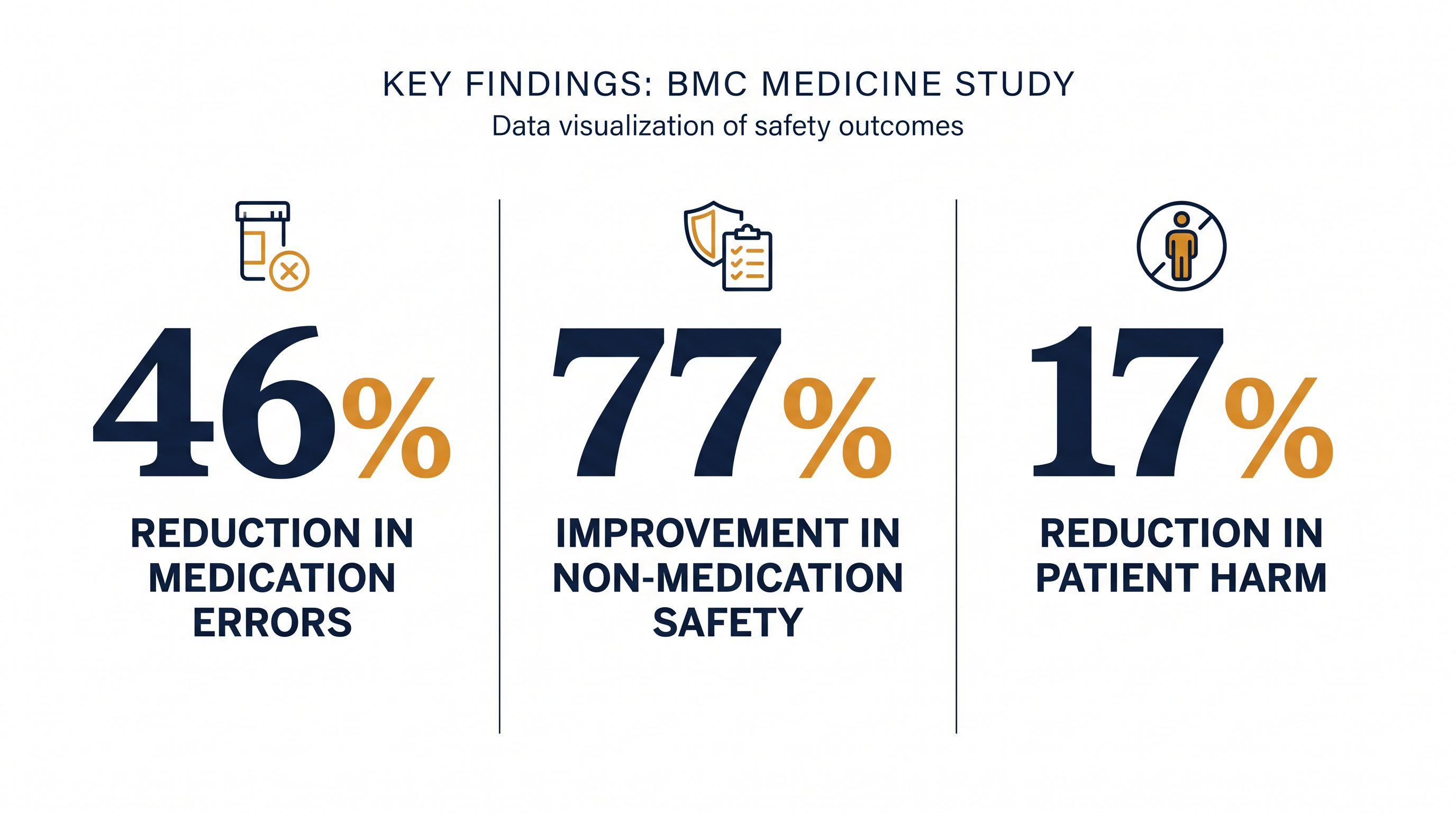
The benefits of these digital systems extended far beyond the prescription pad. The researchers found a 77 percent improvement in non-medication safety processes. These enhancements included significantly faster diagnostic checks and more timely laboratory monitoring, which are critical for patients managing chronic conditions on complex, multi-drug regimens.[1][2]
Most importantly, these digital safety nets translated directly into tangible human outcomes. The implementation of these tools reduced actual physical patient harm and adverse events by 17 percent. By catching errors early, the technology actively prevented unnecessary hospitalizations, severe asthma attacks, and toxic drug reactions that would have otherwise devastated patients' lives.[1][2]
The engine driving these improvements is the Clinical Decision Support System (CDSS). These intelligent software modules run quietly in the background of electronic health records, instantly cross-referencing a patient’s new prescription against their entire medical history, current medication list, and recent laboratory results to flag potential dangers before the doctor finalizes the order.[1][5][7]
However, the study revealed a crucial nuance regarding how these systems are deployed: standalone alerts are rarely enough. The data showed that the most successful setups were "multi-component" systems. When real-time CDSS alerts were paired with retrospective audit and feedback tools—allowing clinics to regularly review their overall safety data and prescribing habits—the reduction in clinical errors was significantly higher than with single-component software.[1][3][7]
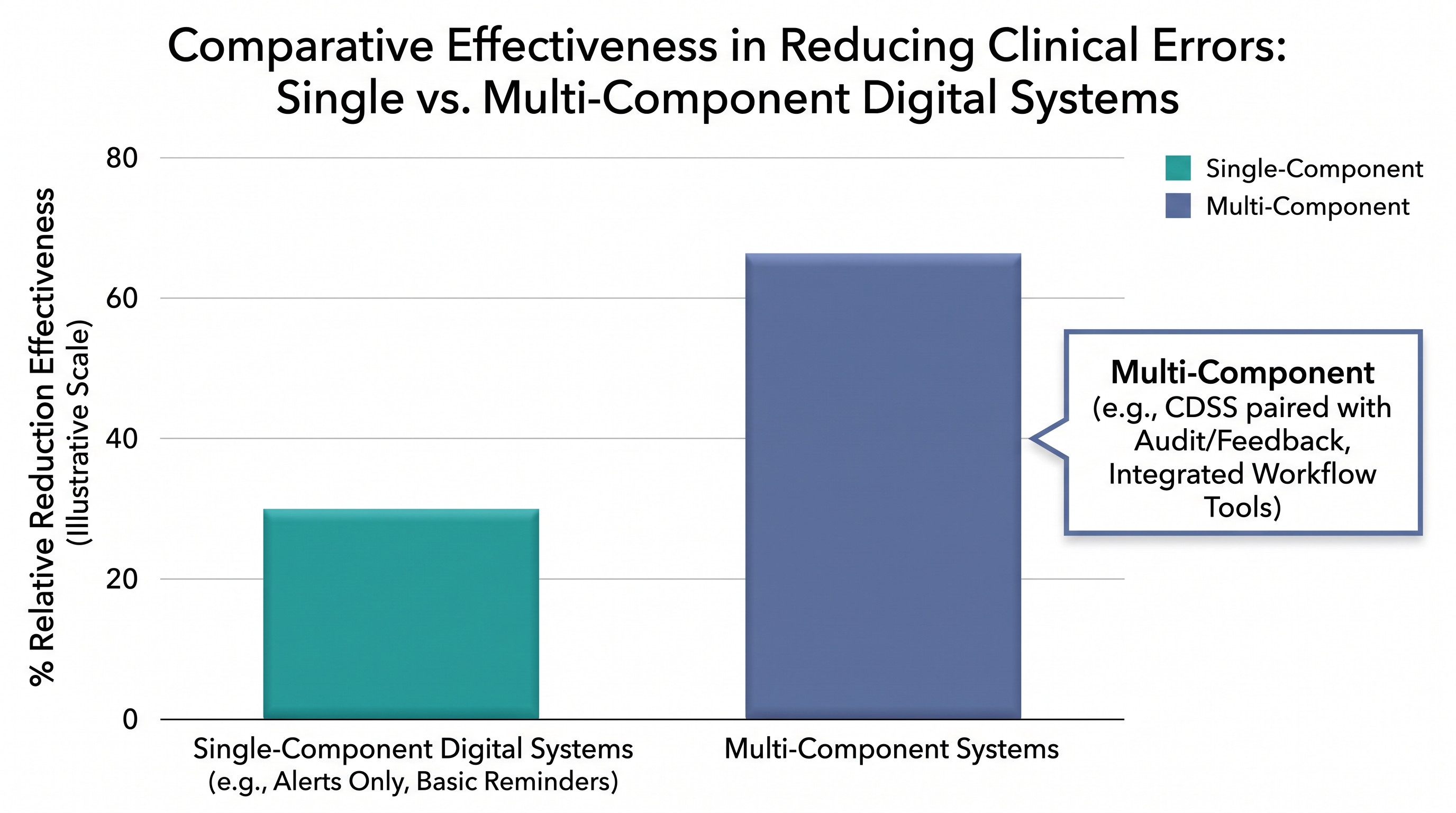
However, the study revealed a crucial nuance regarding how these systems are deployed: standalone alerts are rarely enough.
A prime example of this multi-component success is the UK-developed PINCER programme. PINCER utilizes sophisticated algorithms to search electronic health records and flag patients who are at a statistically high risk of medication-related harm. This allows pharmacists and general practitioners to intervene proactively, correcting the course of treatment before the patient ever experiences an adverse symptom.[2][3][6]
The implications of these findings align perfectly with global public health objectives. The World Health Organization has long targeted medication errors as a primary focus of its "Medication Without Harm" initiative, noting that unsafe medication practices are a leading cause of injury in healthcare systems globally. The Manchester study provides a clear, scalable blueprint for achieving the WHO's ambitious safety goals.[4]
Yet, the transition to a fully digital safety net is not without friction. The review noted that more than 40 percent of the analyzed studies reported significant implementation barriers. Chief among these obstacles is "alert fatigue," a phenomenon that has emerged as the primary threat to the success of clinical decision support systems.[1][2][3]
Alert fatigue occurs when clinical software is poorly optimized, bombarding doctors with low-priority warnings for every minor, theoretical drug interaction. Overwhelmed by excessive pop-ups during busy ten-minute consultations, clinicians inevitably develop a habit of blindly dismissing alerts just to keep their workflow moving—a dangerous conditioning that can lead to critical, life-saving warnings being ignored.[3][5][7]
The real-world consequences of bad user interface design can be devastating. In January 2026, NHS England highlighted the severe dangers of alert fatigue when a decision-support system was intentionally disabled by staff because it was deemed too disruptive. That specific software override tragically contributed to a patient's fatal paracetamol overdose, underscoring that technology must assist clinicians, not annoy them.[3]
Dr. Jung Yin Tsang, the lead researcher of the Manchester study, emphasized that the future of safer care relies on much more than just installing new software. The most effective interventions identified in the review were those that fitted naturally into existing clinical workflows and were heavily supported by comprehensive staff training, strong inter-professional relationships, and deep organizational engagement.[2][7]
Frontline medical professionals echo this sentiment. Heidi Wright, the practice and policy lead for England at the Royal Pharmaceutical Society, praised the 46 percent reduction in errors as a monumental achievement for patient safety. However, she cautioned that technology alone is not a silver bullet; it requires the nuanced clinical judgment of doctors and pharmacists to interpret the data and make the final call.[3][6]
Beyond saving lives, reducing medication errors alleviates a massive financial burden on strained health systems. Preventable adverse drug events cost billions of dollars annually in emergency room visits, extended hospital stays, and complex remedial treatments. By preventing these events at the primary care level, digital tools offer a highly cost-effective intervention that pays for itself many times over.[4][5][7]
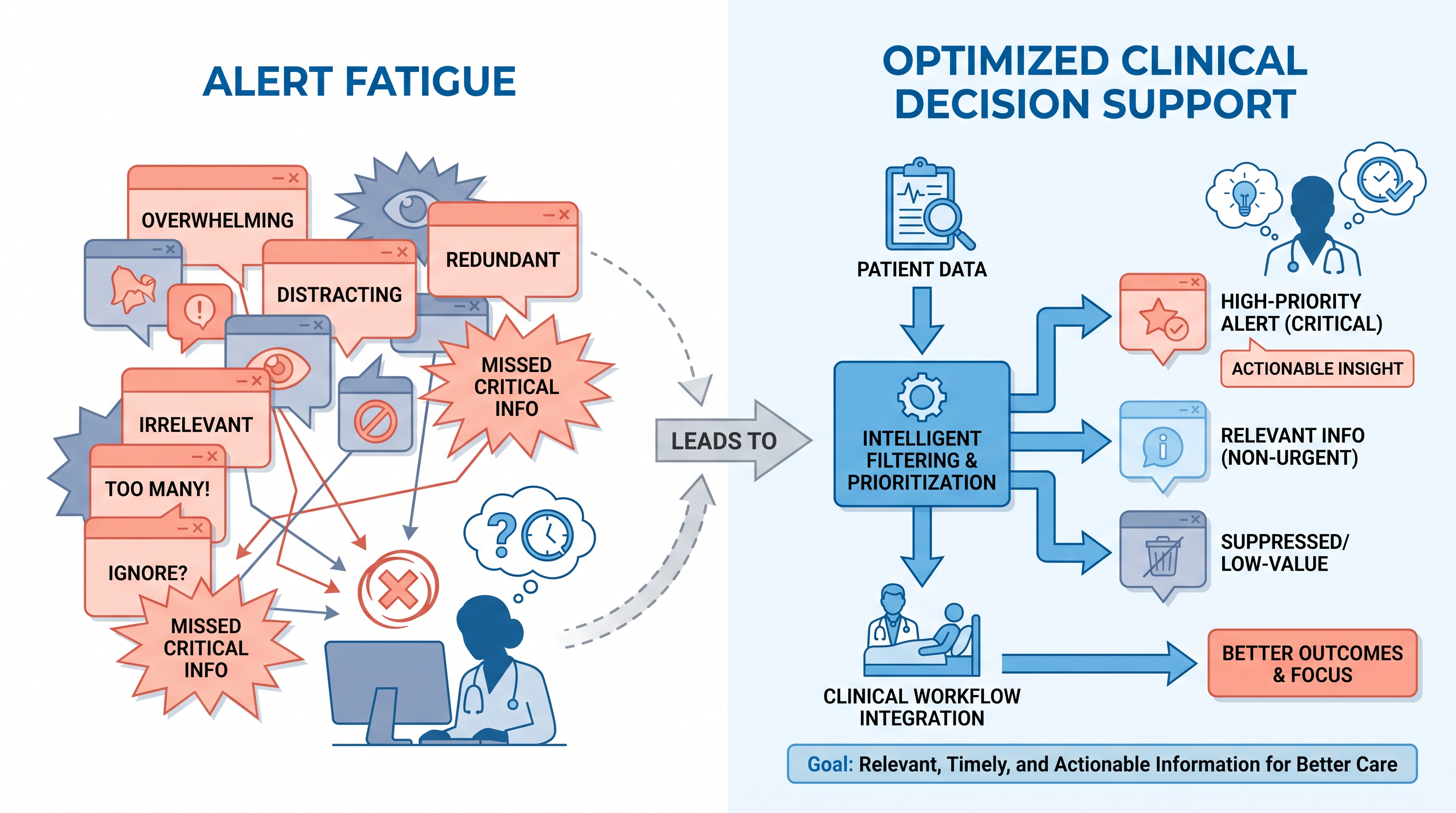
As health systems worldwide look to modernize—including the NHS as it rolls out its ambitious 10-Year Health Plan—this research provides a clear, evidence-backed mandate. Investment must shift away from fragmented, single-use software and toward intelligent, integrated systems that prioritize user experience and workflow harmony.[2][7]
The era of relying solely on human memory to navigate the ever-expanding complexities of modern pharmacology is coming to an end. By proving definitively that well-designed digital tools can cut medication errors nearly in half and measurably reduce patient harm, this landmark study marks a turning point in primary care—one where technology acts as an ever-vigilant, silent partner to the physician.[1][7]
How we got here
1990s-2000s
Early electronic health records introduce basic, single-component alert systems for prescribing.
2010s
The rise of polypharmacy increases the complexity of primary care, leading to higher rates of preventable adverse drug events.
2017
The World Health Organization launches the 'Medication Without Harm' initiative to halve severe, preventable medication-related harm globally.
January 2026
NHS England highlights the dangers of alert fatigue after a disabled decision-support system contributes to a fatal medication error.
August 3, 2026
The University of Manchester publishes a landmark review of 74 trials, proving digital tools cut GP medication errors by 46%.
Viewpoints in depth
Patient Safety Advocates' View
Focus on the massive potential of digital tools to prevent physical harm and optimize prescribing at scale.
For public health officials and patient safety advocates, the 46 percent reduction in medication errors is a watershed moment. This camp argues that human memory is fundamentally insufficient to manage the complexities of modern polypharmacy, making digital safety nets a moral imperative. They point to scalable successes like the UK's PINCER programme as proof that systemic digitization can drastically reduce hospital admissions and save lives. Their primary focus is on accelerating the adoption of these tools across all primary care settings, viewing the initial software costs as negligible compared to the billions saved by preventing adverse drug events.
Frontline Clinicians' View
Highlight the risks of alert fatigue and emphasize that technology must integrate seamlessly into busy workflows.
General practitioners and pharmacists generally welcome digital assistance, but they are acutely aware of the friction poorly designed software introduces. This camp emphasizes the very real danger of 'alert fatigue,' where an endless barrage of low-priority pop-ups conditions doctors to ignore critical warnings. They argue that technology is only as good as its user interface; if a system disrupts a brief ten-minute patient consultation, it will be bypassed or disabled. For frontline workers, the priority is not just more software, but smarter, highly optimized tools that respect clinical workflows and reduce cognitive burden rather than adding to it.
Health Systems Analysts' View
Focus on the data showing that multi-component systems yield the best results.
Health informatics experts and systems analysts focus on the structural findings of the BMC Medicine review. They highlight that single-component interventions—such as a standalone alert system—are often insufficient to drive long-term behavioral change. Instead, this camp advocates for 'multi-component' architectures that pair real-time Clinical Decision Support Systems (CDSS) with retrospective audit and feedback loops. By allowing clinics to review their aggregate safety data, these integrated systems address both immediate prescribing errors and broader systemic flaws, creating a continuous cycle of quality improvement.
What we don't know
- How the rapid integration of generative AI will impact the accuracy and user experience of future Clinical Decision Support Systems.
- Whether the upfront costs of implementing multi-component digital systems will be fully subsidized for smaller, independent GP practices.
- The exact threshold at which software alerts transition from being helpful to causing dangerous alert fatigue.
Key terms
- Polypharmacy
- The concurrent use of multiple medications by a single patient, which increases the risk of adverse drug interactions.
- Clinical Decision Support System (CDSS)
- Health information technology that provides clinicians with real-time, intelligently filtered data and alerts to enhance patient care.
- Alert Fatigue
- Sensory overload experienced by clinicians when exposed to an excessive number of software warnings, leading to desensitization and ignored alerts.
- Adverse Drug Event (ADE)
- An injury or harm resulting from medical intervention related to a drug, which can often be prevented with proper safety checks.
- Systematic Review
- A rigorous research method that collects and analyzes data from multiple independent studies to draw a comprehensive, evidence-based conclusion.
Frequently asked
What did the BMC Medicine study find about medication errors?
The study found that integrated digital tools in primary care improved medication safety by 46% and reduced physical patient harm by 17% compared to standard care.
What is a Clinical Decision Support System (CDSS)?
A CDSS is a software tool integrated into electronic health records that cross-references a patient's prescriptions against their medical history and lab results to flag potential drug interactions or incorrect dosages.
What is 'alert fatigue' in healthcare?
Alert fatigue occurs when doctors are overwhelmed by excessive, low-priority software warnings, leading them to blindly dismiss pop-ups and potentially miss critical, life-saving alerts.
Why are multi-component digital systems better?
The study showed that pairing real-time alerts with retrospective data audits allows clinics to catch immediate errors while also reviewing and improving their long-term prescribing habits.
Sources
Source coverage
7 outlets
3 viewpoints surfaced







[1]BMC MedicinePatient Safety Advocates
Effectiveness of digital health interventions on patient safety in primary care: a systematic review of 74 trials
Read on BMC Medicine →[2]National Institute for Health and Care Research (NIHR)Patient Safety Advocates
Simple, integrated digital tools used in GP surgeries can increase patient safety
Read on National Institute for Health and Care Research (NIHR) →[3]The Pharmaceutical JournalFrontline Clinicians
Digital tools reduce medication errors by 46%, study finds
Read on The Pharmaceutical Journal →[4]World Health OrganizationPatient Safety Advocates
Medication Without Harm: WHO Global Patient Safety Challenge
Read on World Health Organization →[5]Journal of the American Medical Informatics Association (JAMIA)Health Systems Analysts
How effective are electronic medication systems in reducing medication error rates?
Read on Journal of the American Medical Informatics Association (JAMIA) →[6]Royal Pharmaceutical SocietyFrontline Clinicians
Improving Patient Safety and Digital Pharmacy
Read on Royal Pharmaceutical Society →[7]Factlen Editorial TeamHealth Systems Analysts
Synthesis by Factlen editorial team
Read on Factlen Editorial Team →

Every angle. Every day.
Get health stories with full source coverage and perspective breakdowns delivered to your inbox.