
Cycling Injury Report: Roglič Races the Clock for Vuelta as Reusser Escapes Major Damage
Primož Roglič is targeting a historic fifth Vuelta a España title despite a recent training crash, while Marlen Reusser avoids serious injury at the Tour de France Femmes.
By Jackson Reed

The countdown to the final Grand Tour of the 2026 season is officially on, but for several of the peloton's top stars, the most pressing race is currently happening off the bike. Rehabilitation, medical assessments, and structured recovery have taken center stage in the professional cycling world this week, highlighting the immense physical resilience required to survive the elite calendar. As teams finalize their rosters for the late-summer objectives, the medical tents are proving just as decisive as the training camps in shaping the upcoming start lists.[1][5]
At the forefront of this injury watch is Primož Roglič, whose highly anticipated bid for a record-tying fifth Vuelta a España title recently hit a literal roadblock. The Red Bull-Bora-Hansgrohe team leader was struck by a car during a high-altitude training block in Livigno, Italy, sustaining severe bruising to his legs and hip. The incident immediately threw his late-season schedule into disarray, forcing the team to reevaluate his readiness for the grueling three-week Spanish race that has defined much of his career success.[1][2]
While the collision forced the 36-year-old Slovenian to withdraw from two critical preparation races—the Clásica San Sebastián and the Vuelta a Burgos—the medical prognosis remains cautiously optimistic. Comprehensive assessments have not revealed any underlying bone fractures or severe muscle tears, leaving his primary Vuelta hopes intact.
For a rider who has endured a staggering amount of bad luck and traumatic crashes throughout his career, avoiding structural damage in a vehicle collision is a significant victory in itself. Team doctors are closely monitoring his daily recovery to ensure the heavy hematomas do not impede his pedal stroke.[3]
Taking to social media to share striking images of his heavy bruising, Roglič maintained his characteristic stoicism in the face of adversity. "Not the best scenario, but it's life, eh," he wrote to his supporters, confirming that his focus remains entirely on the Spanish Grand Tour, which departs from Monaco on August 22. "Now it's all systems go towards La Vuelta, we work and hope things will turn around." His resilient mindset underscores the psychological fortitude required to repeatedly bounce back from high-speed trauma.[1][2]
Missing the five-day Vuelta a Burgos tune-up deprives Roglič of crucial race rhythm, a significant factor for team management when evaluating a rider's readiness to handle the daily attrition of a Grand Tour. Without those competitive kilometers in his legs, he will have to rely heavily on his extensive baseline fitness and tactical experience. However, management must weigh the risk of racing on bruised tissues against the reward of form-building, ultimately deciding that cautious rest provides the most viable pathway to the start line in Monaco.[3]
Meanwhile, at the Tour de France Femmes, the Movistar team breathed a collective sigh of relief after a high-speed scare involving Swiss powerhouse Marlen Reusser. During the chaotic closing 21 kilometers of the opening stage into Lausanne, Reusser was caught in a multi-rider crash triggered when her teammate, Arlenis Sierra, slid out on a treacherous corner curb. The incident sent a ripple of panic through the peloton, as Reusser is widely considered one of the most vital engines and stage contenders in the women's field.
Reusser dramatically flipped over her handlebars in the pileup, a heart-stopping moment that could have easily ended her Tour campaign on day one. Yet, in a remarkable testament to the durability of professional cyclists, both riders quickly remounted their bikes. Assisted by teammate Sara Martin, who dropped back to pace them, Reusser seamlessly reconnected with the main field with 17 kilometers remaining. She managed to avoid any time loss or serious injury, keeping Movistar's tactical ambitions fully intact for the remainder of the race.
Unfortunately, not all recent crashes have ended with a quick return to the saddle. At the Tour of Denmark, Lotto-Intermarché's Toon Aerts suffered a devastating season-ending blow during a highly contested final-stage sprint. Aerts crashed heavily in the closing meters, and while he bravely crossed the finish line, subsequent medical examinations confirmed a double fracture of the kneecap alongside a scaphoid fracture in his wrist. The severe injuries required immediate surgical intervention, abruptly halting what had been a highly successful road campaign for the Belgian rider.[4]
Despite the severity of the double fractures, Aerts' projected recovery timeline offers a distinct silver lining for his supporters. The Belgian squad expects him to complete his intensive rehabilitation in time to return to competition in late October. Because Aerts splits his calendar between road racing and cyclocross, this timeline keeps his winter cyclocross ambitions firmly on track. His ability to pivot focus from a ruined road season to a hopeful winter comeback highlights the unique adaptability required in modern multi-discipline cycling.[4]
Despite the severity of the double fractures, Aerts' projected recovery timeline offers a distinct silver lining for his supporters.
The stark contrast between Roglič's deep bruising, Reusser's miraculous near-miss, and Aerts' complex fractures underscores the highly unpredictable nature of cycling injuries. For riders facing actual structural damage, such as Ineos Grenadiers' Josh Tarling—who recently fractured his collarbone at the Tour Auvergne-Rhône-Alpes—the modern rehabilitation protocol is incredibly structured. Elite teams no longer rely on simple rest; they deploy advanced sports science to accelerate healing while meticulously preventing the loss of cardiovascular fitness during the crucial weeks off the road.[5]
Sports medicine experts note that while a standard collarbone fracture requires a full six to eight weeks for complete radiographic bone healing, elite cyclists rarely wait that long to resume training. Riders often return to indoor trainer riding within three to four weeks, provided they keep all weight off their upper extremities. The key to these rapid comebacks is maintaining aerobic capacity through targeted cross-training—such as swimming or aqua jogging—while strictly managing the mechanical load on the healing tissues to prevent catastrophic reinjury.[6]
As the professional peloton shifts its collective focus toward the late-summer classics, the World Championships, and the Vuelta a España, the efficiency of these medical interventions will be tested on the global stage. For recovering stars like Roglič and Tarling, the coming weeks will not be measured in high-speed descents or summit finishes, but in the quiet, steady, and often painful milestones of physical therapy. Their ability to win the race inside the clinic will ultimately determine their chances of winning on the road.[1][5][6]
Key points
- Primož Roglič sustained severe bruising after being hit by a car during training, forcing him to miss key Vuelta tune-up races.
- Medical assessments showed no fractures for Roglič, keeping his hopes for a fifth Vuelta title alive.
- Marlen Reusser avoided serious injury after a high-speed crash at the Tour de France Femmes, quickly rejoining the peloton.
- Toon Aerts suffered a season-ending double kneecap fracture at the Tour of Denmark but aims to return for the cyclocross season.
How we got here
July 2026
Josh Tarling fractures his collarbone at the Tour Auvergne-Rhône-Alpes, beginning a race against time to recover.
July 31, 2026
Primož Roglič announces he was hit by a car during a training ride in Livigno, sustaining severe bruising.
August 1, 2026
Marlen Reusser crashes but quickly recovers during Stage 1 of the Tour de France Femmes.
August 2, 2026
Toon Aerts suffers a double kneecap fracture during the final stage of the Tour of Denmark.
- Medical & Rehab Specialists
- Focuses on structured return protocols, tissue healing timelines, and the importance of cross-training.
- Team Management & Strategists
- Weighs the necessity of race rhythm against the risk of aggravating injuries before a Grand Tour.
- Rider & Fan Optimism
- Emphasizes the psychological resilience of the athletes and their drive to meet major seasonal goals despite setbacks.
Perspectives this story doesn't cover
- Race Organizers
- Equipment Manufacturers
Sources
Source coverage
6 outlets
3 viewpoints surfaced






- [1]Outside OnlineRider & Fan Optimism
Primož Roglič hit by car, misses key Vuelta a España tune-up races
Read on Outside Online → - [2]road.ccRider & Fan Optimism
Primož Roglič hit by driver on training ride ahead of Vuelta a España
Read on road.cc → - [3]KarlobagTeam Management & Strategists
Car hits Primož Roglič: injury disrupts preparations for historic bid for fifth Vuelta title
Read on Karlobag → - [4]IDL Pro CyclingTeam Management & Strategists
Toon Aerts' road season over after double kneecap fracture in Tour of Denmark crash
Read on IDL Pro Cycling → - [5]Cycling Up To DateMedical & Rehab Specialists
Josh Tarling - Another setback for Netcompany Ineos
Read on Cycling Up To Date → - [6]Roadman CyclingMedical & Rehab Specialists
Coming Back From Cycling Injuries: Structured Rehab and Return Timelines
Read on Roadman Cycling →
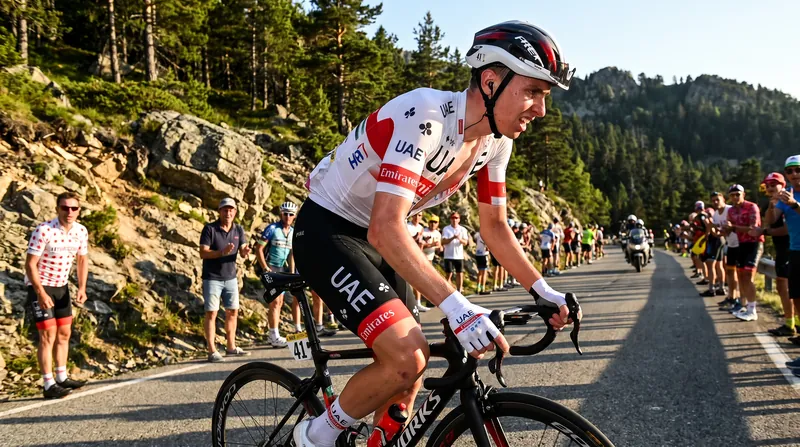
More in Sports
See all →Power ranking
Post-Montreal Cycling Power Rankings: McNulty and Vollering Surge as Pogačar Holds the Throne
5 sources
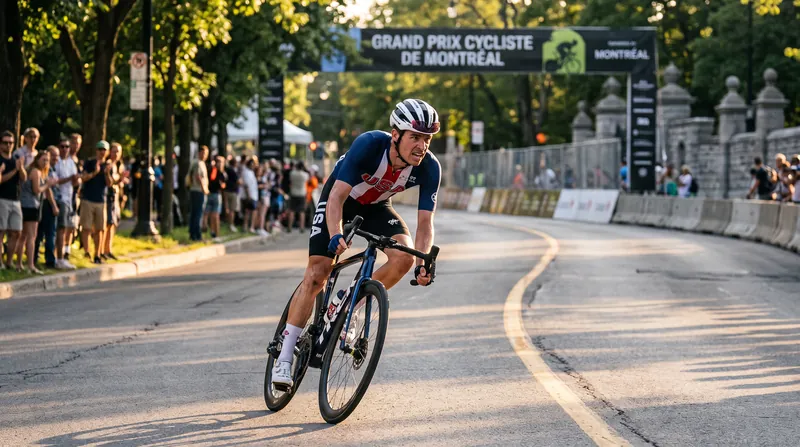
Standings
Late-Season Surge: Philipsen Overtakes Pidcock in UCI World Rankings as Martinez Enters Top 10
5 sources
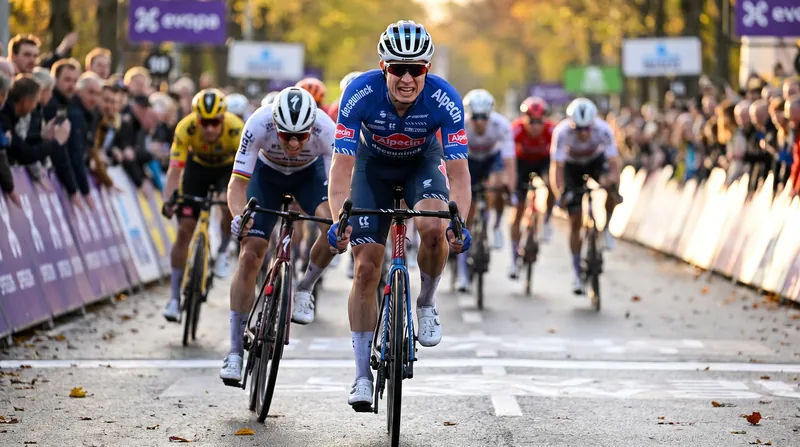
Trade
WorldTour Transfer Window: Lidl-Trek Secures Felix Gall as Ben Turner and Pfeiffer Georgi Headline Major 2027 Moves
7 sources
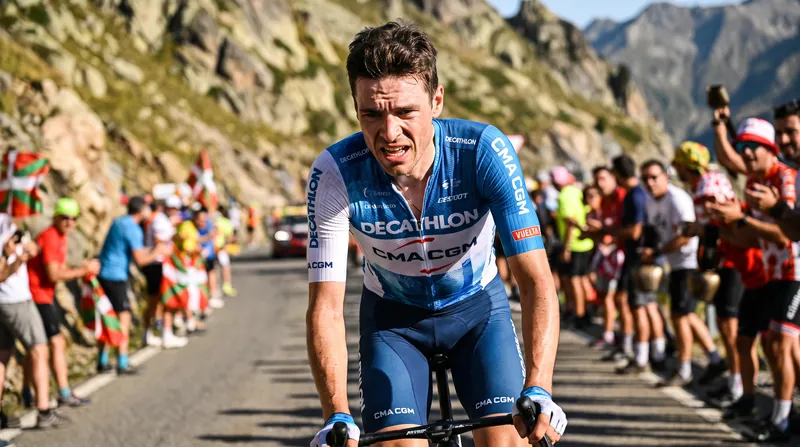
Storyline
Isaac del Toro Wins Grand Prix de Montréal, Stakes Claim as World Championship Favorite
6 sources
Comments
Every angle. Every day.
Get Sports stories with full source coverage and perspective breakdowns, free every day.