
Global Cycling Injury Report: Froome Retires, De Lie Abandons Tour de France, and Roldan Sidelined
The opening week of July has reshaped the professional cycling landscape, marked by Chris Froome's injury-induced retirement, high-profile abandons at the Tour de France, and a severe training crash for Mara Roldan.
By Ryder James
Share this story
The opening week of July has delivered a brutal reminder of professional cycling's immense physical toll, fundamentally reshaping the peloton across the Tour de France, the Giro d'Italia Women, and the broader UCI WorldTour. While fans naturally focus their attention on the battle for the yellow jersey and stage victories, the medical car has arguably been the most pivotal vehicle in the convoy.
Injuries and sudden illnesses are the invisible architects of Grand Tour standings, capable of instantly derailing months of meticulous preparation. From high-speed crashes on technical descents to severe heat exhaustion, the sheer attrition rate of the sport has taken center stage, forcing teams to rapidly rewrite their tactical playbooks as key domestiques and sprinters are forced to abandon.
The most significant medical news of the week came off the race course, as four-time Tour de France champion Chris Froome officially announced his retirement from professional cycling. Froome, who had spent years fighting to return to his peak form following a devastating 2019 accident, revealed the harrowing extent of a more recent training crash he suffered in southern France in August 2025.
While the public was previously aware of his broken ribs, collapsed lung, and fractured lumbar vertebra, Froome disclosed a far more severe complication. Blunt chest trauma from the 30 mph collision with a road sign had caused a rupture of the pericardium—the protective sac surrounding the heart.
"Surgery revealed the critical injury... even then, I knew it was over," Froome admitted to broadcasters, bringing a quiet and medically forced end to one of the most dominant Grand Tour careers in history. The 41-year-old leaves behind a legacy that includes four Tour de France titles, two Vuelta a España victories, and a Giro d'Italia crown, placing him among the absolute elite of the sport. His retirement underscores the catastrophic risks riders face even during routine training rides, a reality that the current peloton knows all too well.
Back on the competitive road, the 2026 Tour de France has been a war of attrition from the very first stage in Barcelona. Groupama-FDJ United suffered an immediate and costly blow during the opening team time trial when Clément Berthet lost his balance at high speed.
The crash brought down his teammate Guillaume Martin and cost the squad valuable seconds. More importantly, the physical damage forced Berthet to become the first official abandon of the 2026 Tour, leaving his team a crucial man down before the peloton had even reached the high mountains.
The chaos only amplified as the race moved into Stage 2, where a nervous and twitchy peloton saw eight riders hit the deck in a massive pile-up against the guardrails. The crash ensnared notable names including Biniam Girmay and Dorian Godon.
While Girmay was able to quickly remount and signal to the medical motorbike that he was uninjured, others were not so lucky. XDS Astana's Aaron Gate was forced to visit the medical car for a nasty facial injury that required stitches post-stage, though the resilient rider managed to survive the day and stay in the race.
By Stage 3, the combination of extreme heat and the relentless pace claimed one of the peloton's brightest young sprinting talents. Lotto-Intermarché's Arnaud De Lie, who had been battling a severe stomach infection prior to the Grand Départ, found himself dropped early as temperatures soared toward a suffocating 40°C (104°F).
Supported by his dedicated teammate Baptiste Veistroffer, De Lie fought desperately to stay within the time limit, pushing his body to the absolute brink. However, the physical deficit and systemic fatigue proved too much to overcome, and he was forced to step off the bike at the feed zone.
"This stomach infection weakened me a lot," De Lie said after officially abandoning the race. "I gave everything I had over the first two stages." For the 24-year-old Belgian, the withdrawal was a heartbreaking case of déjà vu, mirroring his early exit from the Giro d'Italia earlier in the year under remarkably similar circumstances. His departure deprives the Tour of a major contender for the flat and rolling sprint finishes, forcing Lotto-Intermarché to pivot their entire strategy toward breakaway hunting.
Stage 3 also featured a massive pile-up that ensnared key domestiques for several general classification favorites, temporarily blocking the road and causing panic in the bunch. Visma | Lease a Bike's Bruno Armirail went down hard, suffering a painful knee injury and a broken cycling shoe. In a display of sheer stubbornness, the Frenchman rode nearly 10 kilometers with the broken footwear before finally receiving a replacement, eventually finishing the stage over 30 minutes behind the leaders.
Netcompany INEOS rider Thymen Arensman was also caught in the Stage 3 carnage, requiring a massive, sustained pacing effort from teammates Filippo Ganna, Kévin Vauquelin, and Joshua Tarling to rejoin the main group. Despite a heavily bandaged and bleeding knee, Arensman managed an impressive 19th-place finish on the stage. He later took to social media to call his teammates "absolute legends" for the rescue effort, highlighting the intense camaraderie forged in the crucible of Grand Tour crashes.
Beyond the men's Grand Tour, the women's peloton received highly distressing news regarding Picnic PostNL rider Mara Roldan. The 22-year-old Canadian had just abandoned the Giro d'Italia Women following a high-speed crash into a caravan during Stage 3, an incident that left her in too much pain to continue. Just as she was beginning to recover from that trauma, she suffered a freak and severe accident during a routine training ride back home.[1]
Roldan was involved in a head-on collision with a child riding a city bike in the wrong direction on a bike path, an impact that threw her to the ground and resulted in a fractured skull. "Sometimes it feels like the universe keeps dealing me blows," Roldan shared alongside photos of herself in a neck brace.
Facing a lengthy and uncertain rehabilitation, her injury serves as a stark reminder of the vulnerability of cyclists, whether they are navigating the chaotic sprint of a Grand Tour or simply training on a local bike path.
As the WorldTour calendar pushes deeper into the grueling summer months, these injuries underscore the fragile line between peak athletic performance and season-ending disaster. For the riders still in the saddle at the Tour de France and the Giro d'Italia Women, the daily goal is no longer just winning—it is survival. The medical updates will continue to dictate the narrative of the season, proving once again that in professional cycling, the road itself is often the most unforgiving opponent.
Key points
- Chris Froome officially retired from professional cycling due to a ruptured pericardium sustained in a 2025 training crash.
- Arnaud De Lie abandoned the Tour de France on Stage 3 after battling a severe stomach infection in 40°C heat.
- Clément Berthet became the first rider to abandon the 2026 Tour de France following a Stage 1 crash.
- Bruno Armirail and Thymen Arensman both survived major Stage 3 crashes, finishing the day with battered knees.
- Picnic PostNL rider Mara Roldan suffered a skull fracture in a training collision shortly after crashing out of the Giro d'Italia Women.
How we got here
August 2025
Chris Froome suffers a devastating training crash in southern France, rupturing his pericardium.
July 2, 2026
Mara Roldan reports a skull fracture from a head-on training collision with a city bike.
July 3, 2026
Chris Froome officially announces his retirement from professional cycling.
July 4, 2026
Clément Berthet abandons the Tour de France following a high-speed Stage 1 crash.
July 6, 2026
Arnaud De Lie withdraws during Stage 3 due to a severe stomach infection and extreme heat.
- Team Medical Staff
- Medical staff prioritize long-term health over immediate race results, often making the unpopular decision to pull a rider.
- General Classification Contenders
- GC leaders view the chaotic opening stages as a survival test where avoiding crashes is just as critical as climbing ability.
- The Riders
- Professional cyclists accept immense physical suffering as a baseline requirement of their profession.
Perspectives this story doesn't cover
- Race Organizers
- Equipment Manufacturers
Sources
Source coverage
1 outlets
3 viewpoints surfaced

- [1]PezCycling NewsGeneral Classification Contenders
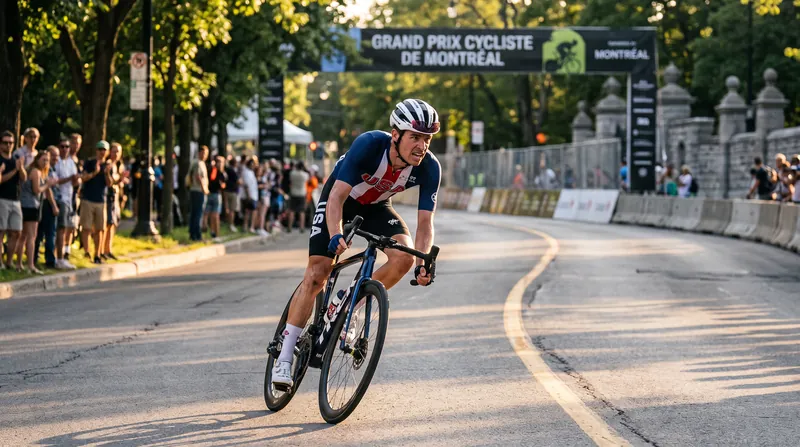
Teams Announced for the Giro d'Italia Women
Read on PezCycling News →
More in Sports
See all →Standings
Late-Season Surge: Philipsen Overtakes Pidcock in UCI World Rankings as Martinez Enters Top 10
5 sources
Trade
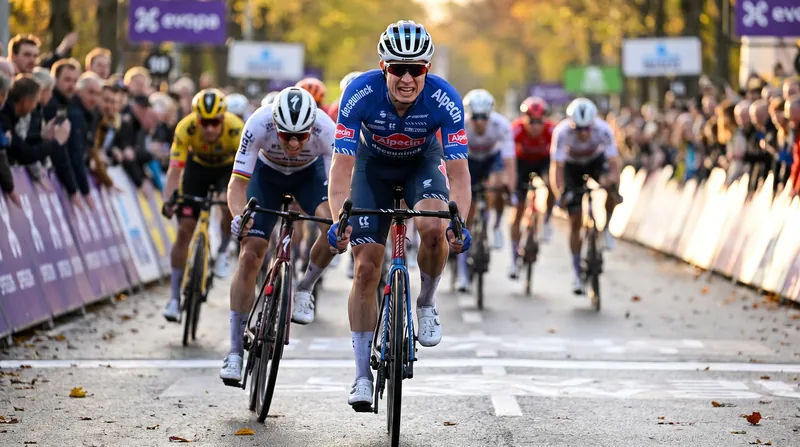
WorldTour Transfer Window: Lidl-Trek Secures Felix Gall as Ben Turner and Pfeiffer Georgi Headline Major 2027 Moves
7 sources
Storyline
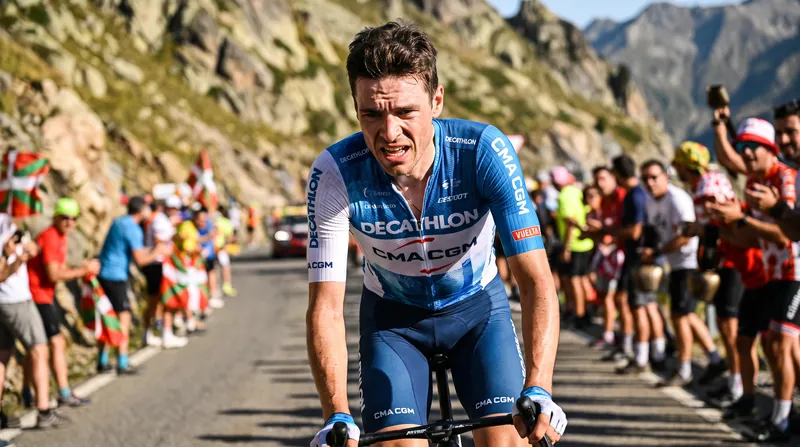
Isaac del Toro Wins Grand Prix de Montréal, Stakes Claim as World Championship Favorite
6 sources
Trade
Pogačar Locks In Until 2032 While Roglič Hits the Open Market in a Wild WorldTour Transfer Window
8 sources
Comments
Every angle. Every day.
Get Sports stories with full source coverage and perspective breakdowns, free every day.