
WorldTour Injury Update: Van Aert Returns to the Saddle as Ryan and Gigante Clear Major Recovery Hurdles
Wout van Aert completed his first ride since elbow surgery, while rising stars Archie Ryan and Sarah Gigante made crucial breakthroughs in their long-term injury rehabilitations.

Share this story
The physical toll of the 2026 UCI WorldTour season has been immense, with high-speed crashes and chronic overuse injuries sidelining some of the sport's most dynamic talents. Yet, as the summer racing calendar reaches its peak, the medical updates emerging from team camps are overwhelmingly positive.
Rather than a litany of setbacks, the latest injury reports highlight crucial medical breakthroughs and successful rehabilitations. Several key riders are finally turning the corner on complex surgeries, shifting the peloton's narrative from attrition to resilience.
The most visible sign of progress came this weekend from Belgian superstar Wout van Aert. After a training crash left him with a severely infected elbow wound that ruled him out of the upcoming Tour de France, his summer looked bleak.[4]
Van Aert was forced to undergo urgent surgery to clean the wound and avoid the life-threatening risk of sepsis. The Visma | Lease a Bike rider spent a night in the hospital and required intravenous antibiotics, leaving his team to scramble for a Tour replacement.
But less than a week after the operation, Van Aert was back in the saddle. Sporting a large bandage on his right arm, he completed a 67.6-kilometer charity group ride for the Olivia Fund, a Belgian organization supporting childhood cancer research.
Averaging a modest 30.6 kilometers per hour, Van Aert posted the ride to Strava with the caption, "First attempt to hold my bars again." While his July Grand Tour plans are definitively over, the symbolic ride marks a massive psychological victory and the first step toward a late-season return.
In the Women's WorldTour, Australian climbing sensation Sarah Gigante is celebrating a medical breakthrough of a different kind. The AG Insurance-Soudal Quick-Step rider has been battling to return from a devastating femur fracture sustained in an August 2025 training crash.[1]
Despite months of grueling indoor training and dedicated physiotherapy, her progress had mysteriously plateaued. Gigante found herself able to ride long endurance miles, but intense efforts remained agonizingly painful, delaying her highly anticipated return to competition.[1]
Doctors recently discovered that her persistent pain was not coming from the healing bone itself, but from severe irritation caused by the surgical hardware used to stabilize the fracture. Gigante underwent a secondary procedure this week to resolve the hardware fit.[1]
With the structural source of the pain finally addressed, the 25-year-old is preparing to resume indoor training. Her immediate focus is on surgical recovery, with the ultimate goal of putting the ten-month injury saga behind her for good.[1]
Meanwhile, the EF Education-EasyPost camp is celebrating the outdoor return of Archie Ryan. The 24-year-old Irish climber underwent double knee surgery in February to remove plica—a fold of synovial tissue that had caused him chronic, career-threatening pain.[2][3]
After months of intensive rehabilitation, Ryan is finally riding outdoors again, completely pain-free. "This is probably what caused all my injuries in the past, so that is the light at the end of the tunnel," Ryan noted, expressing immense relief. He is now targeting an August return to the peloton.[2][3]
A nearly identical diagnosis has brought a similar sense of relief to British phenom Joe Blackmore. The NSN Cycling Team rider, who won the prestigious Tour de l'Avenir, has been sidelined all season with mysterious knee pain that halted his rapid rise.[3]
A recent diagnostic arthroscopy in Belgium with specialist Dr. Claes revealed an infrapatellar plica, which was successfully treated during the procedure. NSN's medical staff is highly optimistic about a full recovery, giving the young Brit a clear, unimpeded path back to racing.
Not all news is entirely rosy, however. EF Education-EasyPost's Kasper Asgreen is facing a race against time after breaking his collarbone in a heavy crash at the Four Days of Dunkirk, requiring his own surgical intervention.[3]
Yet, as the recoveries of Van Aert, Gigante, Ryan, and Blackmore prove, the modern peloton's medical and rehabilitation protocols are more adept than ever. By prioritizing long-term health and precise diagnostics over rushed returns, teams are ensuring their stars come back stronger than before.
The essentials
- Wout van Aert completed a 67.6km charity ride less than a week after undergoing surgery for an infected elbow.
- Sarah Gigante had a successful secondary surgery to resolve hardware irritation from a previous femur fracture.
- Archie Ryan has returned to outdoor training completely pain-free following double knee surgery to remove inflamed plica.
- Joe Blackmore underwent a successful diagnostic arthroscopy to treat an infrapatellar plica, clearing his path to recovery.
- Kasper Asgreen is recovering from collarbone surgery after a heavy crash at the Four Days of Dunkirk.
Timeline
August 2025
Sarah Gigante suffers a severe femur fracture in a training crash, ending her breakout season.
February 2026
Archie Ryan undergoes double knee surgery in London to remove inflamed plica tissue.
May 2026
Kasper Asgreen breaks his collarbone in a heavy crash at the Four Days of Dunkirk.
Early June 2026
Wout van Aert crashes in training, sustaining an elbow wound that later becomes severely infected.
Mid-June 2026
Van Aert undergoes urgent surgery to clean the infection, ruling him out of the Tour de France.
June 21, 2026
Van Aert completes his first post-surgery ride, a 67.6km charity event in Belgium.
- Medical & Rehabilitation Staff
- Focuses on accurate diagnosis and patient-led recovery timelines over rushed returns to competition.
- The Injured Riders
- Emphasizes the psychological relief of finding the root cause of chronic pain and the motivation drawn from returning to the bike.
- Team Management
- Balances the immediate tactical loss of key riders for major races with the long-term investment in their athletes' health.
Perspectives this story doesn't cover
- Independent sports physiotherapists
- Race organizers affected by star withdrawals
Sources
Source coverage
4 outlets
3 viewpoints surfaced




- [1]Bicycling AustraliaThe Injured Riders
Sarah Gigante undergoes further surgery as recovery from femur fracture continues
Read on Bicycling Australia → - [2]EF Pro CyclingThe Injured Riders
Archie Ryan is back on his bike
Read on EF Pro Cycling → - [3]IDL Pro CyclingTeam Management
Injury update: Good news for Ryan and Blackmore, bad news for Asgreen
Read on IDL Pro Cycling → - [4]Cycling Magazine CanadaTeam Management
Belgian star ruled out after elbow injury fails to heal
Read on Cycling Magazine Canada →
More in Sports
See all →Standings
Late-Season Surge: Philipsen Overtakes Pidcock in UCI World Rankings as Martinez Enters Top 10
5 sources
Trade
WorldTour Transfer Window: Lidl-Trek Secures Felix Gall as Ben Turner and Pfeiffer Georgi Headline Major 2027 Moves
7 sources
Storyline
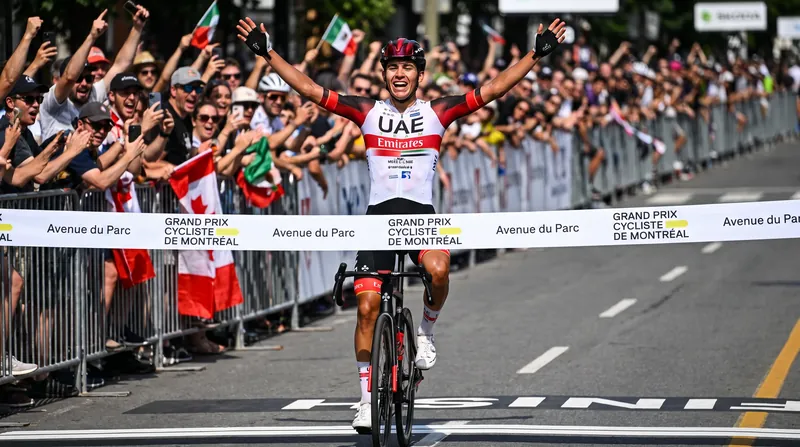
Isaac del Toro Wins Grand Prix de Montréal, Stakes Claim as World Championship Favorite
6 sources
Trade
Pogačar Locks In Until 2032 While Roglič Hits the Open Market in a Wild WorldTour Transfer Window
8 sources
Comments
Every angle. Every day.
Get Sports stories with full source coverage and perspective breakdowns, free every day.