
Italy's Campi Flegrei Volcano Records Strongest Earthquake in 40 Years, Injuring Dozens
A magnitude 4.7 earthquake struck the Campi Flegrei volcanic region near Naples, injuring at least 26 people and forcing hundreds to evacuate amid an ongoing seismic swarm.
By Marina Lopez

- Civil Protection Authorities
- Prioritize immediate structural safety, evacuations, and infrastructure hardening to mitigate the impact of shallow tremors.
- Geological Monitoring Agencies
- Focus on monitoring the bradyseism cycle, emphasizing that the current unrest is driven by hydrothermal pressure rather than imminent magma eruption.
- Local Residents
- Express concern over the compounding psychological toll and physical disruption of continuous seismic swarms and displacement.
Why this matters
The Campi Flegrei caldera is one of the most densely populated volcanic regions in the world. This escalating seismic activity tests the resilience of urban infrastructure and forces authorities to balance long-term geological monitoring with immediate public safety and mass evacuation readiness.
Key points
- A magnitude 4.7 earthquake struck the Campi Flegrei caldera near Naples, the strongest in 40 years.
- The shallow tremor injured at least 26 people and forced the evacuation of approximately 300 residents.
- Nine buildings and five businesses were declared uninhabitable following initial structural inspections.
- The quake is part of an ongoing seismic swarm driven by bradyseism, the slow uplift of the ground.
- Geologists emphasize the activity is caused by hydrothermal pressure, not an imminent volcanic eruption.
At 7:46 p.m. local time on Friday, the ground beneath the densely populated western suburbs of Naples fractured at a depth of just three kilometers, releasing a magnitude 4.7 earthquake that rippled outward through the Campi Flegrei caldera. The tremor, the most powerful recorded in the region in four decades, immediately severed power lines, triggered localized rockfalls, and forced the suspension of regional rail and metro networks. Because the rupture occurred so close to the surface, the seismic energy translated into violent ground acceleration, shaking masonry and concrete structures far beyond what a typical mid-magnitude tectonic event would produce.[1][2]
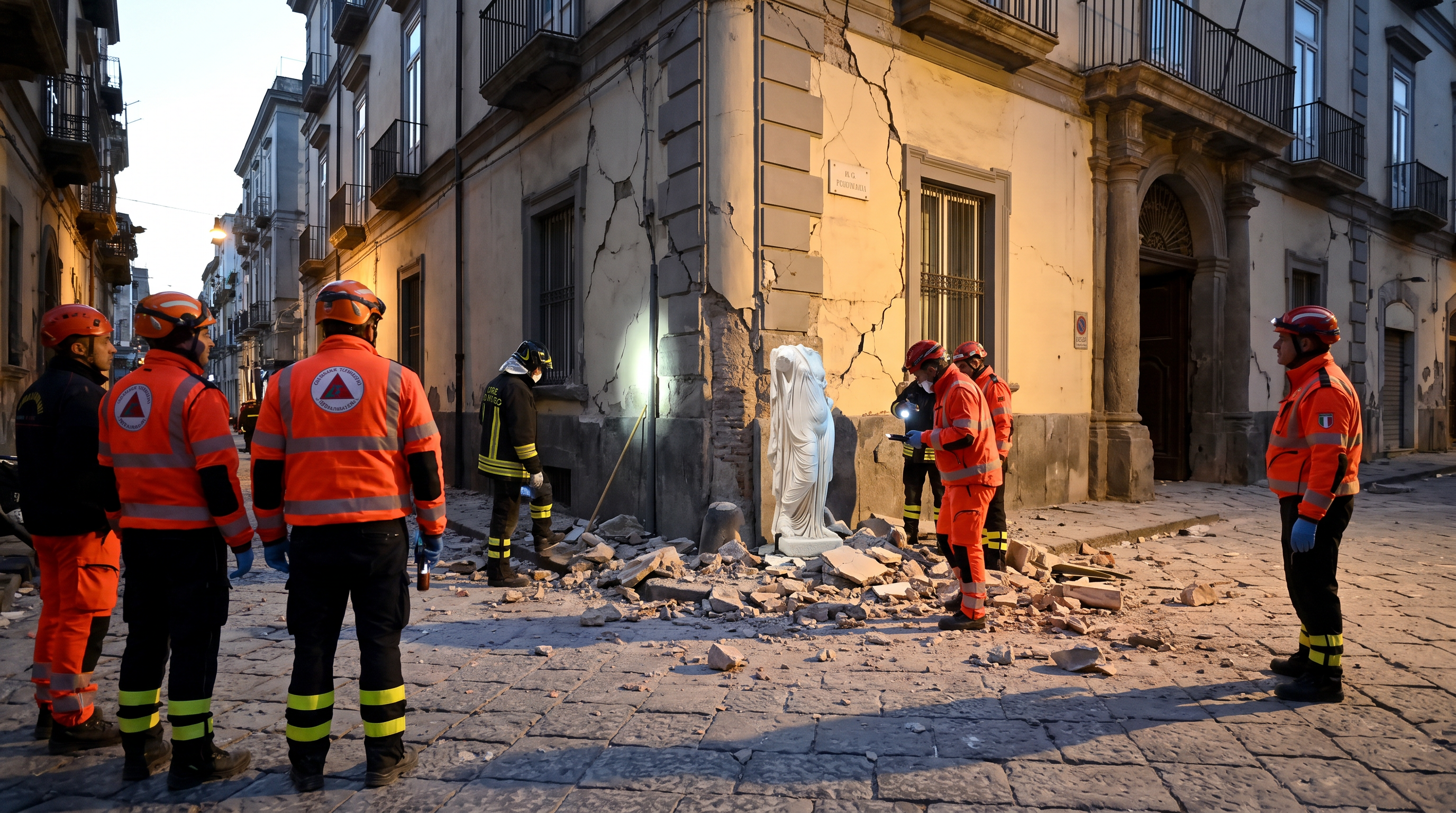
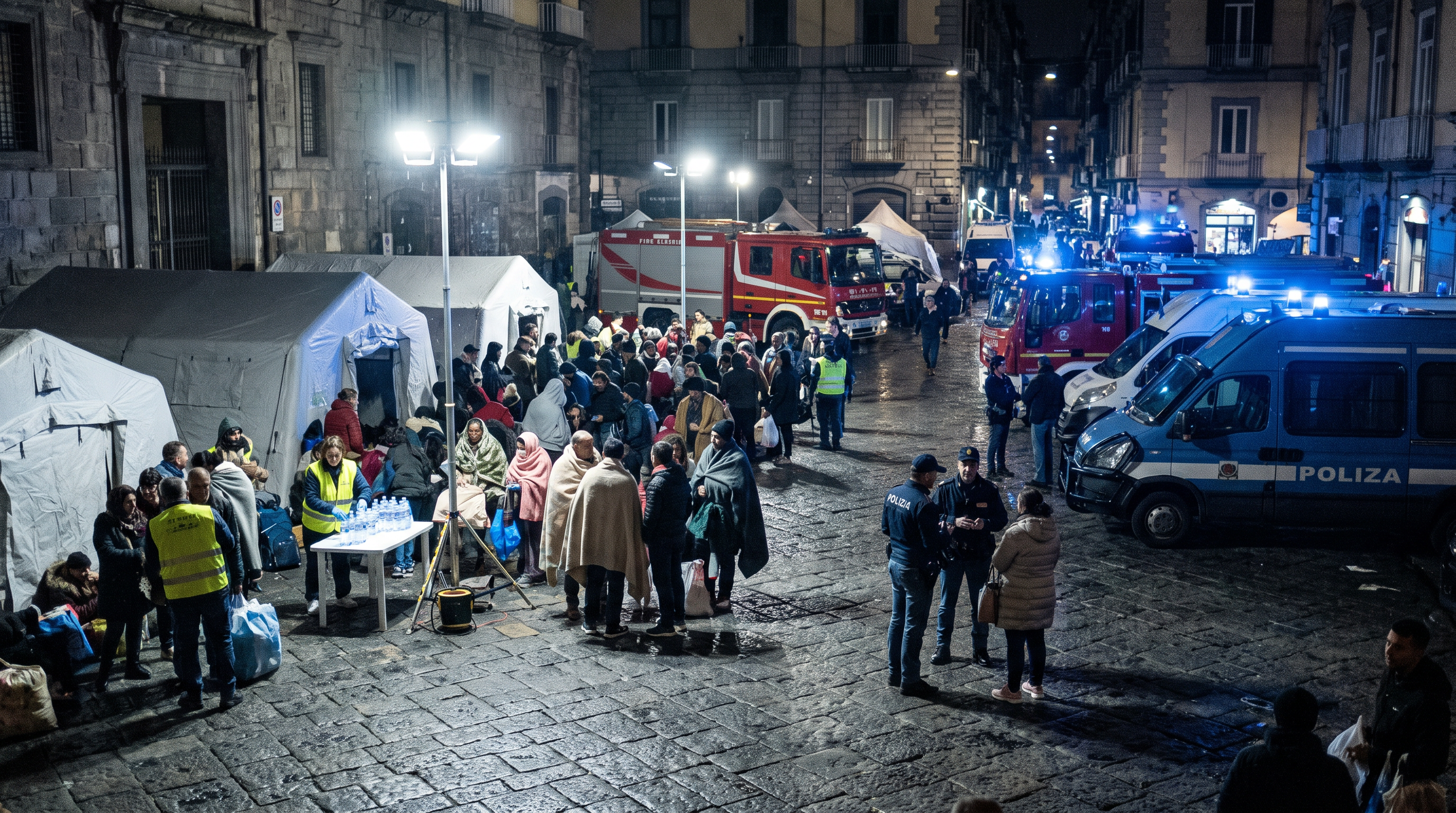
The immediate human toll reflects the vulnerability of urban infrastructure built atop an active volcanic system. Emergency services reported at least 26 injuries across the affected municipalities, with five individuals requiring hospitalization for trauma and fractures sustained during the shaking or from falling debris. In the municipality of Pozzuoli, located near the epicenter, the structural integrity of several residential blocks was compromised, prompting authorities to evacuate approximately 300 residents. Displaced families spent the night in temporary shelters or vehicles as aftershocks continued to rattle the area, underscoring the acute psychological and physical strain on the local population.[1][3][4]
Following the main shock, Italy's Civil Protection Department initiated a sweeping assessment of the region's built environment. Initial inspections led to the condemnation of nine residential buildings and five commercial properties, which were declared entirely uninhabitable. Firefighting crews and structural engineers deployed across Pozzuoli and the neighboring Bagnoli district to evaluate stress fractures in load-bearing walls and clear debris from collapsed facades. Civil Protection Minister Nello Musumeci warned that the number of displaced residents could rise as technical teams systematically work through a backlog of inspection requests, treating each compromised building as a potential hazard in the event of further seismic activity.[3][4]
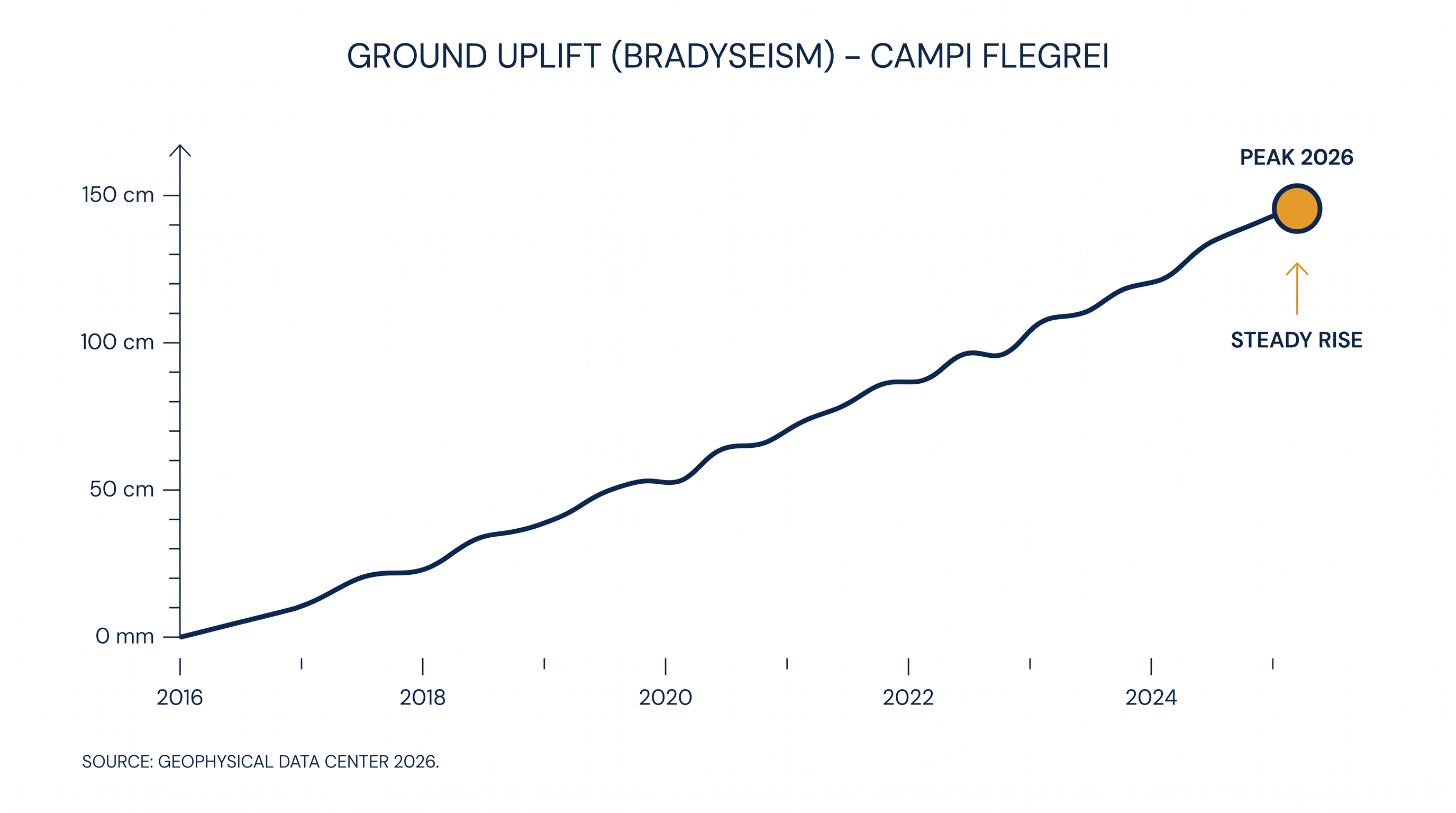
This earthquake is not an isolated rupture, but rather the acute manifestation of a chronic geological process known as bradyseism. The Campi Flegrei caldera, a sprawling volcanic depression that encompasses a significant portion of western Naples, is currently undergoing a phase of sustained ground uplift driven by the accumulation of magmatic gases and hydrothermal fluids deep underground. As the subterranean pressure increases, the overlying crust is pushed upward—rising by more than a meter in recent years—stretching the rock until it snaps. This mechanism generates dense clusters of shallow earthquakes, fundamentally altering the baseline seismic risk for the region's infrastructure.[1]
This earthquake is not an isolated rupture, but rather the acute manifestation of a chronic geological process known as bradyseism.
The magnitude 4.7 event served as the peak of an intense seismic swarm that saturated the local monitoring network. Italy's National Institute of Geophysics and Volcanology (INGV) recorded more than 60 distinct tremors in the hours following the main shock, including a notable magnitude 3.1 aftershock early the next morning. These swarms act as a pressure-release valve for the caldera, but they also subject surface structures to cumulative fatigue. Each successive tremor, even those of lower magnitude, tests the resilience of buildings already weakened by previous shaking, creating a compounding risk profile for the municipalities situated within the caldera's boundaries.[1][2][5]
In response to the escalating risk, local and regional authorities have transitioned into a sustained crisis management posture. The Municipality of Pozzuoli activated its Municipal Operations Center to coordinate the distribution of emergency assistance and manage the logistics of displaced populations. Campania Region President Roberto Fico convened emergency meetings at the Prefecture to align the efforts of various institutional stakeholders, ensuring that structural assessments and public safety communications are synchronized. This coordinated response highlights the shift from reactive emergency management to proactive risk mitigation in a region where seismic unrest has become a persistent operational reality.[3]
While the intensity of the earthquake and the ongoing swarm have heightened public anxiety, volcanologists emphasize that these events are characteristic of bradyseismic cycles and do not necessarily indicate an imminent volcanic eruption. The primary threat currently facing the 250,000 residents of the Campi Flegrei area is not magma reaching the surface, but rather the sustained mechanical stress on the urban environment. The shallow nature of these volcano-tectonic earthquakes means that even moderate energy releases will continue to cause localized damage, requiring a fundamental reassessment of building codes and infrastructure resilience in the affected zones.[1]
Ultimately, the events at Campi Flegrei illustrate the complex intersection of geological forces and urban planning. As the caldera continues its cycle of uplift and seismic release, the downstream consequences extend beyond immediate emergency response to long-term policy adaptations. The Italian government faces the dual challenge of maintaining continuous monitoring of the volcanic system while simultaneously financing the structural hardening of a historic and densely populated region. For the residents of Naples' western suburbs, the earthquake serves as a stark reminder that their built environment must continuously adapt to the shifting, restless geology beneath their feet.[3]
How we got here
1982–1984
A major bradyseismic crisis causes significant ground uplift and widespread evacuations in Pozzuoli.
2005
The current phase of ground uplift and renewed seismic activity begins in the Campi Flegrei caldera.
May 2024
A magnitude 4.4 earthquake strikes the region, marking a significant escalation in the ongoing seismic swarm.
July 31, 2026
A magnitude 4.7 earthquake, the strongest in 40 years, hits the area, causing injuries and structural damage.
Viewpoints in depth
Civil Protection Authorities
Emergency managers are focused on the immediate structural risks posed by the shallow tremors.
For Italy's Civil Protection Department, the primary threat is not an eruption, but the mechanical failure of the built environment. Because the earthquakes originate just kilometers below the surface, their energy is not dispersed before reaching building foundations. Authorities are prioritizing systematic structural inspections, condemning compromised buildings, and preparing logistical contingencies for broader evacuations if the seismic swarm intensifies and renders more of the urban grid uninhabitable.
Geological Monitoring Agencies
Scientists emphasize that the earthquakes are a symptom of ground uplift, not necessarily an impending eruption.
Researchers at the National Institute of Geophysics and Volcanology view the magnitude 4.7 quake as a predictable outcome of the ongoing bradyseismic cycle. As hydrothermal fluids and gases accumulate, they push the crust upward, eventually causing the rock to fracture. While the resulting volcano-tectonic earthquakes are highly disruptive, geologists maintain that the current data does not indicate magma is moving toward the surface, framing the hazard as a prolonged period of infrastructural stress rather than an acute volcanic crisis.
Displaced Residents
Local communities are grappling with the psychological and logistical toll of chronic seismic instability.
For the residents of Pozzuoli and Bagnoli, the abstract geological data translates into immediate, tangible disruption. The compounding effect of dozens of daily tremors, culminating in the strongest shock in 40 years, has created an environment of chronic anxiety. Displaced families face the uncertainty of when—or if—their homes will be declared safe, while those who remain must navigate suspended public transit, power outages, and the constant threat of falling debris.
Sources
Source coverage
5 outlets
3 viewpoints surfaced





[1]The GuardianLocal Residents
Dozens injured as earthquake hits near Naples in seismic swarm
Read on The Guardian →[2]ReutersGeological Monitoring Agencies
Magnitude 4.7 quake strikes near Italy's Naples, causing outages and damage
Read on Reuters →[3]Anadolu AgencyCivil Protection Authorities
Italy's Campi Flegrei sees continued tremors, evacuations after magnitude 4.7 earthquake
Read on Anadolu Agency →[4]Yahoo NewsCivil Protection Authorities
At Least 26 People Injured, 300 Evacuated After 4.7 Magnitude Earthquake Strikes Italy
Read on Yahoo News →[5]ArmenpressGeological Monitoring Agencies
Magnitude 4.7 quake strikes near Italy's Naples, causing outages and damage
Read on Armenpress →
Comments


Every angle. Every day.
Get environment stories with full source coverage and perspective breakdowns delivered to your inbox.