
DOE Commits $2.7 Billion to Domestic Uranium Enrichment, Securing US Nuclear Fuel Supply
The Department of Energy has awarded $2.7 billion to three companies to expand domestic uranium enrichment, aiming to eliminate reliance on Russian imports and fuel the next generation of advanced reactors.
By Hunter Cole

- Federal Policymakers
- Focus on national security and decoupling from Russian supply chains.
- Nuclear Industry & Enrichers
- Focus on operational expansion and the revitalization of domestic infrastructure.
- Energy Market Analysts
- Focus on the financial risks and the necessity of federal purchasing guarantees.
Summary
- The Department of Energy awarded $2.7 billion to three companies to expand domestic uranium enrichment.
- The funding aims to secure Low-Enriched Uranium (LEU) for existing reactors and High-Assay Low-Enriched Uranium (HALEU) for advanced reactors.
- The investment follows a 2024 law banning the import of Russian uranium, forcing the U.S. to rapidly onshore its nuclear fuel supply chain.
- Market analysts warn that while the infrastructure is being built, the federal government may still need to guarantee fuel purchases to stabilize the market.
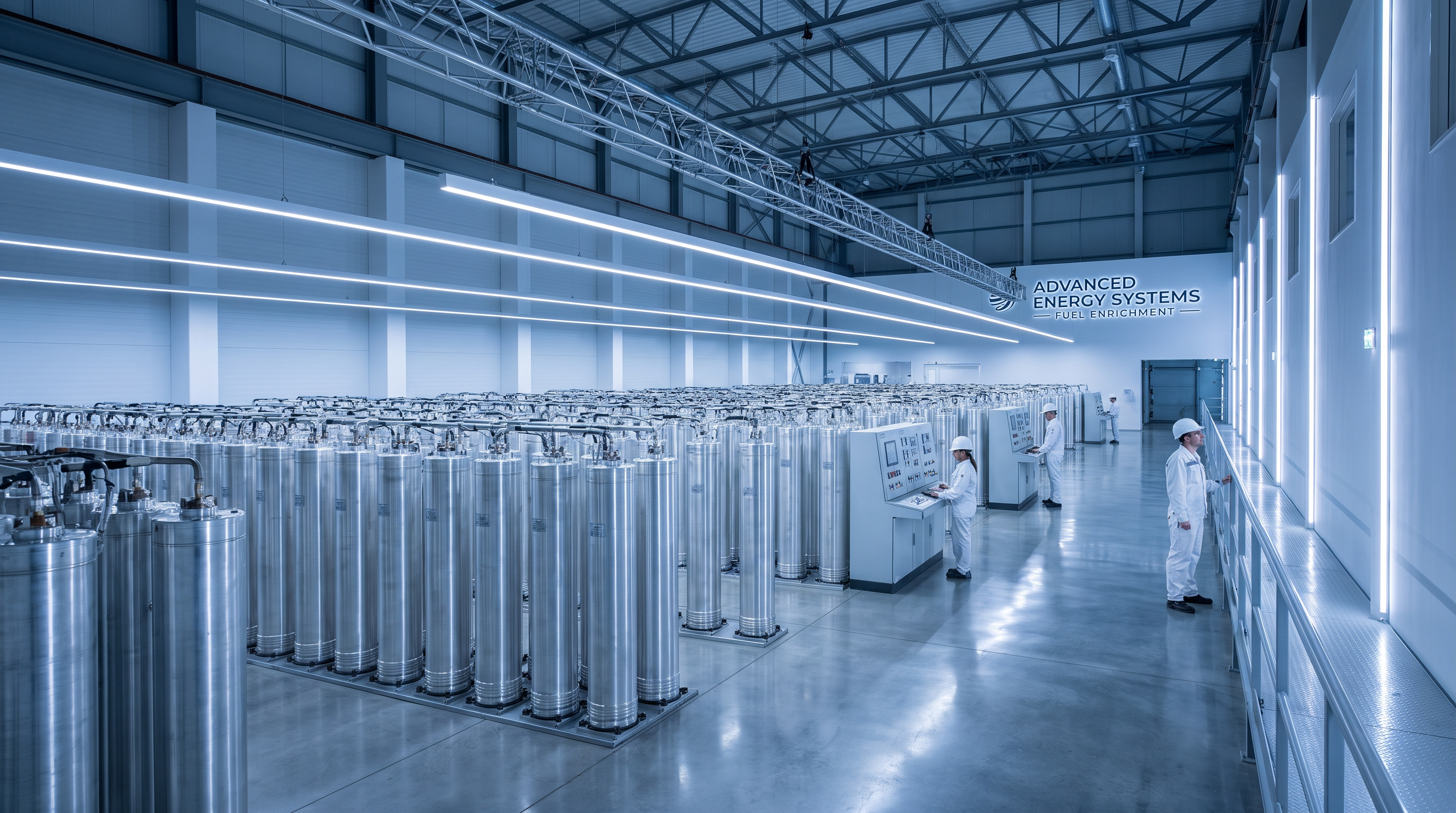
The short version stated plainly: The United States is spending $2.7 billion to rebuild its domestic uranium enrichment industry. The Department of Energy has awarded task orders to three companies to construct the infrastructure necessary to process nuclear fuel on American soil, aiming to secure the supply chain for both existing power plants and next-generation reactors.[1][2]
This investment functions as a critical node in a larger energy transition strategy. For decades, the U.S. nuclear sector relied heavily on foreign suppliers, particularly Russia's state-owned Rosatom, for enriched uranium. Following the 2024 Prohibiting Russian Uranium Imports Act, which bans Russian fuel imports through 2040, the federal government faced an urgent deadline to onshore the supply chain before a fuel bottleneck could choke off domestic power generation.[2]
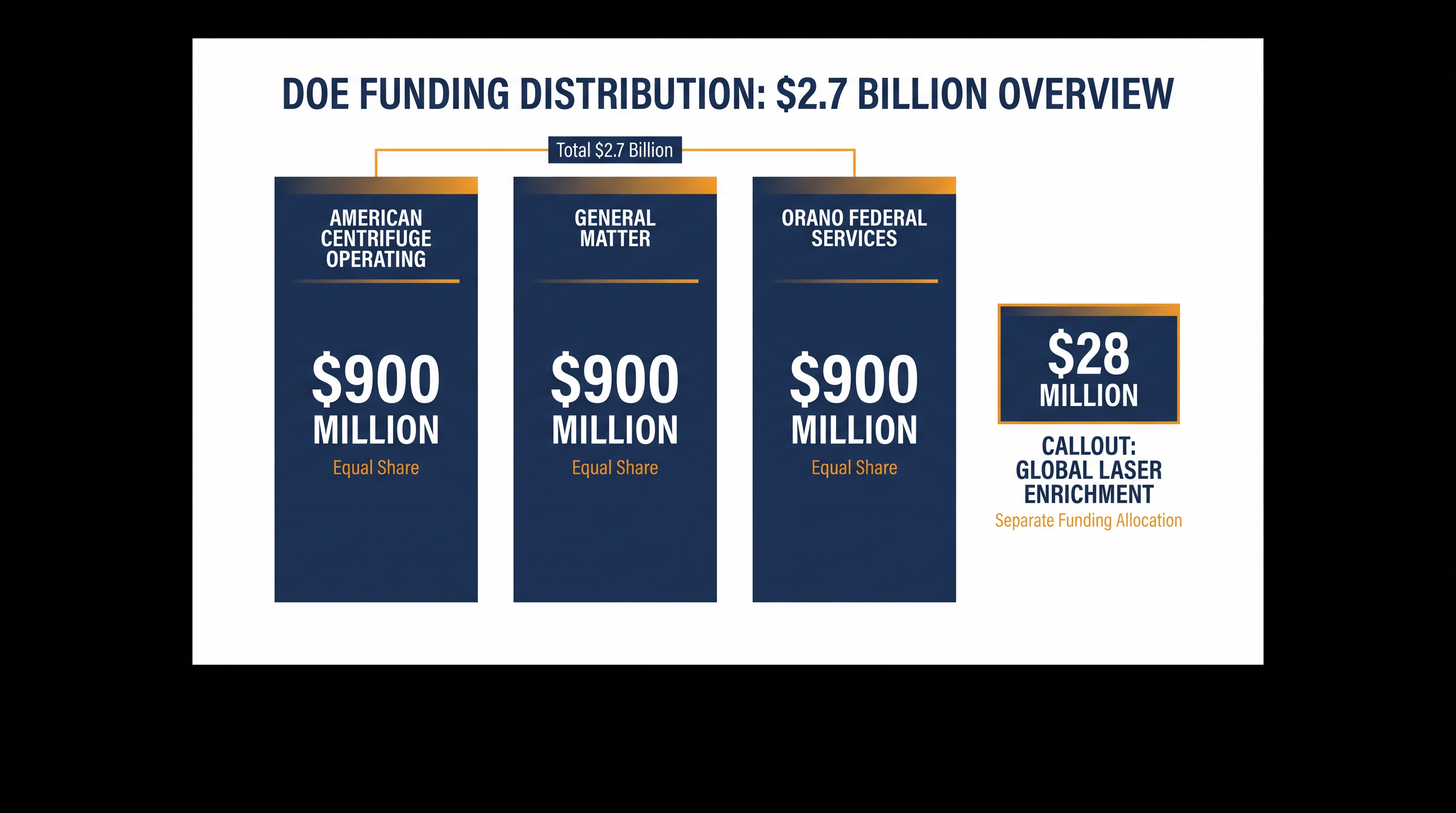
The $2.7 billion in congressionally appropriated funds is divided equally among three primary recipients: American Centrifuge Operating (a subsidiary of Centrus Energy), General Matter, and the French enrichment giant Orano Federal Services. Each company will receive $900 million to develop specific segments of the nuclear fuel cycle.[1][3]
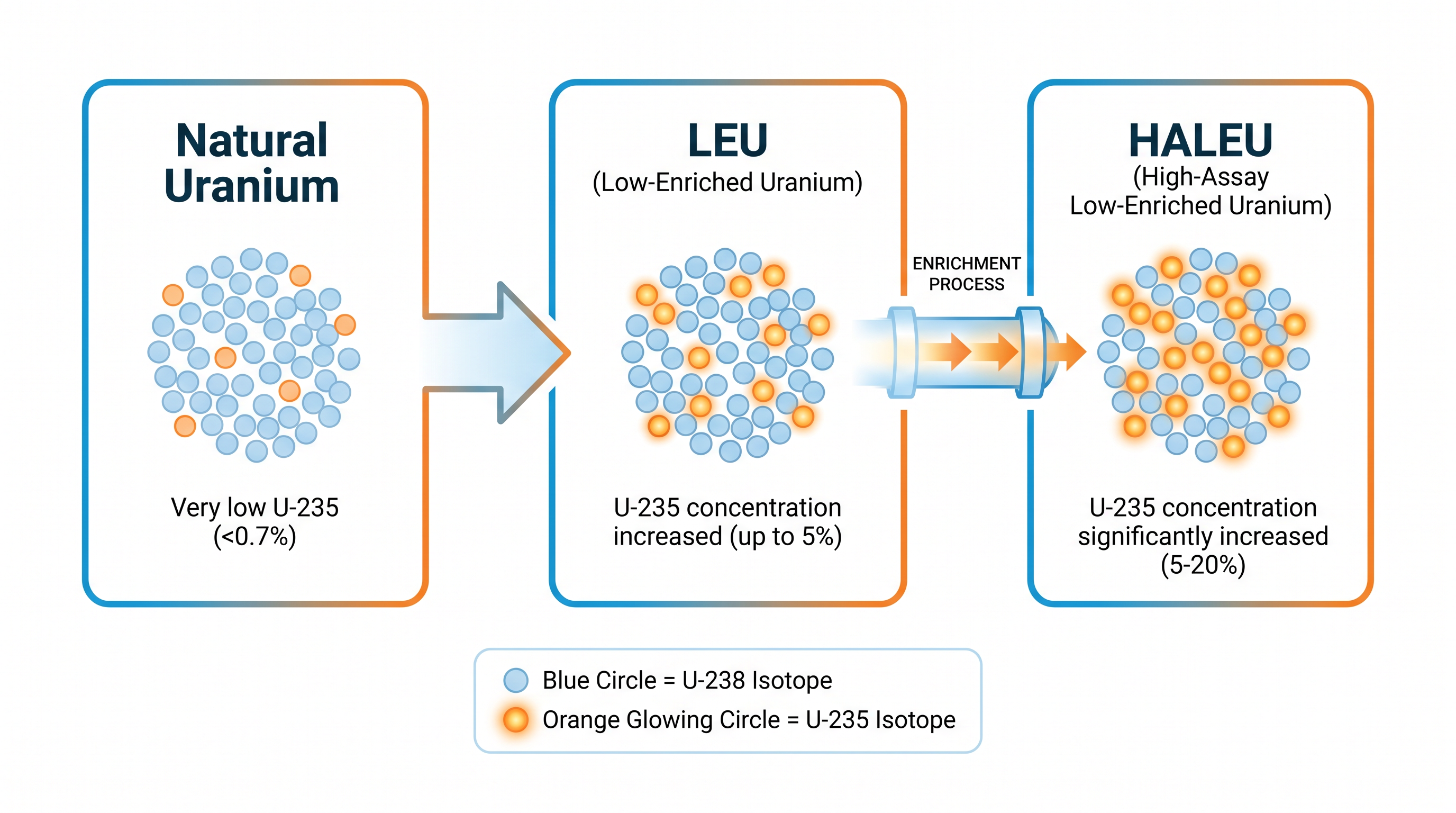
To understand the downstream consequences of these awards, it is necessary to examine the mechanics of nuclear fuel. Natural uranium mined from the earth cannot be used directly in most reactors; it must be processed and spun in high-speed centrifuges to increase the concentration of the fissile U-235 isotope.[3]
The current fleet of 94 commercial light-water reactors in the United States—which provide nearly 20% of the nation's electricity—runs on Low-Enriched Uranium (LEU), which is enriched up to 5%. Orano Federal Services is tasked with using its $900 million award to expand domestic LEU production capacity, ensuring that these existing baseload power plants do not face operational disruptions as foreign supplies are phased out.[1][3]
However, the future of the industry relies on a different product: High-Assay Low-Enriched Uranium (HALEU). HALEU is enriched to between 5% and 20%, allowing for smaller, more efficient, and longer-lasting fuel cores. This specific fuel type is the prerequisite for most advanced reactors and small modular reactors (SMRs) currently under development.[1]
However, the future of the industry relies on a different product: High-Assay Low-Enriched Uranium (HALEU).
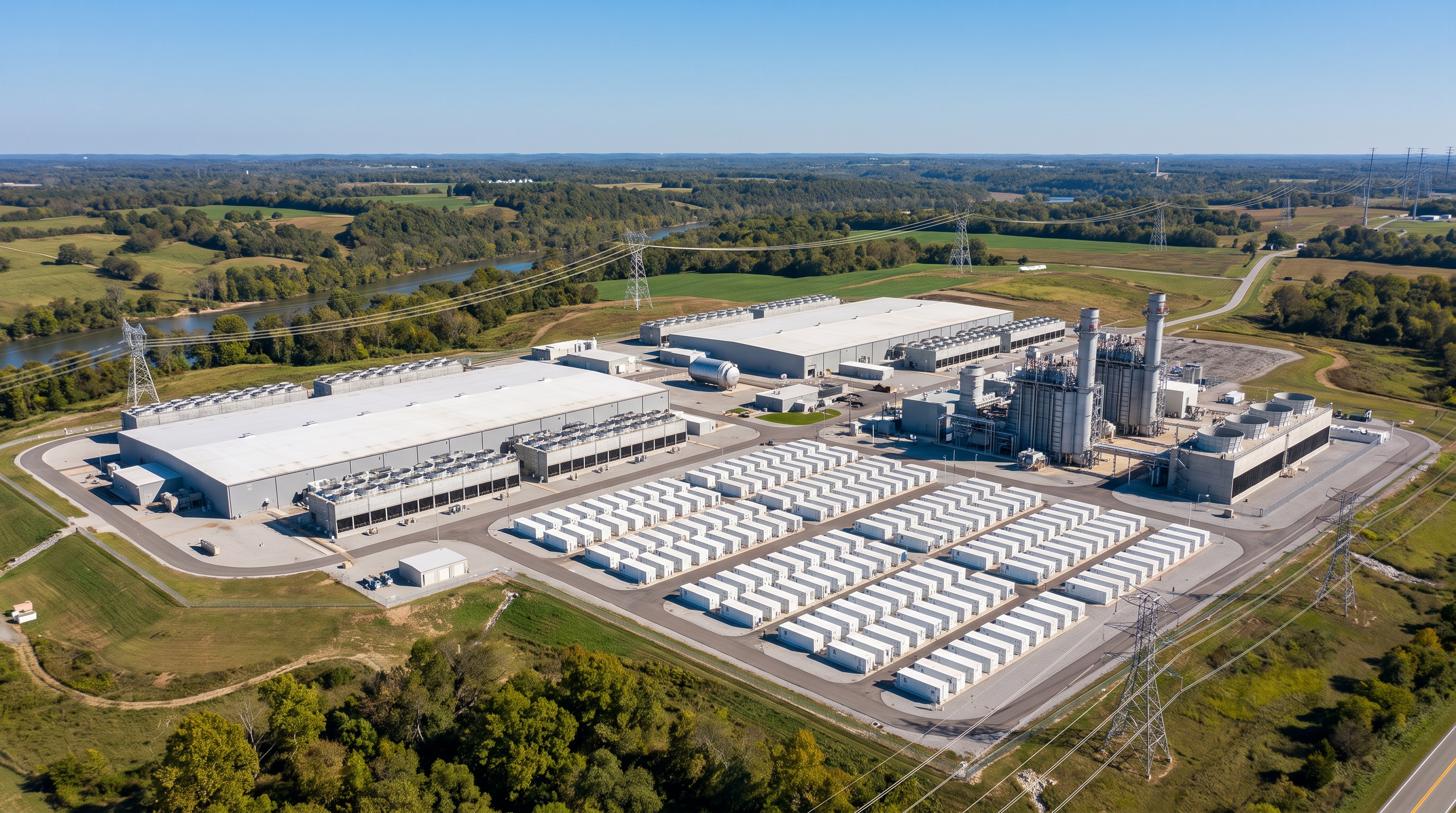
American Centrifuge Operating and General Matter are responsible for building this domestic HALEU capacity from the ground up. General Matter is constructing a $1.5 billion commercial enrichment facility on a leased 100-acre site at the former federal Paducah Gaseous Diffusion Plant in Kentucky, a project the company states will make the region a cornerstone of U.S. enrichment once again.[3]
Meanwhile, Centrus Energy is expanding its operations in Piketon, Ohio. The company has been performing pilot-scale uranium enrichment operations at its American Centrifuge Plant since 2023, utilizing highly efficient gas centrifuge technology developed in coordination with the Oak Ridge National Laboratory.[4]
In addition to the primary task orders, the Department of Energy awarded $28 million to North Carolina-based Global Laser Enrichment. This smaller grant is designed to advance next-generation laser-based enrichment technology, which could eventually offer a more energy-efficient alternative to traditional gas centrifuges.[1][2][3]
While the technical capacity to enrich uranium domestically is a significant milestone, energy market analysts caution that infrastructure alone does not guarantee a stable market. The Breakthrough Institute notes that nuclear fuel markets are thin, capital-intensive, and highly sensitive to timing risks.[4]
Enrichment facilities are long-lived assets designed to operate for decades. Producing limited quantities of HALEU for first-of-a-kind advanced reactors—without firm, multi-reactor, multi-decade contracts—presents a substantial stranded-asset risk for enrichers. Advanced reactor developers, often capital-constrained during their pilot phases, cannot credibly commit to buying enough fuel to justify the massive upfront costs of new enrichment plants.[4]
Consequently, while the $2.7 billion investment solves the immediate infrastructure bottleneck, the downstream success of the American nuclear renaissance may require the federal government to act as a guaranteed buyer, strategically banking enriched uranium to bridge the gap between supply and long-term commercial demand.[4]
Definitions
- Low-Enriched Uranium (LEU)
- Uranium enriched up to 5% with the U-235 isotope, used to fuel traditional commercial nuclear reactors.
- High-Assay Low-Enriched Uranium (HALEU)
- Uranium enriched between 5% and 20%, required for most next-generation advanced reactor designs.
- Centrifuge
- A high-speed rotating machine used to separate uranium isotopes based on their slight mass differences.
- Isotope U-235
- The specific variant of uranium that easily undergoes fission to produce energy in a nuclear reactor.
- Stranded-Asset Risk
- The financial risk that a piece of infrastructure will lose its value before it pays for itself due to lack of market demand.
- Small Modular Reactor (SMR)
- Advanced nuclear reactors that have a smaller footprint and capacity than traditional plants, designed to be manufactured in factories and assembled on-site.
Chronology
2020
Congress establishes the HALEU Availability Program to begin addressing the fuel bottleneck for advanced reactors.
2022
The federal government provides initial funding to allow the DOE to purchase and hold enriched uranium.
May 2024
The Prohibiting Russian Uranium Imports Act is signed into law, banning Russian LEU imports through 2040.
October 2024
The DOE announces initial contracts allowing companies to bid on future work to produce and store HALEU.
January 2026
The DOE awards $2.7 billion in task orders to three companies to build domestic enrichment capacity.
Analysis by camp
Federal Policymakers
Focus on national security and decoupling from Russian supply chains.
For federal officials, the primary driver of this investment is geopolitical risk mitigation. Following the 2024 ban on Russian uranium imports, policymakers recognized that relying on foreign state-owned entities for nuclear fuel presented an unacceptable vulnerability. By underwriting the domestic enrichment industry, the government aims to ensure that the U.S. power grid remains insulated from international supply shocks while simultaneously creating high-tech domestic manufacturing jobs.
Nuclear Industry & Enrichers
Focus on operational expansion and the revitalization of domestic infrastructure.
Companies receiving the task orders view this funding as the essential catalyst for a long-awaited American nuclear renaissance. For decades, domestic enrichers struggled to compete with state-subsidized foreign competitors. This $2.7 billion injection allows firms like Centrus and General Matter to scale up their operations, build commercial-scale facilities at former federal sites in Ohio and Kentucky, and transition next-generation gas centrifuge technologies from the laboratory to the commercial market.
Energy Market Analysts
Focus on the financial risks and the necessity of federal purchasing guarantees.
While analysts acknowledge the importance of building physical enrichment capacity, they argue that infrastructure alone does not create a functional market. Because enrichment plants are highly capital-intensive and designed to operate for decades, producing fuel without guaranteed, long-term buyers presents a massive stranded-asset risk. These experts contend that until the federal government commits to strategically banking enriched uranium or acting as a guaranteed buyer, the market for advanced reactor fuel will remain precariously unstable.
Questions & answers
Why is the US investing in uranium enrichment now?
A 2024 law banned the import of Russian uranium, creating an urgent need to build domestic enrichment capacity to fuel both existing and future nuclear reactors.
What is the difference between LEU and HALEU?
LEU is enriched up to 5% and powers traditional commercial reactors. HALEU is enriched up to 20% and is required for smaller, more efficient advanced reactors.
Who received the $2.7 billion in funding?
The DOE awarded $900 million each to American Centrifuge Operating, General Matter, and Orano Federal Services to build new enrichment capacity.
Will this solve the nuclear fuel bottleneck?
It solves the immediate infrastructure challenge, but analysts warn that the federal government may still need to guarantee purchases to stabilize the market for enrichers.
Limits of the evidence
- Whether the federal government will establish a strategic uranium reserve to act as a guaranteed buyer for the newly produced HALEU.
- How quickly advanced reactor developers will be able to secure the financing needed to purchase commercial quantities of the new fuel.
- Whether the $28 million investment in laser-based enrichment will yield a commercially viable alternative to traditional gas centrifuges within the next decade.
Significance
A secure, domestic supply of enriched uranium is the critical bottleneck for both maintaining the current US nuclear fleet and deploying the advanced reactors needed to meet surging electricity demand from data centers and industrial growth.
Sources
Source coverage
4 outlets
3 viewpoints surfaced




[1]Department of EnergyFederal Policymakers
U.S. Department of Energy Awards $2.7 Billion to Restore American Uranium Enrichment
Read on Department of Energy →[2]POLITICO ProFederal Policymakers
DOE gives 3 companies billions for nuclear fuel enrichment
Read on POLITICO Pro →[3]American Nuclear SocietyNuclear Industry & Enrichers
DOE awards $2.7 billion for domestic uranium enrichment
Read on American Nuclear Society →[4]The Breakthrough InstituteEnergy Market Analysts
The Real Bottleneck for Advanced Nuclear
Read on The Breakthrough Institute →
Comments
Every angle. Every day.
Get energy stories with full source coverage and perspective breakdowns delivered to your inbox.