
Human-Induced Warming Reaches 1.37°C as Earth's Energy Imbalance Doubles
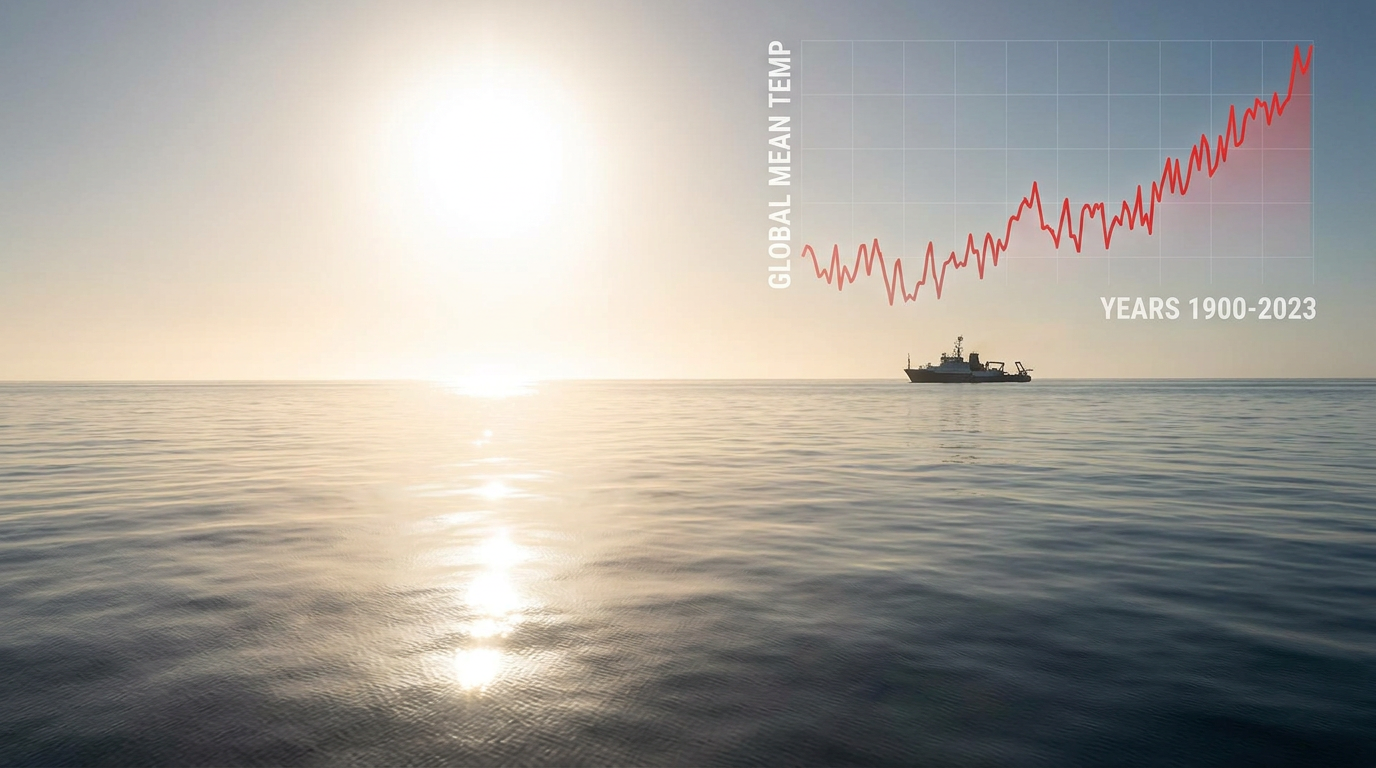
A definitive update from over 70 scientists reveals that human-driven global warming hit 1.37°C in 2025, putting the planet on track to permanently breach the 1.5°C Paris Agreement limit by 2030.
By Factlen Editorial Team
- Climate Researchers
- Scientists focused on the empirical data, the shrinking carbon budget, and the unprecedented rate of the Earth's energy imbalance.
- Policy & Impact Analysts
- Experts focused on the consequences of breaching 1.5°C and the urgent need for adaptation.
- Meteorological Agencies
- Forecasters focused on the interaction between human-induced warming and natural climate variability.
- Editorial Synthesis
- Synthesizing the evidence and highlighting the certainty and uncertainty of the data.
What's not represented
- · Fossil Fuel Industry Representatives
- · Developing Nations Most Vulnerable to Climate Impacts
- · Next-Generation Climate Activists
Why this matters
The definitive scientific update on the planet's health reveals that the 1.5°C warming limit will likely be permanently breached by 2030. This acceleration in warming, driven by record greenhouse gas emissions and a massive energy imbalance, guarantees more severe weather extremes, accelerating sea-level rise, and profound disruptions to global food and water security.
Key points
- Human-induced global warming reached 1.37°C in 2025, rising at a record rate of 0.27°C per decade.
- Earth's energy imbalance has more than doubled since the 1970s, trapping unprecedented levels of heat.
- The remaining carbon budget for a 1.5°C pathway is 130 billion tonnes, which will be exhausted in roughly three years.
- Marine heatwaves have more than tripled globally since 1991, severely impacting coastal ecosystems.
- NOAA confirmed the presence of El Niño conditions, which will likely spike global temperatures further into 2027.
Human-induced global warming reached an unprecedented 1.37°C above pre-industrial levels in 2025, according to the newly published Indicators of Global Climate Change (IGCC) report. The comprehensive assessment, authored by over 70 scientists and published in the peer-reviewed journal Earth System Science Data, serves as the definitive annual update on the planet's climate health.[1][2]
The primary consequence of this accelerated warming is that the 1.5°C threshold—the most ambitious target set by the 2015 Paris Agreement—is now projected to be permanently breached within approximately four years, around 2030. While individual years have already temporarily exceeded 1.5°C due to natural weather cycles, the IGCC report tracks the long-term, human-driven baseline, which is rising at an all-time high rate of 0.27°C per decade.[1][5][6]
The evidence for this rapid escalation is anchored in the concept of Earth's energy imbalance (EEI). This metric represents the difference between the amount of solar energy arriving at the planet and the amount of heat radiating back into space. According to the researchers, this imbalance is the most critical indicator of the pace of climate change, as it measures the actual accumulation of heat within the Earth system.[2][4][7]
The data reveals that Earth's energy imbalance has more than doubled since the 1970s and currently sits at a record high. Without human interference, this imbalance should be close to zero. Instead, the persistent trapping of heat by greenhouse gases has created a massive energy surplus, driving changes across every component of the climate system.[1][2][4]

The primary driver of this imbalance remains record-high greenhouse gas emissions. Global emissions reached an all-time high of 56.8 billion tonnes of carbon dioxide equivalent (CO2e) in 2024, the most recent year with complete data. Atmospheric concentrations of carbon dioxide, methane, and nitrous oxide all continued to climb through 2025, trapping increasingly more outgoing thermal energy.[1][2][4]
Paradoxically, the warming trend has been further accelerated by successful environmental policies targeting air pollution. Sulfur dioxide aerosols, emitted by industrial processes and shipping, have historically reflected a portion of incoming sunlight back into space, creating a cooling effect. As global regulations have successfully reduced these harmful pollutants, this "aerosol masking" effect has diminished, unmasking the full warming potential of the accumulated greenhouse gases.[1][2][4]
The vast majority of the excess heat generated by this energy imbalance does not remain in the atmosphere. Approximately 90% of it is absorbed by the world's oceans. This massive transfer of thermal energy is fundamentally altering marine environments and driving unprecedented changes beneath the surface.[4][6][7]
The vast majority of the excess heat generated by this energy imbalance does not remain in the atmosphere.
To quantify this impact, the 2026 IGCC report introduced a new metric tracking marine heatwaves. The data shows that the number of days experiencing marine heatwaves globally has more than tripled since 1991. In 2025 alone, the world's oceans experienced 65 days of marine heatwave conditions.[1][2][6]

The evidence strongly links these marine heatwaves to the devastation of coastal ecosystems. Prolonged periods of extreme ocean temperatures bleach coral reefs, decimate kelp forests, and disrupt the distribution of fish stocks that millions of people rely on for their livelihoods. Furthermore, abnormally warm surface waters provide the thermal fuel required to rapidly intensify hurricanes and tropical storms.[2][6][7]
The accumulation of heat is also accelerating global sea-level rise. In 2025, global mean sea levels reached a new record of 23 centimeters above 1901 levels. The current rate of rise has accelerated to 3.84 millimeters per year, driven both by the thermal expansion of seawater as it warms and the accelerating melt of land-based ice sheets and glaciers.[1][6][7]
Compounding the human-induced warming trend is the return of natural climate variability. On June 11, 2026, the US National Oceanic and Atmospheric Administration (NOAA) confirmed that El Niño conditions are present in the equatorial Pacific.[3][5]
El Niño is a naturally occurring climate pattern characterized by warmer-than-average ocean surface temperatures in the central and eastern Pacific. This phenomenon typically releases vast amounts of stored ocean heat into the atmosphere. NOAA forecasters expect these conditions to strengthen into the Northern Hemisphere winter of 2026-2027, which will likely cause a temporary spike in global annual temperatures, potentially making the coming year the hottest on record.[3][5][7]
In light of these compounding factors, the remaining carbon budget to avoid crossing the 1.5°C threshold has shrunk drastically. The carbon budget represents the total amount of CO2 the world can still emit while maintaining a 50% chance of holding global warming below 1.5°C.[1][4]
According to the IGCC assessment, the remaining carbon budget stood at just 130 billion tonnes of CO2 at the start of 2026. At the current global emission rate of roughly 40 billion tonnes of CO2 per year, this budget will be entirely exhausted in approximately three years. The budgets for 1.6°C and 1.7°C are similarly constrained, projected to run out in roughly eight and twelve years, respectively.[1][5][6]

While the empirical evidence for the warming trend is robust, researchers highlighted growing vulnerabilities in the global climate monitoring infrastructure. Recent funding cuts to deep-sea observation systems and the dismantling of certain international air quality monitoring initiatives threaten to create dangerous gaps in the data required to track the Earth's energy imbalance accurately.[6][7]
The publication of the IGCC report coincides with international climate negotiations in Bonn, Germany, where diplomats are laying the groundwork for future UN climate summits. The stark data is shifting the policy conversation from preventing a 1.5°C breach to managing the inevitable "overshoot" and accelerating adaptation efforts for vulnerable coastal and equatorial communities.[5][6][7]
Despite the severe trajectory, the evidence pack contains a crucial silver lining regarding human intervention. While total greenhouse gas emissions remain at record highs, the growth rate of those emissions is beginning to slow down. Climate scientists note that the rapid deployment of clean energy technologies, electric vehicles, and targeted policy interventions are starting to bend the emissions curve, demonstrating that societal choices in the current decade can still dictate the ultimate severity of the climate crisis.[1][5][7]
How we got here
2015
The Paris Agreement is adopted, establishing the goal of limiting global warming to well below 2°C, while pursuing efforts to limit the increase to 1.5°C.
2023
The Intergovernmental Panel on Climate Change (IPCC) concludes its Sixth Assessment Report (AR6), providing the baseline data for human-induced warming.
2024
Global greenhouse gas emissions reach an all-time high of 56.8 billion tonnes of carbon dioxide equivalent.
2025
Human-induced global warming reaches 1.37°C above pre-industrial levels, and global marine heatwave days peak at 65.
June 11, 2026
The Indicators of Global Climate Change (IGCC) report is published, and NOAA confirms the strengthening of El Niño conditions.
Viewpoints in depth
Climate Researchers
Scientists focused on the empirical data, the shrinking carbon budget, and the unprecedented rate of the Earth's energy imbalance.
For climate modellers and researchers, the most alarming signal is the rapid acceleration of Earth's energy imbalance. They argue that this metric provides the clearest, most undeniable evidence that the climate system is accumulating heat at a record pace. Their primary concern is that the remaining carbon budget for a 1.5°C pathway is now mathematically nearly impossible to maintain, requiring a complete exhaustion of the budget within three years at current emission rates. They emphasize that while the warming is unprecedented, it aligns perfectly with the upper bounds of their physical models.
Policy & Impact Analysts
Experts focused on the consequences of breaching 1.5°C and the urgent need for adaptation.
Policy analysts and environmental economists view the IGCC data as a stark warning that the era of purely preventative climate policy is over. With a permanent breach of the 1.5°C target expected by 2030, they argue that international negotiations must immediately pivot toward managing the 'overshoot' and funding massive adaptation efforts. They point to the tripling of marine heatwaves and accelerating sea-level rise as evidence that the economic and human costs of climate change are already materializing, disproportionately affecting coastal and equatorial communities.
Meteorological Agencies
Forecasters focused on the interaction between human-induced warming and natural climate variability.
Meteorological organizations like NOAA emphasize the compounding threat of natural climate cycles operating on top of the human-induced warming baseline. They note that the strengthening El Niño pattern in the Pacific will release vast amounts of stored ocean heat into the atmosphere over the next year. While they clearly distinguish between this natural variability and the long-term anthropogenic trend, they warn that the combination of the two will likely shatter near-term temperature records and trigger severe, unpredictable weather extremes globally.
What we don't know
- The exact year the 1.5°C threshold will be permanently breached, as natural variability like El Niño can temporarily mask or amplify the long-term trend.
- How quickly the Earth's climate system might cross irreversible 'tipping points,' such as the collapse of major ice sheets or the die-off of the Amazon rainforest, at temperatures between 1.5°C and 2.0°C.
- The full impact of the recent reduction in aerosol pollution on regional weather patterns, particularly how the loss of this cooling 'mask' will alter monsoon cycles and extreme heat events.
Key terms
- Earth's Energy Imbalance (EEI)
- The difference between the amount of solar energy arriving at Earth and the amount of heat returning to space, serving as the primary metric for how fast the planet is heating.
- Carbon Budget
- The maximum amount of cumulative net global human-caused carbon dioxide emissions that would result in limiting global warming to a given level.
- Marine Heatwave
- A period of abnormally high ocean temperatures, which can have devastating impacts on marine ecosystems like coral reefs and kelp forests.
- Aerosol Unmasking
- The phenomenon where reductions in reflective air pollution (aerosols) remove a cooling effect, thereby accelerating the observed rate of global warming.
- El Niño
- A naturally occurring climate pattern characterized by the warming of the ocean surface in the central and eastern tropical Pacific, which temporarily raises global air temperatures.
Frequently asked
What is Earth's energy imbalance?
It is the difference between incoming solar energy and outgoing heat radiated back into space. It is currently at a record high, meaning the planet is trapping more heat than ever.
Have we officially breached the 1.5°C Paris Agreement target?
Not permanently. While individual years may exceed 1.5°C, the long-term human-induced warming average reached 1.37°C in 2025. A permanent breach is expected around 2030.
Why did reducing air pollution increase warming?
Sulfur dioxide aerosols, a major component of air pollution, reflect sunlight and have a cooling effect. As countries successfully cleaned up air pollution, this 'masking' effect disappeared, revealing the full warming impact of greenhouse gases.
How does El Niño affect these findings?
El Niño is a natural climate pattern that releases stored ocean heat into the atmosphere. NOAA expects El Niño conditions to strengthen into winter 2026-2027, which will likely spike global temperatures further.
Sources
Source coverage
7 outlets
4 viewpoints surfaced





[1]Earth System Science DataClimate Researchers
Indicators of Global Climate Change 2025: annual update of key indicators of the state of the climate system and human influence
Read on Earth System Science Data →[2]University of LeedsClimate Researchers
Major climate report shows Earth is getting hotter faster
Read on University of Leeds →[3]NOAAMeteorological Agencies
Climate Prediction Center: ENSO Diagnostic Discussion
Read on NOAA →[4]Carbon BriefClimate Researchers
Guest post: How a record-high 'energy imbalance' is driving global warming
Read on Carbon Brief →[5]Argus MediaPolicy & Impact Analysts
Global warming set to exceed 1.5°C by 2030: Scientists
Read on Argus Media →[6]Health Policy WatchPolicy & Impact Analysts
Planet On Course To Permanently Breach 1.5°C Limit By 2030
Read on Health Policy Watch →[7]Factlen Editorial TeamEditorial Synthesis
Synthesis by Factlen editorial team
Read on Factlen Editorial Team →


Every angle. Every day.
Get science stories with full source coverage and perspective breakdowns delivered to your inbox.