
How to Read the Internet: A Beginner's Guide to Lateral Reading and the SIFT Method
Discover how professional fact-checkers navigate the web and learn practical strategies to build a healthier, more resilient news diet.
By Factlen Editorial Team

- Media Literacy Researchers
- Academics focused on updating digital literacy education to combat modern misinformation.
- Journalism Advocates
- Professionals dedicated to maintaining information integrity and public trust in reporting.
- Public Health Experts
- Specialists concerned with the psychological toll of chronic information overload.
- Information Synthesis
- Editorial synthesis of best practices for navigating the digital information landscape.
What's not represented
- · Social Media Platform Engineers
- · Algorithm Designers
Why this matters
In an era of deepfakes, algorithmic feeds, and rampant misinformation, knowing how to quickly verify online claims is an essential life skill. Adopting a healthy news diet protects your mental health from 'doomscrolling' while ensuring you base your decisions on facts rather than manipulation.
Key points
- The traditional method of 'vertical reading'—evaluating a website based solely on its own appearance—is obsolete in the digital age.
- Professional fact-checkers use 'lateral reading,' opening multiple browser tabs to see what independent sources say about a claim.
- The SIFT method (Stop, Investigate, Find, Trace) provides a rapid, four-step framework for verifying online information.
- Curating a 'healthy news diet' involves diversifying sources and avoiding emotionally manipulative clickbait to protect mental well-being.
The modern internet delivers a relentless, high-velocity stream of information directly into our pockets, creating an environment where separating fact from fabrication has never been more challenging. Every day, users are bombarded with breaking news, algorithmic recommendations, and user-generated content that blur the lines between verified reporting and deliberate misinformation. This constant influx has led public health and media experts to coin the term "infobesity," describing a state of cognitive overload where the sheer volume of data overwhelms our ability to process it critically. Just as a diet of junk food impacts physical health, a diet of sensationalized, unverified information takes a toll on mental well-being and civic participation. Recognizing this crisis, educators and researchers have begun shifting their focus from simply teaching people how to find information to teaching them how to critically evaluate the media they consume on a daily basis.[4][8]
For decades, the standard approach to media literacy in schools relied on a technique known as "vertical reading." Students were taught to evaluate a website's credibility by looking closely at the page itself—checking for grammatical errors, reading the "About" section, examining the site's design, and trusting domains that ended in ".org" or ".edu." However, as the internet evolved, this method became dangerously obsolete. Today, anyone can build a polished, professional-looking website or manipulate a social media profile to appear authoritative. Bad actors and purveyors of disinformation easily exploit these outdated checklists, creating sophisticated digital facades that routinely fool even highly educated adults. When readers stay on a single page and scroll from top to bottom, they are playing by the rules set by the site's creator, making it nearly impossible to detect hidden agendas or subtle biases.[1][9]
The breakthrough in modern media literacy came from observing how professional fact-checkers operate. Researchers at the Stanford History Education Group (SHEG), led by Sam Wineburg, conducted extensive studies comparing the online evaluation skills of students, university professors, and professional fact-checkers. They discovered that while academics often fell for well-designed but dubious websites by reading vertically, fact-checkers employed a radically different strategy: they read "laterally." Instead of spending time analyzing the site itself, fact-checkers immediately left the page, opening multiple new browser tabs to see what other, independent sources had to say about the original site and its claims. This simple act of cross-referencing allowed them to quickly identify front groups, uncover funding sources, and dismiss disinformation in a fraction of the time it took the academics to analyze the page.[1][2][9]

Building on the concept of lateral reading, digital literacy expert Mike Caulfield developed a streamlined, four-step heuristic designed specifically for the modern web: the SIFT method. SIFT stands for Stop, Investigate the source, Find better coverage, and Trace claims, quotes, and media to their original context. The method is intentionally pragmatic, acknowledging that most people do not have the time to conduct deep investigative journalism for every article they encounter. Instead, SIFT provides a rapid-response toolkit that can be applied in seconds, helping everyday internet users make quick, sound decisions about whether a piece of content is worth their time, attention, or a share on social media. It has since been widely adopted in university curricula, journalism training programs, and public health initiatives.[3][5][7]
SIFT stands for Stop, Investigate the source, Find better coverage, and Trace claims, quotes, and media to their original context.
The first and arguably most critical step of the SIFT method is simply to "Stop." Before reading an article, watching a video, or hitting the share button, users are encouraged to pause and check their emotional response. Misinformation is frequently engineered to trigger strong emotions—such as outrage, fear, or intense validation—because emotionally charged content spreads fastest on social media algorithms. By stopping, readers interrupt the impulsive reaction that bad actors rely on. This pause also serves as a moment to ask a fundamental question: Do I know and trust the source of this information? If the answer is no, or if the headline seems deliberately sensationalized, the reader knows they must proceed to the next steps before accepting the claim as fact.[5][7][9]

The second step, "Investigate the source," puts lateral reading into direct practice. Rather than reading the article's claims, the user opens a new tab to research the author, the publication, or the organization behind the content. A quick search can reveal whether a seemingly neutral think tank is actually funded by a specific industry, or if a viral news blog has a history of publishing fabricated stories. The goal is not to demand absolute perfection from a source, but to understand its perspective, expertise, and potential biases. As media literacy advocates note, checking what the rest of the internet says about a source is infinitely more reliable than trusting what the source says about itself on its own "About Us" page.[2][4][6]
Once the source is understood, the third step is to "Find better coverage." If a claim is genuinely newsworthy or scientifically significant, it will rarely be confined to a single, obscure website. Readers are encouraged to search for the core claim to see if reputable, mainstream news outlets, academic journals, or specialized reporting agencies have covered the same story. Often, finding better coverage means locating a source that provides more nuance, relies on verified data, and adheres to established journalistic standards. This step helps readers build a consensus view of an event, rather than relying on a single, potentially skewed interpretation. It also empowers users to upgrade their information diet by actively seeking out high-quality reporting.[5][6][9]
The final step of the SIFT method is to "Trace claims, quotes, and media to their original context." In the digital age, information is frequently stripped of its original context, repackaged, and weaponized. A photograph from a protest five years ago might be shared today with a false caption, or a snippet of a politician's speech might be edited to reverse its meaning. By tracing a quote or image back to its source—often using tools like reverse image search or simply finding the full, unedited video—readers can verify whether the evidence actually supports the claim being made. This practice is especially crucial in an era where generative AI and sophisticated editing tools make it easier than ever to manipulate media.[3][5][7]

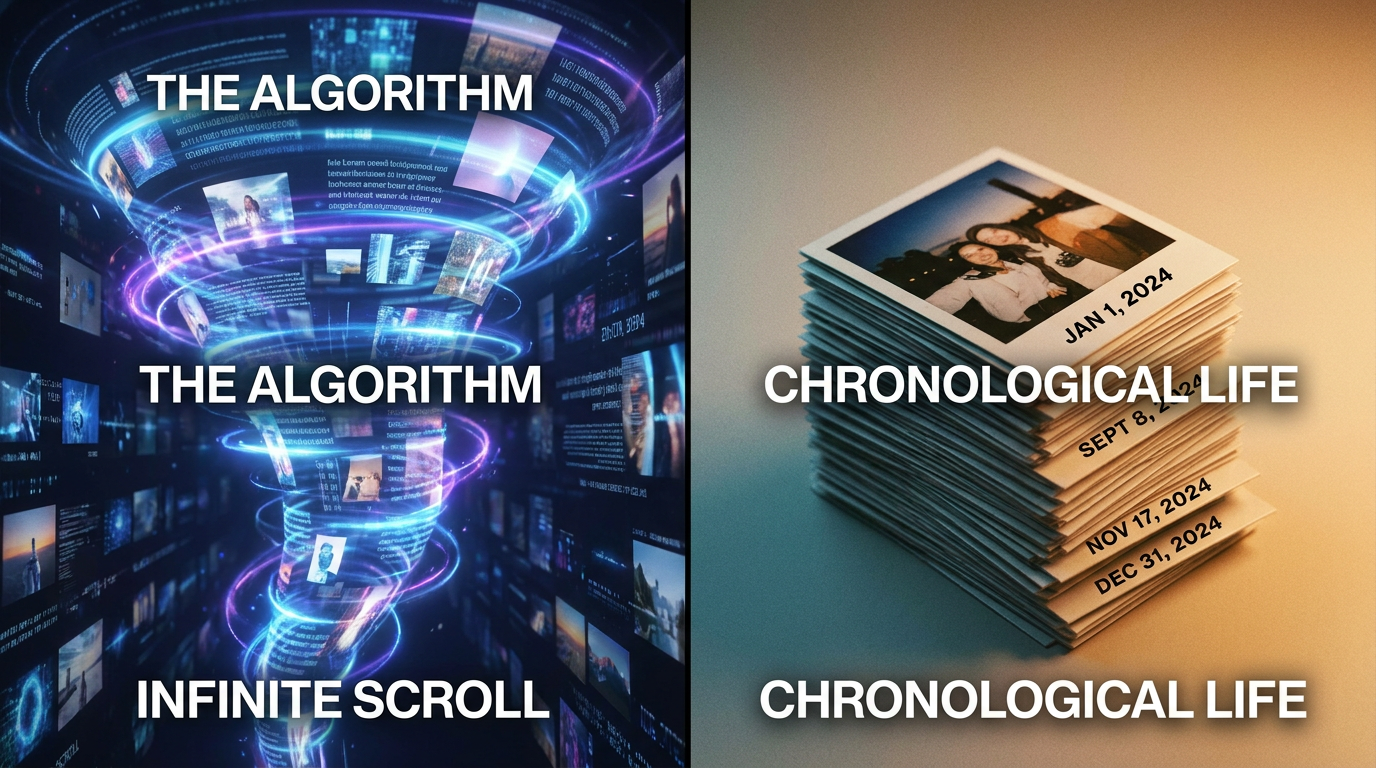
Beyond fact-checking individual claims, experts emphasize that lateral reading and the SIFT method are foundational to cultivating a broader "healthy news diet." Just as a nutritionist advises a balanced intake of whole foods, media researchers advocate for a deliberate curation of information sources. This means actively diversifying the types of media one consumes, seeking out local journalism, relying on primary documents when possible, and reducing reliance on algorithmic social media feeds that prioritize engagement over accuracy. By treating attention as a valuable resource and applying "critical ignoring" to low-quality content, readers can protect their mental health while remaining deeply and accurately informed about the world around them.[1][4][8]
How we got here
2012
Developer Clay Johnson popularizes the concept of the 'Information Diet,' comparing media consumption habits to nutritional health.
2017
The Stanford History Education Group publishes research showing that professional fact-checkers use 'lateral reading' to evaluate sources.
2019
Mike Caulfield introduces the SIFT method, providing a streamlined, four-step framework for digital media literacy.
2022
Stanford researchers demonstrate that just six hours of lateral reading instruction can double a student's ability to spot dubious websites.
Viewpoints in depth
Media Literacy Researchers
Academics and educators focused on updating how digital literacy is taught in schools.
This camp argues that traditional methods of evaluating information, such as checking a website's domain or reading its 'About' page, are actively harmful in the modern internet era. They advocate for curriculum overhauls that prioritize lateral reading, emphasizing that students must be taught to leave a webpage and use the broader web to verify claims. Their research demonstrates that even brief instruction in these techniques drastically improves a reader's ability to spot misinformation.
Journalism & Fact-Checking Professionals
Reporters and editors focused on maintaining information integrity and public trust.
For this group, the widespread adoption of lateral reading is essential for a functioning democracy. They emphasize the importance of diversifying news sources and relying on outlets that adhere to strict ethical standards, such as transparent sourcing and issuing corrections. They view tools like the SIFT method as a way to bridge the gap between professional newsrooms and the general public, empowering readers to become their own first line of defense against algorithmic echo chambers.
Public Health & Psychology Experts
Specialists concerned with the mental health impacts of chronic information overload.
This perspective frames news consumption as a public health issue, using terms like 'infobesity' to describe the psychological toll of a 24/7 news cycle. They argue that a healthy news diet is not just about finding true information, but also about managing headline anxiety and avoiding 'brain rot.' By using heuristics like SIFT to quickly filter out manipulative content, they believe individuals can reduce stress, avoid emotionally triggering clickbait, and engage with the news in a more mindful, sustainable way.
What we don't know
- How the rapid advancement of generative AI will force lateral reading techniques to evolve in the coming years.
- Whether social media platforms will eventually integrate lateral reading tools directly into their user interfaces.
Key terms
- Lateral Reading
- The practice of leaving a webpage and opening new browser tabs to verify the site's credibility and claims using outside sources.
- SIFT Method
- A four-step strategy (Stop, Investigate, Find, Trace) designed to help internet users quickly evaluate the reliability of online information.
- Vertical Reading
- An outdated evaluation method where a reader judges a website's trustworthiness solely by examining the site's own content, design, and 'About' page.
- Information Diet
- The concept that the media and information a person consumes daily affects their mental well-being and worldview, similar to how food affects physical health.
- Infobesity
- A state of cognitive overload caused by consuming excessive amounts of low-quality or sensationalized information.
Frequently asked
What is the difference between vertical and lateral reading?
Vertical reading involves staying on a single webpage and scrolling down to evaluate its credibility based on its appearance. Lateral reading involves opening multiple new tabs to see what other independent sources say about the original site.
Who created the SIFT method?
The SIFT method was developed by digital literacy expert Mike Caulfield as a practical, four-step heuristic for evaluating online information.
How does a healthy news diet improve mental health?
By actively curating high-quality sources and filtering out emotionally manipulative clickbait, readers can reduce 'headline anxiety' and cognitive overload, leading to a more mindful and less stressful relationship with the news.
What does it mean to 'trace a claim'?
Tracing a claim means finding the original context of a quote, statistic, or piece of media to ensure it hasn't been edited, misrepresented, or taken out of context by the site sharing it.
Sources
Source coverage
9 outlets
4 viewpoints surfaced









[1]Stanford Graduate School of EducationMedia Literacy Researchers
Research from the Stanford History Education Group finds that less than six hours of instruction helps students learn to spot dubious sources online
Read on Stanford Graduate School of Education →[2]Poynter InstituteMedia Literacy Researchers
Using multiple online searches to determine the trustworthiness of a source
Read on Poynter Institute →[3]University of MichiganMedia Literacy Researchers
Disinformation, Misinformation, and Fake News Teach-Out
Read on University of Michigan →[4]Columbia Journalism ReviewJournalism Advocates
How to build a healthy news diet
Read on Columbia Journalism Review →[5]Media Helping MediaJournalism Advocates
The SIFT method of fact-checking and adding context
Read on Media Helping Media →[6]PEN AmericaJournalism Advocates
Diversifying Sources to Credibility Checks: How to Build and Maintain a Healthy News Diet
Read on PEN America →[7]National Institutes of HealthPublic Health Experts
The SIFT method for lateral reading in an infodemic
Read on National Institutes of Health →[8]Cascade PBSPublic Health Experts
7 ways to cultivate a healthy news diet
Read on Cascade PBS →[9]Factlen Editorial TeamInformation Synthesis
Synthesis by Factlen editorial team
Read on Factlen Editorial Team →

Every angle. Every day.
Get meta stories with full source coverage and perspective breakdowns delivered to your inbox.